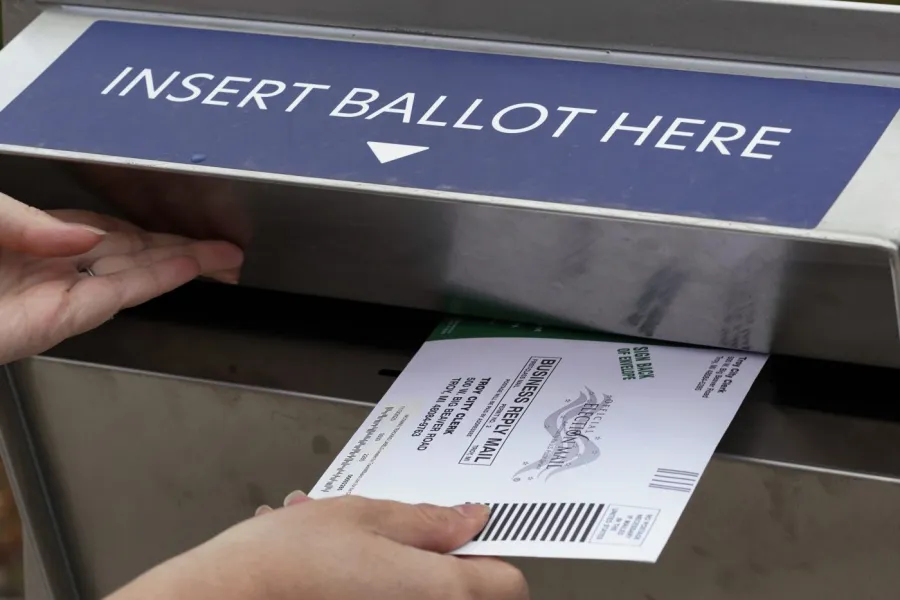
最新哈佛青年民调显示,在表示今年秋天一定会投票的年轻选民中,民主党领先共和党37个百分点。
Democrats lead Republicans by 37 points among likely young voters: survey Democrats are leading Republicans by 37 points among young voters who say they’ll definitely cast their ballots this fall, according to the latest Harvard Youth poll.
在18至29岁选民的一般众议院选票中,民主党以45%对24%领先,优势为21个百分点。然而,在确定会参加中期选举投票的选民中,民主党升至63%,共和党为26%,相差37个百分点,另有10%仍未决定。
On a generic House ballot, Democrats are ahead with 45 percent to 24 percent among voters aged 18-29, a 21-point advantage. Among voters who are certain they’ll vote in the midterms, though, Democrats climb to 63 percent against the GOP’s 26 percent, a 37-point difference with another 10 percent still undecided.
只有三分之一的美国年轻人表示他们今年秋天一定会投票,低于2018年和2022年中期选举中持相同表态的40%。但表达这一确定性的民主党人多于共和党人,差距为16个百分点,高于2022年的5个百分点和2018年的11个百分点,显示出左翼的热情。
Just a third of young Americans say they’ll definitely vote this fall, down from 40 percent who said the same in both the 2018 and 2022 midterms. But more Democrats than Republicans expressed that certainty, a 16-point gap, up from 5 points in 2022 and 11 points in 2018, signaling enthusiasm from the left.
哈佛大学政治研究所民调主任约翰·德拉·沃尔普在一份声明中说:“年轻选民准备对特朗普总统发出严厉斥责,而更广泛的一代人正在向所有掌权者传递一个信息。”
“Young voters are poised to deliver a sharp rebuke to President Trump, while the broader generation is sending a message to everyone in power,” John Della Volpe, director of polling at Harvard's Institute of Politics, said in a statement.
“只有四分之一的美国年轻人预计自己的财务状况会比父母更好——而且由于腐败接近他们最关心的问题之首,领导人将必须通过让生活更负担得起并表明他们为谁的利益服务来赢得信任。”在可能投票的年轻选民中,63%的人表示他们的国会投票是出于对特朗普及其政策的反对,相比之下,14%的人将他们的投票描述为支持。
“Just 1 in 4 young Americans expects to be better off financially than their parents — and with corruption near the top of their concerns, leaders will have to earn trust by making life more affordable and showing whose interests they serve.”Among likely young voters, 63 percent say their congressional vote is driven by opposition to Trump and his policies, compared to 14 percent who describe their vote as support.
经济是年轻选民最关心的问题,他们提到对国家方向、政府腐败和人工智能导致的就业流失的担忧。
Economy reigns as the top issue for young voters as they cite concerns with the country’s direction, government corruption and AI-driven job displacement.
长期以来偏向民主党的年轻选民在2024年总统选举周期中转向特朗普和共和党,原因是经济困境和对现状的不满。
Young voters, who had long favored Democrats, shifted toward Trump and Republicans in the 2024 presidential cycle, driven by economic woes and frustration with the status quo.
然而两年后,年轻选民似乎正转而重新支持民主党,以此表达对总统以及共和党掌控国会的不满。
Two years later, though, young voters appear to be turning back to Democrats as a rebuke of the president and the GOP’s control on Capitol Hill.
《纽约时报》与锡耶纳学院本周联合发布的民调还发现,70%的年轻选民自认是民主党人或倾向民主党,较这两家机构在2024年大选前的上一次民调上升了15个百分点。
New York Times/Siena poll this week also found 70 percent of young voters identified as Democrats or leaned that way, a 15-point increase from the outlets’ last poll before the 2024 election.
该民调发现,在国会通用选票上,年轻选民对民主党的支持率领先44个百分点,而上一轮选举周期中这一差距为10个百分点。
That poll found young voters favor Democrats on a generic congressional ballot by 44 percentage points, up from a 10-point margin in the last cycle.
“这里的重点不在于年轻选民突然全都成了民主党人,而在于Z世代是摇摆不定的。这一代人从小习惯了即时满足,对现状和不断上涨的生活成本感到不满。他们想要改变,”专注于Z世代的媒体与策略公司The Up and Up创始人雷切尔·詹法扎周四在社交媒体上写道,并分享了《纽约时报》的民调数据。
“The takeaway here is not that young voters are suddenly all Democrats. It's that Gen Z is swingy. This is a generation raised on instant gratification, frustrated by the status quo and rising cost of living. They want change,” Rachel Janfaza, founder of the Gen Z-focused media and strategy firm The Up and Up, wrote on social media Thursday, sharing the Times’ numbers.
哈佛青年民调于9月30日至10月7日期间进行,调查对象为2024名18至29岁的美国人,总样本的误差幅度为2.6个百分点,登记选民的误差幅度为3.19个百分点,计划在今秋“一定会投票”的美国年轻人误差幅度为4.3个百分点。
Conducted between Sept. 30 and Oct. 7 among 2,024 Americans aged 18-29, the Harvard Youth poll had a margin of error of 2.6 percent for the total sample, 3.19 percent for registered voters and 4.3 percent for young Americans who plan to “definitely vote” in the fall.
《纽约时报》的民调于10月12日至19日期间进行,调查对象为3494名选民,全样本的误差幅度为1.3个百分点。
The Times polling was conducted Oct. 12-19 among 3,494 voters and had a 1.3 percent margin of error for the full sample.