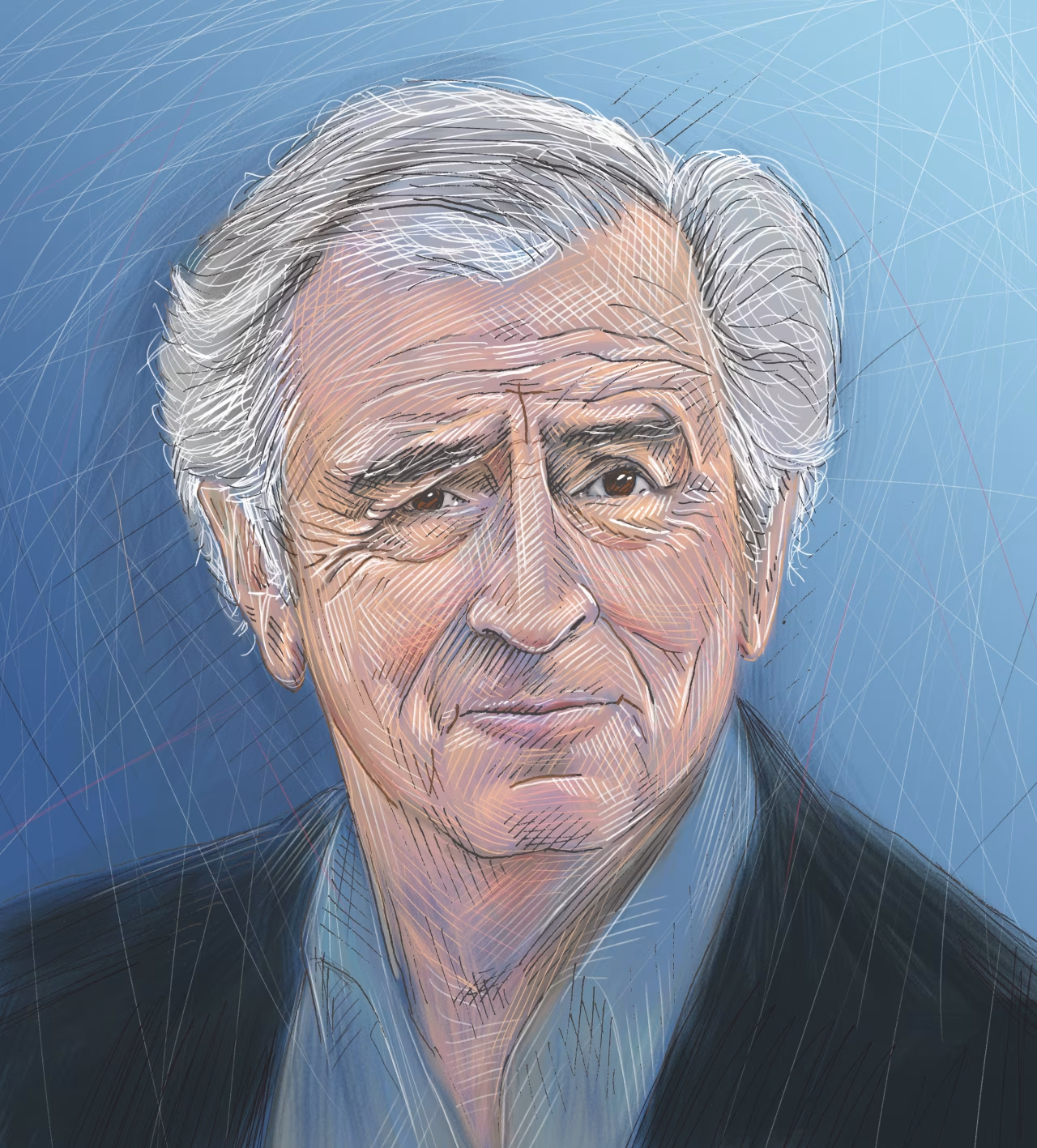
法国巴黎正在燃烧,而伯纳德-亨利·列维正焦灼地注视着这一切。
Paris France is burning, and Bernard-Henri Lévy is watching with anguish.
自9月16日骚乱爆发以来,法国的城市和街道已成为纵火、抢劫、破坏和反犹太主义的舞台,并伴随着对警察和消防员的袭击。但在这个月的道德崩塌中,最让列维先生心碎的,莫过于10月17日位于此地以南250英里的利摩日市政厅被烧毁。
Since Sept. 16, when riots began, France’s cities and streets have been a stage for arson, looting, vandalism and antisemitism, accompanied by attacks on policemen and firemen. But nothing has broken Mr. Lévy’s heart more in this month of moral meltdown than the torching on Oct. 17 of the town hall in Limoges, 250 miles south of here.
“对于不信天堂的法国人来说,利摩日的大火是巴黎圣母院大火的一种世俗对应物,”列维先生说道,指的是七年前那座传奇教堂大部分被毁的事件。“当利摩日市政厅的圆顶在烈焰中轰然倒塌时,坍塌的不仅仅是一个屋顶。法国的一小部分灵魂正在我们眼前燃烧。”列维先生说,就像教堂一样,市政厅(法语称 hôtel de ville)是“市民结婚、投票、缅怀长辈的共同家园”。
“For French people who do not believe in heaven, the fire at Limoges is a kind of secular counterpart to the fire at Notre-Dame in Paris,” Mr. Lévy says, referring to the destruction of much of the storied cathedral seven years ago. “When the dome of Limoges town hall went up in flames and came crashing down, it was not just a roof that collapsed. A little of the soul of France was burning before our eyes.”Like a church, a town hall, or hôtel de ville in French, is a “common home where citizens marry, vote and honor their elders,” Mr. Lévy says.
“共和国的一座大教堂正化为灰烬和浓烟。”(一名极左煽动者已因涉嫌纵火被捕。)现年77岁的列维先生是50本书的作者,也是十几部纪录片的制作者。他被称为哲学家,在法国这意味着一位公共知识分子,而不一定是学院派专家;本报读者对他从乌克兰、尼日利亚、中东等战区发回的激情满满的报道并不陌生。他原本指望秋天忙于推广新书《临时回忆录》,该书于上月在法国出版。
“One of the Republic’s cathedrals was going up in ashes and smoke.” (A far-left agitator has been arrested as the suspected arsonist.) Mr. Lévy, 77, is the author of 50 books and the maker of a dozen documentary films. He is known as a philosopher, which in France means a public intellectual, not necessarily an academic specialist, and is familiar to readers of these pages for his passionate dispatches from war zones in Ukraine, Nigeria, the Middle East and elsewhere. He was expecting to spend the fall plugging his latest book, “Mémoires provisoires,” or “Provisional Memoirs,” which was published in France last month.
但随着国家摇摇欲坠地站在悬崖边缘,莱维的关注点却在别处。“你能感觉到我们正处于内战边缘,”莱维说。“最糟糕的是,该国两大主要政治势力现在都从骚乱中获益——勒庞因为她将夺取政权,梅朗雄因为他将控制街头。这种国内的雅尔塔协议是所有温和派的噩梦,无论是保守派还是自由派。”玛丽娜·勒庞是国民联盟党领袖,让-吕克·梅朗雄是“不屈法兰西”党领袖。
But with his country teetering on a cliff, Mr. Lévy’s attention is elsewhere. “You can sense that we are on the brink of civil war,” Mr. Lévy says. “The worst part is that the country’s two main political forces now have an interest in the riots—Le Pen because she would take power, Mélenchon because he would take control of the streets. This domestic Yalta is the nightmare of all moderates, whether conservative or liberal.”Marine Le Pen is the leader of the National Rally party, and Jean-Luc Mélenchon of La France Insoumise, or France Unbowed.
莱维将他们分别描述为“极右翼”和“极左翼”,这也是大多数主流媒体给他们的标签。然而,与媒体不同的是,媒体只给勒庞女士贴上“法西斯”标签,他却称他们两人都是“法西斯”。鉴于法国政治中间派的崩溃,这两个极端势力有可能在明年5月的总统大选中正面交锋,届时拥挤的候选人阵容将在4月的首轮投票中被淘汰。
Mr. Lévy characterizes them as “far right” and “far left,” respectively, which is also how most mainstream media label them. Unlike the media, however, which reserves the word for Ms. Le Pen, he calls them both “fascists.”Given the collapse of the French political center, it is possible that these two extremes will face off against each other in a presidential election next May, the rest of a crowded field having been eliminated in April’s first round of voting.
列维先生既是坚定的自由主义者,也是西方犹太-基督教价值观的坚定捍卫者。对于勒庞女士与梅朗雄先生进入总统决选的前景,他怎么看?他拒绝接受这一前提,对我说,我陷入了“法国记者的惯思维”,他们“表现得好像结果已成定局,好像六个月前就已注定,最终决战将在两股极端势力、两种新法西斯主义之间展开。我不信。”
Mr. Lévy is both adamantly liberal and a staunch defender of Western Judeo-Christian values. What does he think of the prospect of a presidential runoff between Ms. Le Pen and Mr. Mélenchon? He resists entertaining the premise, telling me that I’ve fallen into the “habit of French journalists,” who “act as though the outcome were already decided, as though it were a foregone conclusion, six months in advance, that the final battle will be fought between the two extreme forces, the two new forms of fascism. Well, I don’t believe it.”
列维先生说,他是一名政治“乐观主义者”,怀有“不同的假设”:“法国人民并非外界描绘的那般可怜。”他深信“在最后几个月,会出现第三种可能。或许是已在竞选中的人;或许是无人预料到的人。”无论哪种情况,“这个人将打破两个对立法西斯分子之间的致命僵局,让法国重回民主常态的轨道。”最后他说,如果真出现勒庞对决梅朗雄的局面,“我绝不会强迫自己在两人中做选择。我绝不会给他们任何一人投上一票。”
Mr. Lévy says he is a political “optimist” and has “a different hypothesis”: that “the French people are not as wretched as they are made out to be.”He is convinced that “in the final months, a third possibility will emerge. Perhaps it will be someone already in the race; perhaps it will be someone no one saw coming.”Either way, “this person will break the deadly deadlock between the two rival fascists and bring France back into the fold of democratic normality.”Finally he says that in the event of a Le Pen-Mélenchon runoff, “I will never force myself to choose between them. I will never cast a vote for either of them.”
列维先生是以色列的长期捍卫者。“仅从犹太教的角度来看,”他说,“梅朗雄是个厚颜无耻的反犹主义者,说出的言论堪比美国的塔克·卡尔森或尼克·富恩特斯——而且毫不羞愧。”
Mr. Lévy is a longstanding defender of Israel. “From the point of view of Judaism alone,” he says, “Mélenchon is an unapologetic antisemite who makes the kind of remarks one hears from Tucker Carlson or Nick Fuentes in America—and does so without the slightest embarrassment.”
勒庞女士的政党“曾宣称已清洗了以往的反犹主义”,如今却因媒体报道党主席若尔丹·巴尔德拉少年时在2010年代发过反犹短信,而见问题旧病复发。“巴尔德拉完全可以说这是青春期的过失,”列维先生说。“但他没有。他的否认、他坚称从未发生过、他对调查其反犹过去的报纸表现出的幼稚愤怒,听起来倒像是一种默认。”
Ms. Le Pen’s party, “which had once declared itself purged of its former antisemitism,” now sees the problem resurface in press reports that party president Jordan Bardella wrote antisemitic text messages as a teenager in the 2010s. “Bardella could, of course, simply have said that he had made a youthful mistake,” Mr. Lévy says. “But no. There is something in his denial, in his insistence that it never happened, in his childish fury toward the newspaper that investigated his antisemitic past, that sounds like an admission.”
列维先生视勒庞女士的政党为……勒庞和梅朗雄同样令他反感。“他们是同一种民粹主义的右翼版和左翼版——如果你愿意,可以称之为右翼特朗普主义,以及一种左翼特朗普主义,两者共享相同的基本倾向。”这些倾向包括:“对[弗拉基米尔]普京的纵容,对[弗拉基米尔]泽连斯基的背叛,民族主义和孤立主义的退缩,以及拒绝向欧洲迈出任何进一步的步伐。此外,还有一种经济政策,将使法国成为走向破产的国家之一。”他说,这是一场生死之战,争夺“谁将拥有毁灭这个国家的可怕特权”。
Mr. Lévy regards Ms. Le Pen and Mr. Mélenchon with equal distaste. “They are a right-wing and a left-wing version of the same populism—a right-wing Trumpism, if you like, and a kind of left-wing Trumpism, both sharing the same fundamental tendencies.”Among those tendencies: “indulgence toward [Vladimir] Putin, betrayal of [Volodymyr] Zelensky, nationalist and isolationist retrenchment, and a refusal to take any further steps toward Europe. Also, an economic policy that will leave France among the nations heading to bankruptcy.”It is a death match, he says, over “which of them will have the dreadful privilege of ruining this country.”
列维认为,法国正处于“向右和向左的双重构造性转变”中。两条道路都通向法国的灾难。它们是钳口的两端,我拒绝让我的国家被困在其中。他说,美国也是如此。“你们也有两个极端联手:MAGA和那些将反犹太复国主义——即反犹太主义——作为其政治首要和最终目标的新民主党人。你们非常清楚,这种对峙将对美国民主造成致命打击。好吧,法国也是完全一样的。”
Mr. Lévy sees France in the midst of a “double tectonic shift, to the right and to the left. Both paths lead to French disaster. They are the two jaws of the vise in which I refuse to let my country be trapped.”The same, he says, is true of the U.S. “You too have two extremes joining hands: MAGA and the new Democrats who make anti-Zionism—that is, antisemitism—the alpha and omega of their politics. You know very well that this face-off would be fatal to American democracy. Well, exactly the same is true of France.”
他补充说,威胁“不再仅仅是政治危险”。“它是一种元政治危险。它是社会纽带本身的毁灭。”这意味着“充满愤怒和狂怒,没有希望,没有对未来的任何愿景,唯一目标是粉碎社会契约本身。”为了防止这种情况,他说,我们必须“远远阻止双方的纵火者:那些点燃人们灵魂的人,思想上的纵火者”。
The threat is “no longer even a political danger,” he adds. “It is a metapolitical one. It is the destruction of the social bond itself.”That entails “rage and fury, devoid of hope, of any vision of the future, with the sole aim of shattering the social contract itself.”To prevent this, he says, we must “block the arsonists on both sides at a distance: those who set fire to people’s souls, the incendiaries of the mind.”
难道自2017年以来担任总统的埃马纽埃尔·马克龙,不应该为将国家带到这一步而承担一些责任吗?列维反驳说。他认为,将马克龙“用右翼和左翼双方的恶魔化方式描绘,就我而言,极其不公平。”列维一直对马克龙的马克龙对“单方面承认巴勒斯坦国,这给哈马斯带来政治胜利,奖励了最恶劣的恐怖主义”表示批评。但他在“至少有一个领域是无可挑剔的:对乌克兰的支持”。
即使在美国似乎站在俄罗斯一边的今天,谢天谢地有马克龙在,维系乌克兰与其欧洲家的纽带。仅就此而言,他应当受到赞扬。
Shouldn’t Emmuanel Macron, the president since 2017, take some blame for leading his country to this pass? Mr. Lévy pushes back. He says the portrayal of Mr. Macron “in diabolical terms by both right and left is, as far as I’m concerned, terribly unfair.”Mr. Lévy has been intensely critical of Mr. Macron for the “unilateral recognition of the state of Palestine, which gifts a political victory to Hamas and rewards the worst terrorism.”But there is “at least one area in which Macron has been impeccable: his support for Ukraine. Even today, when the United States seems to be siding with Russia, thank goodness Macron is there to keep alive the bond that ties Ukraine to its European home. At least for this, he should be praised.”
我们的对话恰逢特朗普的特使史蒂夫·维特科夫称普京为“人道主义者”。“这简直令人作呕,”勒维说,“是对乌克兰死者的侮辱,是对美国信条的侮辱,也是对所有为打击苏联、随后对抗其普京化身、以及更广泛地对抗各种专制而奉献毕生精力的体面共和党人的侮辱。”
Our conversation occurs the same day that Steve Witkoff, Mr. Trump’s special envoy, calls Mr. Putin “a humanitarian.”“It’s properly disgusting,” Mr. Lévy says, “an insult to the Ukrainian dead, an insult to the American creed, and an insult to all decent Republicans who have devoted their lives to fighting, first, the Soviet Union, and then its Putinist avatar, and fighting, more broadly, every form of authoritarianism.”
勒维最初并不敌视法国的抗议。“学生运动显然在一开始就持同情态度,”他说,“它的诉求——更多教师、更好的高中条件——完全值得同情。但整个事件已被梅朗雄的极左彻底劫持,”梅朗雄“冒着巨大的风险呼吁暴力、为暴力正名,并对共和警力投以一种政治诅咒。”梅朗雄“现在是勒庞最好的竞选代理人……梅朗雄以及当然还有暴徒,正为她完成所有工作。”
Mr. Lévy wasn’t initially hostile to the French protests. “The student movement was obviously sympathetic at the outset,” he says. “Its demands—more teachers, better conditions in our high schools—were entirely worthy of sympathy. But the whole thing has been completely hijacked by the far left of Mélenchon,” who took “the enormous risk of calling for violence, legitimizing it, and casting a kind of political curse on the forces of the republican police.”Mr. Mélenchon “is now Le Pen’s best campaign surrogate. . . . Mélenchon and, of course, the rioters, are doing all the work for her.”
别指望这只会停留在法国:“我的国家似乎站在一种现象的前线,这种现象正蔓延至全欧洲,甚至整个西方:虚无主义的爆发。”他指的“是一种社会运动,它并不旨在建立某种社会,而是根本不想要任何社会”。这些暴力抗议“不是针对某个不公,而是针对正义本身——一次不是针对某个政府的反叛,而是针对有组织社会概念的反叛”。
Don’t expect it to stay in France: “My country seems to be on the front line of a phenomenon now spreading across Europe, and perhaps throughout the entire West: an explosion of nihilism.”By which he means “a social movement that seeks not to bring about one kind of society or another but, instead, no society at all.”The violent protests are “not directed against this or that injustice, but against the very idea of justice—a revolt not against this or that government, but against the very idea of an organized society.”
莱维坚持认为,这些“冷骚乱与1968年五月毫无共同之处”——当年他还是个年轻人,曾投身那场抗议运动。“书中有整整一部分专门讲述68年事件及其后数年,”他说,“那时当然也有一种反抗的氛围,但最终带着希望。”那个时代的学生“把目光投向法国之外时,并不是像驴一样反复念叨‘加沙、加沙、加沙’,而是为了抗议当时肆虐全世界的各种独裁政权”。
Mr. Lévy insists that these “cold riots have nothing in common with May 1968,” when he joined the protest movement as a young adult. “There is a whole part of the book devoted to the events of ’68 and the years that followed,” he says. “There was a climate of revolt then, of course, but with hope at the end of it.”When the students of that era “looked beyond France’s borders, it was not to repeat, like donkeys, ‘Gaza, Gaza, Gaza,’ but to protest against all the dictatorships then raging around the world.”
他说,越南“有点像一块试金石”,“但没有人死死盯着它不放。它只是众多事业中的一项。当时的抗议者既关心苏联独裁统治下的受害者,也同样关心拉丁美洲的独裁政权”。
Vietnam was “a kind of shibboleth, he says, “but no one was fixated on it. It was one cause among many others. The protestors of the time were just as concerned with the victims of Soviet dictatorship in the U.S.S.R. as with the dictatorships in Latin America.”
骚乱中反以色列标志无处不在,这让莱维先生深感震惊。“巴勒斯坦旗帜——这很糟糕,但这是事实。正如在纽约,‘全球化起义’已成为新一代所谓进步人士的暗语,巴勒斯坦旗帜也正成为我们最无脑的骚乱者的暗语。我们已走到这一步:对过去国际承诺的悲哀重演,事实上,也是真正的左翼反犹主义的爆发。”他说,这是“一个新现象——无论从规模、性质,还是从其虚无主义和绝望的特征来看。而事实是,似乎没有哪位政治家准备好直面它。”
The ubiquitousness of anti-Israeli symbols at the riots appalls Mr. Lévy. “Palestine flags—it’s terrible, but it’s true. Just as in New York, where ‘Globalize the intifada’ has become a password for a new generation of so-called progressives, the Palestinian flag is becoming a shibboleth for the most brainless of our rioters. This is where we are, in a sad remake of the international commitments of the past and, in fact, the explosion of a genuine left-wing antisemitism.”He says it is “a new phenomenon—in its scale, its nature, and its nihilistic and desperate character. And the fact is, no politician seems ready to confront it.”
许多政治家已经接纳或煽动了它。除了梅朗雄先生,莱维还把市长佐赫兰·马姆达尼列为负有责任者之一。
Many politicians have embraced or stoked it. Apart from Mr. Mélenchon, Mr. Lévy cites Mayor Zohran Mamdani among the culpable.
“对我来说,马姆达尼作为市长坐在市政厅里,是对纽约精神的污点,”他说。“在一个由开国元勋构想为新耶路撒冷、并被犹太人自己视为第二故乡的国家里,这是可耻的。这种恶化难以想象。”
“For me, Mamdani sitting in City Hall as the mayor is a stain on the spirit of New York,” he says. “This is shameful in a country that was conceived by the Founding Fathers as the new Jerusalem, and which was regarded by the Jews themselves as a second fatherland. This deterioration is difficult to imagine.”
去年竞选期间,让莱维先生对马姆达尼印象深刻的是,“反犹主义不仅仅是他言论或纲领中的脚注。它是他论证的驱动力,正是这种论证让他更受欢迎。”莱维先生既是自豪的犹太人,也是自豪的法国人。犹太人在法国还有未来吗?有可信报道称,在法国近期的骚乱中,犹太人的商铺尤其成为攻击目标。
What struck Mr. Lévy about Mr. Mamdani during last year’s campaign is that “antisemitism was not just a footnote in his rhetoric or his program. It was a driving force of his argumentation, the argument which made him even more popular.”Mr. Lévy is as proud a Jew as he is a Frenchman. Do Jews have a future in France? It has been reported credibly that Jewish businesses were especially targeted in the recent French riots.
“这是我这本书的主要主题之一,”他回答道。“犹太人在造就今日法国方面发挥了重要作用。如果真有人不得不离开,那不该是犹太人,而应是反犹分子。我将提出这一主张,并竭尽全力为之奋斗,直到我生命的最后一息。”瓦拉达拉詹先生是《华尔街日报》撰稿人,是美国企业研究所和纽约大学法学院古典自由主义研究所的研究员。
“This is one of the main themes of my book,” he answers. “Jews have played a major part in making France what it is. If anyone should have to leave, it is not the Jews, it is the antisemites. I will make that case and fight for it with all my strength, to my dying breath.”Mr. Varadarajan, a Journal contributor, is a fellow at the American Enterprise Institute and at NYU Law School’s Classical Liberal Institute.