二战结束后,欧洲各国在美国的军事保护伞下建立起各自的福利模式,将大部分国防开支留给华盛顿承担,从而为社会支出腾出空间。
After World War II, European states built their welfare models under the US military umbrella, leaving most of the defense bill to Washington to make room for social spending.
这种保障贯穿冷战并延续至今,其意义远不止军事保护。尽管部分欧洲国家保持了一定程度的军事自主权,但美国的支持维系了一个更广泛的秩序:华盛顿提供安全保障,国际关系通过制度化渠道运行,欧洲政治依赖欧盟内部的共识机制。
Lasting through the Cold War and beyond, the guarantee was about more than just military protection. Even though some European countries kept a degree of military autonomy, US backing sustained a wider order, one where Washington provided security, relations ran through institutions, and European politics relied on consensus within the EU.
然而,先是俄乌战争,继而是特朗普要求各国自行承担国防重任,这让人们开始怀疑这把保护伞究竟有多可靠。顺理成章地,在其庇护下成长起来的欧洲福利模式如今也受到质疑。当前,随着美国开始对其支持附加条件,欧洲习以为常的舒适秩序根基正在迅速动摇。
However, first the Russia-Ukraine war and then Trump's demand that everyone carry their own weight in defense raised doubts about how reliable this shield really is. Naturally, the European welfare model that grew in its shadow is now being questioned too. Today, as the US starts putting conditions on its support, the ground beneath the comfortable order Europe is used to is quickly shifting.
10月7日,美国国务卿马尔科·鲁比奥在雅典帕特农神庙前发表演讲,称欧洲可以“从长久的沉睡中醒来”,辩称该大陆真正需要的是找回失落的文明自信。鲁比奥的诊断实质上将问题归结为单纯的意愿缺失,即未能善用现有资源。然而,当今欧洲的动荡有着更深层的成因。当国际体系的力量对比发生变化、依赖外部安全保护伞的国家,其国内秩序必然随之震荡。
Speaking in front of the Parthenon in Athens on Oct. 7, US Secretary of State Marco Rubio stated that Europe could "wake from its long slumber," arguing that what the continent truly needs is to regain its lost civilizational self-confidence. Rubio's diagnosis essentially reduces the problem to a mere lack of will, a failure to use the resources already at hand. Yet the turmoil in Europe today has a much deeper cause. When the balance of power shifts in the international system, states that rely on an outside security umbrella inevitably see their domestic orders shaken as well.
华盛顿逐步收缩留下的巨大真空,绝非仅靠在国防预算上增加几个百分点就能填补。真正出现裂痕的,是在那把保护伞下精心编织了数十年的社会契约本身。究竟在保护伞下建起了什么?
The huge vacuum left by Washington's gradual pullback will not be filled simply by adding a few extra percentage points to defense budgets. What is actually cracking is the very social contract that was carefully woven over decades beneath that shield. What was actually built under the shield?
在拥有美国安全保护伞的情况下,欧洲国家得以将原本用于武器和军队的资金节省下来,转而用于资助国内的社会和平与繁荣。这里有两个细节值得牢记。首先,福利国家模式不仅是美国的馈赠,也是欧洲自身的阶级斗争和社会民主传统的产物。其次,美国承担这一安全负担并非出于纯粹的慷慨,而是为了防止苏联主导欧亚大陆。
With the US security umbrella in place, European countries were able to take the funds they would have spent on weapons and armies and use them to finance domestic social peace and prosperity instead. Two details are worth keeping in mind here. First, the welfare state model was not just an American gift, it was also the product of Europe's own class struggles and social democratic traditions. Second, the US took on this security burden not out of pure generosity, but to keep the Soviet Union from dominating Eurasia.
尽管如此,二战后欧洲实现的“辉煌”繁荣,是无法与那个两极世界秩序所带来的优势分离开来的。尽管冷战结束已多年,但由于政治惯性而延续至今的舒适感,如今正随着全球力量对比的重新书写而走向终结。而且,很难看出福利国家模式如何能在这一转变中毫发无损。
Still, the "glorious" prosperity Europe achieved after World War II cannot be separated from the advantage created by that bipolar world order. Even though the Cold War ended years ago, the comfort that lingered out of political habit is now coming to an end as the global balance of power is rewritten. And it is hard to see how the welfare state model escapes this shift untouched.
事实上,英国过去的经验表明,这一等式也可以反向运行。1968年,伦敦夹在年轻的福利国家的成本与全球帝国的责任之间,决定从苏伊士以东撤军,实际上将海湾的安全交给了美国。如今,欧洲面临着截然相反的局面,不断上升的军事需求正给社会开支施加沉重的压力。美国国防部长皮特·海格塞斯在6月份对美军在欧洲存在状况的评估、他将未来的支持与国防开支挂钩的举措,以及围绕“北约3.0”正在形成的言论,都意味着华盛顿正在把大约75年前承担的负担重新抛回给欧洲。
In fact, Britain’s past experience shows that this equation can also work in reverse. Caught in 1968 between the cost of its young welfare state [1] and its global imperial responsibilities, London decided to withdraw from East of Suez and effectively handed over the security of the Gulf to the US. Today, Europe faces the exact opposite situation, rising military needs are putting heavy pressure on social spending. US Defense Secretary Pete Hegseth's review of the American presence in Europe back in June, his move to tie future support to defense spending, and the rhetoric taking shape around "NATO 3.0" [2] all mean that Washington is dropping the burden it took on some 75 years ago right back into Europe.
当超级大国的这种“安全补贴”被撤走时,建立在外部支持之上的国内秩序所出现的缺口,就只能由国家自身的资源来填补。而这不可避免地将安全推到了预算清单的最顶端。谁来买单?
When that superpower "security subsidy" is pulled away, the gap in a domestic order built on outside backing has to be filled by the state's own resources. And that inevitably pushes security right to the top of the budget list. Who will pay the bill?
欧洲各国政府如今陷入三重挤压:建立可信的防御威慑、维持福利国家运转、以及保持财政与政治稳定。也不应指望各国能同时实现这三项目标。欧洲正处于艰难的十字路口:无论选择哪两项,都不得不在第三项上妥协。
European governments today are caught in a tight squeeze: Building a credible defense deterrent, keeping the welfare state standing, and preserving fiscal and political stability. Nor should states be expected to achieve all three of these goals at once. Europe is at a tough crossroads where, whichever two it chooses, it will have to compromise on the third.
德国利用财政规则放宽的契机,转向创纪录的举债用于国防和基建,实际上将账单转嫁给了未来。法国在持续的政治动荡中试图遏制预算赤字,导致债券收益率飙升。这表明,同时坚持保护国防与社会福利,能多快将经济推入绝境。荷兰则直接以牺牲福利国家为代价,为不断上升的国防开支买单。政府通过不按通胀调整税级,变相征收了一笔“自由贡献”,这对低收入群体影响更大;同时削减医疗预算,以腾出资金用于国防。
Taking advantage of loosened fiscal rules, Germany turned to record borrowing for defense and infrastructure, effectively passing the bill on to the future. In France, efforts to curb the budget deficit amid ongoing political turmoil sent bond yields surging. This showed just how quickly the insistence on protecting both defense and social welfare at the same time can push an economy into a corner. The Netherlands, meanwhile, funded its rising defense costs directly at the expense of the welfare state. By not adjusting tax brackets for inflation, the government collected an indirect "freedom contribution" that weighed more heavily on lower-income groups, while also cutting the healthcare budget to free up money for defense.
西班牙和意大利目前属于将国防列为次要优先级的国家。西班牙主张,以少得多的开支也能达到军事目标。意大利则动用了一招巧妙的会计手段:仅将若干现有预算项目更名为“国防开支”,便在账面上跨过了北约的开支门槛[3]。
Spain and Italy, for now, are among those choosing to keep defense as a secondary priority. Spain argues that military targets can be met with far less spending. Italy, on the other hand, used a clever accounting move. It simply renamed several existing budget items as "defense spending" to cross NATO’s spending threshold on paper [3].
现实很清楚。无论一个国家选择哪条道路,最终都是不同的群体在付出代价。借贷将负担转嫁给后代,而削减社会福利则直接伤害了退休人员、病人和低收入公民。反过来,不增加国防开支会动摇东欧盟友的信任,并损害一个国家在北约内部的地位。正当中间派政党在这些艰难抉择之间犹豫不决时,他们每一次采取行动都会疏远不同的一群选民。归根结底,这种持续的优柔寡断正在悄然侵蚀公众对主流政治的信任。极右翼承诺了什么?
The reality is clear. Whichever path a country chooses, a different group ends up paying the price. Borrowing places the burden on future generations, while cutting social benefits directly hurts retirees, patients and low-income citizens. Avoiding defense spending, in turn, undermines the trust of Eastern European allies and damages a country's standing within NATO. As centrist parties hesitate between these hard choices, they alienate a different group of voters with every move. Ultimately, this ongoing indecision is quietly eroding public trust in mainstream politics. What does the far-right promise?
要理解极右翼的崛起,必须看到他们为打破这种僵局提供了一条所谓的“出路”。正当中间派政党艰难地向选民说出某些牺牲不可避免这一残酷真相时,极右翼却通过质疑谁首先应该从福利国家中受益,彻底重新构架了这一问题。在他们看来,如果将福利的边界严格划定在公民身份、“文化认同”和“本土性”之内,那么通过削减流向移民、布鲁塞尔或乌克兰的资金,就能轻松筹集到国防所需的大笔资金。
To understand the rise of the far right, one must see that they offer a supposed "way out" of this impasse. While centrist parties struggle to tell voters the hard truth, that certain sacrifices are unavoidable, the far right reframes the issue entirely by questioning who should benefit from the welfare state in the first place. In their view, if the boundaries of welfare are drawn strictly around citizenship, cultural identity and "nativeness," the massive funds needed for defense can easily be found by cutting the money going to migrants, Brussels, or Ukraine.
这种在政治学中被称为“福利沙文主义”的公式对公众具有强大的吸引力,因为它将全部账单转嫁给了“外人”,并承诺在不要求本国选民做出任何牺牲的情况下保持现有的舒适生活。
Known in political science as "welfare chauvinism," this formula holds strong appeal for the public because it shifts the entire bill onto "outsiders" and promises to preserve existing comforts without asking its own voters for any sacrifice.
然而,这些承诺在数学上根本行不通。国防开支所产生的资金缺口实在太大,仅靠削减移民预算或对外援助是无法填补的。事实上,掌权的极右翼政党很快就会直面同样的现实。匈牙利欧尔班的青民盟失去权力,以及瑞典民主党在9月的选举中首次失票回落,都表明承担起责任的极右翼政党——无论是通过执政还是加入执政联盟——同样无法逃脱政治损耗。
Yet, these promises do not add up mathematically. The gap created by defense spending is simply too large to be closed by cutting migrant budgets or foreign aid. Indeed, far-right parties that take power soon come face-to-face with this same reality. The loss of power by Victor Orban's Fidesz party in Hungary, along with the Sweden Democrats losing votes and falling back for the first time in the September elections, shows that far-right parties that take on responsibility, whether by governing or joining a coalition, cannot escape political wear and tear either.
问题还有一个更深层的维度。欧洲摆脱这一僵局最现实的出路在于联合借贷、消除国防工业领域的重复建设[4],以及在全欧洲范围内平等分担负担,不因政治原因阻挠潜在合作伙伴。然而,极右翼和某些政府对“国家主权”的执念,加上他们出于政治动机破坏潜在国防工业伙伴关系的做法,正在侵蚀集体解决方案所需的政治基础。
There is also a much deeper dimension to the issue. Europe's most realistic way out of this deadlock lies in joint borrowing, eliminating duplication across the defense industry [4] and sharing the burden equally across the continent without blocking potential partners for political reasons. However, the obsession with "national sovereignty" among the far-right and certain governments, combined with their politically motivated efforts to undermine potential defense industry partnerships, is eroding the political foundation needed for a collective solution.
总体而言,这就是美国批评欧洲所针对的图景,尤其是特朗普时代以来。虽然华盛顿的部分担忧当然合理,但它解决这些问题所采取的路径本身也带来严重风险。
Broadly, this is the picture the US has targeted in its criticism of Europe, especially since the Trump era. While some of Washington's concerns are certainly valid, the path it is taking to resolve these issues carries serious risks of its own.
曾被推至欧洲政治边缘并遭摒弃的极右翼,如今正与特朗普及其共和党盟友携手并进。马尔科·鲁比奥在雅典迎合反移民情绪和“失去我们文明”的恐惧,绝非巧合。这种言辞表明,在欧洲扎根的“福利沙文主义”获得了美国的公开支持。
Once pushed to the fringes of European politics and dismissed, the far right now walks hand in hand with Trump and his Republican allies. It is no coincidence that Marco Rubio played to anti-immigrant sentiment and fears of "losing our civilization" in Athens. This language shows that the "welfare chauvinism" taking root in Europe has open backing from the US.
然而,这里存在一个重大矛盾。一方面,美国希望欧洲承担相当大份额的安全负担;另一方面,它却给那些让欧洲大陆无法共同承担这一负担的政治运动提供意识形态合法性。简而言之,华盛顿呼吁一个能够“独立自主”的欧洲,却在积极助长并壮大实现这一目标的最大障碍。欧洲必须直面什么现实?
Yet, there is a major contradiction here. On one hand, the US wants Europe to shoulder a significant share of the security burden, on the other, it gives ideological legitimacy to the very political movements that make it impossible for the continent to carry that burden together. In short, while Washington calls for a Europe that can "stand on its own two feet," it is actively feeding and growing the biggest obstacle to that goal. What reality must Europe wake up to?
安全不再是一场临时危机,它直接关乎国家预算。只要各方政府未能在福利、安全和财政政治稳定之间做出明确抉择,无论外部威胁变得多么巨大,中间派政党都将继续失去支持。极右翼还会增长多少,最终取决于主流政治所展现出的勇气。北欧国家拥有强大的福利国家体制,近年来却在国防开支占比较高的国家之列,这一事实就是一个重要的例证。它表明,当对国家的信任稳固且公众确信为什么需要作出牺牲时,这种转变是可以处理得相当好的。
Security is no longer a temporary crisis; it is directly a matter of national budgets. As long as governments fail to make clear choices between welfare, security and fiscal-political stability, centrist parties will continue to lose support no matter how large the external threat grows. How much further the far right grows ultimately depends on the courage shown by mainstream politics. The fact that Nordic countries, with their strong welfare states, have been among the highest defense spenders in percentage terms in recent years is an important example. It shows that when trust in the state is solid and the public is convinced of why sacrifices are necessary, this transition can be managed quite well.
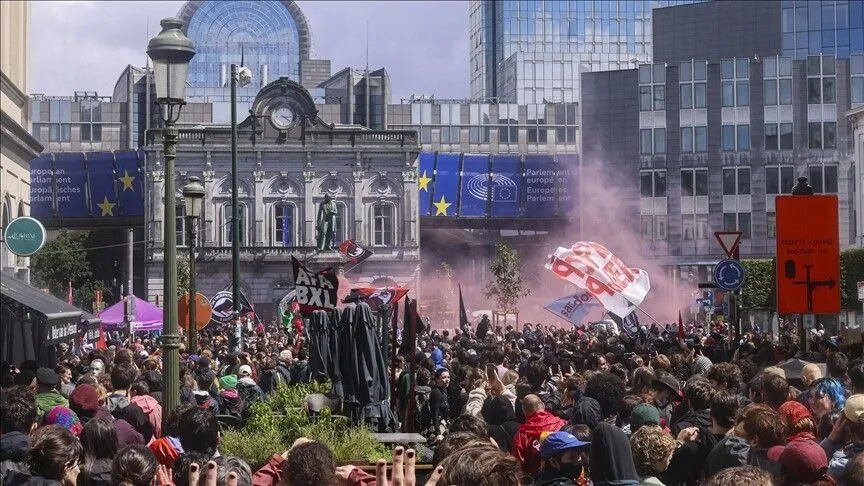
今天的欧洲正站在尖锐的十字路口,面临着两个清晰的选择。要么通过联合机制在整个欧洲分担这一负担,要么陷入一个内向型的时代——在这个时代里,每个国家都各自为政,紧缩政策像在法国所看到的那样将民众赶上街头,“我们与他们”之间的界限被沿着政治、族群和文化边界重新划分。
Europe today stands at a sharp crossroads, facing two clear options. Either it will share this burden across the continent through joint mechanisms, or it will drift into an inward-looking era, one where every country fends for itself, austerity policies drive people into the streets as seen in France, and the line between "us and them" is redrawn along political, ethnic, and cultural borders.
在此情况下,与其像卢比奥那样,将欧洲的危机解释为简单的缺乏意志和自信——这种方法从结果倒推原因,不如回顾一下肯尼斯的理论框架(译注:原文如此,指肯尼斯·华尔兹)。当国际体系的结构发生变化时,国家必须恢复其目标与手段之间的平衡。在一个安全保护伞已经消失的世界里,如果没有保护自身的手段,任何福利契约都无法存续。由于遗忘了这一严格的等级秩序,随着国际结构发生转变,欧洲现在正清醒地面对残酷的现实。
At this point, rather than explaining Europe's crisis as a simple lack of will and self-confidence, as Rubio does, an approach that works backward from effect to cause, it is worth recalling Kenneth Waltz's theoretical framework. When the structure of the international system changes, states must restore the balance between their ends and their means. In a world where the security umbrella is gone, no welfare contract can survive without the means to protect itself [5]. Having forgotten this strict hierarchy, Europe is now waking up to a harsh reality as the international structure shifts.
如果欧洲各国政府接受他们所处的僵局,转向伙伴关系,并与彼此及其盟友建设性地坐到谈判桌前,美国安全保护伞的撤回甚至可能变成一个长期延误的实现“战略成熟”的机遇。然而,如果这张谈判桌永远没有摆好,而场地留给了那些承诺孤立并划定政治、民族和文化界限的人,我们所了解的、在冷战期间经过几十年精心构建的欧洲将受到动摇。它将变成一种完全不同的东西——一个失去福利国家雄心、脱离共享未来理念并通过恐惧政治重写其社会契约的结构。
If European governments accept the deadlock they are in, turn toward partnerships, and sit down at the table constructively with both one another and their allies, the pullback of the US security umbrella could even turn into a long-delayed opportunity for "strategic maturity." However, if that table is never set and the field is left to those who promise isolation and draw political, ethnic, and cultural lines, the Europe we know, carefully built over decades during the Cold War, will be shaken. It will turn into something entirely different, a structure that has lost its welfare state ambition, broken away from the idea of a shared future, and rewritten its social contract through the politics of fear.
[1] 延伸阅读,请参见爱德华·隆吉诺蒂(Edward Longinotti)的文章《看在上帝的份上,表现得像英国一样:20世纪60年代对英国防务政策的教训》(“For God’s sake, act like Britain: Lessons from the 1960s for British defence policy”):[2] 关于北约3.0的文章:[4] 正如北约3.0文章中所指出的,欧洲军队“运营着178种不同类型的主要武器系统,而美国使用的此类系统约为30种”。
[1] For further reading, see Edward Longinotti’s article, “For God’s sake, act like Britain: Lessons from the 1960s for British defence policy”: [2] Article on NATO 3.0:
[5] 肯尼斯·N·华尔兹(Kenneth N. Waltz)著《国际政治理论》(Theory of International Politics)。虽然华尔兹将那些把国际结果与国家内部特征联系起来的方法定义为“还原论”,但他强调,在无政府状态的体系中,安全是“最高目标”,是所有其他目标(包括繁荣与和平)的前提。
[4] As noted in the NATO 3.0 article, European militaries “operate 178 different types of major weapon systems, compared to roughly 30 used by the U.S.” [5] Kenneth N. Waltz, Theory of International Politics. While Waltz defines approaches that tie international outcomes to the internal characteristics of states as "reductionist," he emphasizes that in an anarchic system, security is the "highest end", the prerequisite for all other goals, including prosperity and peace.
*本文表达的观点仅代表作者本人,不一定反映阿 Anadolu 通讯社的编辑方针。
*Opinions expressed in this article are the author's own and do not necessarily reflect Anadolu's editorial policy.