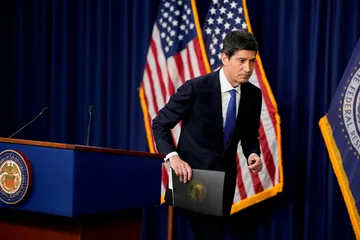
如果美联储本周维持利率不变,沃什将面临一个熟悉的挑战:他必须让投资者放心,央行致力于遏制通胀,同时解释为何官员们选择不加息。
Warsh faces a familiar challenge this week if the Federal Reserve holds interest rates steady: He must reassure investors the central bank is committed to quashing inflation while explaining why officials chose not to raise rates.
这是美联储主席在7月搞砸的同一任务,当时投资者对维持利率不变坦然接受,但对沃什不愿发出借贷成本可能需要进一步上调的信号感到反感。
It’s the same task the Fed chairman fumbled in July, when investors took a rate hold in stride but balked at Warsh’s unwillingness to signal borrowing costs might need to move higher.
在9月加息后,决策者本周预计将再次维持利率不变。这使得市场预期转向12月,此时美联储今年第二次加息已被广泛看好。
Policymakers are once again expected to leave rates unchanged this week after lifting them in September. That’s shifted expectations to December, when the Fed’s second rate hike this year is now heavily favored.
桑坦德美国资本市场首席经济学家斯蒂芬·斯坦利表示:“我预期不变——我认为他们会在12月再次加息。这次会议信息传递的棘手部分在于,沃什要解释为何10月不加息,并在阐述理由后,再解释为何12月加息仍是一个选项。”沃什或许能得到同事的一点帮助。一位或多位官员可能通过对维持利率不变的决定投反对票,为12月加息做开场铺垫。
“I expect no change — I do think that they’ll hike again in December,” said Stephen Stanley, chief economist at Santander US Capital Markets. “The tricky part of the messaging of this meeting is going to be for Warsh to explain why they didn’t go in October and, after making the case there, explain why December is still live.”Warsh could get a bit of help from colleagues. One or more official may make the opening case for a December rate hike by dissenting against the decision to hold.
但他们中没有人能在周三发声,这给沃什带来了挑战,而这可能是他不愿面对的。自5月加入美联储以来,他拒绝就未来利率路径向市场提供指引。
But none of them can speak on Wednesday, presenting a challenge for Warsh that he may not wish to meet. Since joining the Fed in May, he’s refused to provide markets with guidance on the future path of rates.
沃什认为,在其他决策者的有限支持下,前瞻性指引常被误读为承诺采取特定的未来决策,应留待经济危机时期,届时真正的承诺能极大增强美联储行动的效力。但他表示,当官员们进行旨在使经济大体保持平衡的相对微小调整时,提供指引会限制美联储的灵活性。
Warsh believes, with limited support from other policymakers, that forward guidance is too often confused as a promise to take a specific future decision, and should be reserved for times of economic crisis when a real commitment can supercharge the Fed’s actions. But when officials are making relatively small adjustments aimed at keeping the economy roughly in balance, he’s said, providing guidance can limit the Fed’s flexibility.
为此,沃什在未来利率决策方面几乎没有提供任何信息,仅重申了央行将通胀带回 2% 目标的决心。相反,他建议投资者在试图预测利率走向时,应跟随经济数据。
To that end, Warsh has offered almost nothing about future rate decisions beyond reaffirming the central bank’s resolve to bringing inflation back to its 2% target. He’s advised investors, instead, to follow the economic data when trying to predict where rates will go.
这已经引发了麻烦。在 7 月维持利率不变后的新闻发布会上,沃什的措辞极为吝啬,令渴望得到美联储若物价压力恶化将采取行动这一保证的市场陷入动荡。
That’s already led to trouble. During his press conference after the July rate hold, Warsh’s language was so sparing that he roiled markets hungry for some assurance the Fed would take action if price pressures worsened.
沃什在 8 月的一次演讲中修正了路线,透露了更多想法,并在通胀问题上听起来更为强硬。随后在 9 月的会议上,他和同事们通过加息,并利用季度利率预测发出信号,表明在今年剩下的两次会议中还可能再加息一次,以此兑现了这一立场。
Warsh course corrected with an August speech that revealed more of his thinking and sounded tougher on inflation. And in the September meeting that followed, he and his colleagues backed that up by raising rates and signaling, via their quarterly interest-rate projections, that one more hike was likely in the two meetings that remained this year.
随后几周,通胀形势进一步恶化。顽固的高油价已传导至经济各环节,并因原油与成品油价差高企而被放大。这推高了 9 月的消费者价格和批发价格。与此同时,由人工智能基础设施投资驱动的对材料、零部件和电力的旺盛需求,持续推高消费电子产品、个人电脑和电力的价格。
In the weeks that followed, the inflation picture has only worsened. Stubbornly high oil prices have bled through the economy, amplified by high spreads between oil and refined products. That helped lift both consumer and wholesale prices in September. At the same time, voracious demand for materials, components and power driven by investment in artificial intelligence infrastructure continues to push up the prices of consumer electronics, personal computers and electricity.
“他们在9月加息时给出的理由是通胀令人担忧,”美国银行公司美国经济主管阿迪蒂亚·巴夫说,他预测美联储下周将意外加息。“从那时起,通胀总体上变得更糟了。”作为回应,投资者遵循了沃什的建议。他们考量了数据,并开始为10月加息定价——直到关键官员介入以改变预期。在9月29日和10月1日的讲话中,纽约联储主席约翰·威廉姆斯和美联储理事会副主席菲利普·杰斐逊均表示,美联储可以从容考虑下一次何时加息。另一位备受关注的决策者、理事克里斯托弗·沃勒传递了类似的信号。
“When they went in September, the reason given was that inflation is getting concerning,” said Aditya Bhave, head of US economics at Bank of America Corp, who is projecting a surprise rate hike from the Fed next week. “Since then, inflation has been worse on net.”In response, investors followed Warsh’s advice. They considered the data and began pricing in an October rate hike — until key officials intervened to alter expectations. In speeches on Sept. 29 and Oct. 1, New York Fed President John Williams and Philip Jefferson, vice chair of the Board of Governors, each said the Fed could afford to take its time in contemplating when next to raise rates. Governor Christopher Waller, another closely followed policymaker, relayed a similar message.
这一信号似乎异常明确。投资者得出结论:数据已出,前瞻性指引回归——至少针对10月而言——加息概率从70%以上降至30%以下。
The signal seemed unusually clear. Investors concluded the data was out and forward guidance was back — at least for October — and the probability of a hike dropped from above 70% to below 30%.
沃什在10月16日有机会在曼谷举行的国际货币基金组织年会上发言,推动市场预期重回近期通胀数据所指引的轨道。但他拒绝了,称自9月会议以来,世界“总体上符合我们的预期”。当他周三走上麦克风前时,沃什将面临压力,不仅要解释为何维持利率不变,还要理清这一沟通混乱。
Warsh had a chance on Oct. 16 to push markets back in line with the recent inflation data when he spoke at the IMF’s annual meetings in Bangkok. He declined, saying that, since the September meeting, the world had “broadly conformed to our expectations.”When he steps to the microphone on Wednesday, Warsh will come under pressure, not only to explain the rate hold, but also to untangle this communications jumble.
与此同时,政治背景并未消失。尽管他将责任归咎于沃什的同事,但特朗普总统严厉批评了美联储9月的加息举措。就在关键的中期选举前几天,如果本周再次加息,可能会引发白宫的愤怒回应。
The political backdrop, meanwhile, has not gone away. Though he pinned the blame on Warsh’s colleagues, President Donald Trump sharply criticized the Fed’s September rate increase. Another rate hike this week, just days before crucial midterm elections, could trigger a furious response from the White House.
沃什——就像他的前任们一直做的那样——几乎肯定会否认选举对利率决策有任何影响。但他可以提供其他合理的解释。
Warsh — as his predecessors have always done — will almost certainly deny that elections have any influence on rate decisions. But he could offer other reasonable explanations.
与威廉姆斯和杰弗逊一样,他可以强调,在9月举行会议之后,美联储有时间分析12月聚会召开前将到手的数据。到12月时,官员们将已收到他们青睐的9月通胀指标、10月的多项通胀读数、10月和11月的就业数据,以及第三季度GDP的初值。
Like Williams and Jefferson, he could emphasize the Fed has time to analyze the data that will arrive before its December gathering in the wake of the September move. By December, officials will have received their favored measure of inflation for September, multiple inflation readings for October, employment data for October and November, and the first print of third-quarter GDP.
沃什也可能重申他的观点,即长期美债收益率上升正在助美联储一臂之力。在上周出现买入激增之前,10年期美债收益率已在5%以上徘徊了一个月。这推高了从房屋、汽车到信用卡债务等各方面的成本。较高的借贷成本或许也在一定程度上导致股票——尤其是深度卷入AI建设的科技股——从高位回落。自10月6日触及历史纪录高位以来,纳斯达克100指数已下跌逾7%。
Warsh might also reprise his view that a rise in longer-run Treasury yields is helping the Fed’s cause. Until a buying surge last week, yields on 10-year Treasuries had spent a month above 5%. That’s lifted the costs for everything from homes and cars to credit card debt. Higher borrowing costs may also have played a role in bringing stocks, especially those for tech companies heavily involved in the AI build-out, off their highs. The Nasdaq 100 Index has dropped more than 7% since hitting an all-time record on Oct. 6.
但如果沃什愿意为维持利率不变进行辩护,他必须小心,不要对通胀表现得过于乐观,以免引发另一场混乱的市场反应。
But if Warsh is willing to defend the rate hold, he must be careful not to sound too sanguine about inflation to avoid another chaotic market response.
“如果他们不收紧政策,肯定存在风险,可能会导致较高能源价格的溢出效应,”全国保险首席经济学家凯西·博斯贾尼奇表示。“不行动可能会让债券投资者感到不安,并导致长期利率失去锚定。”
“There are certainly risks that if they don’t tighten policy, you could get those spillover effects from higher energy prices,”said Kathy Bostjancic, chief economist at Nationwide. “Not acting could unnerve bond investors and unhinge the long-term rates.”