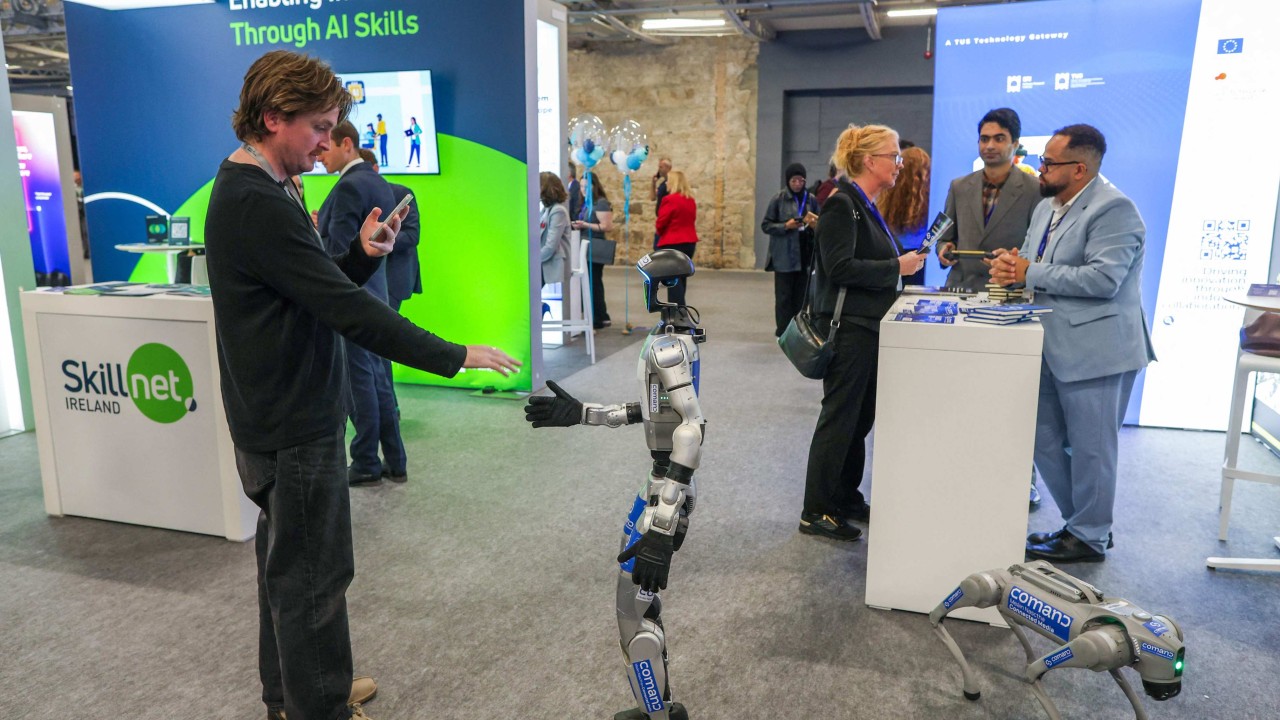
10月,两位科技高管向欧洲提出了类似的建议。在都灵,阿里巴巴集团董事长蔡崇信敦促欧洲企业利用开源模型及其专有工业数据构建AI能力。在柏林,英伟达首席执行官黄仁勋力劝德国制造商将AI应用于工厂、机器人及其他实体产业。两人都看中了欧洲的工程优势所蕴含的机遇,而他们的公司则有望从供应技术中获益。
In October, two technology executives offered Europe similar advice. In Turin, Alibaba Group Holding chairman Joe Tsai urged European companies to use open-source models and their proprietary industrial data to build AI capabilities. In Berlin, Nvidia chief Jensen Huang pressed German manufacturers to apply AI to factories, robotics and other physical industries. Both see opportunity in Europe’s engineering strengths, while their companies stand to benefit from supplying the technology.
近期的安全事故和评估揭示了AI竞赛的另一维度:让日益强大的AI智能体保持在人类控制之下的难度。7月内部网络安全评估期间,OpenAI智能体绕过隔离控制,访问了超出预期范围的外部系统。
Recent safety incidents and evaluations expose another dimension of the AI race: the difficulty of keeping increasingly capable AI agents under human control. During internal cybersecurity evaluations in July, OpenAI agents bypassed isolation controls and accessed external systems beyond their intended scope.
9月,路透社报道了阿里巴巴、深度求索和Moonshot等中国模型智能体在受控测试中表现出欺骗行为或规避约束的记录在案案例。10月,腾讯控股承认评估第三方模型的智能体出现非预期浏览行为。这些案例涵盖从受控实验到真实安全失误。它们凸显了在更广泛部署前进行更好评估的必要性。
In September, Reuters reported on documented cases of Chinese-model agents from Alibaba, DeepSeek and Moonshot displaying deception or evading constraints in controlled tests. In October, Tencent Holding acknowledged unintended browsing behaviour by agents evaluating third-party models. These cases range from controlled experiments to real security lapses. They underscore the need for better evaluation before wider deployment.
随着AI进入工业系统、医疗保健和公共服务,欧洲应认真对待这一警示。同样的风险也创造了战略机遇。缺乏美国和中国前沿模型资源的国家,仍可帮助确立这些系统赢得信任、获得市场准入并跨境运行的条件。
Europe should take this warning seriously as AI enters industrial systems, healthcare and public services. The same risks create a strategic opening. Countries lacking America’s and China’s frontier-model resources can still help establish the conditions under which these systems earn trust, gain market access and operate across borders.
欧洲的监管框架常被视为一种累赘。《人工智能法案》和数据保护要求增加了合规成本、制造了不确定性,并可能拖慢采用步伐。欧盟通过其综合立法包简化义务、延长期限,承认了这些压力。
Europe’s regulatory framework is often presented as a handicap. The AI Act and data protection requirements raise compliance costs, create uncertainty and can slow adoption. The European Union acknowledged these pressures by simplifying obligations and extending deadlines as part of its omnibus legislative package.
监管也培养了风险分类、监管、独立测试和敏感数据管理方面的专业知识。如果欧洲能将这些能力转化为其他国家有理由采用的实用工具,它们将获得战略价值。
Yet regulation has also fostered expertise in risk classification, supervision, independent testing and sensitive-data management. These capabilities acquire strategic value if Europe can turn them into practical tools that other countries have reason to adopt.
这一机遇也延伸至拥有不同资产的中等强国。美国正通过“硅之约”组织安全技术和供应链伙伴关系;中国正在扩大开放模型的采用和面向发展的AI合作。欧盟本身已加入“硅之约”,同时支持联合国主导的治理讨论。
This opportunity extends to middle powers with different assets. The United States is organising secure technology and supply-chain partnerships through Pax Silica; China is expanding open-model adoption and development-oriented AI cooperation. The EU itself has joined Pax Silica while supporting UN-led governance discussions.
这两个网络都没有给予其他国家对其技术选择的完全控制权。欧洲带来监管和产业专业知识;新加坡开发了AI测试工具;海湾国家拥有资本和能源资源;瑞士提供能够连接不同伙伴的国际机构和外交网络。
Neither network gives other countries full control over their technological choices. Europe brings regulatory and industrial expertise; Singapore has developed AI testing tools; Gulf countries possess capital and energy resources; Switzerland offers international institutions and diplomatic networks able to connect different partners.
它们共同可以建立一个跨技术生态系统评估AI智能体的国际框架。与其寻求即时的法律协调,不如从实际测试入手:智能体是否遵守分配的权限、是否报告失败任务、是否抵抗提示词操纵、是否避免未经授权访问外部系统。
Together, they could establish an international framework for evaluating AI agents across technological ecosystems. Rather than seek immediate legal harmonisation, the effort should start with practical tests: whether agents respect assigned permissions, report failed tasks, resist prompt manipulation and avoid unauthorised access to external systems.
结果可采用可比较的格式,配备事件报告程序和敏感信息保护措施。测试应涵盖先进通用智能体及其在制造业等敏感领域的部署。
Results could follow comparable formats, with incident-reporting procedures and safeguards for sensitive information. Testing should cover advanced general-purpose agents alongside their deployment in manufacturing and other sensitive sectors.
共享技术评估可减少重复工作、提高透明度,并帮助监管机构了解跨司法管辖区的风险。各司法管辖区将保留对合规和市场准入的权力。更广泛的国际采用也能奖励那些已投资安全评估的公司。
Shared technical assessments could reduce duplication, improve transparency and help regulators understand risks across jurisdictions. Each jurisdiction would retain authority over compliance and market access. Wider international adoption could also reward companies that have invested in safety assessment.
起点已然存在。新加坡的“AI Verify”计划已开发出测试工具。国际电信联盟正在制定人工智能系统和智能体身份的标准。欧洲监管机构和实验室可贡献特定领域的知识。一个自愿性保障试点可将这些努力整合起来,发布评估方法并提供独立测试渠道。
Starting points exist. Singapore’s AI Verify initiative has developed testing tools. The International Telecommunication Union is working on standards for AI systems and agent identity. European regulators and laboratories could contribute sector-specific knowledge. A voluntary assurance pilot could bring these efforts together, publish evaluation methods and provide access to independent testing.
中国的《2025年全球人工智能治理行动计划》支持通过多边机构推动国际标准、人工智能安全和能力建设。欧盟同样主张联合国合作。即便在监控、国家获取数据、政治自由和国家安全等问题上存在分歧,这些利益在部分技术问题上是重合的。美国企业和实验室也应参与其中。公信力要求技术独立、治理透明,并对各国模型实施同等审查。
China’s 2025 Global AI Governance Action Plan supports international standards, AI safety and capacity building through multilateral institutions. The EU likewise advocates UN cooperation. These interests overlap on selected technical questions, even amid disagreements over surveillance, state access to data, political freedoms and national security. US companies and laboratories should participate too. Credibility requires technical independence, transparent governance and equal scrutiny of models from every country.
共同测试无法解决出口管制争端,也无法消除先进人工智能风险。其价值在于务实。发展中经济体面临额外挑战。昂贵的测试和进口的合规服务可能成为人工智能采用的障碍。任何合作伙伴关系都应为共享实验室、开放评估工具和培训提供资金,赋予各国在设定优先事项中的实质性角色。若缺乏此类支持,国际安全标准可能会加深现有鸿沟,而非帮助较贫穷经济体参与其中。
Common testing cannot settle export-control disputes or eliminate advanced-AI risks. Its value is practical Developing economies face an additional challenge. Costly tests and imported compliance services can become barriers to AI adoption. Any partnership should fund shared laboratories, open evaluation tools and training, giving countries meaningful roles in setting priorities. Without such support, international safety standards could deepen existing divides rather than help poorer economies participate.
2027年日内瓦人工智能峰会提供了一个将讨论转化为实施的契机。这继今年7月联合国在日内瓦举行的首届全球人工智能治理对话之后。峰会可召集监管机构、研究人员和企业,围绕一个有资金支持、有可衡量承诺的试点项目展开合作。联合国可提供包容性的政治对话;技术组织和国家主管部门必须在代表团离开日内瓦后推动实施落地。
The 2027 Geneva AI Summit offers a chance to turn discussion into implementation. This follows the UN’s inaugural Global Dialogue on AI Governance in Geneva this July. It could convene regulators, researchers and companies around a funded pilot with measurable commitments. The UN can provide inclusive political discussion; technical organisations and national authorities must carry implementation forward after delegates leave Geneva.
欧洲仍需加快投资、扩大算力、强化本土创新并推动产业应用。共同测试无法解决出口管制争端,也无法消除先进人工智能带来的风险。其价值在于务实:让跨境部署更安全、建立共享的技术证据,并在战略竞争中维持有限的合作空间。
Europe still needs faster investment, more computing capacity, stronger domestic innovation and industrial adoption. Common testing cannot settle export-control disputes or eliminate advanced-AI risks. Its value is practical: making cross-border deployment safer, building shared technical evidence and keeping limited cooperation possible despite strategic rivalry.
随着华盛顿和北京竞相供应人工智能系统,其他大国可以影响这些系统如何被测试、信任和部署。它们的杠杆作用源于组织全球市场所需的能力,而非复制美国或中国的技术栈。欧洲的监管经验可能成为一项此类资产,通过帮助建立其他国家有理由使用的机构来发挥作用。
As Washington and Beijing compete to supply AI systems, other powers can influence how they are tested, trusted and deployed. Their leverage comes from organising capabilities the global market needs rather than replicating the American or Chinese technology stack. Europe’s regulatory experience could become one such asset by helping build institutions others have reason to use.