
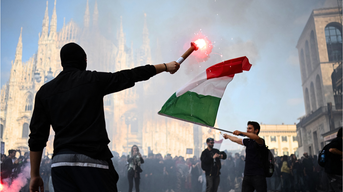
欧洲正处于街头抗议之中。从巴黎到布鲁塞尔,从米兰到里斯本,数十万市民正在抗议生活成本上涨、工资停滞、住房难以负担以及公共服务恶化。在法国,示威演变为燃烧路障、商铺遭洗劫以及公共建筑受袭。其他地方,学生、工人和失望的家庭要求政府兑现长期以来承诺的繁荣与安全。大多数抗议者保持和平,但这场动荡反映出一种日益增长的焦虑:欧洲的经济和社会模式不再兑现承诺。
Europe is in the streets. From Paris to Brussels, Milan to Lisbon, hundreds of thousands of citizens are protesting rising living costs, stagnant wages, unaffordable housing and deteriorating public services. In France, demonstrations have descended into burning barricades, looted businesses, and attacks on public buildings. Elsewhere, students, workers and frustrated families are demanding that their governments deliver the prosperity and security they have long promised. Most protesters are peaceful, but the unrest reflects a growing anxiety that Europe’s economic and social model is no longer delivering.
直接诉求各不相同,但深层问题更为深刻:太多欧洲经济体更擅长保护昨天的安排,而非创造明天的机会。过度监管、僵化的劳动力结构、碎片化的资本市场以及缓慢的决策,制约了维持欧洲慷慨社会承诺所必需的增长。欧洲并未耗尽人才,只是让人才不必要地难以施展。
The immediate grievances vary, but the underlying problem is more profound: too many European economies have become better at protecting yesterday’s arrangements than creating tomorrow’s opportunities. Excessive regulation, rigid labor structures, fragmented capital markets, and slow decision-making constrain the growth necessary to sustain Europe’s generous social promises. Europe has not run out of talent. It has made it unnecessarily difficult for talent to flourish.
作为曾任美国驻欧盟大使,我曾从在硅谷掌管欧洲大型企业美国业务的高管那里亲耳听到这一点。他们的信息极为一致:他们根本无法像在美国那样在欧洲进行创新。这些是欧洲人在描述自身经济环境的局限。他们来到美国,是因为我们的生态系统允许他们行动更快、吸引资本、承担风险、招募人才,并将有前景的想法转化为商业上成功的业务。
Having served as the U.S. ambassador to the EU, I have heard this firsthand from executives running the American operations of major European companies, particularly in Silicon Valley. Their message is remarkably consistent: they simply cannot innovate in Europe the way they can in the United States. These are Europeans describing the limitations of their own economic environment. They come to America because our ecosystem allows them to move faster, attract capital, take risks, recruit talent, and turn promising ideas into commercially successful businesses.
试想其深远影响。欧洲拥有卓越的大学、杰出的工程师、世界级的科学家和成熟的企业。然而,许多同样的企业在想要突破创新边界时,却将目光投向美国。问题不在于想象力,而在于一种经济和监管结构,它往往在想象力尚未转化为商业现实之前,就将其扼杀。
Think about the implications. Europe has extraordinary universities, brilliant engineers, world-class scientists, and sophisticated corporations. Yet many of those same corporations look to America when they want to push the boundaries of innovation. The problem is not imagination. It is an economic and regulatory structure that too often suffocates imagination before it can become commercial reality.
欧洲困境还有另一个令人不适的维度。几十年来,美国提供了军事安全保护伞,使得欧洲各国政府能够投入相对较少的资源用于自身国防。当美国纳税人为庞大的军事能力买单时,许多欧洲国家则将更多资源集中在慷慨的养老金、医疗保健、社会福利和其他国内优先事项上。
There is another uncomfortable dimension to Europe’s predicament. For decades, the United States provided the military security umbrella under which European governments could devote comparatively modest resources to their own defense. While American taxpayers financed enormous military capabilities, many European countries concentrated more of their resources on generous pensions, health care, social benefits, and other domestic priorities.
设想一下,如果过去三十年里,欧洲各国政府被要求将国内生产总值的 4% 或 5% 用于国防开支,它们的社会安全网还会像今天这样吗?也许欧洲人仍会选择广泛的福利、较短的工作周和漫长的假期。但这些安排将需要在税收、借贷、支出和经济增长方面做出艰难得多的财政抉择。
Imagine if European governments had been required to spend 4% or 5% of GDP on defense throughout the past three decades. Would their social safety nets look anything like they do today? Perhaps Europeans would still have chosen extensive benefits, shorter workweeks and lengthy vacations. But those arrangements would have required far more difficult fiscal choices involving taxes, borrowing, spending and economic growth.
美国的军事力量并未创造欧洲的福利国家,但它帮助使该福利国家更容易负担得起。
American military power did not create Europe’s welfare state, but it helped make that welfare state easier to afford.
美国的安全承诺或许也扭曲了欧洲对威胁本身的认知。当保护你的成本主要由他人承担时,就更容易低估危险。如果承认俄罗斯构成的全部威胁,意味着要告诉选民他们必须牺牲珍视的福利来购买坦克、飞机和导弹,为什么要这样做呢?对欧洲人来说,得出华盛顿在夸大危险、让美国花钱、自己再享受一个三小时午餐的结论,要容易得多。
The American security guarantee may also have distorted European perceptions of the threats themselves. When someone else bears much of the cost of protecting you, it becomes easier to discount the danger. Why acknowledge the full threat posed by Russia if doing so means telling voters they must sacrifice cherished benefits to purchase tanks, aircraft and missiles? Far easier for Europeans to conclude that Washington is exaggerating the danger, let America spend the money, and enjoy another three-hour lunch.
波兰和波罗的海国家对俄罗斯的看法总体上有所不同。但在西欧大部分地区,美国的安全保护使得战略上的自满情绪更容易维持。
Poland and the Baltic states have generally viewed Russia differently. But across much of Western Europe, American protection made strategic complacency easier to sustain.
如今,国防账单到了偿还的时候。特朗普总统施压北约盟友承担更大的自身安全责任,欧洲各国政府承诺大幅增加国防开支。这些承诺的出台,正值欧洲经济难以产生为其提供资金所需的增长之际。
Now the defense bill is coming due. President Trump has pressed NATO allies to assume greater responsibility for their own security, and European governments have committed to substantially higher defense spending. Those commitments arrive just as their economies struggle to generate the growth necessary to finance them.
欧洲需要立即进行监管重置,建立更一体化的资本市场,实行灵活的劳动力安排,加快审批许可,确保能源价格可负担,并营造一种让企业家无需跨越大西洋就能打造全球性公司的环境。爱沙尼亚的数字政府、丹麦的劳动力灵活性、爱尔兰的技术投资和波兰的工业发展提供了有益的范例。欧洲缺少的不是另一个委员会或另一份报告。它需要有政治领袖敢于直面阻碍实质性改革的官僚机构、既得利益集团和体制惯性。这就说到了美国。
Europe needs an immediate regulatory reset, more integrated capital markets, flexible labor arrangements, faster permitting, affordable energy and an environment in which entrepreneurs can build global companies without crossing the Atlantic. Estonia’s digital government, Denmark’s labor flexibility, Ireland’s technology investment and Poland’s industrial development offer useful examples. What Europe lacks is not another commission or another report. It needs political leaders willing to confront the bureaucracies, vested interests and institutional inertia that prevent meaningful reform. Which brings us to America.
我们也有自己的抗议、骚乱、经济不平等、政治机能障碍和政府官僚主义。我们远非完美,绝不应假装完美。数百万美国人在住房成本、医疗保健、教育以及担心子女可能无法享有他们曾期待的机会方面举步维艰。我们有感到被抛弃的社区、失去公众信任的机构,以及有时似乎无法弥合的政治分歧。但美国最大的优势从来不是完美。而是我们非凡的自我重塑能力。
We have our own protests, riots, economic inequalities, political dysfunction, and government bureaucracy. We are far from perfect, and we should never pretend otherwise. Millions of Americans struggle with housing costs, health care, education, and the fear that their children may not enjoy the opportunities they once expected. We have communities that feel abandoned, institutions that have lost public trust and political divisions that sometimes seem impossible to bridge. But America’s greatest strength has never been perfection. It is our extraordinary capacity for reinvention.
我们的体制建立在持续变革的可能性之上。我们实验、失败、学习、改进,然后再试一次。昨天的常规智慧会变成明天过时的商业模式。新公司向老牌巨头发起挑战。新技术颠覆整个行业。每一代人都有机会创造前所未有的事物。
Our system is built around the possibility of constant change. We experiment, fail, learn, improve and try again. Yesterday’s conventional wisdom becomes tomorrow’s obsolete business model. New companies challenge established giants. New technologies disrupt entire industries. Every generation has the opportunity to create something that did not exist before.
这一过程可能混乱、破坏性强,有时甚至极不公平。但它创造了成功社会不可或缺的东西:相信明天会比今天更好,且个人有能力帮助实现这一愿景。
That process can be messy, disruptive, and sometimes deeply unfair. But it creates something indispensable to a successful society: the belief that tomorrow can be better than today, and that individuals have the power to help make it so.
这就是美国经济活力与束缚欧洲大部分地区的更僵化结构之间的本质区别。我们的体制不保证成功。它保留了取得非凡成功的可能性,并给予人们反复追求这一目标的机会。
This is the essential difference between American economic dynamism and the more rigid structures that constrain much of Europe. Our system does not guarantee success. It preserves the possibility of extraordinary success, and it gives people repeated opportunities to pursue it.
批评美国贫富差距的人经常指出,我们不断增加的亿万富翁数量,或许未来还会出现万亿富翁,这是体制出错的证据。但非凡财富的单纯存在忽略了一个根本问题。问题不仅仅是最富有的美国人积累了多少财富。而是下一个美国人,仅凭一个想法、才华和决心,是否拥有真正的机会建立非凡的事业。
Critics of American wealth inequality frequently point to our growing number of billionaires, and perhaps someday a trillionaire, as evidence of a system gone wrong. But the mere existence of extraordinary fortunes misses a fundamental point. The question is not simply how much wealth the richest American has accumulated. It is whether the next American, starting with little more than an idea, talent and determination, has a genuine opportunity to build something extraordinary.
我希望每天醒来都相信天空才是极限。我希望每个美国人都拥有同样的机会。不是政府强加的雄心上限,不是预先设定的成功上限,也不是旨在惩罚卓越成就、仅仅因为它卓越的税收制度。
I want to wake up every morning believing the sky is the limit. I want every American to have that same opportunity. Not a government-imposed ceiling on ambition, not a predetermined limit on success, and not a tax system designed to punish exceptional achievement simply because it is exceptional.
如果政府已经决定多少成功才算够,为什么还要冒险、投入资本、加班加点、追求看似不可能的目标?
Why take the risk, invest the capital, work the extra hours or pursue the seemingly impossible if government has already decided how much success is enough?
这并不意味着要无视不平等。如果财富和权力永久集中、既有企业压制竞争、出生贫困的孩子几乎没有切实的晋升前景,这样的经济将背离让美国资本主义发挥作用的根本原则。政府在维护法治、保护竞争、提供教育、维持有效的安全网、确保机会不只保留给已拥有财富或影响力的人等方面发挥着不可或缺的作用。
None of this means ignoring inequality. An economy in which wealth and power become permanently concentrated, established businesses suppress competition and children born into poverty have little realistic prospect of advancement would betray the very principles that make American capitalism work. Government has an essential role in enforcing the rule of law, protecting competition, providing education, maintaining a functioning safety net and ensuring that opportunity is not reserved for those who already possess wealth or influence.
但政府创造机会条件与政府试图指令经济结果之间,有着巨大的差别。
But there is an enormous difference between government creating the conditions for opportunity and government attempting to dictate economic outcomes.
美国应当既不傲慢也不冷漠地回应欧洲的困境。一个繁荣、创新且具备军事能力的欧洲,对我们自身的安全和经济利益至关重要。我们应当鼓励欧洲改革,欢迎欧洲投资,并坚持要求盟友承担更大份额的防务责任。
America should respond to Europe’s difficulties with neither arrogance nor indifference. A prosperous, innovative and militarily capable Europe is essential to our own security and economic interests. We should encourage European reform, welcome European investment and insist that our allies assume a greater share of their defense responsibilities.

然而在国内,我们必须小心,不要引进欧洲正努力摆脱的那些经济僵化因素。我们应当抵制诱惑,不要试图用又一层监管、又一道投资壁垒、又一项让创业回报降低的政策,来解决每一个不完美之处。
At home, however, we must be careful not to import the very economic rigidities Europe is struggling to escape. We should resist the temptation to address every imperfection with another layer of regulation, another barrier to investment or another policy that makes entrepreneurship less rewarding.
我们而应就每一项重大经济政策提出一个更简单的问题:这是让美国人工作、投资、创新、创业、转行、从失败中恢复变得更容易,还是更困难?
We should instead ask a simpler question of every major economic policy: Does this make it easier or harder for Americans to work, invest, innovate, start businesses, change careers and recover from failure?
我们还必须确保晋升的承诺保持可信。这意味着更好的学校、负担得起的住房、竞争性的市场、获得资本的渠道、高效的公共机构,以及远远超出少数繁荣科技中心的机会。
And we must make sure that the promise of advancement remains credible. That means better schools, affordable housing, competitive markets, access to capital, effective public institutions and opportunities extending far beyond a handful of prosperous technology centers.
美国的抗议活动提醒我们,如果太多公民认为体制对他们关闭,仅靠经济增长无法维持公众信心。必须保护和平异议,必须摒弃暴力,必须回应合理诉求。如果大量民众失去对自己能够参与并分享成功的信心,一个充满活力的经济就无法保持政治稳定。
America’s protests remind us that economic growth alone cannot sustain public confidence if too many citizens believe the system is closed to them. Peaceful dissent must be protected, violence must be rejected and legitimate grievances must be addressed. A dynamic economy cannot remain politically stable if large portions of its population lose faith in their ability to participate in its success.
解决不平等的办法不是压制杰出成果。而是防止不平等演变为永久性的排斥。
The answer to inequality is not to suppress exceptional outcomes. It is to prevent inequality from becoming permanent exclusion.
美国梦从来不是保证人人都能致富。它是一种信念:没有人的未来必须由其出生境遇来决定。
The American dream was never a guarantee that everyone would become wealthy. It was the conviction that nobody’s future had to be dictated by the circumstances of their birth.
衡量一个社会是否成功,不在于它多么有效地限制顶层人士的财富,而在于它多么令人信服地为那些渴望跻身其中的人敞开大门。
The measure of a successful society is not how effectively it limits the fortunes of those at the top, but how convincingly it keeps the door open for those who aspire to join them.
欧洲的动荡应当成为一种警示:当期望增长快于经济满足期望的能力,而政治体制更擅长保护既得安排而非创造未来机遇时,会发生什么。
Europe’s unrest should serve as a warning about what happens when expectations grow faster than the economy’s capacity to fulfill them, and when political institutions become better at protecting yesterday’s arrangements than creating tomorrow’s opportunities.
美国最大的资产不是它已经积累的财富。而是那些尚未被创造出来的财富、发现、产业和机遇。欧洲需要重新发现经济可能性。美国需要守护它。
America’s greatest asset is not the wealth it has already accumulated. It is the wealth, discoveries, industries and opportunities that have yet to be created. Europe needs to rediscover economic possibility. America needs to protect it.