塞尔维亚大选显示民族主义民粹主义者的新弱点 在欧洲大部分地区,右翼势力的崛起似乎势不可挡。但在东部,长期执政的民族主义者正在被抛弃。
Serbia’s Election Shows New Vulnerability for Nationalist Populists In much of Europe, the advance of the right has been seen as unstoppable. But in the east, nationalists are being cast aside in places where they long governed.
当匈牙利选民在4月拒绝了他们看似不可战胜的民粹主义领导人欧尔班·维克托时,邻国塞尔维亚的一位年轻设计师安德烈·博罗瓦茨感到欣喜若狂,但他对自己国家的民粹主义强人遭遇同样的命运却持悲观态度。
When voters in Hungary rejected their seemingly invincible populist leader Viktor Orban in April, Andrej Borovac, a young designer in neighboring Serbia, was ecstatic, but he was downbeat about his own country’s populist strongman suffering the same fate.
“这种事绝不可能发生在这里,”他回忆起当时的想法。自2012年以来,武契奇一直是塞尔维亚的主导政治人物,鉴于他在掌权十多年间对安全部队、几乎所有主要媒体、选举委员会以及许多其他机构的控制,他看起来纹丝不动。至少博罗瓦茨当时是这么认为的。
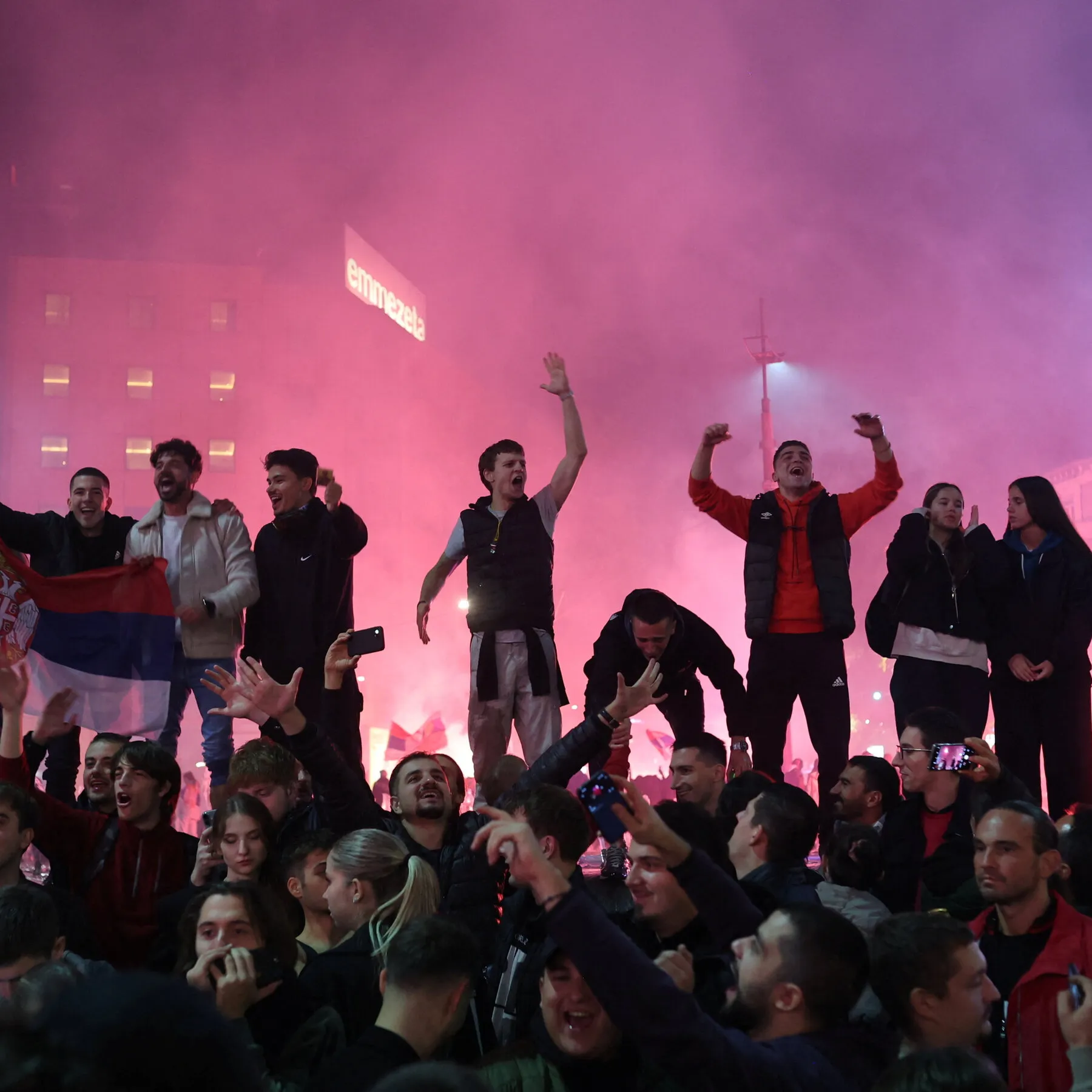
周日晚间,38岁的博罗瓦茨和两位朋友加入了聚集在贝尔格莱德议会大楼附近的数万名民众行列,庆祝武契奇在一场关键的新议会选举中落败。
“That can never happen here,” he recalled thinking. Aleksandar Vucic, Serbia’s dominant political figure since 2012, looked immovable, given his grip — established over more than a decade in power — on security forces, nearly all major media outlets, the electoral commission and many other institutions. Or so he thought. On Sunday night, Mr. Borovac, 38, and two friends joined tens of thousands of people gathered near Parliament in Belgrade, the Serbian capital, to celebrate Mr. Vucic’s defeat in a pivotal election for a new legislature.
“匈牙利之春在秋天来到了塞尔维亚,”周日深夜,博罗瓦茨在挥舞塞尔维亚国旗、燃放红色照明弹的欢庆人群中说道。附近,一群年轻的塞尔维亚人欢呼雀跃,翩翩起舞。
“The Hungarian Spring has come to Serbia in the fall,” Mr. Borovac said late Sunday night, surrounded by revelers waving Serbian flags and setting off red flares. Nearby, a group of young Serbs danced for joy.
在自由派日益担忧右翼民族主义者支持率飙升之际,曾经的共产主义东方——在1989年苏联霸权崩溃后成为民粹主义政治的早期先行者——正显示出风向可以逆转。
At a time of rising liberal fears of surging support for right-wing nationalists, the formerly Communist East, an early pioneer of populist politics after the collapse of Soviet hegemony in 1989, is showing that tides can turn.
今年匈牙利和塞尔维亚的大选,以及2023年波兰大选,让《无权者的力量》一书中大多已被遗忘的自由派希望重燃生机。该书由捷克异见人士瓦茨拉夫·哈维尔于1978年撰写,他后来成为总统,并成为自由民主信仰者的全球偶像。
Elections this year in Hungary and Serbia, and in Poland in 2023, have given new life to mostly forgotten liberal hopes voiced in “The Power of the Powerless,” a 1978 book by Vaclav Havel, the Czech dissident who would later become president and a global icon for believers in liberal democracy.
对猖獗腐败的愤怒把不同且有时相互矛盾的政治力量凝聚在了一起,使它们能够围绕一个引起更广泛人群共鸣的议题开展竞选活动,这些民众对与执政党有关联的人的显赫财富感到不满。
Anger at rampant corruption helped glue together disparate and sometimes contradictory political forces, allowing them to campaign on an issue that resonated with a wider population upset by the conspicuous wealth of people connected to the governing party.
在德国、法国、意大利以及西欧的其他地方,反建制民族主义阵营已经呈现出势不可挡的庞然大物之势,并且它可能在明年的密集选举中表现强劲。但在目前,在东欧及其他地区,它新近显现出了紧张的迹象。
In Germany, France and Italy and elsewhere in Western Europe, the anti-establishment nationalist camp has taken on the appearance of an invincible juggernaut, and it may yet show strongly in a raft of elections next year. But for the moment, in Eastern Europe and beyond, it is newly showing signs of strain.
就在塞尔维亚举行选举的同一天,巴西选民以微弱劣势拒绝了极右翼几乎注定的胜利,并将一场胜利交给了左翼总统路易斯·伊纳西奥·卢拉·达席尔瓦。
On the same day as Serbia’s election, voters in Brazil narrowly rejected an all but preordained victory for the hard right and handed a win to the leftist president, Luiz Inácio Lula da Silva.
塞尔维亚的选举也将加剧特朗普总统的“让美国再次伟大”(MAGA)运动的窘境,该运动在下周预计将是一场艰难的选举到来之前,目前在许多民调中落后。它曾将塞尔维亚领导人视为致力于捍卫国家主权和抵制欧洲自由主义者的同道中人。特朗普的家人曾关注该国的商业交易。
The Serbian election will also add to the discomfit of President Trump’s MAGA movement, which for now lags in many polls ahead of what is expected to be a difficult election next week. It had looked to the Serbian leader as a kindred spirit committed to defending national sovereignty and resisting European liberals. Mr. Trump’s family eyed it for business deals.
选举前几周,与“让美国再次伟大”结盟的美国组织“保守派政治行动会议”(简称CPAC)宣布,它将在巴尔干地区举行首次集会,定于11月在贝尔格莱德举行,“并由亚历山大·武契奇总统担任压轴嘉宾”。CPAC此前将其实施欧洲活动的重心放在匈牙利,并在那里举行大型年度集会,但在欧尔班落败以及新政府停止向帮助资助来自国外的“反觉醒”斗士的各种风险投资的基金会提供国家资金后,该集会目前前途未卜。
A few weeks before the election, the Conservative Political Action Conference, or CPAC, a MAGA-aligned American organization, announced that it would hold its first gathering in the Balkan region, to be held in Belgrade in November and “headlined by President Aleksandar Vucic.”CPAC had previously focused its European activities on Hungary, where it held a big annual gathering, now in doubt following Mr. Orban’s defeat and the end of state funding by the new government to foundations that helped bankroll various ventures by “anti-woke” warriors from abroad.
即便在东欧,势头也并非全都是单向的,而且往往呈之字形发展。今年的斯洛文尼亚议会选举、去年的捷克共和国议会选举以及波兰的总统大选,都见证了民族主义力量的胜出,尽管是以微弱的优势。
Even in Eastern Europe, the momentum has not been all one-way, and it often zigzags. Parliamentary elections in Slovenia this year and the Czech Republic last year as well as a presidential vote in Poland all saw nationalist forces prevail, albeit by tiny margins.
此外,在对抗民族主义右翼的过程中被证明占据上风的力量本身也成分复杂,远非自由派全球主义者。欧尔班被一个由彼得·马加尔领导的新政党击败,马加尔是一位保守派的欧尔班前忠实支持者;武契奇则被一份由学生挑选的候选人名单击败,这些候选人几乎全是政坛新人。
Also, the forces that have proved ascendant against the nationalist right are themselves a mixed bag that are far from being liberal globalists. Mr. Orban was defeated by a new party led by Peter Magyar, a conservative former Orban loyalist, and Mr. Vucic by a slate of student-selected candidates, nearly all newcomers to politics.
柏林全球公共政策研究所所长托斯滕·贝纳表示,来自匈牙利和塞尔维亚两国的经验教训是,“在某个时刻,反现任者的偏见或愤怒会打击这些威尼斯式……威权主义者”,尽管替代方案“不会是完美的自由派”。
Thorsten Benner, director of the Global Public Policy Institute in Berlin, said the lesson from both Hungary and Serbia was that “at some point, anti-incumbency bias or rage hits these authoritarians,” though the alternative “won’t be picture-perfect liberals.”
他补充道:“真正积极的经验教训是,这些威权主义者实际上会在选举中落败并承认失败。”支撑武契奇长期权势的政党名为塞尔维亚前进党,这绝不是一个右翼组织。它一直抨击私有化,并誓言将保持强劲增长的大部分经济交由国家控制。
“The real positive lesson,” he added “is that these authoritarians can actually lose elections and concede defeat.”The political party that underpinned Mr. Vucic’s long ascendancy is called the Serbian Progressive Party, hardly a right-wing outfit. It has railed against privatization and vowed to keep big chunks of the economy, which has grown robustly, under state control.
在创纪录的近百分之七十的投票率之后,他的政党赢得了百分之三十九的选票,而其主要对手——一个从近两年的学生主导抗议活动中脱颖而出的名为“学生名单-学生获胜”的新政治集团则获得了百分之五十二的选票。
After a record turnout of nearly 70 percent, his party won 39 percent of the vote compared with 52 percent for its main opponent, a new political grouping that emerged from nearly two years of student-led protest called Student List-Students Win.
“学生名单”本身也接受了民族主义主题。周日晚间在街头欢呼的许多人做出了塞尔维亚三指礼,这是巴尔干战争期间四处劫掠的塞族军队曾使用的一种爱国手势。
The Student List has itself embraced nationalist themes. Many of the people rejoicing Sunday night on the street flashed the three-finger Serbian salute, a patriotic gesture used by marauding ethnic Serb troops during the Balkan wars of the 1990s.
三十三岁的米利亚娜·佩吉奇是一名青年培训师,她加入了周日晚间的街头庆祝活动。她说,该手势目前的用法并非对黑暗民族主义激情的倒退,而是对被劫持的“塞族符号的重新夺回和重新构架”。
Miljana Pejic, 33, a youth trainer who joined Sunday night’s street celebrations, said the salute in its current use was not a throwback to dark nationalist passions but a “reclaiming and reframing of Serb symbols” that had been hijacked.
她说:“我们热爱我们的国家,所以我们或许是民族主义者,但学生们倡导的一切——法治、反腐败、独立的机构——都符合欧盟的价值观。”
“We love our country so perhaps we are nationalist,” she said, “But everything the students advocate — the rule of law, anti-corruption, independent institutions — is in line with the values of the European Union,” she said.
塞尔维亚于2009年申请加入欧洲联盟,但在武契奇先生的领导下,这一申请大体陷入停滞。他的民族主义和非自由主义政治品牌与他在匈牙利的盟友欧尔班先生十分相似。
Serbia applied to join the European bloc in 2009, but its application largely stalled under Mr. Vucic, whose brand of nationalism and illiberal politics closely resembled that of his ally Mr. Orban in Hungary.
尽管如此,当选民如潮水般的不满情绪最终压倒了两人多年来为将政治竞争环境倾斜向自身(其中不乏操纵媒体)而做出的最大努力时,两人最终还是承认了失败。
In the end, both men nonetheless conceded defeat when it became obvious that the groundswell of discontent from voters had overwhelmed their best, years-old attempts to tilt the political playing field their way, not least by manipulating the media.
在周日晚间的一场早期认输讲话中,武契奇先生感叹“他们推翻了我们”,并将他的失败归咎于隐秘的外国势力。他称,选举结果“是对一场得到多个欧洲国家和美国深层政府——即反对特朗普总统的那一股势力——直接支持的革命的证实”。但正如欧尔班先生一样,他最大的问题在于,这场选举在很大程度上变成了一场针对他个人的全民公投:他已经不再受欢迎,并被指控与歹徒有染,进而成了广大民众(无论其政治倾向如何)所厌恶的对象。
In an early concession speech Sunday evening, Mr. Vucic lamented that “they toppled us,” blaming his defeat on shadowy foreign forces. The election result, he said, “was the verification of a revolution carried out with direct support from various European countries and the American deep state — the one opposed to President Trump.”But his biggest problem, as was Mr. Orban’s, was that the election largely became a referendum on himself: he had stopped being popular and, accused of ties to gangsters, become instead a hate figure for large segments of the population, no matter what their political orientations.
卡内基欧洲研究中心高级研究员、巴尔干问题专家迪米塔尔·贝切夫表示,他对反对派的大幅领先优势感到惊讶,但他补充道:“当权多年后,你就会招人嫌弃。”
Dimitar Bechev, a senior fellow at Carnegie Europe and an expert on the Balkans, said he was surprised by the opposition’s wide margin of victory but added: “You overstay your welcome after many years.”
他说,在匈牙利和塞尔维亚,“当你有一个强人形象时,就会出现一个从自由派到极右翼、深感厌烦的人士组成的联盟”。亲反对派的律师博佐·普雷列维奇周一将武契奇先生比作恶性肿瘤。他在接受反对派友好的电视频道N1采访时表示:“塞尔维亚在经历了一场漫长而严重的疾病、一个正在摧毁社会和国家、让公民互相敌对并挑起战争的毒瘤之后,终于迎来了自身解放。”
In both Hungary and Serbia, he said, “when you have a strongman figure, you have a coalition from liberals to people on the far right fed up.”Bozo Prelevic, an opposition-aligned lawyer, on Monday compared Mr. Vucic to a malignant tumor. “Serbia has freed itself after a long and serious illness, a cancer that was destroying both society and the state, setting citizens against one another and invoking war,” he told N1, an opposition-friendly television channel.
目前尚不清楚“学生名单”获胜的候选人在进入新议会后,在政策方面有何打算。新议会必须在最终选举结果宣布后30天内召开。他们的竞选活动围绕着一个单一的核心议题:赶走武契奇先生,并根除他们所称的由武契奇主导的腐败“黑手党”。由学生活动人士挑选的候选人名单中没有学生,成员包括学者、音乐家、活动人士、演员、运动员以及来自各行各业的其他人士。多数人没有任何政治或从政经验。
It is unclear what the Student List’s victorious candidates want to do in terms of policy once they take their seats in a new Parliament, which must convene within 30 days of the announcement of the final results. Their campaign revolved around a single issue: getting rid of Mr. Vucic and uprooting what they called his corrupt “mafia.”The slate of candidates selected by student activists includes no students and comprises academics, musicians, activists, actors, athletes and others from a wide range of backgrounds. Most have no experience in politics or government.
该名单上的第一位候选人是来自诺维萨德市的心脏病专家伊利亚·斯尔达诺维奇,但他并非拥有制定政策权力、能对同为“学生名单”成员的议员发号施令的等级森严的政党党魁。
The first candidate on the list was Ilija Srdanovic, a cardiologist from the city of Novi Sad, but he is not the head of a hierarchical party with power to set policy and tell fellow Student List members of Parliament what to do.
在选举后的首次公开讲话中,斯尔达诺维奇先生斥责了那些曾质疑这样一个无定形的政治运动能否击败武契奇先生的人。
In his first public remarks after the election, Mr. Srdanovic chided those who had questioned whether such an amorphous political movement could defeat Mr. Vucic.
他对面向塞尔维亚的俄罗斯国有新闻媒体“今日俄罗斯”巴尔干频道(RT Balkan)表示:“我们不仅相信胜利,而且相信胜利是如此清晰,以至于无法被掩盖。”
“We believed not just in victory, but in a victory so clear that it could not be concealed,” he told RT Balkan, a Russian state-funded news outlet aimed at Serbia.
阿利萨·多格拉马齐耶娃自贝尔格莱德、史蒂芬·埃尔兰格自柏林进行了联合报道。
Alisa Dogramadzieva contributed reporting from Belgrade, and Steven Erlanger from Berlin.
本文的早期版本错报了一个美国政治组织的名字,该组织计划于11月在巴尔干地区举办一场活动。该组织是保守派政治行动会议(Conservative Political Action Conference),而不是协商政治行动会议。
An earlier version of this article misstated the name of the American political organization that is planning an event in the Balkan region in November. It is the Conservative Political Action Conference, not the Consultative Political Action Conference.
我们通过更正来承认报道中的失误。如果您发现错误,请通过corrections@nytimes.com与我们联系。了解更多信息。安德鲁·希金斯是《纽约时报》东欧和中欧分社社长,常驻华沙。
We acknowledge mistakes in our reporting with corrections. If you spot an error, please let us know at corrections@nytimes.com. Learn more. Andrew Higgins is the East and Central Europe bureau chief for The Times based in Warsaw.