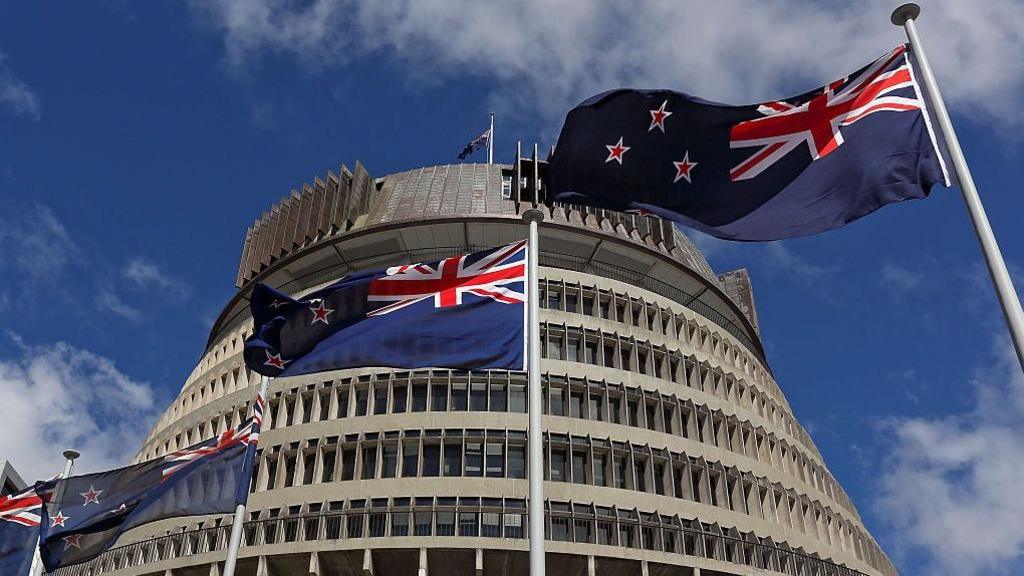
新西兰人将于11月7日前往投票站,选举新政府。生活成本上升、失业和医疗保健是选民的主要关切之一,选民将选举议会议员。
New Zealanders will head to the polls on 7 November to elect a new government. The rising cost of living, unemployment and healthcare are among the main concerns of voters, who will choose members of parliament.
根据选前民调,目前没有明显的领跑者。现任中间偏右的总理克里斯托弗·勒克森在2023年上一次选举中获胜,承诺“构建经济”。以下是关于新西兰2026年大选的所有你需要知道的信息。投票制度如何运作?
There is no clear frontrunner, based on pre-election polls. The incumbent centre-right prime minister, Christopher Luxon, won the last election in 2023 with a promise to "build the economy". Here is everything you need to know about New Zealand's 2026 general election. How does the voting system work?
新西兰每三年举行一次大选,采用混合成员比例代表制,即MMP。
New Zealand holds a general election every three years and uses a Mixed-Member Proportional system or MMP.
每位选民做出两个选择——选举其选区在议会中的代表,以及选择一个政党。在选区中得票最多的候选人获胜,成为议员。
Each voter makes two choices - the representative of their constituency in parliament and a political party. The candidate in a constituency with the most votes wins and becomes an MP.
政党方面,必须获得至少5%的总政党票数才能在议会中获得席位。席位也按比例分配——如果一个政党获得40%的总政党票数,它将获得分配给政党的40%的席位。
Political parties on the other hand must win at least 5% of the total party votes to secure a seat in parliament. The seats are also allocated proportionately - if a party wins 40% of the total party votes, it will get 40% of the seats alloted for parties.
新西兰议会通常有120个席位——71个分配给选区,其余49个按比例分配给政党。新西兰选举很少产生绝对多数,政党会组建联盟以组成政府。
The New Zealand parliament typically has 120 seats - 71 are allocated to constituencies and the remaining 49 are distributed to parties proportionately. New Zealand elections rarely result in an outright majority and parties forge coalitions to form a government.
新西兰于1996年采用MMP,以解决小政党被排除在投票之外的担忧。候选人是谁?
New Zealand adopted the MMP in 1996 to address concerns that small parties were being left out of the vote. Who are the candidates?
现任政府由总理克里斯托弗·勒克森领导,其中间偏右的国家党在2023年执政。它与ACT党和新西兰第一党组成联合政府。
The current government is led by Prime Minister Christopher Luxon, whose centre-right National party came to power following the came to power in 2023. It governs in coalition with the ACT and New Zealand First parties.
勒克森的政党强调经济管理、恢复预算盈余,并扩大新西兰的退休储蓄计划KiwiSaver。主要反对党是中间偏左的工党,由前总理克里斯·希普金斯领导。
His party emphasised economic management, restoring a budget surplus, and expanding KiwiSaver, New Zealand's retirement savings scheme. The main opposition is the centre-left Labour party, led by former prime minister Chris Hipkins.
工党将重点放在降低生活成本、改善医疗和交通,以及投资住房、就业和公共服务上。
Labour has focused on reducing living costs, improving healthcare and transport, and investing in housing, jobs and public services.
国家党的联盟伙伴也有各自的优先事项。由大卫·西摩领导的行动党主张更严格的移民政策,而由温斯顿·彼得斯领导的新西兰优先党则提议修改投票资格,该党建议在新西兰投票应仅限于公民。
National's coalition partners also have their own priorities. ACT, led by David Seymour, has advocated stricter immigration policies, while New Zealand First, led by Winston Peters, has proposed changes to voting eligibility, with the party proposing that voting in New Zealand should be restricted to citizens only.
由克洛·斯瓦布里克和马拉马·戴维森联合领导的绿党是另一支力量。该党围绕财富税、可再生能源和公共服务等议题开展竞选。
The Green Party, co-led by Chlöe Swarbrick and Marama Davidson, is another player. It has campaigned on issues including wealth taxes, renewable energy and public services.
代表毛利人利益的毛利党也在角逐议会席位,其优先事项包括住房、医疗、教育和宪法改革。主要议题是什么?生活成本是新西兰人主要关切的问题。
Te Pāti Māori, which represents Māori interests, is also competing for parliamentary seats, with housing, healthcare, education and constitutional reform among its priorities. What are the main issues? Cost of living is a major concern for New Zealanders.
2026年9月的一项益普索调查发现,63%的受访者将通货膨胀和生活成本列为该国最重要的问题之一。医疗和医院以44%位居第二,经济以34%紧随其后。
A September 2026 Ipsos survey found that 63% of respondents identified inflation and the cost of living as one of the country's most important issues. Healthcare and hospitals came second at 44%, followed by the economy at 34%.
失业问题也日益令人担忧,在同一项调查中,21%的受访者将其列为主要问题。它超过住房,成为新西兰第四重要的问题。结果何时公布?
Unemployment is also a growing concern, with 21% of respondents identifying it as a major issue in the same survey. It overtook housing to become New Zealand's fourth most important issue. When will the results be known?
投票站于11月7日当地时间09:00开放(格林尼治时间11月6日20:00)。投票于19:00结束。提前投票于10月26日开始,海外投票则更早于10月21日开始。
Polling places open from 09:00 local time on 7 November (20:00 GMT 6 November). Voting ends at 19:00. Advance voting started on 26 October while overseas voting began earlier on 21 October.
初步结果将从选举之夜19:00起通过新西兰官方选举结果网站陆续公布。这些初步结果并非官方的最终计票结果。
Preliminary results will be released progressively from 19:00 on election night through New Zealand's official election results website. These initial results will not be the official final count.
选举委员会计划在计票和核验程序完成后,于11月27日公布官方结果。
The Electoral Commission is scheduled to declare official results on 27 November, after the counting and verification process has been completed.
选举之夜若出现明确结果,可能提前显示哪些政党最有可能组建政府。但如果竞争激烈,且没有任何政党赢得绝对多数席位,谈判可能会被推迟。
A clear result on election night could provide an early indication of which parties are best placed to form a government. However, a tight race could delay negotiations if no party wins an outright majority.
因此,新西兰人可能需要等到选举之夜之后,才能知道哪些政党将组建下一届政府,以及谁将在未来三年领导这个国家。
New Zealanders may therefore have to wait beyond election night to find out which parties will form the next government and who will lead the country for the next three years.