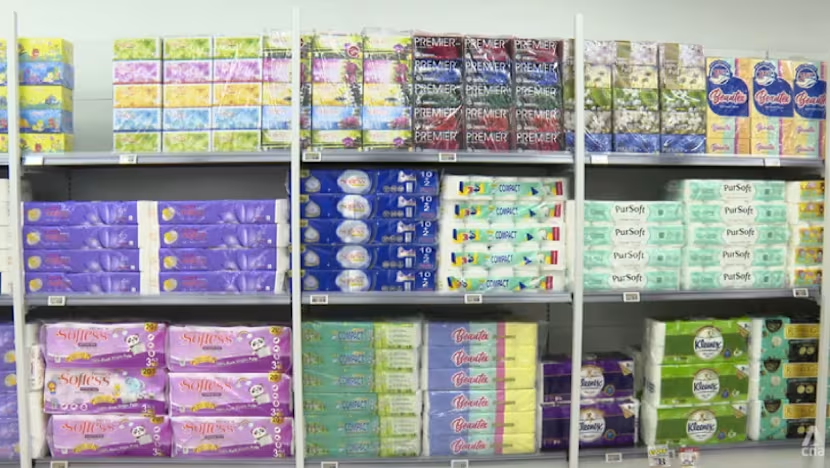
新加坡:我们购物篮里的商品,是否与导致新加坡霾害的火灾有关?
SINGAPORE: Could the products in our shopping baskets be linked to the fires causing haze in Singapore?
随着对印度尼西亚棕榈油和纸浆造纸行业的审视再度升温,这一问题成为焦点。这些行业供应用于食用油、肥皂和纸巾等日常用品的原材料。
The question has come into focus amid renewed scrutiny of Indonesia’s palm oil and pulp-and-paper industries, which supply raw materials used in everyday products such as cooking oil, soaps and tissues.
新加坡已就可能关联跨境霾害的火灾,向印度尼西亚的10家公司发出预防通知。
Singapore has issued preventive notices to 10 companies in Indonesia over fires potentially linked to transboundary haze.
其中包括亚洲浆纸业(APP)的三家木纤维供应商。亚洲浆纸业旗下拥有Paseo和Nice等纸巾品牌。
Among them are three wood-fibre suppliers to Asia Pulp & Paper, which is behind tissue paper brands such as Paseo and Nice.
亚洲浆纸业强化版的新加坡绿色标签认证——涵盖纤维可持续采购、零土地焚烧和泥炭地管理等环保要求——也被实施暂时性限制。根据限制规定,亚洲浆纸业必须每日提交由供应商管理的特许经营区内的火灾热点及灭火措施报告。
APP's enhanced Singapore Green Label certification – which covers environmental requirements including sustainably sourced fibre, zero land burning and peatland management – has also been placed under temporary restrictions Under the restrictions, APP must submit daily reports on fire hotspots and firefighting measures in concession areas managed by the suppliers.
该公司此前曾在2015年严重霾害期间受到审视。当时,新加坡主要零售商因其涉嫌与火灾有关,将与该公司相关的产品下架。
The company previously came under scrutiny during the severe haze in 2015. At the time, major Singapore retailers removed products linked to it from their shelves over alleged connections to fires.
十多年过去了,可持续采购改善了多少?消费者在核查产品来源方面能切实发挥什么作用?
More than a decade on, how much has sustainable sourcing improved, and what role can consumers realistically play in checking where their products come from?
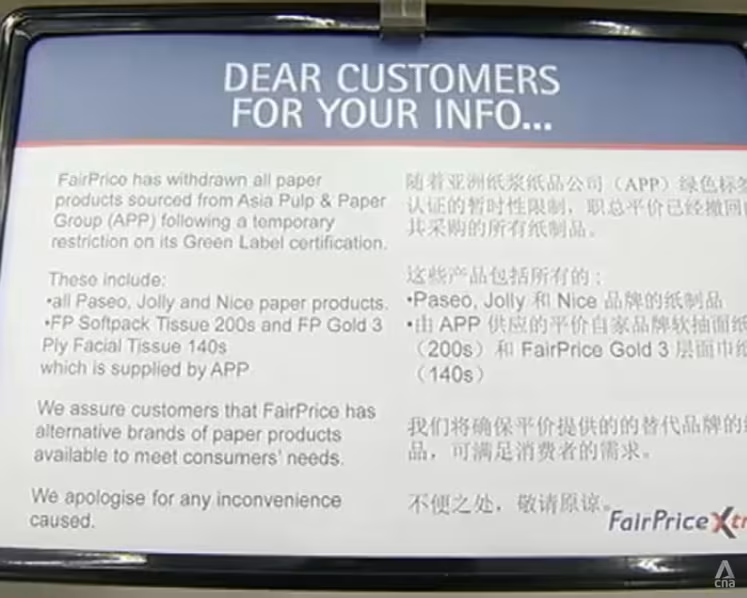
2015年,FairPrice Xtra一家门店张贴告示,通知顾客源自亚洲浆纸业的纸制品已撤柜。
A notice at a FairPrice Xtra outlet in 2015 informing customers that paper products sourced from Asia Pulp & Paper had been withdrawn from shelves.
可持续棕榈油的挑战 在棕榈油行业,推动生产更可持续的努力已持续逾二十年。
CHALLENGES OF SUSTAINABLE PALM OIL In the palm oil industry, efforts to make production more sustainable have been underway for more than two decades.
成立于2004年的可持续棕榈油圆桌会议(RSPO),汇集种植者、制造商、零售商及其他业界参与者,以推动可持续生产。
The Roundtable on Sustainable Palm Oil (RSPO), established in 2004, brings together growers, manufacturers, retailers and other industry players to promote sustainable production.
根据RSPO《2026年影响报告》,2024年经认证的可持续棕榈油产量达1620万吨,约占全球棕榈油供应量的五分之一。
According to RSPO's 2026 Impact Report, 16.2 million tonnes of certified sustainable palm oil were produced in 2024, accounting for about one-fifth of global palm oil supply.
然而,只有约1100万吨(即大约三分之二)通过可持续棕榈油圆桌倡议组织(RSPO)的渠道售出。其余部分则通过其他认证计划进入市场,或作为常规棕榈油出售。
However, only about 11 million tonnes, or roughly two-thirds, were sold through RSPO channels. The remainder entered the market under other certification schemes or was sold as conventional palm oil.
认证的可持续棕榈油尚未成为行业标准,部分原因是成本问题。寻求认证的种植园必须满足环境和劳工要求并接受审核。
Certified sustainable palm oil has yet to become the industry standard, partly because of the cost. Plantations seeking certification must meet environmental and labour requirements and undergo audits.
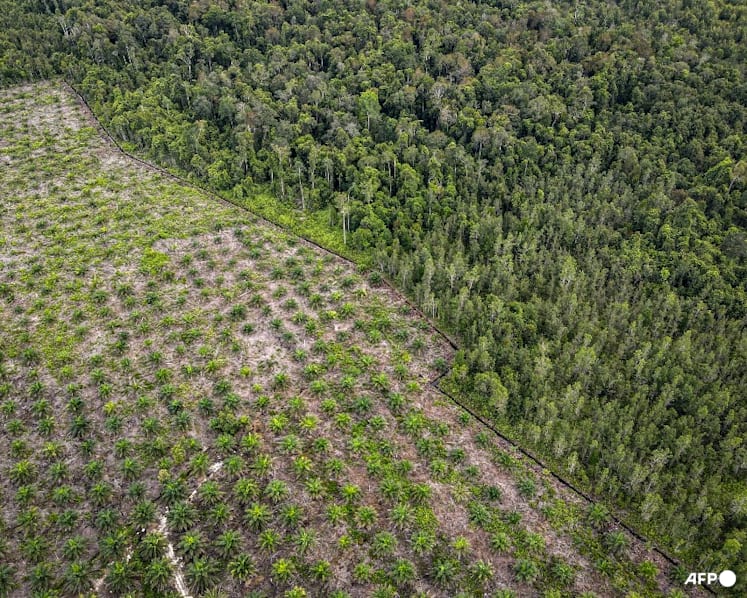
一张摄于2026年2月12日的航拍照片显示了印度尼西亚中加里曼丹省卡普阿斯县达瑙拉瓦的一处紧邻森林的棕榈油种植园。通过供应链追踪棕榈油是另一项挑战。
An aerial picture taken on Feb 12, 2026 shows a palm oil plantation adjacent to the forest in Danau Rawah, Kapuas Regency in Indonesia's Central Kalimantan Province. Tracing palm oil through the supply chain is another challenge.
在到达消费者手中之前,棕榈油可能会经过种植园、压榨厂、精炼厂、加工商和制造商。它还被加工成用于各种产品的不同馏分和衍生物。
Before reaching consumers, palm oil can pass through plantations, mills, refineries, processors and manufacturers. It is also processed into different fractions and derivatives used in a wide range of products.
在每个阶段,企业都必须追踪棕榈油的来源以及其认证状态是否得到保持。它在供应链中流转得越远,这项工作就可能变得越困难。
At each stage, companies must track the oil's origins and whether its certified status has been maintained. The further it moves through the supply chain, the more difficult this can become.
但新加坡国立大学亚洲环境法中心主任、副教授林尤琳(Jolene Lin,音译)表示,技术的进步使得追踪产品变得更容易。
But advances in technology have made tracing products easier, said Associate Professor Jolene Lin, director of the Asia-Pacific Centre for Environmental Law at the National University of Singapore.
她对亚洲新闻台(CNA)表示:“在全球供应链中,问责很困难,特别是当你提出问责落实于生产链的哪个环节这一问题时。”
"With global supply chains, accountability is difficult, especially when you ask the question of where in the production chain does accountability come in," she told CNA.
她重点提到了马来西亚棕榈油认证计划所使用的数字追踪技术,该技术有助于企业识别其棕榈油的产地。
She highlighted digital tracing used by Malaysia's palm oil certification scheme, which helps companies identify where their palm oil originates.
她指出,此类技术“在能够指出特定产品采自何处方面,具有相当高的精确度”。然而,认证计划所提供的可追溯性水平可能会有所不同。
Such technology allows "quite a lot of precision in being able to point out where a particular product was harvested from", she noted. However, the level of traceability offered by certification schemes can differ.
例如,一些棕榈油供应链模式将认证棕榈油与常规棕榈油分开,而另一些模式则允许在受控系统下将两者混合。可持续性标签到底能保证什么?对消费者而言,这些供应链的复杂性往往难以察觉。
For instance, some palm oil supply-chain models keep certified oil separate from conventional oil, while others allow the two to be mixed under controlled systems. WHAT DO SUSTAINABILITY LABELS ACTUALLY GUARANTEE? For consumers, the complexity of these supply chains is often difficult to see.
棕榈油在配料表上可能以植物油、棕榈仁油或其他专业术语出现。配料标签也可能极少提供关于油品产地或是否来自认证供应链的信息。
Palm oil may appear on ingredient lists under names such as vegetable oil, palm kernel oil or other technical terms. Ingredient labels may also provide little information about where the oil was produced or whether it came from a certified supply chain.
南洋理工大学南洋商学院副教授柯文(Kelvin Law,音译)表示,认证通常意味着独立第三方已核查产品或公司是否符合特定的一套要求。
Associate Professor Kelvin Law from Nanyang Technological University's Nanyang Business School said certification generally indicates that an independent party has checked whether a product or company meets a particular set of requirements.
然而,他补充道,这并不一定能确定是哪个种植园提供了原材料,也不一定能确定这些原材料是否来自受火灾影响的地区。认证也不保证未发生环境破坏。
However, it does not necessarily establish which plantation supplied the raw materials or whether those materials came from an area affected by fires. Certification also does not guarantee that no environmental harm has occurred, he added.
同样的问题也适用于浆和纸,对亚太资源(APP)绿色认证的限制显示了当对供应商存疑时,认证机构可施加额外审查。专家表示,消费者在核查某些日用品原材料来源方面面临挑战。零售商能否为确保可持续采购做得更多?专家表示,零售商在确保产品可持续采购方面发挥着作用。
The same questions apply to pulp and paper, with the restrictions on APP's green certification showing how certifiers can impose additional scrutiny when concerns arise over suppliers. Experts say consumers face challenges in verifying where raw materials in some everyday products come from. CAN RETAILERS DO MORE TO ENSURE SUSTAINABLE SOURCING? Retailers have a role to play in ensuring products are sustainably sourced, experts say.

新加坡管理大学城市可持续发展专家、副教授万德伟(Terry van Gevelt,音译)表示,超市处于更有利的位置,可向供应商索取信息。他说:“超市在如何推动供应链方面拥有不成比例的权力。”
Associate Professor Terry van Gevelt, an urban sustainability expert at Singapore Management University, said supermarkets are in a stronger position to demand information from suppliers. "Supermarkets have a disproportionate amount of power in terms of how they can push through the supply chain," he said.
“它们也具备比消费者更深入理解这些标签的能力。”他表示,超市可向供应商施压,要求提供产品产地及是否获得认证的信息,使其成为供应链上有效的施压点。新加坡已采取措施鼓励更负责任的采购。
"They also have the capacity to understand these labels at a greater degree than consumers." He said supermarkets can press suppliers for information on where products come from and whether they are certified, making them an effective point of pressure along the supply chain. Singapore has taken steps to encourage more responsible sourcing.
新加坡可持续棕榈油联盟(SASPO)在2015年霾害引发公众强烈不满后成立,一直与企业合作,提升对认证棕榈油的需求,并改进采购做法。政府最新的行动也让企业问责成为焦点。
The Singapore Alliance for Sustainable Palm Oil (SASPO), formed after public outcry over the 2015 haze, has worked with businesses to increase demand for certified palm oil and improve sourcing practices. The government's latest action has also brought corporate accountability into sharper focus.
除了向10家印尼公司发出预防性通知,国家环境局(NEA)还向10家在新加坡注册的棕榈油和林业公司发出通知,要求其提供信息。一个新的专家小组也将协助调查跨国的企业关系和供应链。
In addition to the preventive notices issued to 10 Indonesian companies, the National Environment Agency (NEA) has issued notices seeking information from 10 Singapore-registered palm oil and forestry firms new specialist panel will also help investigate corporate relationships and supply chains across borders.
完全避用棕榈油是答案吗?完全避用棕榈油未必能减少环境破坏。油棕每公顷产油量远高于大豆或葵花籽等作物。
IS AVOIDING PALM OIL THE ANSWER? Avoiding palm oil altogether may not necessarily reduce environmental damage. Oil palm produces considerably more oil per hectare than crops such as soybean or sunflower.
若要以替代植物油生产同等数量的棕榈油,可能需要大幅更多的土地。
Replacing the same amount of palm oil with alternative vegetable oils could require substantially more land.
因此,全面弃用棕榈油反而可能加剧其他地区的土地压力,包括导致森林砍伐和生物多样性丧失。
A wholesale shift away from palm oil could therefore increase pressure on land elsewhere, including through deforestation and biodiversity loss.
对消费者而言,独立的可持续性认证仍是一个有用的切入点,尽管它无法完整呈现产品的生产过程。
For shoppers, independent sustainability certification remains a useful starting point, although it does not provide a complete picture of how a product was made.
“我们不该指望消费者在选购纸巾时去审核全球供应链。这是不可能的,”罗副教授说。
"We shouldn't expect consumers to audit a global supply chain when we are shopping for tissue paper. That's not possible," said Assoc Prof Law.
不过他表示,消费者有权就企业的采购做法提出质询,尤其是考虑到霾害带来的健康风险。
Still, he said consumers have a right to question companies about their sourcing practices, particularly given the health risks associated with haze.
“承受所有健康后果的是我们。所以我们理应有权提问,即使未必能得到答案,”他说。
“We are the ones suffering all the health consequences. So we should have every right to ask the questions, even though we may not get the answer,” he said.