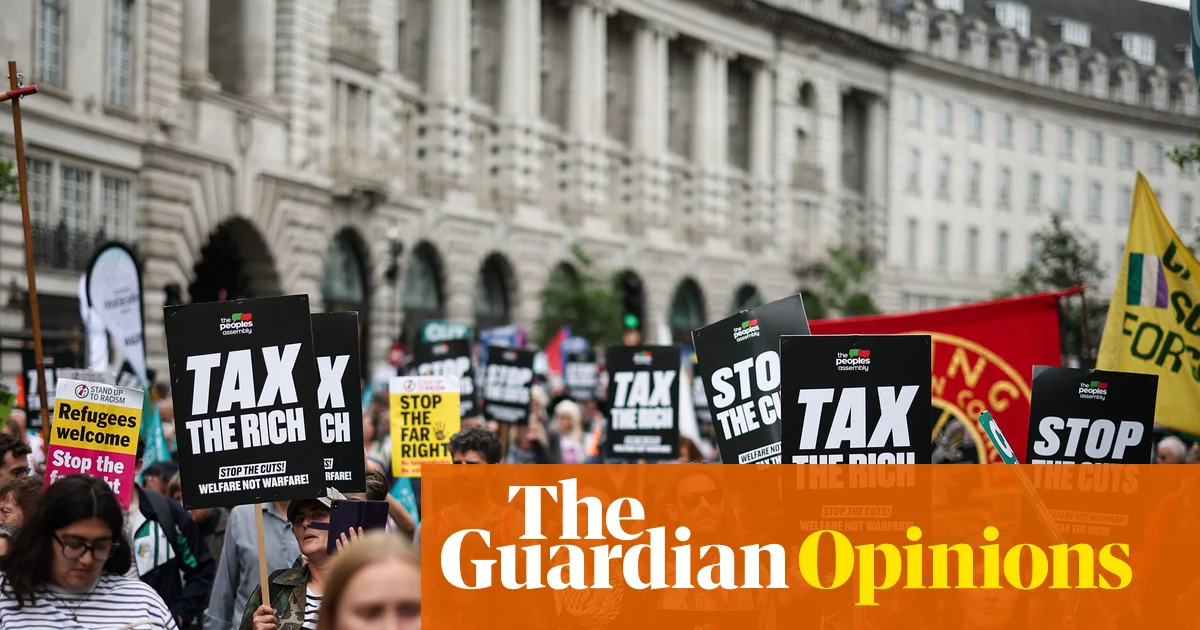
在约翰·希利本周公布的首份预算案中,我们终于能窥见将兑现安迪·伯纳姆“终结新自由主义”承诺的经济政策。还是说看不见?将资本利得税与所得税拉平?已排除。对坐拥1000万英镑以上财富者征收真正的财富税?不在考虑范围内。即便是透露出的银行附加税上调,也只是将其恢复到保守党2023年削减之前的水平。我们可以对支持繁荣商业街、财政下放和长期投资的拟议政策抱有期待,但空气中仍弥漫着一股浓浓的“涓滴经济学”气息。
In John Healey’s first budget this week, we will finally get a sense of the economic policies that will deliver Andy Burnham’s pledge to end neoliberalism. Or will we? Capital gains tax equalised with income tax? Ruled out. A genuine wealth tax on those sitting on over £10m? Off the table. Even the briefed increase in the banking surcharge only takes us back to where it was until the Conservatives cut it in 2023. We can cross our fingers for trailed policies on supporting high streets, financial devolution and longer-term investment, but there is still more than a whiff of trickle-down economics in the air.
民调接连显示,英国公众压倒性支持对超级富豪征收财富税——包括五分之三倾向改革党的选民。我们知道,财富不平等——英国最富有的50个家族拥有的财富超过英国一半人口的总和——正在削弱我们的经济、侵蚀社会结构、动摇民主根基。就在去年,时任大曼彻斯特市长的伯纳姆曾明确承认,我们“过度征税劳动,对财富征税不足”。究竟发生了什么?
Poll after poll shows that the British public overwhelmingly supports wealth taxes on the super-rich – including three in five Reform-leaning voters. We know that wealth inequality – with the richest 50 families in the UK possessing more wealth than half of the UK population – is weakening our economy, eroding our social fabric and undermining our democracy. Just last year, Burnham, then mayor of Greater Manchester, explicitly acknowledged that we have “overtaxed labour and undertaxed wealth”. So what on earth is going on?
为解开这一悖论,我们 Tax Justice UK 团队联手斯特拉斯克莱德大学的研究人员,直击源头。2026 年 2 月至 7 月,在基尔·斯塔默担任首相期间,我们采访了威斯敏斯特、荷里路德和森德的 30 位政客。我们特别确保采访了威斯敏斯特工党的各个派系——作为执政党、也是我们预期倾向于对超级富豪征收更高税收的政党,其观点自然最受关注。
To solve this paradox, our team at Tax Justice UK joined forces with researchers at the University of Strathclyde to go straight to the source. We interviewed 30 politicians across Westminster, Holyrood and the Senedd between February and July 2026, while Keir Starmer was prime minister. We made sure, in particular, that we spoke to every faction of the Labour party in Westminster – as the party in government and the party we would expect to be predisposed to higher taxes on the super-rich, its opinions inevitably garner more interest.
调查结果难得地窥见了英国政治隐秘的运作机制。结果表明,对极端财富征税的障碍,是一种根深蒂固的政治恐惧、经济不确定性、体制俘获和议会自我保全交织的模式。虽然这些访谈是在前任领导层时期进行的,但我们此后与议员们的交谈表明,除非伯纳姆承诺对财富征收更高税收,否则同样的障碍依然存在。
The findings offer a rare glimpse into the hidden machinery of British politics. They suggest that the barrier to taxing extreme wealth is a deeply entrenched pattern of political fear, economic uncertainty, institutional capture and parliamentary self-preservation. And while these interviews took place under the former leadership, our conversations with MPs since suggest that, unless Burnham commits to higher taxes on wealth, the same barriers do hold.
问题并非始于议会。远离绿色长椅,一种敌对氛围被精心营造,让对财富征税显得不可取。亿万富翁掌控的媒体机器不断推波助澜,成功误导普通房主,让他们以为“财富税”针对的是他们普通的家庭住宅,而非离岸资产和数百万英镑的资产。媒体不断宣称亿万富翁因新税离开英国——甚至包括十年前就已离开的人——并引用一份严重失实报告中的“百万富翁外逃”数据。这些叙事是否属实并不重要——它们成功渗透进了议员们的内心深处。
The problem doesn’t start in parliament. Far from the green benches, a hostile climate is carefully cultivated to make taxing wealth seem undesirable. A billionaire-owned media apparatus relentlessly pushes scare stories, successfully tricking ordinary homeowners into thinking a “wealth tax” targets their modest family homes rather than offshore holdings and multimillion-pound assets. Outlets constantly tell us that billionaires are leaving the UK because of new taxes – even those who actually left a decade ago – and quote “millionaire flight” figures from a seriously flawed report. It doesn’t matter if they are not true – these narratives successfully penetrate the hearts and minds of parliamentarians.
无论议员们否决这一前景是因为他们假定公众绝不会接受,不愿面对媒体抨击,还是想要涵盖政策设计每一个微观细节及其潜在影响的更有力实证支撑,这种媒体环境都直接削弱了政治家为财富增税而战的信心。当然,要求提供证据是合理的——但我们很少看到这种审视被应用到国防或人工智能支出上。
Whether MPs are dismissing the prospect because they assume that the public would never go for it, not wanting to face the press backlash, or wanting stronger empirical proof covering every micro-detail of policy design and its potential impacts, this media backdrop directly undermines politicians’ confidence in fighting for higher taxes on wealth. Demands for evidence are reasonable, of course – yet we rarely see this scrutiny applied to spending on defence or AI.
然后是精英资金的直接影响。有一种看法认为,当你足够富有时,不需要在公众旁听席上高声疾呼:你拥有精英渠道。一位工党政治家告诉我们:“如果金融城不喜欢,有时它能以一种无益的方式改变这里的观点。”
Then there is the direct influence of elite money. There is a perception that when you are rich enough, you don’t need to shout from the public gallery: you have elite access. As one Labour politician told us: “If the City doesn’t like it then sometimes it can change views here in a way that’s not helpful.”
在议会内部,这种结构性压力转化为个人的瘫痪。即使私下支持财富税的后座议员,往往也不愿在党领袖之前挺身而出。一位工党议员承认因担心失去地方资金而保持沉默,坦言:“我尽量不做彻头彻尾的反叛者,因为我想为我选区一个真正贫困的地区再争取一个‘引以为豪的地方’奖项。”当选区建设改善被作为遵守党纪的筹码时,依据原则行事就变得复杂了。
Inside parliament, this structural pressure transforms into personal paralysis. Even backbenchers who privately champion wealth taxes often won’t stick their necks out ahead of party leaders. One Labour MP confessed to keeping quiet for fear of losing local funding, admitting: “I’m trying not to be an out-and-out rebel, because I want another Pride in Place award for a really deprived part of my constituency.”When constituency improvements are held hostage to party-line conformity, acting on principle becomes complicated.
然而,这种动态也揭示了一个机会:我们的访谈显示,如果党领导层在财富征税问题上采取果断立场,大多数工党议员会站在其后。此外,考虑到伯纳姆对财富增税的态度比斯塔默热情得多——后者曾臭名昭著地将财富税倡导者称为“推销蛇油的骗子”——议员们发声可能拥有更多空间和机会。
Yet this dynamic also reveals an opportunity: our interviews revealed that if the party leadership took a decisive stand on taxing wealth, most Labour MPs would fall in line behind it. Furthermore, given that Burnham has been far warmer towards higher taxes on wealth than Starmer – who notoriously referred to wealth tax campaigners as “snake oil merchants” – there is potentially more space and opportunity for MPs to speak up.
对于首相本人而言,这或许是他愿意展现勇气的议题,或许不是。当然,危险在于,从内部视角来看,情况截然不同。我们所看到的退缩表明,伯纳姆及其团队已开始屈服于我们的研究所揭示的那些威斯敏斯特式压力。
For the PM himself, this may or may not be an issue he is willing to be brave on. The danger, of course, is that the view looks very different from the inside. The retreat we are seeing suggests that Burnham and his team are already succumbing to the very same Westminster pressures our research laid bare.
人们或许会认为,这种政治抵制的背后,是一种意识形态教条,即对巨额财富征税以某种方式“惩罚成功”。但尽管我们在受访的右翼政客中遇到了这种观点,在其他群体中却鲜少发现其踪迹。这或许值得欣慰:如果许多障碍并非源于意识形态,那么我们便可以采取切实可行的措施。
One might assume that underlying some of this political resistance is an ideological dogma that taxing extreme fortunes somehow “punishes success”. But while we encountered this view among interviewees on the political right, we found little evidence of it elsewhere. Which perhaps is some cause for celebration: if many of the barriers are not ideological, there are practical things we can do.
首先,我们应当牢记,赢得财富税论战不仅是一场政策之争,更是一场叙事之争。正如多位受访政客所指出,经济正义运动必须不再过分聚焦“谁来买单”,而应开始不懈地强调“钱花在何处”。与其关心给亿万富翁征税,民众更关心修缮当地的国民医疗服务体系(NHS)医院、修葺摇摇欲坠的学校,以及投资绿色基础设施。对财富征税必须被积极定位为对共同繁荣的种子投资。积极的、聚焦收益的信息传递,能够剥离那种将税收本质妖魔化为本质上有害的武器化叙事。
First, we would do well to remember that winning the argument on wealth taxation isn’t just a policy battle – it’s a narrative one. As several interviewed politicians noted, the movement for economic justice must stop focusing too heavily on “who pays”, and start relentlessly highlighting “what the money buys”. People are far less interested in taxing billionaires than they are in fixing their local NHS hospitals, repairing crumbling schools and investing in green infrastructure. Taxing wealth must be framed positively as a seed investment in collective prosperity. Positive, gain-focused messaging strips away the weaponised narrative that tax is inherently bad.
归根结底,我们的研究提醒我们,公民社会不能坐等进步派前座议员从上而下推动变革。议会内部的结构性激励机制旨在制造谨慎,而非勇气。
Ultimately, our research reminds us that civil society cannot sit back and wait for a progressive frontbench to deliver change from above. The structural incentives inside parliament are designed to manufacture caution, not courage.
除非我们让政客们觉得无视公众意愿比向超级富豪发起挑战更危险,否则我们将继续看到预算案无法纠正我们税制核心处的根本不公。民调显示,国家已经站在我们这边。现在我们必须把这种默许转化为不可动摇的公众压力,推开伯纳姆此前表态留下的那扇虚掩的门。正如财富一样,真正的改革从未从上层“渗透”下来——它是从基层构建起来的。
Until we make it more dangerous for politicians to ignore the public than to challenge the super-rich, we will continue to get budgets that fail to correct a fundamental unfairness at the heart of our tax system. The polls show the country is already with us. Now we must translate that quiet consent into unshakeable public pressure to push on the door left ajar by Burnham’s previously stated positions. Just like wealth, true reform has never trickled down from the top – it is built from the ground up.