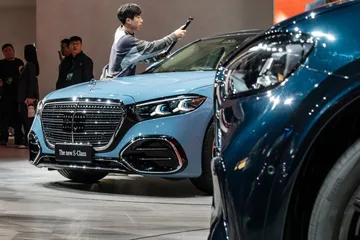
在豪华汽车市场恶化程度超出预期之后,梅赛德斯-奔驰集团股份公司正准备对其中国战略进行更广泛的调整,并坚称其没有计划撤出这个依然是全球最大的汽车市场。
Group AG is preparing a broader overhaul of its China strategy after the luxury-car market deteriorated more sharply than expected, insisting it has no plans to retreat from what remains the world’s largest auto market.
首席执行官康林松表示,中国的市场状况“恶化程度超出了我们今年早些时候的预期”,且下半年的疲软态势进一步加剧。高端市场的低迷尤为严重,梅赛德斯在这一领域历来占据强势地位,并创造了其最为丰厚的利润率之一。
Chief Executive Officer Ola Källenius said conditions in China were “deteriorating beyond what we had thought would happen this year,” with weakness intensifying further in the second half. The downturn has been particularly severe at the upper end of the market, where Mercedes has traditionally held a strong position and generated some of its richest margins.
康林松表示,梅赛德斯正在全面评估其在中国的产品阵容、销售、生产、采购和技术等各个方面,更广泛的战略将于2027年公布。
Källenius said Mercedes is reviewing everything from its product lineup to sales, production, sourcing and technology in China, with a broader strategy to be presented in 2027.
他在周三对分析师表示:“没有任何剧本会将中国置之度外。它必须成为你战略的支柱之一。”这家德国汽车制造商周三表示,此次重新评估正值梅赛德斯推进近年来最大规模的产品和成本调整之际。第三季度营收下降4.5%至307亿欧元(约合341亿美元),而经调整的集团息税前利润下降15%。就在一天前,梅赛德斯下调了业绩预期,理由是中国的低迷态势加剧以及成本上升。
“There is not a play where you put China aside,” he told analysts Wednesday. “It has to be one of the pillars of your strategy.”The reassessment comes as Mercedes pushes ahead with its biggest product and cost overhaul in years. Third-quarter revenue fell 4.5% to €30.7 billion ($34.1 billion), while adjusted group earnings before interest and tax declined 15%, the German carmaker said Wednesday. A day earlier, Mercedes lowered its outlook, citing a worsening China slump and higher costs.
在核心汽车部门,第三季度经调整后的利润缩水过半至5.60亿欧元,利润率从4.8%收窄至2.5%,这反映出来自中国的贡献减弱,以及汇率和新车上市成本的影响。
At the core cars division, adjusted earnings more than halved to €560 million in the third quarter, and the margin narrowed to 2.5% from 4.8%, reflecting the weaker contribution from China as well as currency and product-launch costs.
梅赛德斯第三季度在中国的汽车销量较去年同期下降31%,延续了因豪华车需求走弱、激烈的价格战以及日益成熟的本土竞争对手而导致的下滑态势。
Mercedes vehicle sales in China fell 31% in the third quarter from a year earlier, extending a decline driven by weaker luxury demand, fierce price competition and increasingly sophisticated domestic rivals.
康林松表示,梅赛德斯并未将销量下滑视为将中国降级为小众市场的理由。他指出,除了庞大的市场规模之外,中国因其快速发展的技术生态系统以及中国供应商和汽车制造商不断增长的全球影响力,依然至关重要。
Källenius said Mercedes isn’t treating the decline as a reason to downgrade China to a niche market. Beyond its sheer size, the country remains important because of its fast-moving technology ecosystem and the growing global reach of Chinese suppliers and automakers, he said.
该公司转而试图重塑在当地销售汽车的经济效益。康林松形容,即将推出的纯电动E级轿车是在一张“白纸”的基础上开发出来的,其产品能够更贴合中国买家的需求,并将采购重心大幅转向中国本土。
The company is instead trying to remake the economics of selling cars there. A coming electric E-Class was developed from what Källenius described as effectively a “white sheet of paper,” with a product tailored more closely to Chinese buyers and sourcing shifted much more heavily into the country.
康林松表示,梅赛德斯将实现该车型几乎全部在中国的本地化采购和生产,与上一代车型相比,这将显著降低可变成本。该公司还计划根据当地市场状况为这款车制定切合实际的定价,而不是依赖以往支撑其中国业务的经济模式。
Mercedes will get close to sourcing the vehicle entirely in China for local production, Källenius said, helping cut variable costs significantly compared with its previous model. The company also plans to price the car realistically for local market conditions rather than relying on the economics that underpinned its China business in the past.
尽管如此,康林松排除了一味追求销量的可能性。他说,梅赛德斯不会采取某些竞争对手所奉行的“不惜一切代价甩卖以换取市场份额”的方法,这凸显了在保护品牌与参与全球最激烈价格战之一之间的紧张关系。
Still, Källenius ruled out chasing volume at any cost. Mercedes won’t adopt the “fire sale market-share-at-all-cost” approach pursued by some competitors, he said, underscoring the tension between protecting the brand and competing in one of the world’s fiercest price wars.
首席财务官哈拉尔德·威廉姆表示,公司预计新车型的势头将在2027年进一步增强,同时可变成本也将继续削减。但他拒绝预测届时中国市场会处于什么水平,并称公司将在2月份发布全年财报时给出更清晰的评估。
Chief Financial Officer Harald Wilhelm said the company expects its new-model momentum to strengthen further in 2027, alongside continued reductions in variable costs. But he declined to predict where China will be by then, saying the company would give a clearer assessment when it reports full-year results in February.
这些言论进一步表明,梅赛德斯越来越将中国视为一个结构性挑战,而非暂时的周期性低迷。多年来,首席执行官康林松一直奉行专注于销售更少但更昂贵的汽车的战略,严重依赖S级、迈巴赫、G级和AMG系列等车型来支撑利润率。
The comments add to signs that Mercedes increasingly sees China as a structural challenge rather than a temporary cyclical downturn. For years, Chief Executive Officer Ola Källenius has pursued a strategy centered on selling fewer but more expensive cars, relying heavily on models such as the S-Class, Maybach, G-Class and AMG range to support margins.
随着中国的房地产低迷拖累豪华车消费,且本土竞争对手在价格、软件、电动技术以及日益提升的设计方面向梅赛德斯发起挑战,这一计算变得更加艰难。
That calculation has become harder as China’s property downturn weighs on luxury spending and local rivals challenge Mercedes on price, software, electric technology and increasingly design.
梅赛德斯正通过削减成本和有史以来最大规模的产品攻势作出回应。到2027年底前,将推出40多款全新或改款车型。电动CLA和GLC已经在陆续推出,C级、S级、GLE和GLS的新版本也在旨在重振需求的车型之列。
Mercedes is responding with both cost cuts and its largest-ever product offensive. More than 40 new or refreshed models are due by the end of 2027. The electric CLA and GLC are already being rolled out, with new versions of the C-Class, S-Class, GLE and GLS among the vehicles intended to revive demand.
该公司还将物料成本较2024年水平削减约8%作为目标,并计划在中国进行幅度大得多的削减,同时在收缩专为更强销量而建立的工业产能。目前正通过自愿离职计划来缩减德国本土的员工规模。
The company is also targeting material-cost savings of around 8% compared with 2024 levels, with substantially deeper reductions planned in China, and is shrinking an industrial footprint built for stronger volumes. Voluntary redundancy programs are being used to reduce the German workforce.
这种压力波及了德国整个汽车行业。宝马汽车公司和大众汽车集团也曾发出警告,称中国不断恶化的市场状况正在损害盈利,这凸显了一个曾经带来巨额利润的市场如何以如此快的速度成为该行业最大的结构性问题之一。
The pressure extends across Germany’s auto industry. BMW AG and Volkswagen AG have also warned that deteriorating conditions in China are hurting earnings, highlighting how quickly a market that once generated outsized profits has become one of the sector’s biggest structural problems.
沃尔沃汽车首席执行官哈坎·萨缪尔森上周表示,西方研发的汽车在中国的市场不会再回来了。
Volvo Car AB Chief Executive Officer Håkan Samuelsson said last week that the market for Western-developed cars in China isn’t coming back.