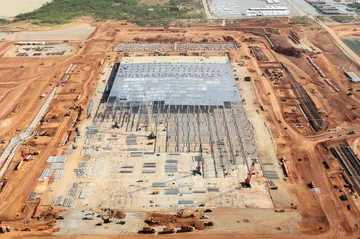
人工智能正在助推美国经济扩张,后者在近几个月显示出加速迹象。经济学家预测,10月29日公布的第三季度数据将显示国内生产总值(GDP)增速达到一年来最快。AI在报告中没有单独的条目,但其影响跨越许多类别。
Artificial intelligence is contributing to a US economic expansion that has shown signs of picking up steam in recent months. Economists forecast that third-quarter figures due Oct. 29 will show the fastest pace of growth in gross domestic product in a year. AI doesn’t have its own item line in the report, but its reach spans across many categories.
AI通过多种渠道对GDP做出贡献,包括科技公司向该技术投入的数十亿美元直接投资、随之而来的数据中心建设热潮,以及由AI推动的股市上涨带来的消费支出提振。
AI contributes to GDP through various channels, including the billions of dollars in direct investments tech companies are pouring into the technology, the accompanying boom in the construction of data centers, and a boost in consumer spending thanks to the AI-fueled stock-market rally.
这仍有争议。一些经济学家认为影响温和,另一些则测算出影响显著。
That’s a matter of debate. Some economists see a modest impact, while others calculate a significant one.
高盛集团给出了相对保守的估计之一。其经济学家称,AI的效应受到一系列因素限制,包括AI相关进口和通胀,以及AI挤占经济其他领域投资的方式。高盛的估计:过去一年AI为GDP贡献了0.1个百分点。从2025年第二季度到2026年第二季度,美国经济增长了2.2%。
Goldman Sachs Group Inc. has one of the more conservative estimates. Its economists say that AI’s effect is limited by a range of factors, including AI-related imports and inflation, and the way AI crowds out investment in other areas of the economy. Goldman’s estimate: AI added 0.1 percentage point to GDP over the last year. From the second quarter of 2025 to the second quarter of 2026, the US economy grew 2.2%.
美联储7月发布的一份工作论文考察了企业在软件、数据中心、电力设施、计算机及外围设备方面的投资,结论是AI相关收益季度间分布不均,但按一年时间计算约占GDP总增幅的五分之一。
A Federal Reserve working paper published in July looking at business investment in software, data centers, power facilities, and computer and peripheral equipment concluded that AI-related gains are uneven quarter to quarter but work out to about one-fifth of overall GDP growth over a year’s time.
全国互保的经济团队估计,过去一年直接AI投资连同溢出效应——如数据中心建设带来的就业增长和AI主导的股市繁荣创造的财富——为GDP增加了0.6个百分点,约占总增幅的四分之一。“这相当有意义,”首席经济学家凯西·博斯特扬西克说。
Nationwide Mutual’s economic team estimates that over the past year direct AI investment alongside spillover effects — such as employment gains related to construction of data centers and the wealth created from an AI-led stock-market boom — added 0.6 percentage point to GDP, or about one quarter of total growth. “It’s pretty meaningful,” said chief economist Kathy Bostjancic.
荷兰国际集团(ING Groep NV)预计,2026年美国经济增长将达到2.4%左右,其中人工智能(AI)的直接和间接影响将贡献约0.8个百分点,约占总增速的三分之一。
ING Groep NV expects US economic growth to around 2.4% in 2026 and for AI’s direct and indirect effects to account for around 0.8 percentage point, or a third, of that total.
彭博经济研究(Bloomberg Economics)认为,官方统计低估了AI对国内生产总值(GDP)的贡献。该机构估计,如果政府统计人员能更好地捕捉该技术的影响,2025年美国经济增速本应达到更强劲的3.1%,而非记录在案的2.3%。
Taking the view that official accounts understate AI’s contribution to GDP, Bloomberg Economics estimates that US growth would have registered a more robust 3.1% in 2025, rather than the recorded 2.3% pace, if government statisticians better captured the impact of the technology.
AI有望成为美国历史上最大规模的投资。哥伦比亚商学院金融与房地产教授斯泰因·范·尼韦尔堡(Stijn Van Nieuwerburgh)预测,2025年至2032年,数据中心、电力基础设施、芯片和计算机设备等AI相关投资总额将达10.3万亿美元,约占美国GDP的3.6%(按年均计算)。这将超过过去在运河扩建、铁路、电气化、公路或互联网基础设施建设中所占的GDP份额。其中规模最大的1870年至1890年铁路建设热潮,约占GDP的2.2%。
AI is poised to become the biggest investment in US history. Stijn Van Nieuwerburgh, a finance and real estate professor at Columbia Business School, projects that AI-related investment in data centers, power infrastructure, chips and computer equipment will total $10.3 trillion from 2025 to 2032, or roughly 3.6% of US GDP per year. That would exceed the share committed in the past to the expansion of canals, railroads, electrification, highways or the infrastructure for the internet. The biggest of those projects, the 1870-1890 railroad buildout, accounted for about 2.2% of GDP.
在软件、数据中心、芯片、计算机和电力基础设施上的支出,在GDP报告中最明显地体现在设备和知识产权这两个条目下。
Spending on software, data centers, chips, computers and power infrastructure appears most obviously in the GDP report under the line items for equipment and intellectual property.
然而,支持AI繁荣的支出中,很大一部分用于在美国境外制造的组件——如芯片、计算机和计算机设备,生产地包括韩国和台湾。政府统计人员统计了在AI商品和服务上的数十亿美元支出,随后从GDP核算中剔除海外生产的部分,因为GDP旨在仅衡量国内生产。因此,AI相关进口降低了经济增长的主要指标。
However, a significant share of spending in support of the AI boom is on components — such as chips, computers and computer equipment — that are manufactured outside the US, in places including South Korea and Taiwan. Government statisticians capture the billions spent on AI goods and services, then remove the portion that is produced overseas from calculations of GDP, which is meant to measure domestic production only. As a result, AI-related imports lower the top-line measure of economic growth.
在所谓的“财富效应”下,当美国人的财富增长时,他们会增加支出,即使其中大部分财富仅存在于账面上。自2024年以来,股市屡创新高,部分得益于投资者对人工智能(AI)的押注。结果是:美国家庭财富在今年第二季度升至历史新高。
In what’s known as the wealth effect, Americans spend more when their wealth is growing, even if much of it is only on paper. Since 2024, the stock market has hit a series of fresh records, driven in part by investor bets on AI. The result: US household wealth rose to a record high in the second quarter of this year.
诚然,并非所有股市涨幅都源于AI,也并非所有人都从股价上涨中获益。最富有的10%人群持有美国约三分之二的家庭财富,而后50%人群仅占总额的2%多一点。
To be sure, not all the stock market gains are from AI, and not everyone benefits from rising equity prices. The wealthiest 10% of people hold about two-thirds of household wealth in the US, while the bottom half account for a little more than 2% of the total.
但这些经济状况较好的美国人往往持有股票,并正在推动消费支出——这是经济增长的关键驱动力。据一些估算,AI对经济增长的贡献中,约有一半来自财富效应。
But those better-off Americans tend to own stocks and are fueling consumer spending, a key driver of economic growth. By some estimates, about half of AI’s contribution to economic growth comes from the wealth effect.
“我们看到高收入家庭继续强劲消费。他们拥有收入并持有财富。中低收入家庭因工资增长疲软和生活成本上升,感受到更大的财务压力,”荷兰国际集团(ING)首席国际经济学家詹姆斯·奈特利(James Knightley)表示。
“We are seeing high-income households continuing to spend strongly. They have the income and hold the wealth. Middle and lower income households are feeling more financial pressure from weak wage growth and the rising cost of living,” said James Knightley, chief international economist at ING.
“这在美化GDP增长。但这不是一切,”凯投宏观(Capital Economics)高级北美经济学家托马斯·瑞安(Thomas Ryan)说。
“It’s flattering GDP growth. It’s not everything,” said Thomas Ryan, senior North American economist at Capital Economics.
经济的其他支柱包括医疗保健行业,过去一年约四分之三的就业岗位创造来自该行业。调查显示,美国工厂近几个月在增加产量的同时也在增聘工人。且美国各行各业的企业都报告利润强劲。即便如此,AI放缓可能对经济产生超出比例的影响。
Other pillars of the economy include the healthcare sector, which made up about three-quarters of all job creation over the past year. Surveys show that US factories have been adding workers in recent months as they increase production. And US companies across an array of sectors are reporting strong profits. Even so, an AI slowdown could have an outsize impact on the economy.
企业投资将会放缓。如果股票价值停止增长或缩水,财富效应就会逆转。这可能对劳动力市场产生影响。例如,人工智能正在支撑建筑行业。自2024年秋季以来,住宅建筑商已裁减了97,500个工作岗位。但数据中心的建设热潮推动非住宅建筑达到历史新高,足以抵消住宅建筑商的岗位流失而有余。这是一个巨大的未知数。
Business investment would slow. If stock values stop growing or shrink, the wealth effect would go into reverse. There could be effects on the labor market. For example, AI is propping up the construction industry. Residential builders have shed 97,500 jobs since the fall of 2024. But the data-center buildout has helped push nonresidential construction to a record high, more than offsetting the decline among homebuilders. That is a great unknown.
Anthropic PBC在计划首次公开募股前提交的公开文件中表示,人工智能既可能构成“对人类的生存风险”,也可能“加速全球增长,并大幅改善世界各地人们的生活质量”。迄今为止,人工智能对生产率的影响一直难以显现。但这项技术似乎已经在影响劳动力市场的某些角落,一些研究表明,它正在减少软件开发、客户支持等领域对早期职业员工的招聘。咨询公司麦肯锡的一项研究预测,未来十年内,人工智能可能迫使约1100万美国劳动者寻找新工作。
In its public filing in advance of a planned initial public offering, Anthropic PBC said AI could both pose “existential risks to humanity” and “accelerate global growth and dramatically improve quality of life for people around the world.”So far, AI’s impact on productivity has been hard to see. But the technology appears to be affecting corners of the labor market already, with some research showing it is reducing hiring for early-career workers in fields such as software development and customer support. A study by consulting firm McKinsey & Co. projected that AI could force about 11 million American workers to find a new job over the next decade.
微软联合创始人比尔·盖茨在8月的一篇文章中写道:“即使在最好的情况下,向这个人工智能新时代的过渡也将是人类历史上最动荡的时期之一。”他写道:“会出现一些新的工作岗位,但如果没有正确的政策,工作岗位将远少于今天现有的数量。”许多经济学家和政策制定者预计,尽管中期会出现干扰,但长期将带来回报。美联储理事会成员莉萨·库克在9月的一次讲话中表示:“从长远来看,我乐观地认为,人工智能驱动的生产率增长能够提高所有美国人的生活水平。”
“Even under the best circumstances, the transition to this new AI era will be one of the most turbulent times in human history,” Microsoft Corp. co-founder Bill Gates wrote in an August essay. “There will be some new jobs,” he wrote, “but without the right policies there will be far fewer than exist today.”Many economists and policymakers are projecting a long-term payoff despite medium-term disruptions. “In the long term, I am optimistic that AI-fueled productivity growth can raise living standards for all Americans,” Lisa Cook, a member of the Federal Reserve’s board of governors, said in a September speech.