用外部选举支出游戏中最大牌人物的话来说,“亲以色列是好的政策,也是好的政治。”然而,在这个中期选举周期,美国以色列公共事务委员会(AIPAC)的策略似乎恰恰相反。与其标志性口号相反,AIPAC的名字已成为各政治派别选民所厌恶的对象,他们对以色列在加沙的种族灭绝感到反感,也对华盛顿在国内成本飙升之际向一个外国政府倾泻军事援助感到不满。
In the words of the biggest name in the outside elections-spending game, “Being pro-Israel is good policy and good politics.”This midterms cycle, however, the American Israel Public Affairs Committee’s strategy seems to suggest the opposite. Contrary to its signature slogan, AIPAC’s name has become anathema to voters across the political spectrum repulsed by Israel’s genocide in Gaza and frustrated by Washington’s outpouring of military aid for a foreign government while domestic costs soar.
于是它转入地下。正如《拦截》在12月报道的那样,AIPAC进入2026年中期选举时回归其战略根基——资助其他团体、联合捐赠者,而不是专注于直接面向候选人的支出。如今,AIPAC已宣布将不再正式背书或直接向候选人捐款。
So it’s going underground. As The Intercept reported in December, AIPAC entered the 2026 midterms by returning to its strategic roots — funding other groups and uniting donors, rather than focusing on direct-to-candidate spending. Now, AIPAC has announced that it will no longer officially endorse or contribute directly to candidates.
尽管进步派欢迎这一宣布,将其视为AIPAC退缩的证据,但这远非AIPAC让步的迹象。预计该团体将继续通过其超级政治行动委员会在选举上大举支出,该委员会利用竞选财务漏洞,在本周期若干场竞选中隐瞒其参与,直到选举已经结束后才曝光。在中东和平基金会主席拉拉·弗里德曼看来,AIPAC选择隐身表明“其品牌在政治上已具有放射性”。
Though progressives welcomed the announcement as evidence of AIPAC’s retreat, it’s far from a sign that AIPAC is backing down. The group is expected to continue spending heavily on elections through its super PAC, which took advantage of campaign finance loopholes to conceal its involvement in several races this cycle until after elections had already passed. To Lara Friedman, president of the Foundation for Middle East Peace, AIPAC’s opting for obscurity shows that “its brand has become politically radioactive.”
但究竟改变了多少?随着AIPAC转变策略,《拦截》的一个新项目揭示了仍有数百名候选人接受其资金,以及这些钱如何为他们带来回报。数据表明,尽管这个亲以色列游说巨头可能被削弱,但它仍然占据主导地位。
But how much has really changed? As AIPAC shifts strategy, a new project by The Intercept reveals the hundreds of candidates still taking its cash, plus how the money paid off for them. The data suggests that though the pro-Israel lobbying giant may be weakened, it’s still dominant.
The Intercept 追踪了该组织及其超级政治行动委员会在今年中期选举中,为让亲以色列候选人上选票所花费的资金——包括其试图避开公众视线的资金。尽管美国以色列公共事务委员会(AIPAC)利用一系列新成立的临时组织和过路财团运作,但它仍直接向 2026 年中期选举注资数百万美元。其支持的候选人通常仍然获胜。
The Intercept tracked how much the group and its super PAC spent on elections to put pro-Israel candidates on the ballot in this year’s midterms — including the money it tried to keep out of the public eye. While AIPAC makes use of a series of new pop-ups and pass-throughs, it still poured millions directly into 2026 midterm races. Its candidates usually still win.
新数据延续了 2024 年的一项项目,当时 The Intercept 记录了 AIPAC 是如何塑造上一届国会的。当时,唐纳德·特朗普正准备重返白宫,而卡玛拉·哈里斯的竞选因公众对拜登政府坚定支持以色列在加沙实施种族灭绝感到幻灭而受阻。对渴望制止暴力的以色列批评者而言,两党看起来同样黯淡,亲以色列游说集团对国会的控制似乎牢不可破。
The new data builds on a 2024 project in which The Intercept documented just how AIPAC shaped the last congressional class. At the time, Donald Trump was preparing for his return to the presidency as Kamala Harris ran a campaign hamstrung by public disillusionment over the Biden administration’s unflinching support for Israel’s genocide in Gaza. To critics of Israel desperate to stop the violence, the two parties looked equally bleak, and the pro-Israel lobby’s grip on Congress appeared unshakeable.
本轮选举周期情况有所不同。全国各地的初选中,承诺切断或限制对以色列军事援助的候选人获胜,现任议员为保住席位纷纷签署阻止武器移交的立法。但这种转变不应被夸大:AIPAC 仍介入了近四分之三的竞选,其支持的候选人获胜次数仍远多于失败。总计,AIPAC 或其超级政治行动委员会“联合民主项目”在今年 473 个待选席位中的 333 个席位上进行了支出。
It’s been different this cycle. Primaries across the country saw candidates win after vowing to cut off or restrict military aid to Israel, and incumbents signed on to legislation blocking weapons transfers in an attempt to keep their seats. But the shift should not be overstated: AIPAC still waded into nearly three-quarters of races, and its candidates still won far more often than they lost. In total, AIPAC or its super PAC, United Democracy Project, spent on 333 of the 473 seats up for election this year.
这些是AIPAC和UDP在竞选中直接花费的资金。前者向候选人捐款,而后者作为AIPAC的主要超级政治行动委员会,则进行独立支出,例如购买广告。这两笔支出构成了亲以色列游说团体已知竞选支出的大部分——AIPAC支出5330万美元,UDP支出6670万美元,而上一轮周期分别为5370万美元和4140万美元。与此同时,这些团体采取了另一种策略:让人更难判断他们实际参与了哪些竞选。
These are the dollars AIPAC and UDP spent directly in races. The former makes contributions to candidates, while the latter, as AIPAC’s leading super PAC, makes independent expenditures, like buying ads. They made up the bulk of the pro-Israel lobby’s known elections spending — $53.3 million from AIPAC and $66.7 million from UDP, compared to $53.7 million and $41.4 million last cycle. Simultaneously, the groups took up another tack: making it harder to tell which races they were actually involved in.
该团体的捐款人向AIPAC未正式背书候选人的竞选中注入资金。AIPAC的董事会主席为一名候选人举办筹款活动,而该候选人宣称该团体并未支持她。在一系列竞选中,直到选举结束后,人们才确定AIPAC在选举中花费了资金。
The group’s donors poured money into races where AIPAC didn’t officially endorse a candidate. AIPAC’s board president hosted a fundraiser for a candidate who swore the group wasn’t backing her. And in a series of races, no one knew for certain that AIPAC had spent on the election until after it was over.
该团体在不同州尝试了不同策略,例如在密歇根州参议院竞选中直接支出,同时在其他几场初选中隐瞒其支出。在这些竞选中,UDP向其他委员会提供资金,包括一系列“临时政治行动委员会”,这些团体在初选前刚刚注册,从而可以推迟披露捐款人,直到选举结束。其中几个团体接受了AIPAC超级政治行动委员会的资金,投放针对批评以色列候选人的广告,然后便消失了。
The group tested different strategies in different states, spending directly in the Michigan Senate race, for example, while concealing its spending in several other primaries. In those races, UDP gave money to other committees, including a series of “pop-up PACs,” groups that registered just before primaries, allowing them to delay disclosing their donors until after the election passed. Several of those groups took money from AIPAC’s super PAC, spent on ads against candidates critical of Israel, and then disappeared.
这些临时团体和中转机构代表了AIPAC最受关注的新策略,但该游说团体及其旗舰超级政治行动委员会仍将大部分支出投入关键竞选和高优先级州。《拦截者》分析了AIPAC在何处采用了哪种策略,UDP资金如何通过临时政治行动委员会流动,以及哪些候选人在初选中获得了最多的AIPAC和UDP资金。
The pop-ups and pass-throughs represent AIPAC’s most talked-about new tactic, but the lobbying group and its flagship super PAC still sunk the bulk of their spending into key races and high-priority states. The Intercept analyzed where AIPAC employed which strategy, how UDP dollars flowed through pop-up PACs, and which candidates received the most AIPAC and UDP cash in their primaries.
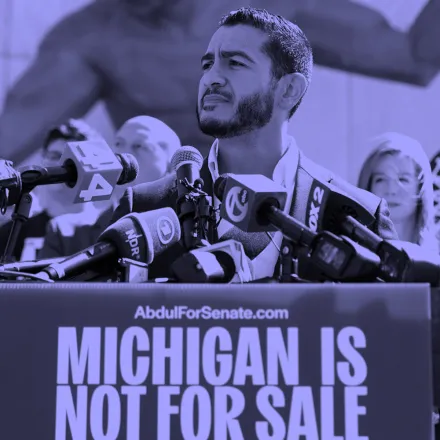
亲以色列游说团体在初选中的最大投入最终令人失望。UDP花费了超过3000万美元投放广告,在密歇根州参议院竞选中攻击民主党候选人阿卜杜勒·埃尔-赛义德,或支持他的对手、众议员海莉·史蒂文斯。如今埃尔-赛义德已成为民主党提名人,UDP还在他与共和党人迈克·罗杰斯的大选对决中与埃尔-赛义德对抗,迄今花费略超50万美元。
The pro-Israel lobby’s biggest investment in the primaries turned out to be a disappointment. UDP spent more than $30 million on ads attacking Democratic candidate Abdul El-Sayed in the Michigan Senate race or backing his opponent, Rep. Haley Stevens. Now that El-Sayed is the Democratic nominee, UDP is also battling El-Sayed in his general election contest with Republican Mike Rogers, spending just over $500,000 so far.
部分由于这笔巨额支出,埃尔-赛义德与史蒂文斯之争成为2026年初选的焦点之战之一,对阵双方分别是一位直言批评亲以色列游说团体、有望成为美国首位穆斯林参议员的候选人,和一位热情接受AIPAC资金、曾有名言“以色列在我的梦中来到我身边”的候选人。这是我们梳理AIPAC和UDP为支持某位候选人、反对某位明确对手而投入资金的关键选战之一。我们没有纳入民主党众议员候选人阿德里安·博阿福,他受益于UDP 570万美元的支出,因为他的马里兰州初选还包括另外23名候选人。
Thanks in part to the deluge of spending, the El-Sayed–Stevens contest was one of the marquee primaries of 2026, pitting a vocal critic of the pro-Israel lobby who could become the first Muslim U.S. senator against an enthusiastic AIPAC cash recipient who famously said: “Israel comes to me in my dreams.”It’s one of the key races where we’re breaking down the money AIPAC and UDP spent in favor of one candidate and against a clear opponent. We’re skipping Democratic House candidate Adrian Boafo, who benefited from $5.7 million in UDP spending, because his Maryland primary included 23 other candidates.
在史蒂文斯和博阿福之后,今年初选中获得AIPAC和UDP资金最多的,是来自密苏里州的温和派民主党人、众议员韦斯利·贝尔,他击退了前众议员科里·布什的挑战,重返众议院(上一周期AIPAC曾花费数百万美元将她赶下台)。若不计UDP支出,贝尔在初选中获得的AIPAC资金超过任何其他民主党人。
After Stevens and Boafo, the top AIPAC and UDP recipient from this year’s primaries was Rep. Wesley Bell, a moderate Democrat from Missouri who fended off a challenge from former Rep. Cori Bush to return to the House (AIPAC spent millions to oust her last cycle). When UDP spending is excluded, Bell received more AIPAC funding in the primaries than any other Democrat.
在共和党方面,最大受益者是特朗普支持的挑战者埃德·加勒林,他在肯塔基州击败了众议员托马斯·马西。马西是一名自由意志主义者,批评一切对外援助——包括对以色列的援助——是AIPAC和UDP所反对的、相对罕见的共和党现任议员。
On the Republican side, the top beneficiary was Ed Gallrein, the Trump-backed challenger who unseated Rep. Thomas Massie in Kentucky. Massie, a libertarian critic of all foreign aid — including to Israel — was the relatively rare Republican incumbent AIPAC and UDP opposed.
亲以色列团体往往支持共和党现任议员。另外两位获得资金最多的受益者是参议员汤姆·科顿,他在阿肯色州轻松赢得初选;以及约翰·科宁,他在得克萨斯州输给了州检察长肯·帕克斯顿。
Often, the pro-Israel groups backed Republican incumbents. Two more top recipients were Sen. Tom Cotton, who easily won his primary in Arkansas, and John Cornyn, who lost to state attorney general Ken Paxton in Texas.
但接受美国以色列公共事务委员会(AIPAC)慷慨资助最多的共和党人——在排除联合民主项目(UDP)后,排在加勒林之前——并没有遇到初选对手。
But the greatest Republican recipient of AIPAC largesse — ahead of Gallrein, when UDP is excluded — did not face a primary opponent.
缅因州共和党参议员苏珊·柯林斯眼下正与民主党候选人特洛伊·杰克逊展开一场势均力敌的普选角逐,她长期以来一直是与亲以色列游说团体立场一致的竞选资金的受益者。去年,Zeteo曾询问她对被以色列军方杀害的美国人有何评论,柯林斯摇了摇头,只说了句:“我支持以色列。”除了本轮选举周期直接用于竞选活动的5360万美元之外,联合民主项目还向民主党初选投入了另外1310万美元,方式是向其他委员会提供资金,而这些委员会的名称或公开宣称的议程均未显示与以色列政策有关。
Republican Sen. Susan Collins of Maine, now facing a tight general election contest against Democratic candidate Troy Jackson, has been a longtime beneficiary of campaign cash aligned with the pro-Israel lobby. Asked by Zeteo last year for her comment on Americans killed by the Israeli military, Collins shook her head and said only: “I am pro-Israel.”On top of the $53.6 million it spent directly on races this cycle, United Democracy Project poured another $13.1 million into Democratic primaries by giving money to other committees whose names or stated agendas indicated no connection to Israel policy.
这1310万美元——是联合民主项目上一周期通过其他团体提供的350万美元的三倍多——帮助资助了今年成立的至少三个临时政治行动委员会。
That $13.1 million, more than triple the $3.5 million United Democracy gave through other groups last cycle, helped fund at least three pop-up PACs that formed this year.
正如《杠杆》近期所强调的,这些团体的名称几乎无法让人了解其政治议程。联合民主项目在芝加哥周边一系列民主党初选中对临时政治行动委员会的支出最多,在那里,“选举芝加哥女性”、“芝加哥进步伙伴关系”和“现在就负担得起的芝加哥!”等名称的团体利用其资金攻击那些以拒绝AIPAC资金或终止美国对以色列军事支持为竞选纲领的候选人。其中几个团体还获得了联合民主项目主要捐助者的资助,其中三个团体在初选结束后关闭,并将资金退还给了联合民主项目。
The groups’ names offered little insight into their political agendas, as The Lever recently highlighted. UDP spent the most on popup PACs in a series of Democratic primaries around Chicago, where groups with names like Elect Chicago Women, Chicago Progressive Partnership, and Affordable Chicago Now! used their funds to attack candidates running on rejecting AIPAC money or ending U.S. military support for Israel. Several of the groups also received funding from major United Democracy Project donors, and three of them shut down after the primaries and gave their money back to United Democracy Project.
在其他案例中,“联合民主项目”资助了与现任或前任众议院民主党领袖有关联的历史悠久的政治行动委员会,例如“勇敢美国”,该组织由国会拉美裔党团的前成员创立。该组织报告今年筹款1220万美元,其中近四分之一来自UDP。UDP提供的份额为280万美元,几乎相当于“勇敢美国”针对达里亚利萨·阿维拉·切瓦利尔花费的290万美元。阿维拉·切瓦利尔是一名民主社会主义者和亲巴勒斯坦活动人士,在纽约击败了现任议员、国会拉美裔党团主席阿德里亚诺·埃斯帕伊拉特。
In other cases, United Democracy Project funded long-established political action committees with ties to current or former House Democratic leaders, like Bold America, which was formed by former members of the Congressional Hispanic Caucus. That group got almost a quarter of the $12.2 million it reported raising this year from UDP. The UDP share, $2.8 million, was nearly equivalent to the $2.9 million Bold America spent against Darializa Avila Chevalier, a democratic socialist and pro-Palestine activist who defeated incumbent and Congressional Hispanic Caucus Chair Adriano Espaillat in New York.
超级政治行动委员会EDW行动基金情况类似。前民主党国会竞选委员会主席谢里·布斯托斯和前众议员安妮·库斯特于2023年底创立了该组织,作为政治行动委员会“选举民主党女性”的分支。与“勇敢美国”一样,EDW行动基金约四分之一的资金来自UDP。它还为“支持选择多数行动”提供了超过80%的资金,这是一个新成立的政治行动委员会,于5月成立,在12场初选中进行了支出。
The super PAC EDW Action Fund was similar. Former Democratic Congressional Campaign Committee Chair Cheri Bustos and former Rep. Annie Kuster formed that group in late 2023 as an offshoot of the political action committee Elect Democratic Women. Like Bold America, EDW Action got about a quarter of its funding from UDP. It also provided more than 80 percent of the funding for Pro-Choice Majority Action, a new PAC that formed in May and spent in 12 primaries.
该组织自称支持民主党女性,但“支持选择多数行动”值得注意的是,其支出用于反对亲巴勒斯坦候选人,例如梅拉特·基罗斯,后者在初选中挑战科罗拉多州民主党众议员戴安娜·德盖特并获胜。
The group presents itself as supporting Democratic women, but Pro-Choice Majority Action notably spent against pro-Palestine candidates like Melat Kiros, who ran a primary challenge against Rep. Diana DeGette, D-Colo., and won.
在给《拦截》的一份声明中,“支持选择多数行动”发言人莱尼·扬驳斥了将该组织描述为“快闪政治行动委员会”的报道,并表示该组织在初选和大选中支持了23名候选人,这些候选人对以色列持有不同观点。
In a statement to The Intercept, Pro-Choice Majority Action spokesperson Lenny Young dismissed reporting characterizing the group as a pop-up PAC and said it had backed 23 candidates with a range of views on Israel across the primaries and general election.
“如果说我们会因为某位民主党女性对以色列的立场——无论哪一边——而否认她当选国会议员,那就完全抓不住重点了,”杨说。“我们希望国会中有更多的民主党女性,因为我们相信这将改善妇女和家庭的生活。就此为止。”Bold America未回应《拦截者》的置评请求。发给Elect Chicago Women、Chicago Progressive Partnership和Affordable Chicago Now!的电子邮件因这些组织已关闭而被退回。
“To suggest that we would deny a Democratic woman from being elected to Congress because of her position on Israel, on either side, misses the whole point,” Young said. “We want more Democratic women in Congress because we believe it would improve the lives of women and families. Period.”Bold America did not respond to The Intercept’s request for comment. Emails to Elect Chicago Women, Chicago Progressive Partnership, and Affordable Chicago Now! bounced back because the groups have shut down.
UDP又向本轮选举周期中未直接在民主党初选中投放广告的团体提供了另外265万美元。
UDP gave another $2.65 million to groups that did not spend directly on ads in Democratic primaries this cycle.
八月,民主联盟项目向一个名为SD PAC(也称拯救民主政治行动委员会)的团体提供了165万美元。该团体注册于2020年,过去曾在大选中支持民主党候选人。该团体今年未直接在民主党初选中进行任何外部支出,但将资金转给了进行此类支出的附属团体——其中一些资助了针对进步派的攻击。
In August, United Democracy Project gave $1.65 million to a group called SD PAC, also known as Save Democracy PAC, which registered in 2020 and has supported Democratic candidates in past general elections. The group did not directly conduct any outside spending in Democratic primaries this year, but it funneled money to affiliate groups that did — some of which funded attacks against progressives.
UDP的另一笔资金接收者是棕榈行动组织,该组织成立于五月,仅在南卡罗来纳州的共和党参议院初选中花钱。该组织曾支持林赛·格雷厄姆参议员,直至他七月去世,随后从UDP获得资金注入,开始支持格雷厄姆的妹妹达琳,为一场特别参议院初选做准备。该组织在大选前最后一次报告中未报告任何额外支出。
The other recipient of money from UDP, Palmetto Action, formed in May and only spent in South Carolina’s Republican Senate primary. The group backed Sen. Lindsey Graham before his death in July, then received a cash infusion from UDP and started supporting Graham’s sister, Darline, ahead of a special Senate primary. The group did not report any additional spending in its last filing due before the general election.
棕榈行动组织、拯救民主政治行动委员会以及EDW行动基金均未回应《拦截者》的置评请求。
Palmetto Action, Save Democracy PAC, and EDW Action Fund did not respond to The Intercept’s requests for comment.
如果说上一轮选举周期AIPAC证明了它能够利用其财务优势来针对以色列批评者,那么本轮选举周期的表现表明,其资金已成为一支摇摇欲坠的超级大国。
If last cycle AIPAC proved that it could leverage its financial advantage to target critics of Israel, its performance this cycle suggests that its money has become a faltering superpower.
新的亲巴勒斯坦团体纷纷涌现,以对抗美国以色列公共事务委员会(AIPAC)的资金投入——尽管它们的资金实力远不如后者。在本轮以美国对以色列在加沙地带实施种族灭绝的军事支持为核心议题的初选中,亲巴勒斯坦候选人往往脱颖而出。
New pro-Palestine groups have sprung up to spend against AIPAC — though their pockets aren’t nearly as deep. When candidates went head-to-head this cycle in primaries defined by U.S. military support for Israel’s genocide in Gaza, pro-Palestine candidates often came out on top.
中东和平基金会的弗里德曼表示,在AIPAC开始直接介入选举支出的几十年之前,“AIPAC一直在暗中运作”。她补充说,其背书曾是“明确但非官方的”,其资金则通过“与大额捐赠者的非正式谅解以及表面上独立但实为盟友的政治行动委员会(PAC)”来运作。
For decades before it started spending directly on elections, “AIPAC operated in the shadows,” Friedman, of Foundation for Middle East Peace, said. Its endorsements were once “clear but unofficial,” she added, and its funding operated through “informal understandings with big donors and allied but ostensibly independent PACs.”
弗里德曼表示,如今“AIPAC正在尝试一种折中路线。它将部分回归幕后——不再直接背书、不再直接捐款——但也将继续直接在选举中施展其影响力,利用过去四年测试和磨练出的战术。”如果说有什么变化,下一轮选举周期可能会见到近期“临时成立PAC”策略的扩张,这将使人们更难察觉AIPAC的介入——等到发觉时已为时过晚。
Today, “AIPAC is trying out a sort of middle road,” Friedman said. “It will return in part to the shadows — no direct endorsements, no direct donations — but it will also continue to flex its power directly in elections, via tactics it has been testing and honing these past four years.”If anything, next cycle could see an expansion of the recent pop-up PAC strategy, making it harder to tell when AIPAC is involved — until it’s too late.