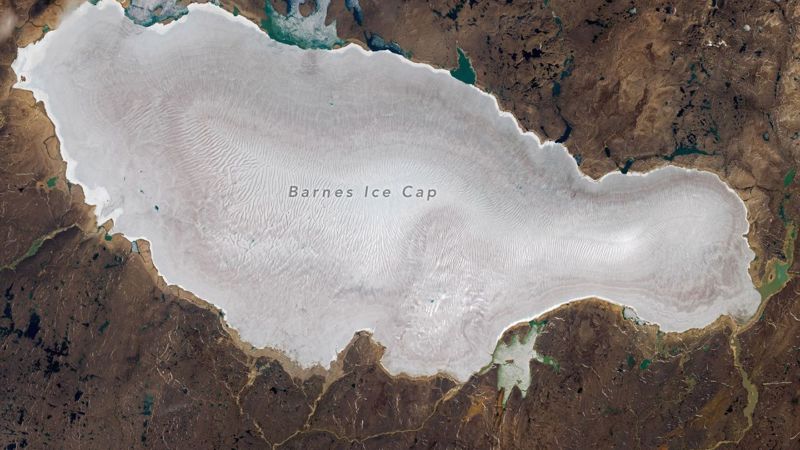
加拿大北极地区一个正在萎缩的冰盖,讲述了一个惊人的故事:人类燃烧化石燃料可能已经阻止了地球的下一个冰河时代。这是最新研究的结论。
A shrinking ice cap in Arctic Canada tells a striking story of how humans may have halted the planet’s next ice age by burning fossil fuels, according to new research.
大约2万年前,曾经巨大的劳伦泰德冰盖从北极圈延伸至伊利诺伊州以南,部分地区厚度达两英里(约3.2公里)。如今仅存的只有位于加拿大努纳武特地区巴芬岛上的巴恩斯冰盖,其面积与特拉华州相当。
Around 20,000 years ago, the once vast Laurentide Ice Sheet sprawled from the Arctic Circle as far south as Illinois and was up to two miles thick in parts. All that remains of it now is the Delaware-sized Barnes Ice Cap on Baffin Island in Canada’s Nunavut territory.
根据发表在《科学》杂志上的新研究,大约2000年前,这个冰盖开始缓慢而稳定地重新扩张。其增长标志着一个新的冰川期(通常称为冰河时代)的开始。
Roughly 2,000 years ago, this ice cap started to slowly and steadily re-expand. Its growth marked the start of a new period of glaciation, commonly called an ice age, according to the new study published in the journal Science.
但大约在1960年,随着人为驱动的气候变化推高夏季气温,冰盖突然开始萎缩。
But around 1960, as human-driven climate change pushed up summer temperatures, the ice cap abruptly began to shrink.
“这只是刚开始,一切都很正常,下一次冰川作用即将发生——但它停止了,”该研究作者、哥伦比亚大学气候学院拉蒙特-多尔蒂地球观测站的地球化学家尼古拉斯·杨说。“这是一个非常有力的例子,说明我们如何震动了这个系统。”数百万年来,地球在冰河时代之间进进出出,这是由地球轨道的变化驱动的,而劳伦泰德冰盖常常是一个起点。
“It was just getting started, everything was normal, the next glaciation was about to happen — and yet it stopped,” said Nicolás Young, a study author and a geochemist at the Lamont-Doherty Earth Observatory, part of the Columbia Climate School. “It’s a very powerful example of how we have jolted the system.”For millions of years the planet has moved in and out of ice ages, driven by shifts in Earth’s orbit, and the Laurentide Ice Sheet often serves as a starting point.
杨和一组科学家想要弄清该冰盖是否曾经比现在更小,然后又重新增长。这是一项艰巨的任务,因为地质线索往往在冰层重新增长时被抹去。
Young and a group of scientists wanted to understand whether the ice sheet had ever been smaller than it currently is and then regrown. It’s a tough task as geological clues are often erased as ice regrows.
然而,巴恩斯冰盖冻结在其基岩上且不滑动,这意味着它保存了生长过程中掩埋的植物。科学家们在冰盖边缘附近采集了早已枯死的苔藓,并对其进行分析,以确定它们最后一次存活的时间。“我们实际上可以追踪冰缘的扩张,因为它逐渐覆盖苔藓并将其(杀死),”杨说。
The Barnes Ice Cap, however, is frozen to its bedrock and doesn’t slide, meaning it has preserved the plants it entombed as it grew. The scientists gathered long-dead mosses near the ice cap’s edge and analyzed them to figure out when they were last alive. “We can actually track the expansion of the ice margin as it’s progressively covering mosses and killing (them),” Young said.
他们还检查了附近的岩石,通过测试一种罕见的放射性同位素来确定这些岩石无冰覆盖的时间长短,这种同位素会在岩石暴露于空气后开始累积。
They also examined nearby rocks to find out how long they had been ice-free by testing for a rare, radioactive isotope that accumulates once a rock is exposed to air.
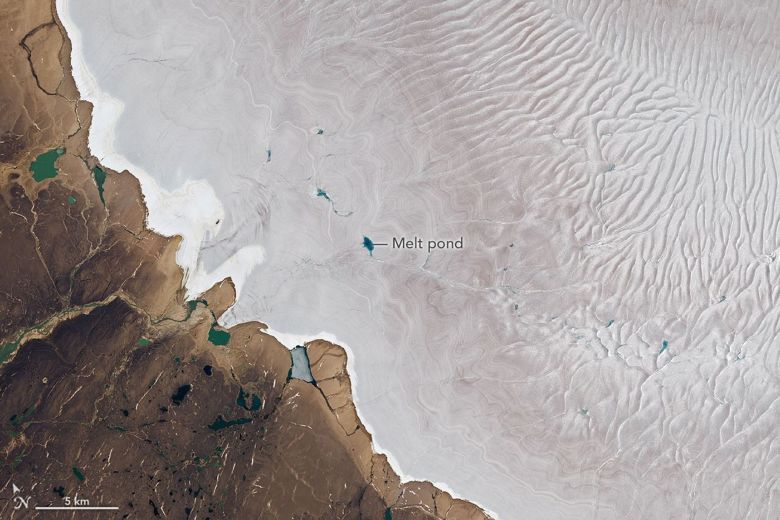
这些技术帮助他们重建了冰盖过去的图景。他们发现,冰盖在约3000年前达到最小规模,随后在约2000年前因气温变冷开始重新增长。
The techniques helped them reconstruct a picture of the ice’s past. They found the ice sheet reached its minimum size about 3,000 years ago, then started to regrow roughly 2,000 years ago in response to cooler temperatures.
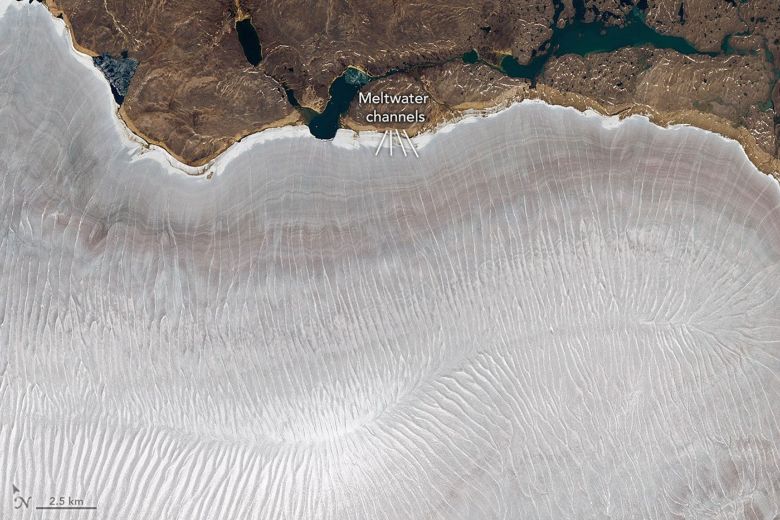
研究作者认为,这种重新增长应被视为一个新冰期的开始,但在20世纪60年代趋势逆转之前,它从未度过初期阶段。“我们认为,这与我们向大气中排放了惊人的温室气体量发生在同一时间绝非巧合,”杨格说。气候污染“从根本上压倒了”那些“倾向于让该地区变冷”的其他机制,他补充道。
This regrowth should be considered the start of a new ice age, but it never got past its infancy before it reversed course in the 1960s, the study authors argue. “We think that it’s no coincidence that that’s at the same time as we’ve pumped an extraordinary amount of greenhouse gases into the atmosphere,” Young said. Climate pollution has “essentially overpowered” the other mechanisms that “want to make that region cool,” he added.
达特茅斯学院地球科学教授梅雷迪斯·凯利未参与该研究,她表示,该研究运用包括“植物新型放射性碳定年法”在内的多种技术,勾勒出了冰盖前进与后退的清晰图景。
Meredith Kelly, an earth sciences professor at Dartmouth College, who was not involved with the study, said the research applies techniques including “novel radiocarbon dating of plants” to set out a good picture of the ice cap’s advance and retreat.
她补充道,关于巴恩斯冰盖的前进预示着一个冰期开始的结论可能是正确的,但若能与同一时期也在前进的其他地区冰川进行对比,将有助于更深入地了解其中的机制。
The conclusions that the advance of the Barnes Ice Cap suggests the start of an ice age could be right, she added, but a comparison with glaciers in other regions that were also advancing at a similar time would help to understand more about the mechanisms at play.
波茨坦气候影响研究所物理学家安德烈·加诺波尔斯基表示,关于碳污染是否可能显著推迟下一个冰期的到来,已有大量研究。
Andrey Ganopolski, a physicist at the Potsdam Institute for Climate Impact Research, said there has been plenty of research into whether carbon pollution may significantly delay the onset of the next ice age.
但他补充道,其他建模研究,包括他自己的研究,得出的结论是,即使没有全球变暖,下一个冰期也要在5万年左右才会到来。巴恩斯冰盖的增长“不足以支持‘一个新的冰期循环已经开始随后又被中止’这一结论”,他说。
But, he added, other modeling studies, including his own, conclude the next ice age wouldn’t be expected for another 50,000 years or so — even without global warming. The growth of the Barnes Ice Cap “is insufficient to support the conclusion that a new glacial cycle had already begun and was subsequently aborted,” he said.
然而,扬及其合著者认为,劳伦泰德冰盖的首次重新增长就算作一个冰期的开始,我们不必等到巨大冰盖形成才宣布冰期已经开始。
Young and co-authors, however, argue the first regrowth of the Laurentide Ice Sheet counts as the start of an ice age and we don’t need to wait for the formation of enormous ice sheets to declare one has begun.
扬说,这些发现还为20世纪70年代一个颇具争议的时期提供了新的视角,当时一些科学家提出,世界可能正在进入一个新的冰期。这一观点被媒体采纳,包括《新闻周刊》上一篇如今已臭名昭著、标题为《冷却的世界》的文章,该文警告说,随着世界变冷,将出现粮食危机。
The findings also throw new light on a controversial period in the 1970s, when some scientists suggested the world might be entering a new ice age, Young said. This idea was picked up by the media, including a now infamous article in Newsweek with the headline “The Cooling World,” which warned of a food crisis as the world chilled.
气候变化怀疑论者和否认者经常引用这一时期来诋毁科学家,称他们危言耸听、判断错误。但扬认为,这项新研究表明他们是对的,“一次新的冰川作用实际上已经开始了;它只是刚刚起步,而现在它已经停止了。”
It’s a period climate change skeptics and deniers often reference to discredit scientists as alarmist and incorrect. But Young believes the new research suggests they were right, that “a new glaciation actually had started; it was just getting going, and now it’s stopped.”
扬告诫说,这项研究不应被解读为暗示全球变暖“使人类免于一个冰期”。冰川作用期是在非常长的时间尺度上发生的。他说,冰盖要接近到足以影响人们日常生活的规模,需要数千年的时间。
Young cautioned that the study should not be interpreted as suggesting global warming has “saved humanity from an ice age.”Periods of glaciation happen over very long time frames. It would have taken thousands of years before the ice cap would have approached a size where it would have affected people’s everyday lives, he said.
相反,这些发现揭示了人类将地球系统推离正轨的程度有多么深刻。扬说,我们不仅避免了这个冰期,而且“我们可能已经把未来任何其他冰川作用的机会推迟了非常、非常长的时间。”
Instead, the findings reveal just how profoundly humans have pushed Earth’s systems out of whack. Not only have we avoided this ice age, Young said, but “we’ve probably put off any chance of any other future glaciation for a very, very long time.”