华尔街顶尖的另类资产管理公司正通过拥有AI热潮背后的基础设施并锁定长期租约租金,来押注AI繁荣。
Street's top alternative asset managers are betting on the AI boom by owning the infrastructure behind it and locking in rent through long-term leases.
随着人们日益担忧处于AI基础设施繁荣核心地位、负债累累的新型云计算公司可能违约,以及该领域的巨额支出可能无法带来足够回报,行业高管们也在强调他们专注于高质量、长期租户。
With concerns growing that debt-laden neocloud companies at the heart of the AI infrastructure boom could default and that massive spending on the sector may fail to deliver adequate returns, industry executives are also emphasizing their focus on high-quality, long-term tenants.
蓝 owl (OWL.N) 联席首席执行官马克·利普舒尔茨表示,公司拥有对数字经济增长至关重要的实体基础设施。
Blue Owl (OWL.N) Co-CEO Marc Lipschultz said the company owns physical infrastructure critical to the growth of the digital economy.
利普舒尔茨说:“我们通常将其出租15至20年,并设有年度租金递增条款,为投资者创造高度可预测且不断增长的租金收入流。”他补充称,蓝 owl 专注于限制风险,包括与短期租约和代币定价相关的风险。
"We typically lease it out for 15 to 20 years with annual rent escalators, creating a highly predictable and growing stream of rental income for our investors," Lipschultz said, adding Blue Owl focuses on limiting risks including those tied to short-term leases and token pricing.
周四,另类资产管理公司股价上涨,蓝 owl 上涨6.5%,Ares Management 上涨2%。KKR 和黑石各上涨2.5%,阿波罗全球管理上涨3.7%。
Shares of alternative asset managers rose on Thursday, with Blue Owl up 6.5% and Ares Management gaining 2%. KKR and Blackstone each rose 2.5%, while Apollo Global gained 3.7%.
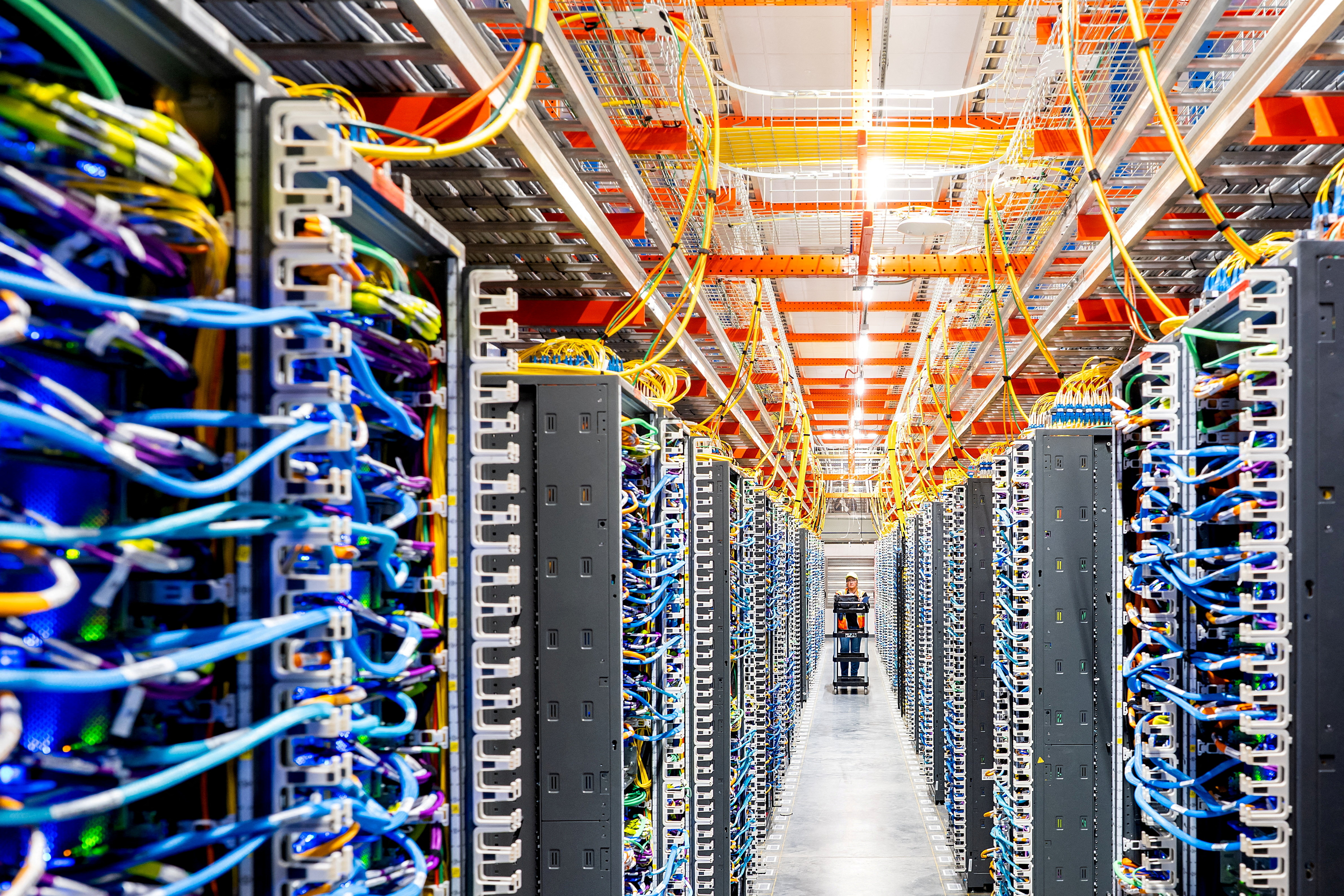
数据中心已成为AI繁荣的关键部分,容纳了训练和运行AI模型所需的服务器和计算设备。
Data centers have become a critical part of the AI boom, housing the servers and computing equipment needed to train and run AI models.
随着全球最大科技公司竞相扩大算力,此类设施的需求激增,行业高管们将其描述为另类资产管理公司的千载难逢的机遇。
As the world's biggest technology companies race to expand computing capacity, demand for such facilities has surged, creating what industry executives have described as a generational opportunity for alternative asset managers.
蓝 owl 表示,公司拥有130多座在运营或在建的数据中心,代表近14吉瓦的租赁和自有容量,另有21吉瓦在储备管线中。
Blue Owl said it has more than 130 data centers operating or under construction, representing nearly 14 gigawatts of leased and owned capacity, with another 21 gigawatts in its pipeline.
“我们投资数据中心并非是在押注AI,”蓝猫头鹰资本首席财务官Alan Kirshenbaum表示,并补充称公司预计算力需求不会下降。“我们承担的是微软、亚马逊、Meta的信用风险。”
"We are not making a bet on AI when we invest in data centers," Blue Owl CFO Alan Kirshenbaum said, adding that the company does not expect demand for computing power to decline. "We are taking Microsoft, Amazon, Meta, credit risk."
Ares Management表示,其数据中心开发战略聚焦于东京、大阪、伦敦和圣保罗等大都市区,将项目预租给投资级超大规模运营商,租期为12至15年,无终止权,并含通胀递增条款。
Ares Management said its data center development strategy focuses on metropolitan areas including Tokyo, Osaka, London and Sao Paulo, pre-leasing projects to investment-grade hyperscalers under 12- to 15-year leases with no termination rights and inflation escalators.
黑石集团上周同样强调了其对实体基础设施和长期合约资产的关注。其数据中心投资组合绝大多数初始租期为15至20年,96%的交易对手评级为投资级,平均市值达2.5万亿美元。
Blackstone last week also highlighted its focus on physical infrastructure and long-term contracted assets. The vast majority of its data center portfolio has initial lease terms of 15 to 20 years, with 96% of counterparties rated investment grade and an average market capitalisation of $2.5 trillion.
“因此当我们考虑风险时,这对我们来说感觉并不特别冒险,”黑石总裁Jonathan Gray在业绩后电话会上对分析师表示。
"So when we think about risk, that doesn't feel particularly risky to us," Blackstone President Jonathan Gray told analysts on a post-earnings call.
横跨数据中心、电力、设备和软件的AI支出热潮是历史上最大的投资浪潮之一,可与互联网诞生和铁路扩张时期伴随的投资浪潮相媲美。
The AI spending spree across data centers, power, equipment and software is one of the biggest investment waves in history, rivaling those that accompanied the advent of the internet and the expansion of railways.
Ares估计,到2030年AI相关资本支出需求将略超5万亿美元,其中约2万亿美元用于实体数据中心建筑及相邻的发电和输电基础设施。
Ares estimates AI-related capex demand at just over $5 trillion through 2030, including roughly $2 trillion for physical data center buildings and adjacent power generation and transmission infrastructure.
被问及本月早些时候的AI抛售时,Ares首席执行官Michael Arougheti表示,投资者正变得更加审慎地看待交易对手风险及其定价。他还淡化了较高借贷成本对AI资本支出融资的影响,称替代方案将是用股权为项目融资。
Asked about the AI selloff earlier this month, Ares CEO Michael Arougheti said investors were becoming more discerning about counterparty risk and how to price it. He also downplayed the impact of higher borrowing costs on AI capex financing, saying the alternative would be to fund projects with equity.
“随着资本支出规模持续扩大,资金来源已从主要靠股权融资,转为高等级融资,现在开始看到部分需求流向杠杆融资和私募信贷市场。所以这里存在一个演变过程,”Arougheti表示。
"As the capex numbers have continued to scale, they went from largely equity-funded to then high-grade funded and now you're starting to see some of that funding demand flow through into the leveraged finance and private credit market. So there's an evolution here," Arougheti said.
评级机构穆迪本周早些时候表示,人工智能和数字基础设施正在产生大规模、长期限的融资需求,使私人信贷市场的范围扩大到传统直接借贷之外。
Ratings agency Moody's said earlier this week that AI and digital infrastructure were creating large, long-duration financing needs that broaden the private credit market beyond traditional direct lending.
穆迪表示:“许多借款人和交易对手属于投资级。然而,集中度风险、建设风险、残值风险和循环融资风险正在增加。”
"Many borrowers and counterparties are investment grade. However, concentration, construction, residual-value and circular-financing risks are growing," Moody's said.