
新加坡:新加坡全国雇主联合会(SNEF)周五(10月30日)发布的一项调查显示,新加坡的大多数企业目前在人力资源流程中使用人工智能,但人类仍然对大多数决策进行最后确认。
SINGAPORE: Most firms in Singapore now use artificial intelligence for human resources processes, but humans still sign off on most decisions, according to a Singapore National Employers Federation (SNEF) survey released on Friday (Oct 30).
新加坡全国雇主联合会在6月至7月对1,000家雇主进行的调查中,统计了近3,000个在人力资源中使用人工智能的应用案例。
SNEF counted almost 3,000 use cases of AI in HR in its survey of 1,000 employers from June to July.
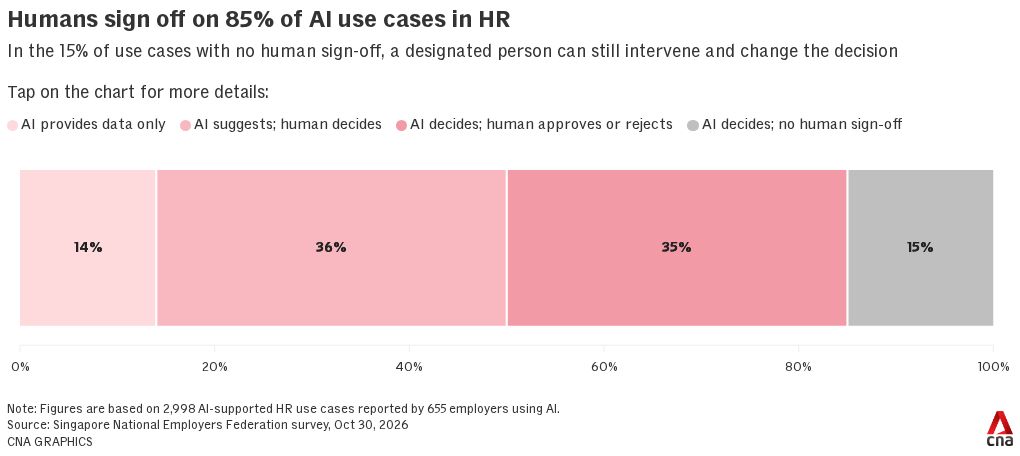
在这些案例中,85%的应用案例是在人工智能提供意见后,由人类确认做出最终决定。
Out of this number, 85 per cent of use cases leave the final decision to human confirmation after AI provides input.
在其余15%的案例中,人工智能在未经人类确认的情况下做出决定。新加坡全国雇主联合会表示,在这些应用案例中,73%属于“日常或大批量的行政流程”,例如简历筛选和技能评估。
In the remaining 15 per cent, AI makes the decision without a humang off on it. Among these use cases, 73 per cent are in “routine or high-volume administrative processes” such as resume screening and skills assessments, said SNEF.
在几乎所有无需人工最终确认的应用案例中,雇主仍会指定专人(例如人力资源主管、主管或招聘经理)在需要时进行干预,并更改或推翻人工智能做出的决定。
In nearly all use cases without human sign-off, employers still designate someone – such as the head of HR, supervisor or hiring manager – to intervene if needed and change or reverse the decision made by AI.
新加坡全国雇主联合会表示:“雇主通常不会在对员工产生重大后果的情况下使用人工智能,”并补充说,这反映了雇主对人类判断的持续信任和重视。
"Employers generally do not use AI in cases where there are more significant consequences for employees," said SNEF, adding that this reflects employers’ continued trust and emphasis on human judgment.
大型机构更有可能在人力资源职能中使用人工智能,员工人数超过200人的企业中有81%这样做,而员工人数在200人及以下的中小企业(SME)这一比例为65%。
Large organisations are more likely to use AI in HR functions, with 81 per cent of firms with more than 200 employees doing so, compared to 65 per cent of small and medium enterprises (SMEs) with 200 or fewer employees.
新加坡全国雇主联合会会长柯文伟周五表示,在人力资源职能中使用人工智能时,监督水平应“与风险相匹配”,对日常任务进行较宽松的监督,对影响人生计的决策进行更密切的监督。
SNEF president Kuah Boon Wee on Friday said that when AI is used in HR functions, the level of oversight should "match the stakes", with lighter monitoring for routine tasks and closer watching for decisions that affect people’s livelihoods.
他在首届新加坡全国雇主联合会雇主峰会上表示:“这才是负责任的使用在实践中应有的样子。”该峰会的主题是利用人工智能促进业务和劳动力成果。人工智能何时使用最多?
"That is what responsible use should look like in practice," he said at the inaugural SNEF Employers’ Summit, with a theme of harnessing AI for business and workforce outcomes. WHEN IS AI USED THE MOST?
新加坡全国雇主联合会的调查还发现,人工智能在人力资源职能中的使用因员工在组织内的生命周期而异。
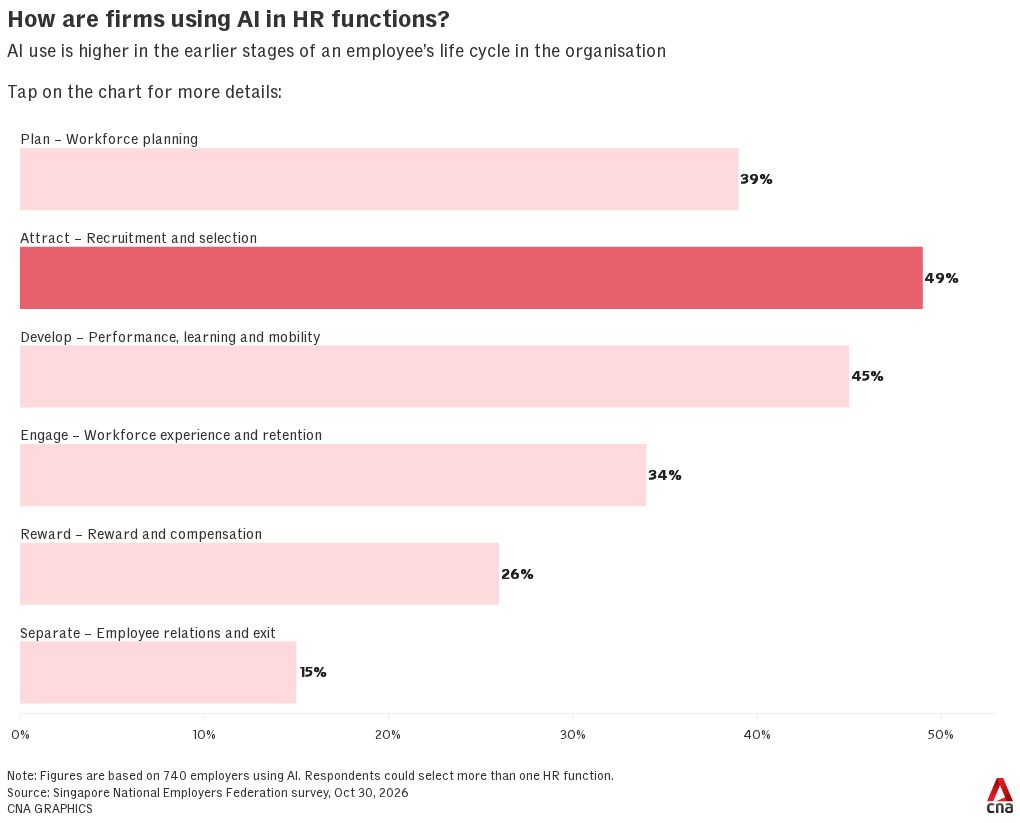
SNEF’s survey also found that AI use in HR functions varies across an employee’s life cycle in an organisation.
人工智能在雇用关系的前期阶段采用率更高——例如,筛选和甄选招聘候选人,或个性化员工的学习并告知他们在公司内部的流动。
AI adoption is heavier in the early stages of the employment relationship – for instance, to screen and shortlist candidates for recruitment, or to personalise employees' learning and inform their mobility within the company.
甚至在招聘之前,人工智能就被用于劳动力规划,例如预测需求和识别技能差距。
Even prior to hiring, AI is used in workforce planning, such as to forecast demand and identify skills gaps.
新加坡全国雇主联合会表示,公司还利用人工智能来分析员工情绪和离职风险,以及对标薪酬和分析薪酬公平性。
Companies also tap AI to analyse employee sentiment and attrition risk, said SNEF, as well as to benchmark compensation and analyse pay equity.
在雇用关系接近尾声、处理离职和退场事宜时,对人工智能的依赖程度最低。
Reliance on AI is lowest towards the end of the employment relationship, when dealing with separation and exit matters.
在此阶段,如果使用人工智能的话,主要也是用于分析员工离职数据以减少人员流失,并支持离职规划或纪律调查。
At this stage, AI is used – if at all – mostly to analyse employee attrition data to reduce turnover and support separation planning or disciplinary investigations.
新加坡全国雇主联合会表示:“总体而言,雇主通常更倾向于在大批量流程中使用人工智能,在这些流程中人工智能可以补充而非取代专业判断。”
"Overall, employers are generally more likely to use AI in high-volume processes where AI can complement, rather than replace, professional judgement," said SNEF.
柯文伟表示:“雇主已经在谨慎选择使用人工智能的地方,这是正确的直觉。”在美国,人工智能招聘工具的制造商Workday和Eightfold AI面临着对其在筛选候选人时使用这些工具的公平性提出质疑的诉讼。这些判例正受到关注,以了解其对人力资源流程中人工智能使用的潜在影响。
Said Mr Kuah: "Employers are already choosing carefully where to use AI, and that is the right instinct." In the United States, makers of AI hiring tools Workday Eightfold AI face lawsuits contesting how fairly these tools were used to screen candidates. These test cases are being watched for possible implications on AI use in HR processes.
当被问及如何解决对潜在偏见的担忧时,新加坡全国雇主联合会首席执行官郝硕表示,雇主通常了解相关法律以及他们对歧视违法行为的责任。
Asked how concerns about potential bias would be addressed, SNEF chief executive Hao Shuo said employers are generally aware of the laws and their liability for offences of discrimination.
调查发现,84%的雇主对《劳资政公平雇佣劳资政准则》、公平考量框架、生成式人工智能的各方人工智能治理模型框架以及定于2027年底生效的即将出台的《职场公平法》等框架非常熟悉或极其熟悉。
The survey found that 84 per cent of employers were very or extremely familiar with frameworks such as the Tripartite Guidelines on Fair Employment Practices, Fair Consideration Framework, Model AI Governance Framework for Generative AI, and the forthcoming Workplace Fairness Act, set to come into effect end-2027.
郝硕表示:“当雇主在简历进来时的整个筛选过程中部署人工智能时,他们会确保这个过程没有偏见。”
“When they deploy AI in the whole sifting process when CVs come in, employers will make sure that there is no bias in the process,” said Mr Hao.
他补充说,求职者还可以学习如何在人工智能筛选中让自己的简历脱颖而出,并更好地了解人工智能是如何在招聘过程中部署的。新加坡全国雇主联合会指出,一些雇主已经制定了保障措施。
He added that jobseekers can also learn how to make their resumes stand out in AI screening, and better understand how AI is deployed in the recruitment process. Some employers already have safeguards in place, noted SNEF.
这些措施包括监控人工智能工具结果的机制,并进行调整,例如审查决策模式、重新训练模型、追踪人工干预的原因以及向供应商提供反馈。企业寻求关于人工智能的指导调查发现,雇主对使用人工智能的最大担忧是,过度依赖该技术可能会随着时间的推移侵蚀人力资源能力。39%的受访者提到了这一点。
These include mechanisms to monitor the outcomes of AI tools and make adjustments such as reviewing decision patterns, retraining models, tracking reasons for human intervention and giving feedback to vendors. FIRMS SEEK GUIDANCE ON AI Employers’ top concern about using AI was that an over-reliance on the technology could erode HR capabilities over time, found the survey. This was cited by 39 per cent of respondents.
*大约三分之一的人担心何时应该信任人工智能而不是专业判断(36%)、人工智能犯错时的问责制(35%)以及缺乏有效使用该技术的培训(31%)。
Roughly one-third were concerned about when to trust AI over professional judgment (36 per cent), accountability when AI makes errors (35 per cent), and lack of training to use the technology effectively (31 per cent). For support in tackling such issues, 42 per cent of employers sought more clarity on their obligations and liability when using AI in HR functions, and training on responsible use of the technology.
为了获得应对此类问题的支持,42%的雇主寻求在人力资源职能中使用人工智能时的义务和责任有更多清晰界定,并寻求关于负责任使用该技术的培训。
Some also wanted an advisory service on using AI in HR, and a list of AI tools assessed for their fairness. In response, SNEF has developed a "pre-scoped" solution for firms that integrates support for AI adoption with workforce transformation.
一些人还希望获得关于在人力资源中使用人工智能的咨询服务,以及一份经评估具有公平性的人工智能工具清单。
The solution covers four areas: strategic HR aligning workforce planning and employee development with business priorities; AI automation of routine HR work; workforce transformation involving job redesign and change management; and skills analytics using AI.
作为回应,新加坡全国雇主联合会为企业制定了一项“预先界定范围”的解决方案,将对人工智能采纳的支持与劳动力转型结合起来。
Firms can approach SNEF to be matched to specialist consultants who will help them transform their HR functions and workforce in a “people-centred manner”, said SNEF. Five specialist consultants have been appointed: BDO, Elitez, EON, PwC and Skybots.
该解决方案涵盖四个领域:将劳动力规划和员工发展与业务优先事项对齐的战略人力资源;日常人力资源工作的/');
Eligible firms can fund these efforts through the Workforce Development Grant (Job Redesign+), which covers up to 70 per cent of costs for SMEs and 50 per cent for non-SMEs, capped at S$150,000.