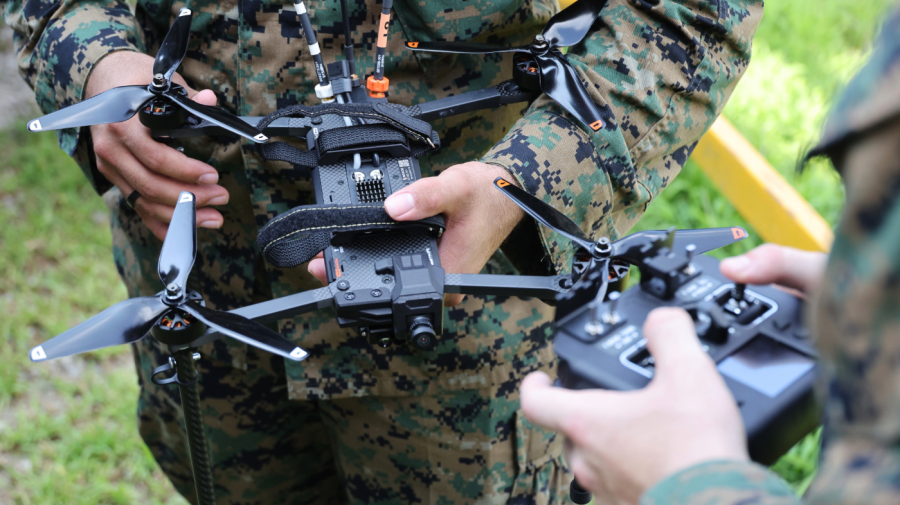
我们正目睹现代战争制造出一种悖论。战场从未拥有过如此多的情报,然而士兵利用情报的时间可能比以往任何时候都更少。一架无人机可能被一个系统探测到,被另一个系统识别,被第三个系统跟踪,再被另一个系统击败。每个系统都可能按设计运行。但如果这些能力无法汇聚到只有几秒钟行动时间的人员身边,技术优势就会变得无关紧要。这给我们的作战人员带来了一个根本性且致命的鸿沟。
We are witnessing modern warfare create a paradox. The battlefield has never had more intelligence, yet the soldier may have less time than ever to use it. A drone can be detected by one system, classified by another, tracked by a third and defeated by yet another. Each system may work as designed. But if those capabilities can’t converge around the person who has seconds to act, technological superiority becomes irrelevant. It poses a fundamental and lethal gap for our warfighters.
无人机战争将在操作员层面决出胜负。优势不会属于拥有最好无人机或最复杂拦截器的军队,而将属于能将情报与能力围绕个体士兵整合在一起、在机器速度下创造决策优势的军队。
Drone warfare will be won at the operator level. The advantage won’t belong to the military with the best drones or the most sophisticated interceptor, but to the military that brings intelligence and capability together around the individual solider, creating a decision advantage at machine speed.
几十年来,军事现代化在传感、通信和精确打击方面取得了非凡进步。但无人机战争暴露了一个危险的弱点。一个小型空中威胁可能在几乎没有预警的情况下出现,只给士兵几秒钟的时间来了解发生了什么并做出反应。挑战不在于信息是否存在,而在于需要信息的人能否在为时已晚之前理解并采取行动。
For decades, military modernization has delivered extraordinary advances in sensing, communications and precision. But drone warfare exposes a dangerous weakness. A small aerial threat can emerge with little warning, leaving a soldier seconds to understand what’s happening and respond. The challenge isn’t simply whether information exists. It’s whether the person who needs it can understand it and act before it’s too late.
信息优势不会自动转化为决策优势。一个被传感器和情报包围的作战人员,可能仍然缺乏关于下一步该做什么的清晰图景。当每一项新能力都引入另一股争夺注意力的数据流时,更多信息反而会成为负担。
Information superiority doesn’t automatically translate into decision superiority. A warfighter surrounded by sensors and intelligence may still lack a clear picture of what to do next. More information can become a burden when every new capability introduces another stream of data demanding attention.
我们花了数年时间在士兵面前堆砌更多信息。现在我们必须消除复杂性。各国军队正在开发能力日益增强的电子战系统。挑战在于让它们协同工作。
We have spent years putting more information in front of soldiers. Now we must remove the complexity. Militaries are developing increasingly capable electronic warfare systems. The challenge is making them work together.
与其围绕单一平台构建系统并要求操作员在平台之间切换,不如围绕操作员本身构建——类似于为个人提供的“铁穹”。传感器、自治资产和防御能力应通过统一的协同层汇聚,该层吸收技术复杂性,向操作员呈现对威胁的清晰认知以及可用选项。
Rather than building systems around individual platforms and asking operators to navigate between them, we should build around the operator — something like an Iron Dome for the individual. Sensors, autonomous assets and defensive capabilities should converge through a common coordination layer that absorbs technical complexity and presents the operator with a clear understanding of the threat and available options.
具备代理性的人工智能可能会改变这一过程。不同于仅仅分析信息的人工智能,具备代理性的系统能够协调任务和可用工具。这样的系统可以处理传感器数据、对威胁进行分类、识别可用防御能力并提供选项。操作员将不再需要在多个系统之间切换来了解可以采取的措施。
Agentic artificial intelligence could transform this process. Unlike AI that simply analyzes information, agentic systems can coordinate tasks and available tools. Such a system could process sensor data, classify a threat, identify available defensive capabilities and present options. The operator would no longer need to navigate multiple systems to understand what can be done.
目标并不是向作战人员展示机器所知的一切,而是提供他们在需要时必须了解的信息。机器的速度应当压缩复杂性,而人类仍然保持指挥权。
The goal isn’t to show warfighters everything a machine knows. It’s to provide what they need to know when they need it. Machine speed should compress complexity while humans remain in charge.
我们的观点来源于不同的经历。我们之一在陆军特种作战部队服役二十年,期间有十八次作战部署。另一位在政府和新兴技术领域工作,专注于人工智能和系统设计。还有一位调查并揭露了国家最复杂、最重要的军用飞机生产线上的危险缺陷。
Our perspectives come from different experiences. One of us spent two decades in Army Special Operations, including 18 combat deployments. Another has worked across government and emerging technology, focusing on artificial intelligence and systems design. And one of us investigated and uncovered dangerous flaws on the production line of one of the nation’s most complicated and important military aircraft.
然而所有这些经历都指向同一原则:战场技术应使操作员更具能力,而非让其变得无关紧要。
Yet all these experiences point to the same principle: Battlefield technology should make the operator more capable, not irrelevant.
这样的系统可以通过协调曾经需要多个界面或专家才能完成的能力,为单个士兵提供战术优势。这并不会消除指挥结构,而是提升态势感知,改善战场决策。
Such a system could give an individual soldier a tactical edge by coordinating capabilities that once required multiple interfaces or specialists. This wouldn’t eliminate command structures. It would create greater situational awareness and improve decision-making on the battlefield.
但它必须在战场条件下发挥作用,即便通信中断、GPS降级、网络瘫痪也不例外。对手可能操纵信息并攻击承载信息的系统。战场人工智能必须针对降级环境进行设计,即便远程指挥中心或云连接不可用,也能提供有用的情报。
But it must work under battlefield conditions even when communications fail, GPS degrades and networks go down. Adversaries can manipulate information and attack the systems carrying it. Battlefield AI must be designed for degraded environments, enabling useful intelligence even when distant command centers or cloud connections are unavailable.
五角大楼还应扩大其衡量反无人机性能的方式。探测距离、拦截概率、准确性和成本仍然重要。但从探测到无人机到促成人类响应之间的时间同样重要。一个能更早探测到无人机却使决策过程复杂化的系统,并不是作战优势。
The Pentagon should also expand how it measures counter-drone performance. Detection range, interception probability, accuracy and cost remain important. But so does the time between detecting a threat and enabling a human response. A system that detects a drone earlier but complicates the decision-making process isn’t an operational advantage.
存在真实的风险。人工智能可能错误分类威胁、在意外条件下失效,或助长对机器建议的过度信任。当涉及致命武力时,这些危险是严重的。答案并不是简单地增加自主性。
There are real risks. AI can misclassify threats, fail in unexpected conditions or encourage excessive trust in machine recommendations. These dangers are serious when lethal force is involved. The answer is not simply greater autonomy.
必须内置人类监督。操作员需要的不仅仅是批准最终行动的能力;他们需要态势理解和决策权限。人工智能应执行机器能更快完成的任务,同时帮助人类在压力下做出更好的决策。
Human oversight must be built in. Operators need more than the ability to approve a final action; they need situational understanding and authority over decisions. AI should perform tasks that machines can execute faster while helping humans make better decisions under pressure.
美国必须停止只问还能把多少技术交到作战人员手中。它必须问能去除多少复杂性。随着无人机数量激增和自主性提高,可用于决策的时间在缩短。如果操作员无法迅速行动,更多的传感器和拦截器也无济于事。
The U.S. must stop asking only how much more technology it can put in warfighters’ hands. It must ask how much complexity it can remove. As drones proliferate and autonomy increases, the time available to make decisions shrinks. More sensors and interceptors won’t matter if operators can’t act quickly.
无人机战争将由这样的军队赢得:它连接其系统、压缩决策时间,并把情报放在最重要的地方——交给生命依赖于它的人。
Drone warfare will be won by the military that connects its systems, compresses decision time and puts intelligence where it matters most: with the person whose life depends on it.
战场人工智能的目标不是把人类从战斗中移除,而是让人类在战斗中占据优势。
The goal of battlefield AI is not to remove the human from the fight. It is to give the human an advantage within it.
托马斯·佩恩因2015年在伊拉克服役期间的表现,荣获美国陆军荣誉勋章。塞萨尔·R·埃尔南德斯是哈佛大学肯尼迪政府学院的研究员、麻省理工学院媒体实验室的开发人员,也是牛津大学工商管理硕士毕业生。艾伦·M·科恩是一位获得皮博迪奖和艾美奖的记者。
Thomas Payne is a recipient of the U.S. Army’s Medal of Honor for actions during his service in Iraq in 2015. Cesar R. Hernandez is a fellow at Harvard’s Kennedy School of Government, a developer at the MIT Media Lab, and an MBA graduate of Oxford University. Alan M. Cohn is a Peabody and Emmy Award-winning journalist.