东京讯 -- 国际货币基金组织(IMF)和世界银行本月初在曼谷举行会议,会议以某种程度的反高潮收场,美国财政部长斯科特·贝森特缺席了二十国集团(G20)财长和央行行长会议。
TOKYO -- The International Monetary Fund and World Bank held meetings in Bangkok earlier this month that ended somewhat anticlimactically, with U.S. Treasury Secretary Scott Bessent skipping a Group of 20 meeting of finance ministers and central bank governors.
尽管如此,泰国领导人很可能松了一口气,因为他们成功举办了一场吸引了来自191个国家和地区的1.5万名参会者的活动。自9月下旬以来的暴雨导致首都部分地区被淹,引发了对素万那普国际机场(该国主要国际门户)可能出现中断的担忧。
Still, Thai leaders likely breathed a sigh of relief at having pulled off an event that drew 15,000 participants from 191 countries and territories. Heavy rains since late September had left parts of the capital flooded, raising concerns about possible disruptions at Suvarnabhumi Airport, the country's main international gateway.
自1991年上次主办会议以来,泰国发生了巨大变化。据国际货币基金组织称,人均国内生产总值(GDP)从几十年前的1769美元激增4.6倍,预计将达到2026年的8105美元,而贫困率则从50%暴跌至5%。
Thailand has changed dramatically since it last hosted the meetings, in 1991. According to the IMF, gross domestic product per capita has risen 4.6-fold to an estimated $8,105 in 2026 from $1,769 all those decades ago, while the poverty rate has plunged to 5% from 50%.
在年会期间的一个特别研讨会上,副总理兼财政部长埃克尼提·尼提塔帕斯表示,泰国下一阶段的增长将需要通过投资数字技术和人力资本来提高生产率。
At a special seminar during the annual meetings, Deputy Prime Minister and Finance Minister Ekniti Nitithanprapas said Thailand's next phase of growth would require higher productivity through investment in digital technology and human capital.
他的观点有道理。但泰国几乎无法忽视支撑其增长的经济基础设施中出现的裂痕。
He has a point. But Thailand can hardly afford to ignore the cracks appearing in the economic infrastructure underpinning its growth.
2024年9月26日,曼谷暴雨中,人们涉水穿过被淹的街道,车辆被淹没。泰国政府尚未完成15年前灾难性洪水后启动的防洪计划。
People wade through a flooded street next to submerged vehicles during heavy rain in Bangkok on Sept. 26. The Thai government has yet to complete a flood control program initiated after catastrophic floods 15 years ago.
2011年的灾难性洪水瘫痪了泰国的经济腹地,造成的经济损失估计约为470亿美元,此后政府推出了雄心勃勃的防洪计划。然而关键排水渠尚未完工,工期延误加剧了此次洪水造成的严重破坏。
After catastrophic floods in 2011 paralyzed Thailand's economic heartland and caused economic losses estimated at around $47 billion, the government unveiled an ambitious flood-control program. Yet key drainage channels have not been completed, and the delay contributed to severe damage from the latest flooding.
高铁项目讲述了类似的故事。一条从曼谷通往老挝边境的东北线仍未完工,一条旨在将素万那普机场、廊曼机场和乌打拍机场与东部经济走廊(亚洲主要工业中心之一)连接起来的东部线也同样未完工。这两个项目都是十年前启动的。
High-speed rail projects tell a similar story. A northeastern line from Bangkok toward the border with Laos remains unfinished, as does an eastern line intended to connect Suvarnabhumi, Don Mueang and U-Tapao airports with the Eastern Economic Corridor, one of Asia's leading industrial hubs. Both projects got underway a decade ago.
泰国长期以来利用其庞大的公路、机场、港口和城市铁路网络吸引外国投资。但它在将这些基础设施适应气候变化等新现实方面却步履维艰。其中一项挑战是争取更好的印度洋通道。
Thailand has long used its extensive network of roads, airports, ports and urban railways to attract foreign investment. But it has been slower to adapt that infrastructure to new realities like climate change. One such challenge is securing better access to the Indian Ocean.
“如果我们能参与开发该港口,将提供另一个选择,”副总理兼外交部长西哈萨·蓬克特克奥在8月访问俄罗斯期间表示,表达了泰国有意加入俄罗斯支持的在缅甸南部打威开发大型港口项目的意愿。
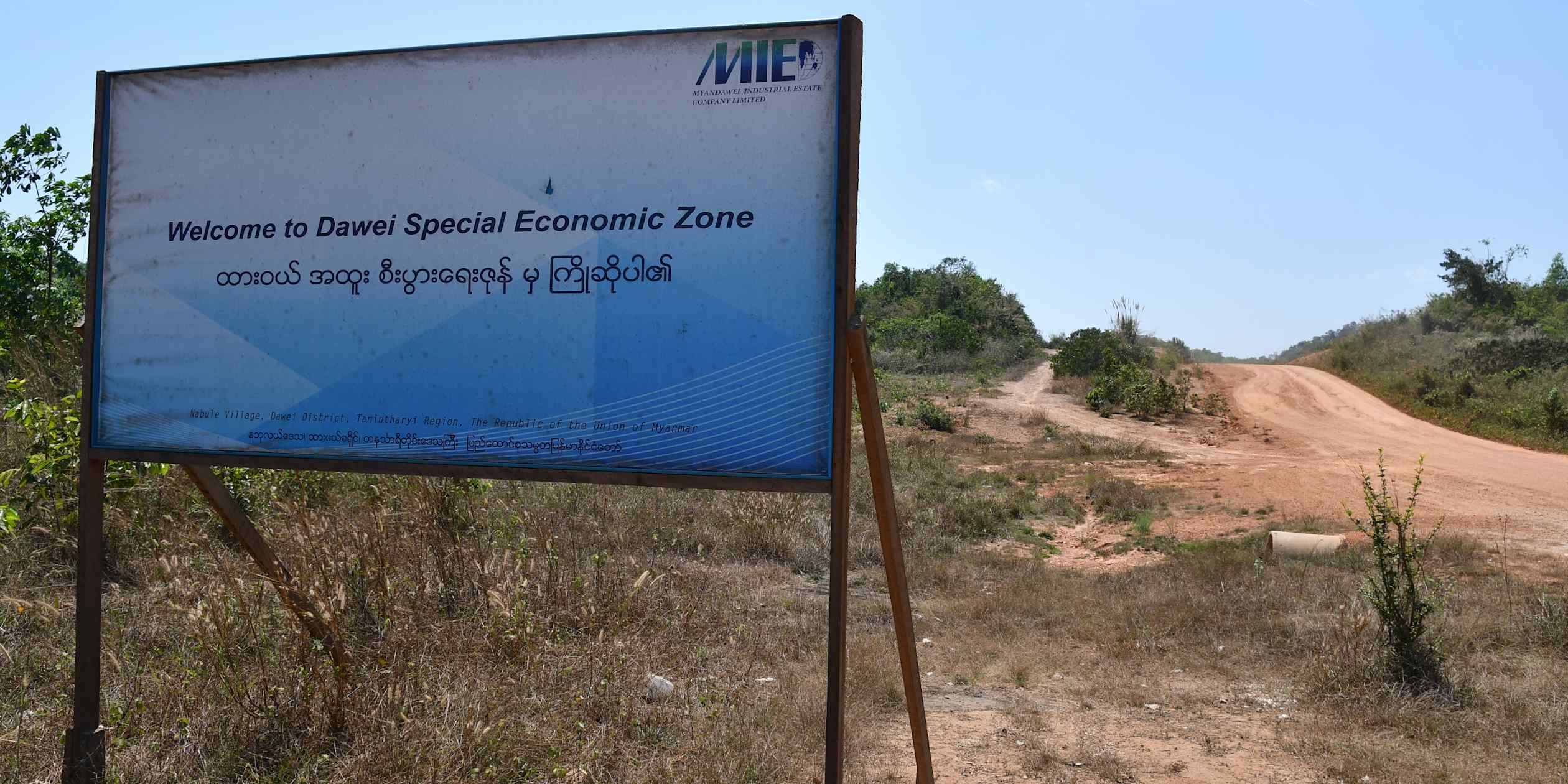
"If we can participate in developing the port, it would provide another option," Deputy Prime Minister and Foreign Minister Sihasak Phuangketkeow said during a visit to Russia in August, expressing Thailand's interest in joining a Russian-backed project to develop a major port at Dawei in southern Myanmar.
打威位于曼谷以西约300公里处,长期以来为泰国提供了一个诱人却难以企及的前景。
Dawei, some 300 kilometers west of Bangkok, has long offered Thailand a tantalizing but elusive prospect.
1996年,泰国建筑巨头意泰发展公司(ITD)接触缅甸当时的军政府,达成协议在打威地区开发工业园区。次年亚洲金融危机爆发,该项目随之搁浅。
In 1996, Thai construction giant Italian-Thai Development (ITD), approached Myanmar's then-military government and reached an agreement to develop an industrial estate in the Dawei area. The project foundered when the Asian financial crisis struck the following year.
2008年,泰缅签署政府间谅解备忘录,项目重启。2010年11月,缅甸举行二十年来首次大选前四天,意泰发展公司签署合同牵头开发。
It was revived in 2008, when Thailand and Myanmar signed an intergovernmental memorandum of understanding. In November 2010, four days before Myanmar held its first general election in two decades, ITD signed a contract to lead the development.
意泰发展公司将租赁250平方公里土地75年,将其打造成全球最大的沿海工业区之一。整个项目预估耗资580亿美元。
ITD would lease 250 square kilometers of land for 75 years and transform it into one of the world's largest coastal industrial zones. The total project was estimated to cost $58 billion.
当时年营收约为10亿美元的意大利-泰国发展公司(ITD)很难独自为这样一个项目融资。时任总裁Premchai Karnasuta表示,他预期西方对缅甸的经济制裁将被解除,并期待该国过渡到文人统治后会有外资涌入。但该项目规模庞大,难以吸引合作伙伴。
ITD, whose annual revenue then was around $1 billion, could hardly finance such a project on its own. Then-President Premchai Karnasuta said he expected Western economic sanctions on Myanmar to be lifted, anticipating an influx of foreign investment after the country transitioned to civilian rule. But the project's sheer scale made it difficult to attract partners.
由于进展缓慢,缅甸政府于2013年终止了与ITD的合同,并将责任转移给一个由泰国和缅甸政府共同拥有的实体。
Frustrated by the lack of progress, Myanmar's government terminated ITD's contract in 2013 and shifted responsibility to an entity jointly owned by the Thai and Myanmar governments.
2015年1月,意大利-泰国发展公司时任总裁Premchai Karnasuta访问达维。这位曾被称为泰国“建筑大亨”的商人,未能实现将该地区打造为大型工业区的梦想。
Then-President Premchai Karnasuta of Italian-Thai Development visits Dawei in January 2015. The businessman, once dubbed Thailand's "Construction King," could not realize his dream of turning the area into a massive industrial zone.
由于在泰国运营的日本制造商对达维表现出兴趣,东京也通过日本国际协力银行的资金加入了该计划。
As Japanese manufacturers operating in Thailand had shown interest in Dawei, Tokyo also joined the initiative through funding by the Japan Bank for International Cooperation.
当重启后的项目进行招标时,ITD赢得了开发初始27平方公里区域的权利。
When the revamped project was put out to tender, ITD won the right to develop an initial 27-sq.-km section.
但融资问题再次阻碍了进展。2020年底,缅甸通知ITD,其合同将第二次被终止。泰国、缅甸和日本正在讨论另一次改组,当时缅甸军方于2021年2月夺取政权,实际上使该项目搁浅。
But financing problems stalled progress again. At the end of 2020, Myanmar notified ITD that its contract would be terminated for a second time. Thailand, Myanmar and Japan were discussing yet another overhaul when Myanmar's military seized power in February 2021, effectively putting the project on ice.
再次面临西方制裁的缅甸军政府转向俄罗斯,俄罗斯是主要的军事装备来源国,也一直寻求在印度洋立足。2025年2月,双方同意合作开发达维,实际上取消了此前涉及泰国和日本的安排。
Once again subject to Western sanctions, Myanmar's military government turned to Russia, a major source of military equipment that has also sought a foothold on the Indian Ocean. In February 2025, the sides agreed to cooperate to develop Dawei, effectively scrapping earlier arrangements involving Thailand and Japan.
随着达维项目陷入停滞,曼谷开始考虑另一种完全在泰国境内确保印度洋通道的方式。
As the Dawei project languished, Bangkok began considering another way to secure Indian Ocean access, entirely within Thailand.
2020年9月,时任总理Prayuth Chan-ocha指示交通部研究一项“陆桥”项目。
In September 2020, then-Prime Minister Prayuth Chan-ocha instructed the Transport Ministry to study a "land bridge" project.
该计划旨在马来半岛两侧建设大型港口,并通过铁路、公路和石油管道将其连接;在两港口周边设立特区。
The plan called for building large ports on opposite coasts of the Malay Peninsula, then connecting them with railways, expressways and oil pipelines; special economic zones would be set up around both ports.
支持者称,通过让往返太平洋和印度洋的货物绕过马六甲海峡——全球最重要的海上瓶颈之一——该项目有望将泰国打造为印太物流枢纽。
By allowing cargo traveling between the Pacific and Indian oceans to bypass the Strait of Malacca, one of the world's most important maritime chokepoints, proponents said the project could turn Thailand into an Indo-Pacific logistics hub.
泰国已在安达曼海的拉农拥有一个商业港口,但其水深仅为8米,无法容纳大型船舶。
Thailand already has a commercial port at Ranong on the Andaman Sea. But with a water depth of only 8 meters, it is unsuitable for large vessels.
因此,当局考虑选址新港口,以能够接纳大型集装箱船并提供足够的土地用于特区。
Authorities therefore considered a new site capable of handling large container ships and providing enough land for a special economic zone.
拉农商业港口的照片摄于2022年2月。安达曼海港口水深不足,无法容纳大型船舶。
The commercial port at Ranong, Thailand, pictured in February 2022. The Andaman Sea port is too shallow to handle large vessels.
2023年上任的斯雷塔·塔维辛政府继承了该项目,并举办海外投资路演,为这项价值1万亿泰铢(约合297亿美元)的工程筹集资金。
The government of Srettha Thavisin, which took office in 2023, inherited the project and held overseas investment roadshows to raise funding for the 1 trillion-baht ($29.7 billion) undertaking.
回应并不热烈。人们仍对巨额投资需求、两岸货物转运的可行性以及潜在的环境破坏提出质疑。
The response was lukewarm. Questions persisted over the enormous investment required, the feasibility of transferring cargo between the two coasts and potential environmental damage.
2月霍尔木兹海峡关闭后,人们对海上瓶颈风险的认识提升,使陆桥提案再次受到关注。
The closure of the Strait of Hormuz in February heightened awareness of the risks posed by maritime chokepoints, bringing renewed attention to the land bridge proposal.
5月,首相阿努廷·查恩维拉库尔成立了由埃克尼提主持的项目审查委员会。委员会建议放弃该计划,理由是其商业可行性存疑且会加重公共财政负担。相反,委员会提议扩大现有的拉农港口,并延伸从曼谷出发的铁路和高速公路。随后,德威再次进入议程。
Prime Minister Anutin Charnvirakul in May set up a committee chaired by Ekniti to review the project. The committee recommended abandoning the plan, citing concerns about its commercial viability and the burden on public finances. Instead, it proposed expanding the existing port at Ranong and extending rail and expressway links from Bangkok. And then Dawei came back into the picture.
缅甸前军事领导人敏昂莱今年四月成为该国总统。泰国支持他重返东盟峰会,此前缅甸领导层因军事接管而被排除在外。
Min Aung Hlaing, Myanmar's former military chief, became the country's president in April. Thailand has backed his return to ASEAN summits after Myanmar's leadership was excluded following the military takeover.
对泰国而言,改善与一个与其接壤约2400公里边界的国家的关系,显然是当务之急。关于进入印度洋的可能合作,也应放在这个背景下来看。
For Thailand, it is an obvious priority to improve relations with a country with which it shares a roughly 2,400-km border. Possible cooperation on access to the Indian Ocean should be seen in that context as well.
经历了种种曲折之后,泰国寻找印度洋门户的努力,基本上回到了两个选择:桌或素叻。
After all the twists and turns, Thailand's search for an Indian Ocean gateway has essentially come back to two options: Dawei or Ranong.
桌具有明显的吸引力。它位于曼谷以西约300公里处,距离首都相对较近,并为发展提供了充足空间。但任何进展都在很大程度上取决于缅甸。即使桌得以建成,两国之间的货物运输也必须经过边境管控。
Dawei has obvious attractions. Around 300 km west of Bangkok, it is relatively close to the capital and offers ample space for development. But any progress depends heavily on Myanmar. Even if Dawei were to be built, goods moving between the two countries would have to clear border controls.
缅甸山区的道路发展不足,陡峭的坡度使得大型卡车难以通行。该走廊还穿过由克钦独立军控制的领土,这是一个强大的武装民族团体,引发了安全担忧。
Roads through the mountains in Myanmar remain underdeveloped, with steep gradients making the route difficult for large trucks. The corridor also passes through territory controlled by the Karen National Liberation Army, a powerful armed ethnic group, raising security concerns.
与此同时,开发素叻可以完全在泰国境内进行,无需跨境。该路线大部分地势平坦,没有安全风险。
Developing Ranong, meanwhile, could take place entirely within Thailand, eliminating the need for border crossings. The route is largely flat and carries no security risks.
但素叻距离曼谷约600公里,现有港口缺乏足够的空间进行大规模开发。
But Ranong is around 600 km from Bangkok, and the existing port lacks sufficient space for large-scale development.
还有另一个选择。据知情人士透露,敏昂莱八月初对泰国进行正式访问期间,改善桌与素叻之间的连通性是未来合作的主题之一。
There is another option. When Min Aung Hlaing made an official visit to Thailand in early August, improving connectivity between Dawei and Ranong was among the themes for future cooperation, according to people familiar with the matter.
这两个港口甚至可能相辅相成。大型船舶可以停靠桌,由小型支线船舶提供前往素叻的连接。
The two ports might even complement each other. Large vessels could call at Dawei, with smaller feeder ships providing connections to Ranong.
8月6日,泰国总理阿努廷·参威拉恭(右)与缅甸总统敏昂莱(右二)在曼谷举行的峰会上讨论开发缅甸土瓦地区的潜在合作。无论泰国选择哪种方案,更根本的问题在于政策一致性。
Thai Prime Minister Anutin Charnvirakul, right, and Myanmar President Min Aung Hlaing, second from right, discussed potential cooperation in developing Myanmar's Dawei area at their summit meeting in Bangkok on Aug. 6. Whichever option Thailand chooses, the more fundamental issue is policy consistency.
缅甸的政治动荡并不能单独解释土瓦“失去的30年”。泰国也曾在2006年和2014年经历军事政变,政府还多次被宪法法院裁决罢免。这种政治动荡一直是长期基础设施政策的主要障碍。
Myanmar's political upheavals do not alone explain Dawei's "lost 30 years." Thailand also has undergone military coups, in 2006 and 2014, while governments have repeatedly been removed through Constitutional Court rulings. The political churn has been a major obstacle for long-term infrastructure policy.
几十年来,泰国依靠向东看实现繁荣,日本是其最大贸易伙伴。但日本的经济实力已经衰退,与中国和美国的关系则面临保护主义和其他风险。与其他东盟经济体一样,泰国再也无法承受过度聚焦东方的代价。它需要开拓包括欧洲、印度、中东和非洲在内的西方市场。
For decades, Thailand prospered by looking east, with Japan as its leading trade partner. But Japan's economic power has waned, and ties with China and the U.S. are facing protectionism and other risks. Like other ASEAN economies, Thailand can no longer afford to focus overwhelmingly on the east. It needs to explore western markets including Europe, India, the Middle East and Africa.
国际货币基金组织10月发布的最新经济展望预测,泰国经济2026年和2027年将增长2.1%,远低于东盟整体2026年4.9%和2027年4.7%的预测增速。
The IMF's latest economic outlook, released in October, forecasts Thai economic growth of 2.1% in 2026 and 2027, well below the 4.9% in 2026 and 4.7% in 2027 projected for ASEAN as a whole.
泰国曾经引领东南亚的工业化进程,如今却沦为地区落后者,甚至有人将其称为“亚洲病夫”。为遏制下滑势头,泰国首先需要集中精力完成已经开工的基础设施项目。
Thailand once led Southeast Asia's industrialization, but it has become a regional laggard, with some even labeling it the "sick man of Asia." To arrest its fall, Thailand first needs to concentrate on finishing infrastructure projects it has already started.