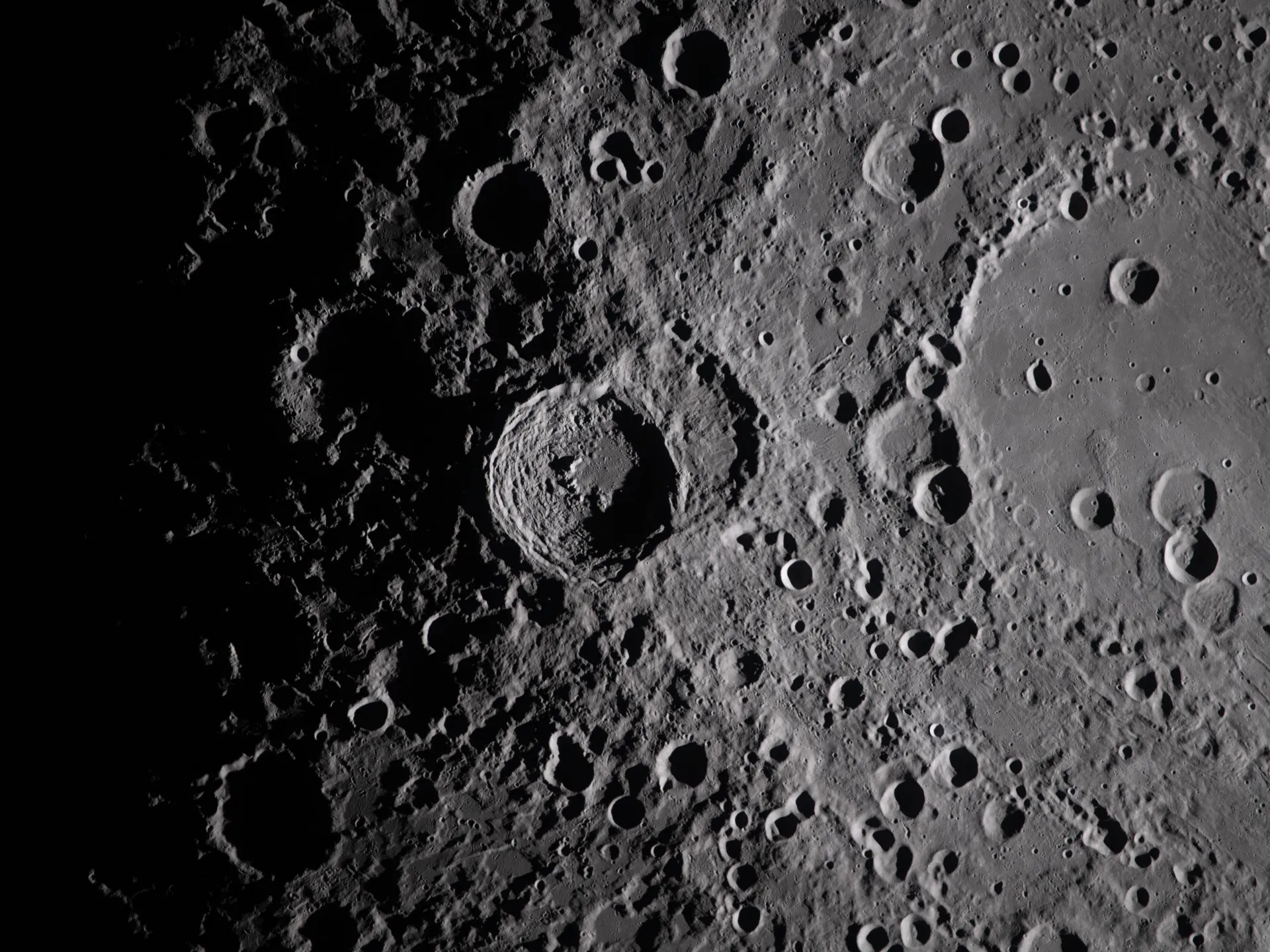
美国、俄罗斯和中国正竞相在月球上建造核反应堆,科学家警告可能存在放射性事故风险。
The United States, Russia and China are racing to build nuclear reactors on the moon, as scientists warn about the possible risk of a radioactive mishap.
1月,美国国家航空航天局(NASA)宣布计划在2030年底前在月球上开发核反应堆。俄罗斯与中国合作,目标是在2036年前实现同样的目标,以推进太空探索。
In January, NASA, the US space agency, announced plans to develop a nuclear reactor on the moon by the end of 2030. Russia, working with China, aims to do the same by 2036 as they strive to advance space exploration.
这些反应堆将为开采月球陨石坑深处冻结的水提供动力,科学家认为这些水可为未来的基地提供饮用水、空气和火箭燃料。反应堆还将为月球基地供电。以下是目前已知的情况。哪些国家想在月球上部署核反应堆?
The reactors will be needed to power mining of frozen water trapped deep in the moon’s craters, which scientists believe could supply drinking water, air, and rocket fuel for future bases. The reactors would also provide power for lunar bases. Here is what we know. Which countries want to put nuclear reactors on the moon?
美国表示,NASA的“月球反应堆1号”将产生20千瓦电力,足以独立运行五年而无需维护。
The US said NASA’s Lunar Reactor 1 would produce 20 kilowatts of electricity, creating enough power to run on its own for five years without maintenance.
NASA的反应堆设计紧凑,重量在6000公斤(13200磅)以下,可装入长3.7米(12英尺)、宽5.5米(18英尺)的火箭隔间内。
NASA’s reactor is designed to be compact, weighing under 6,000kg (13,200 lbs) and will fit inside a rocket compartment measuring 3.7 metres (12 feet) long by 5.5 metres (18 ft) wide.
俄罗斯也在建造一座核反应堆,预计产生10千瓦电力。这座名为“塞勒涅”的反应堆可在无需维护的情况下运行十年。它将在2036年左右为中国主导的月球基地供电。
Russia is also building a nuclear reactor, which is expected to produce 10 kilowatts. The reactor, called Selena, will be able to run for a decade without maintenance. It will be ready to power a Chinese-led moon base by about 2036.
“塞勒涅”反应堆预计将比NASA的更轻,重量约为1100至1300公斤(2400至2800磅),以便在月球表面实现更轻松、更柔和的着陆。这并非核反应堆首次被送入外太空。
The Selena reactor is expected to be even lighter than NASA’s, weighing about 1,100 to 1,300kg (2,400 to 2,800 lbs) for an easier and softer landing on the lunar surface. This would not be the first time nuclear reactors have been placed in outer space.
苏联在20世纪60年代末至80年代间,将30多座核裂变反应堆发射入地球轨道,为冷战时期的间谍卫星供电。
The Soviet Union launched more than 30 nuclear fission reactors into Earth’s orbit between the late 1960s and the 1980s to power spy satellites during the Cold War.
这些重约1000公斤(2200磅)的小型反应堆,利用铀原子裂变产生的热量,为雷达追踪间谍卫星提供3至5千瓦电力。它们现已不再运行,且没有其他国家将核反应堆送入太空。
The small, 1,000kg (2,200 lbs) reactors powered radar-tracking spy satellites using heat from splitting uranium atoms into 3 to 5 kilowatts of electricity. They are no longer operational, and no other country has sent nuclear reactors into space.
美国在过去70年里在先进太空核计划上投入了200亿美元,但自1965年的一次实验以来,从未成功将核反应堆发射入太空。
The US has spent $20bn on advanced space nuclear programmes over the past 70 years, but has never successfully launched a nuclear reactor into space since an experiment in 1965.
那次实验旨在测试核能是否能为卫星供电。起初运行正常,但仅43天后便意外关闭,原因是卫星的一个非核电气部件发生故障。它至今仍漂浮在太空中。
That experiment was carried out to see if nuclear energy could power a satellite. It worked at first but accidentally shut down after just 43 days because a non-nuclear electrical part of the satellite broke down. It is still floating up in space today.
由于预算优先级的变化,美国此前开发核项目的尝试均已停滞。 如何将核反应堆送上月球?
Previous attempts by the US to develop nuclear projects have stalled due to shifting budget priorities How do you put nuclear reactors on the moon?
首先,科学家必须在地球上建造反应堆,随后利用一艘机器人航天器将其运往月球,该飞船通过点火火箭发动机实现缓慢而平稳的着陆。
First, scientists will have to build a reactor on Earth, which will then be transported to the moon using a robotic spacecraft that fires rocket engines for a slow and gentle touchdown.
美国和俄罗斯均表示,将在抵达月球前保持反应堆关闭状态,以将放射性风险降至最低,直至最后一步。
Both the US and Russia say they would keep their reactors switched off until they reach the moon, to keep radioactive risk at a minimum until the last step.
一旦在月球上部署完毕,反应堆将被设计为可在无需维护的情况下运行数年,为从事月表采矿的基地供电。为什么月球需要核反应堆?
Once set up on the moon, the reactors would be designed to run without maintenance for years, supplying power to bases engaged in mining on the lunar surface. Why does the moon need a nuclear reactor?
美国、中国和俄罗斯都希望在月球南极附近建立基地,靠近已知的水冰来源。这些冰位于永久阴影的陨石坑中,那里数百万年来未见阳光。
The US, China and Russia want to build bases near the moon’s south pole, close to the known sources of water ice. The ice sits in the permanently shadowed craters, where sunlight has not reached for millions of years.
除了为月球基地供电,反应堆还将为采矿提供足够的动力。目前,美国、俄罗斯和中国都想开采冻结的水,一旦释放,这些水可用于维持月球基地上人类的生存与科研活动。
As well as powering the moon bases, the reactors would also supply enough power for mining. So far, the US, Russia and China want to mine for frozen water which, once released, could be used to support life on the moon at bases where people could live and conduct research.
科技亿万富翁埃隆·马斯克也表示,他想提取铝、钛和硅等矿物,这些是制造卫星所需的材料。
Tech billionaire Elon Musk has also said he wants to extract minerals such as aluminium, titanium, and silicon, required for manufacturing satellites.
太阳能对此类任务的支持有限,因为阳光只在一半时间内照射月球上的任意一点,所以太阳能电池板每个月会陷入约两周的黑暗。
Solar power for such endeavours would be limited as the sun shines on any one spot on the moon only half the time, so solar panels would go dark for about two weeks every month.
班戈大学核未来研究所(NFI)所长西蒙·米德尔伯格对半岛电视台表示,太阳能过于有限,无法为月球基地提供所需的稳定能量流,而电池和柴油成本过高,因为所有东西都必须从地球发射。
Simon Middleburgh, director of Bangor University’s Nuclear Futures Institute (NFI), told Al Jazeera that solar power is too limited to provide the steady flow of energy a moon base would need, while batteries and diesel are too costly, because everything has to be launched from Earth.
米德尔伯格说,核能是“显而易见的选择”,并补充说必须“负责任地”使用。
Nuclear energy is the “obvious choice”, Middleburgh said, adding that it must be used “responsibly”.
他补充说,可能需要三到四座反应堆协同工作,才能为开采月球冰资源以及维持月球基地运行提供足够的能量。为何如此匆忙?这归结为地缘政治。
It is likely that three or four reactors working together would be required to provide sufficient energy for mining lunar ice as well as supporting a moon base, he added. Why the rush? It comes down to geopolitics.
美国总统唐纳德·特朗普在2025年12月的一项行政命令中,责令美国国家航空航天局(NASA)建造一座月球反应堆,并准备于2030年前发射。中国国家主席习近平和俄罗斯总统弗拉基米尔·普京也公布了类似计划。
In a December 2025 executive order US President Donald Trump ordered NASA to build a lunar reactor ready to launch by 2030. Chinese President Xi Jinping and Russian President Vladimir Putin have revealed similar plans.
今年8月,美国交通部长肖恩·达菲表示,美国正处于“登月竞赛中,与中国竞争”。
In August this year, Sean Duffy, the US transportation secretary, said the US is in a “race to the moon, in a race with China”.
米德尔伯格表示,2030年的最后期限可能针对的是反应堆本身的建造,但更难的部分将是登月并在月球上安全部署系统。
Middleburgh said the 2030 deadline is likely for building the reactor itself, but the harder part will be landing on the moon and safely setting up the system.
他说:“最大的挑战其实根本不是核技术;而是发射法规、发射平台本身的可用性,以及在月球表面着陆并建立系统,使其做好可持续、安全运行的准备。”
“The biggest challenge isn’t really the nuclear technology at all; it is the regulation for launch, the availability of a launch platform itself, and the landing and setting up the system on the lunar surface ready for it to be operated sustainably and safely,” he said.
登月竞赛也发生在地球之外军事竞争日益加剧之际。9月,美国宣布已将武器部署入轨,官员称这些武器将用于保卫美军力量。
The race to the moon also comes amid growing military competition beyond Earth. In September, the US announced it had deployed weapons into orbit which officials said would be used to defend US forces.
虽然美国未提供关于这些“武器”的细节,但专家表示,它们很可能是基于太空的通信干扰器,而非发动动能打击的武器。
While the US did not provide details about these “weapons”, experts say they are likely to be space-based communications jammers, rather than kinetic ones that launch strikes.
这一宣布引发了对“太空武器”概念或将太空用于军事目的的担忧,包括潜在针对提供GPS、通信和情报的卫星。可能出什么问题?
The announcement raised concerns about the concept of “space weapons” or the use of space for military purposes, including the potential targeting of satellites that provide GPS, communications and intelligence. What could go wrong?
米德尔伯格告诉半岛电视台,反应堆发射过程中的事故并不像听起来那么可怕,因为铀在用于反应堆之前,单独存在时放射性并不强。然而,一旦反应堆启动,情况就会改变。分析人士表示,如果正在运行的反应堆坠回地球,风险会更大。
Middleburgh told Al Jazeera that an accident during the launch of the reactors would be less frightening than it sounds because uranium alone, before it is used in a reactor, is not very radioactive. However, that changes once the reactor is switched on. The risk is bigger if a running reactor falls back onto Earth, analysts say.
1978年,一颗携带反应堆的苏联卫星“宇宙954号”,将放射性物质散布在加拿大北部近124,300平方公里(48,000平方英里)的区域内。
In 1978, a Soviet satellite carrying a reactor, Kosmos 954, scattered radioactive material across nearly 124,300 square km (48,000sq miles) of northern Canada.
这起事故迫使军方进行了一次昂贵的清理行动,清除高放射性碎片和微观颗粒。
The accident forced an expensive military cleanup of the highly radioactive fragments and microscopic particles.
米德尔伯格说,在月球上,如果发生类似事故,任何受污染区域都将“极度局部化”。谁拥有月球主权?
On the moon, Middleburgh says, any contaminated area would be “extremely localised” if there were to be a similar accident. Who has sovereignty over the moon?
从法律上讲,无人拥有。《1967年外层空间条约》禁止国家“宣称拥有”月球或其任何部分,尽管它们拥有发射到那里的设备的所有权。该条约并未禁止在太空使用核能。
Legally, no one. The 1967 Outer Space Treaty bans countries from “claiming” the moon or any part of it, though they have ownership of the equipment they send there. The treaty does not ban nuclear power in space.
非营利组织“月球政策平台”主任安东尼诺·萨尔梅里告诉半岛电视台,只要遵循条约原则,包括和平利用和避免有害污染,反应堆就是合法的。
Antonino Salmeri, director of the Lunar Policy Platform, a nonprofit, told Al Jazeera that a reactor can be lawful if it follows the treaty’s principles, including peaceful use and avoiding harmful contamination.
美国亚利桑那州行星科学研究所高级科学家诺伯特·肖尔格霍费尔告诉半岛电视台,所有签署国“都有权开采月球表面,只要是为了和平目的”。
Norbert Schorghofer, a senior scientist at the Planetary Science Institute in Arizona, US, told Al Jazeera all signatories “have the right to mine the lunar surface as long as it is for peaceful purposes”.
哪个国家的反应堆率先到达“最佳”水冰,就可能宣称一个“安全区”,这虽不构成领土宣称,但运作起来却类似。萨尔梅里表示,宣称安全区不产生领土权利,但反应堆本身就会将他国排除在外,因为没人想进入放射性区域。
Whichever country’s reactor gets to the “best” water ice first could claim a “safety zone”, which would not be a land claim but could operate like one. Salmeri said declaring one creates no territorial rights, but a reactor shuts others out anyway, because nobody wants to enter a radioactive area.
“月球政策平台”上个月发布的一份报告指出了另一个问题:如果出了问题,谁负责?报告称,现有责任规则并未设计用于监管在另一颗天体上使用长期危险设备。
A Lunar Policy Platform report released last month points to another problem: Who is responsible if something goes wrong? The report says existing liability rules have not been designed to regulate the use of long-term hazardous equipment on another celestial body.