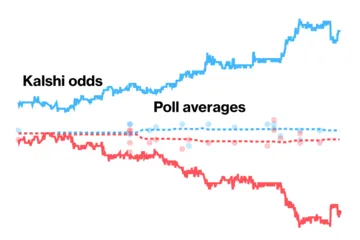
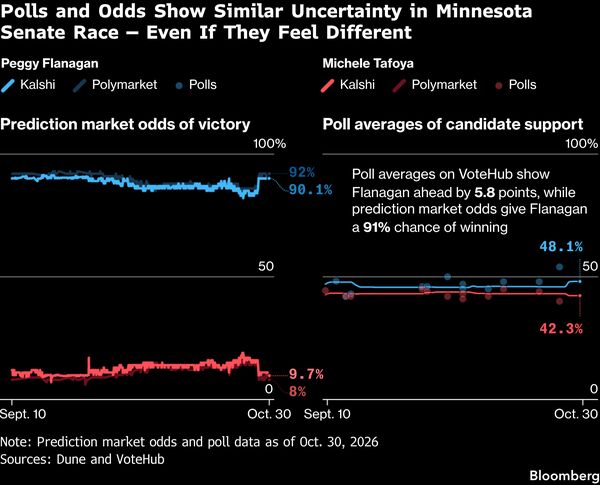
在外行眼中,预测市场似乎表明明尼苏达州参议院竞选的胜者几乎已成定局:Kalshi 的赔率显示民主党人佩吉·弗拉纳根(Peggy Flanagan)有 90% 的获胜几率。但看民调,这场竞选似乎更接近。VoteHub 的平均数据显示弗拉纳根仅领先不到 6 个百分点,这是一个稳固但并不稳妥的优势。
To the untrained eye, prediction markets suggest the winner of the Minnesota Senate race is almost guaranteed: Kalshi odds give Democrat Peggy Flanagan a 90% chance of winning. Looking at the polls, the race might seem closer. Averages from VoteHub have Flanagan leading by just under six percentage points, a solid but not safe margin.
这些数字看似矛盾。事实上,它们只是以两种方式捕捉了相似的图景。
Those numbers may seem contradictory. In fact, they’re really just two ways to capture a similar picture.
本选举周期,预测市场赔率受到更多关注,在新闻报道、竞选材料和政治广告中占据显著位置。有人指责 Kalshi 和 Polymarket 等平台在其看好的候选人落选时“判断失误”。也有人拿着候选人赔率随开票结果暴跌的截图,把预测市场当作舞弊的证据。
Prediction market odds have drawn more attention this election cycle, with prime placement in news coverage, campaign materials and political ads. Some people have accused platforms like Kalshi and Polymarket of blowing it when the candidate they favored lost. Others, armed with screenshots of a candidate’s odds plummeting as results come in, have held up prediction markets as evidence of foul play.
尽管有“真相机器”的营销噱头,预测市场和民调一样,都有其局限性。但针对它们的部分反弹,源于对它们能告诉我们什么——以及不能告诉我们什么——的错误假设。
Despite their “truth machine” marketing, prediction markets have their limitations, just like polls. But part of the backlash against them is rooted in misguided assumptions about what they tell us — and what they don’t.
就中期选举而言,Kalshi 和 Polymarket 上的赔率总体指向与民调相同的方向。虽然预测市场上 75 比 25 的分布,在 5 个百分点的民调领先优势旁边看起来像是一场大获全胜,但这两组数字实际上在很大程度上是一致的。这是因为它们衡量的东西不同。民调领先幅度衡量的是候选人的领先规模,而市场赔率衡量的是该候选人在选举日获胜的概率。将两者在关键中期选举竞选中进行对比,民调反映了市场赔率落脚点的大部分情况。
When it comes to the midterms, the odds on Kalshi and Polymarket are generally pointing in the same direction as polls. While a 75-25 split in the prediction markets can look like a massive blowout next to a 5-point polling margin, those numbers are in fact largely aligned. That’s because they measure different things. A poll margin is the size of a candidate’s lead, while market odds are the chance of that candidate winning on Election Day. Compare the two across key midterm races, and the polls reflect most of where the markets land.
一些预测市场专家对人们如何解读这些赔率表示担忧。“我们正试图教会人们接受一种关于政治、结果和预测的新思维方式,”专注于政治的预测市场平台 PredictIt 的联合创始人约翰·菲利普斯在上周的一次预测市场会议上表示。“这是概率,而不是胜利幅度。”话虽如此,确实存在一些竞选中民调与市场真正存在分歧。
Some prediction market experts are expressing concern about how people interpret these odds. “We're trying to teach people to accept the new way of thinking about politics and outcomes and forecasting,” John Phillips, co-founder of the politics-focused prediction market platform PredictIt, said during a prediction market conference last week. “This is probability as opposed to margin of victory.”That said, there are some races where polls and markets genuinely disagree.
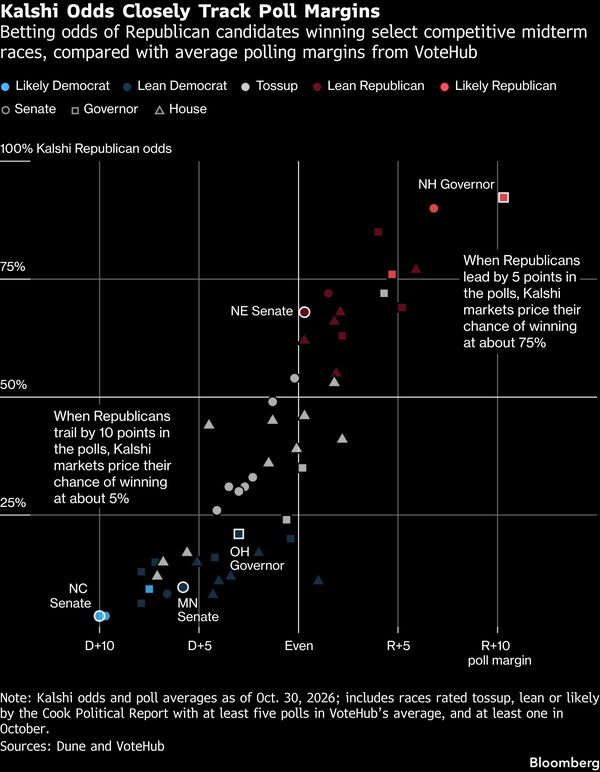
内华达州和俄勒冈州的州长选举民调显示势均力敌,而预测市场则看好民主党。在南卡罗来纳州和内布拉斯加州,民调显示共和党参议员候选人以微弱优势领先,而市场暗示两人获胜几率均约为 70%。
Governor races in Nevada and Oregon are polling as toss-ups, while prediction markets favor the Democrats. In South Carolina and Nebraska, polls show the Republican Senate candidates with slim leads, while markets imply a roughly 70% chance of victory for both.
民调与预测市场出现分歧的原因有很多。交易者可能在实时对新闻做出反应,从而偏离了仅捕捉某一时刻情绪快照的民调。用户可能根据特权信息下注。(Kalshi 和 Polymarket 都曾就中期选举期间的多起内幕交易案件展开调查。)有些人可能只是凭感觉行事。但很难完全解释这些差异。预测市场展示的是交易者如何行为,而非为什么。
Polls and prediction markets can diverge for a number of reasons. Traders might be reacting to news in real time, deviating from polls that capture a snapshot of sentiment. Users might place wagers informed by privileged information. (Kalshi and Polymarket have both investigated numerous cases of insider trading around the midterms.) Some might just be going off of vibes. But it’s hard to fully account for the differences. Prediction markets show how traders behave, not why.
即使二者一致,民调与预测市场回答的也是不同问题。民调估算的是某一时刻谁领先以及领先程度,不确定性体现在误差范围内。预测市场则将资金押注转化为候选人获胜可能性的估算,不确定性则内嵌于赔率本身。
Even when they’re aligned, polls and prediction markets answer different questions. A poll estimates who leads and to what degree at a moment in time, with uncertainty reflected in a margin of error. A prediction market translates financial wagers into an estimate of a candidate’s likelihood of winning, with uncertainty baked into the odds themselves.
在最近的预测市场会议上,资深政治记者查克·托德对公众难以做出这种区分表示沮丧。“你会登上一架只有80%几率能着陆的飞机吗?”他说,“人们突然就开始以不同的方式思考概率了。”
At the recent prediction market conference, veteran political journalist Chuck Todd expressed frustration about the general public’s difficulty making this distinction. “Would you get in an airplane that only had an 80% chance of landing?” he said. “Then suddenly people start thinking about probability differently.”
但内部人士有时谈论预测市场时,仿佛它们拥有水晶球般的预测能力。去年,Polymarket首席执行官谢恩·科普兰在《60分钟》节目中表示,预测市场是“目前人类拥有的最准确的东西”。唐纳德·特朗普赢得2024年总统大选后,Kalshi首席执行官塔雷克·曼苏尔宣称,他的平台“被证明是预测选举结果最准确的来源”。当这些市场似乎预测正确时,高管们谈论自家市场的那种确定性,有助于解释为什么当它们预测失误时,一些人会感到被误导。
But insiders sometimes talk about prediction markets like they have the predictive powers of a crystal ball. Last year, Polymarket CEO Shayne Coplan told 60 Minutes that prediction markets are “the most accurate thing we have as mankind right now.”After Donald Trump won the 2024 presidential election, Kalshi CEO Tarek Mansour declared that his platform “proved to be the most accurate source of predicting election outcomes.”The certainty with which these executives talk about their markets when they seem to get it right helps explain why some people feel misled when they don't.
在8月威斯康星州州长初选前一晚,Kalshi的一个市场给进步派候选人弗朗西斯卡·洪95%的获胜几率。当她最终以不到一个百分点的差距落败时,批评者指责这次选举是预测市场的一次失误。
The night before Wisconsin’s gubernatorial primary in August, a Kalshi market gave progressive candidate Francesca Hong a 95% chance of winning. When she ended up losing by less than one percentage point, critics pointed to the election as a prediction market misfire.
巴西总统大选后,Kalshi因在路易斯·伊纳西奥·卢拉·达席尔瓦击败弗拉维奥·博尔索纳罗前,给后者80%的获胜几率,而遭到类似批评。在X平台上,曼苏尔称这是许多“不懂概率的家伙”案例之一。在随后的来回争论中,这位高管承认,关于预测市场“预测中了”2024年美国总统大选结果的说法可能言过其实,加剧了人们对概率的困惑。
Following Brazil’s presidential election, Kalshi was subjected to similar criticism for giving Flávio Bolsonaro an 80% chance of victory before he was defeated by Luiz Inácio Lula da Silva. On X, Mansour said it was one of many examples of a “dude not understanding probability.”In an ensuing back-and-forth, the executive conceded that claims of prediction markets “calling” the 2024 US presidential result may have overstated the data, contributing to confusion over probabilities.
这些辩论并非新鲜事。选举预测者几十年来一直在为选举结果分配概率,将民调以及所谓的基本面——如党派倾向、连任优势、筹款能力和候选人实力——输入统计模型。内特·西尔弗于2008年帮助推广了这一做法,当时他的FiveThirtyEight模型在50个州中有49个州正确预测了总统选举胜者,四年后又实现了50个州全中。
These debates aren’t new. Election forecasters have been assigning probabilities to election outcomes for decades, feeding polls along with so-called fundamentals — such as partisan lean, incumbency, fundraising and candidate strength — into statistical models. Nate Silver helped popularize the practice in 2008, when his FiveThirtyEight model correctly favored the presidential winner in 49 out of 50 states and then went 50 for 50 four years later.
但在2016年,几乎所有主要模型都看好希拉里·克林顿胜过唐纳德·特朗普。《纽约时报》的Upshot模型在选举日前给克林顿85%的胜选概率,但随着选票陆续统计,概率急剧转向特朗普。这一变化由“指针”这一类似速度计的图形实时呈现,该图形会波动以反映每位候选人的获胜可能性。
But in 2016, almost every major model favored Hillary Clinton over Donald Trump. The New York Times’ Upshot model gave Clinton an 85% chance of winning going into Election Day, but swung sharply toward Trump as returns rolled in. The change was depicted in real time by the Needle, a speedometer-like graphic oscillating to reflect each candidate’s likelihood of winning.
FiveThirtyEight比大多数模型更为谨慎,但也低估了特朗普,将其胜选概率定为29%。事后,关于模型是否失效,还是公众将71%的概率误解为必胜,的争论随之展开。
FiveThirtyEight was more cautious than most, but also underestimated Trump at a 29% chance. In the aftermath, a debate broke out over whether the models had failed or if the public had misperceived a 71% chance as a sure thing.
本轮选举周期,Polymarket和Kalshi在很大程度上与预测模型保持一致。在最大的问题——哪个政党将控制参议院——上,彭博社调查的大多数模型给予民主党赢得51个或更多席位的概率在62%至79%之间。截至周五,Kalshi的赔率处于该区间中间,为71%。
This election cycle, Polymarket and Kalshi are largely in line with the forecasting models. On the biggest question — which party will gain control of the Senate — most models surveyed by Bloomberg give the Democrats a 62% to 79% chance of winning 51 or more seats. As of Friday, Kalshi’s odds fell in the middle of that range at 71%.
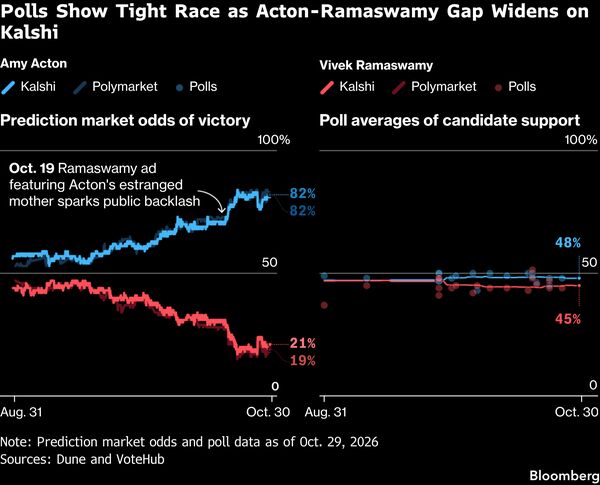
支持预测市场的一个常见论点是,它们可以即时响应选民情绪的变化,而民调本质上存在滞后。在维韦克·拉马斯瓦米(俄亥俄州州长共和党候选人)发布一则有争议的攻击广告后,Kalshi和Polymarket的交易员提高了其对手、民主党人艾米·阿克顿的胜选概率。但在民调汇总网站和许多预测中,这场竞选仍然看起来和几周前一样胶着。
A common argument in favor of prediction markets is that they can react to shifts in voter sentiment instantaneously, while polls are inherently on a lag. Following a controversial attack ad released by Vivek Ramaswamy, the Republican candidate for Ohio governor, traders on Kalshi and Polymarket boosted the odds of his opponent, Democrat Amy Acton. In polling aggregators and many forecasts, the race still appears just as close as it was a few weeks ago.
“当你谈论一场常规选举,当没有发生什么特别不寻常的事情时,基于民调数据和其他各类数据的民调和模型在生成预测方面做得相当不错,”巴纳德学院经济学教授、研究预测市场的拉吉夫·塞西说。“但当真正不寻常的事情发生时,市场能够对此做出调整并作出反应。”塞西说,民调仍然是预测市场最重要的输入之一。交易员在下注时密切关注民调结果。另一方面,越来越多的模型将预测市场纳入其预测,形成一种循环关系,使得很难在两者之间划清界限。
“When you're talking about a routine election, when nothing terribly unusual is happening, then polls and models that are based on polling data and other kinds of data do a pretty good job of generating forecasts,” said Rajiv Sethi, an economics professor at Barnard College who studies prediction markets. “But when something really unusual happens, then markets are able to adjust to it and respond to it.”Polls are still one of the most important inputs for prediction markets, Sethi said. Traders follow their results closely as they place their wagers. On the flip side, a growing number of models factor prediction markets into their forecasts, creating a circular relationship that makes it tricky to draw a clear line between one and the other.
随着选举预测市场进入政治、竞选传播和新闻报道,它们吸引的目光前所未有。一些专家正在敲响警钟,担忧其对民主的下游影响。
Election prediction markets are getting more eyeballs than ever as they make their way into political s, campaign communications and news coverage. Some experts are sounding the alarm about their downstream effects on democracy.
预测市场已被用于在选举结束后对选举公正性提出质疑。据《塞马弗》率先报道,在洛杉矶市长初选期间,Kalshi要求付费政治影响者删除暗示候选人斯宾塞·普拉特被“抢劫”的帖子,并以他在Kalshi市场中曾一度强劲的赔率为证。
Prediction markets have been used to cast doubt on the integrity of elections after they conclude. Amid the Los Angeles mayoral primary, Kalshi asked paid political influencers to remove posts that suggested candidate Spencer Pratt was being robbed, pointing to his once-strong odds in a Kalshi market as evidence, as Semafor first reported.
随着选举结果陆续公布,选举公正性专家正准备应对更多基于预测市场赔率的欺诈指控。“我们预计预测市场将在选举之夜的谣言中扮演非常重要的角色,”华盛顿大学知情公共中心研究员普里娅·达夫卡说。
Election integrity experts are bracing for more claims of fraud based on prediction market odds as the results trickle in. “We’re anticipating prediction markets playing a very big role in rumoring on Election Night,” said Priya Dhawka, a researcher at the University of Washington’s Center for an Informed Public.
正义中心最近的一项研究发现,预测市场赔率影响选民对选举格局的看法。这引发了对市场操纵可能性的担忧,因为策略性下注可以显著改变候选人赔率的表象,从而可能影响捐款人的去向和人们的投票方式。
A recent study from the Brennan Center for Justice found that prediction market odds impact voters’ views of the electoral landscape. That’s raised concerns about the possibility of market manipulation, as strategically placed bets can significantly shift the appearance of a candidate’s odds, potentially shaping where donors give and how people vote.
巴纳德学院经济学家塞西表示,如果没有适当监管,选举市场容易成为自我实现的预言,这使其不同于天气市场之类的东西,他说。
Without proper regulation, election markets are vulnerable to becoming self-fulfilling prophecies, said Sethi, the Barnard economist. That sets them apart from something like a market on weather, he said.
“我不会仅仅因为认为下雨的可能性更大,就让它下雨,”他说。“但选举有一个特性,即人们对将要发生的事情的看法,实际上可能会影响实际发生的事情。”
“I’m not going to make it rain simply by thinking that it’s more likely to rain,” he said. “But elections have the property that people’s beliefs about what’s going to happen can actually affect what happens.”