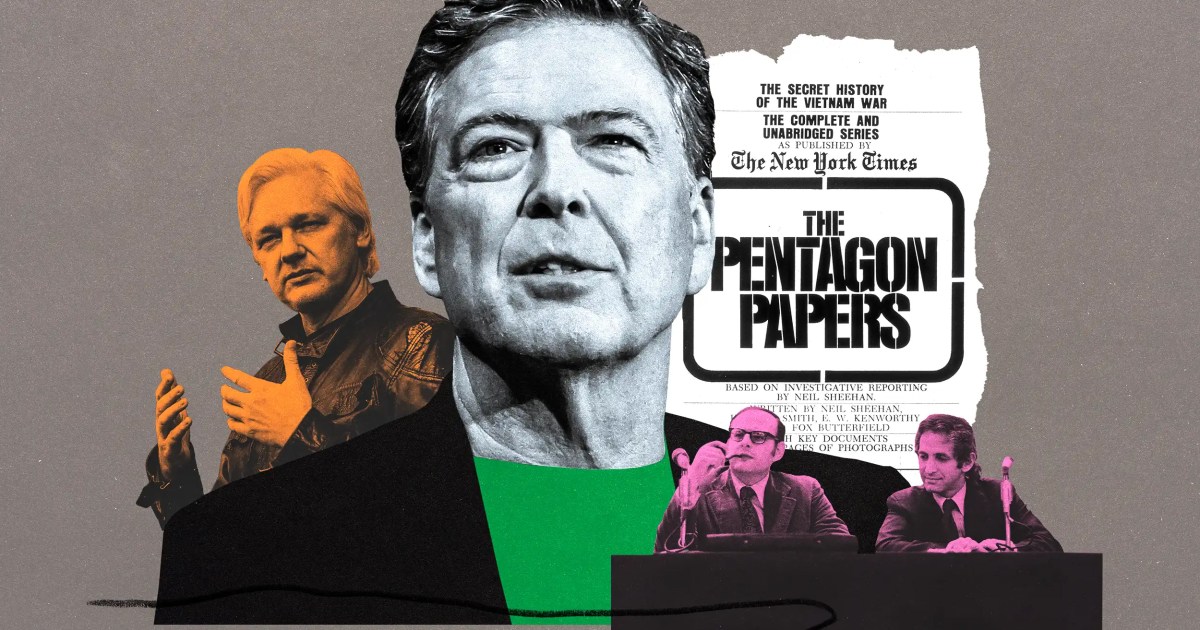
最新指控于周一公布,指控前联邦调查局局长詹姆斯·科米违反《间谍法》传递国防信息。检察官称,科米指示工作人员就一篇路透社关于电子邮件监控的报道与《纽约时报》交谈,科米认为该报道不准确——这一指控听起来与间谍活动并无多大关联。
The latest charges against James Comey, made public Monday, accuse the former FBI director of transmitting national defense information in violation of the Espionage Act. Prosecutors say Comey directed staffers to talk to the New York Times about a Reuters story regarding email surveillance that Comey believed to be inaccurate — an allegation that doesn’t sound much like espionage.
该法条既被用于也被用来对付两党官员:唐纳德·特朗普总统因在海湖庄园浴室藏匿机密文件而依据该法被起诉;前总统乔·拜登因保留一小批文件而接受依据该法的调查。希拉里·克林顿因担任国务卿期间使用私人电子邮件服务器处理公务而接受依据该法的潜在违法调查。最近,前国家安全顾问约翰·博尔顿因为其著作保留日记条目而依据该法被起诉。
The statute has been employed by and against officials from both political parties: President Donald Trump was charged under the law for hiding classified documents in a Mar-a-Lago bathroom; former President Joe Biden was investigated under it for retaining a smaller set of files. Hillary Clinton was investigated for potential violation of the law for using private email servers to conduct official business as secretary of state. More recently, former national security adviser John Bolton was charged under the act over his retention of diary entries for his book. (He pleaded guilty in June.)
(他于6月认罪。)那么,这部古老的法规是如何成为政治和审查性起诉的首选武器的?用于起诉科米及许多其他人的《间谍法》条款仅约130个单词,将与间谍活动毫无关系的行为定为犯罪。1917年法律规定,任何“通报、交付、传递……或故意保留”国防信息者均属重罪。信息是否属于机密并不重要,因为就像切片面包和青霉素一样,分类制度在该法条起草时尚不存在。
So how did this archaic statute become the go-to weapon for political and censorial prosecutions? The provision of the Espionage Act used against Comey and many others, which is only about 130 words, criminalizes conduct having nothing to do with spying. The 1917 law makes a felon of anyone who “communicates, delivers, transmits … or willfully retains” national defense information. It doesn’t matter if the information is classified because, like sliced bread and penicillin, the classification system did not exist when the statute was drafted.
该法范围极广,以至于动机无关紧要——良心驱使向记者揭露违法行为的举报人,或向国内记者透露情况的情报官员,其下场与向外国敌手出卖机密的间谍无异。
The law’s scope is so broad it makes motive irrelevant — a whistleblower exposing illegality to a journalist as an act of conscience, or an intelligence officer talking to domestic reporters, fares no better than a spy selling secrets to a foreign adversary.
其措辞极为模糊,按字面理解,甚至可能允许监禁仅仅阅读基于泄密的国家安全新闻报道的人。
And its wording is so vague that, taken literally, it could permit imprisoning people who merely read national security reporting based on leaks in the newspaper.
尼克松政府本可能会因“五角大楼文件”泄密者丹尼尔·埃尔斯伯格而将其终身监禁,但因其针对他的案件因检方渎职而瓦解,才未能如愿。其他政府也曾考虑利用该法规压制报道。但真正让政府对该法案的依赖蓬勃发展的,是在奥巴马政府时期。奥巴马司法部依据该法案起诉了多名记者的消息来源和举报人,并以这些调查为由对记者实施监控。奥巴马司法部依据《间谍法》起诉“泄密者”的数量远超历届政府总和,使这种做法常态化,为后续政府铺平了道路。
The Nixon administration probably would have locked up Pentagon Papers whistleblower Daniel Ellsberg for life had its case against him not collapsed due to prosecutorial misconduct. Other administrations contemplated using the statute to stifle reporting. But it was really during the Obama administration that government reliance on the act flourished. The Obama Justice Department indicted multiple journalists’ sources and whistleblowers under the act and cited these investigations as reasons to surveil reporters. The Obama DOJ prosecuted far more “leakers” under the Espionage Act than all prior administrations combined, normalizing the practice for future administrations.
特朗普延续了这一传统。1月,联邦执法人员突击搜查了《华盛顿邮报》记者汉娜·纳坦森的住所,缴获数TB数据,理由是指控一名消息来源涉嫌违反《间谍法》。检方主张有合理根据相信纳坦森本人因保留这些数据而违反了该法案,尽管她并未被起诉。今年早些时候,《纽约时报》一名自由撰稿人因其关于朝鲜的报道被传唤作证。10月,前中情局承包商伊恩·布林克斯曼因涉嫌向一名独立记者透露关于以色列政治动荡的情报评估,被指控违反该法案。
Trump has continued that tradition. In January, feds raided the home of Washington Post reporter Hannah Natanson and seized terabytes of data, citing alleged Espionage Act violations by a source. Prosecutors contended they had probable cause to believe Natanson herself had violated the act by retaining the data, although she wasn’t charged. A New York Times freelancer was subpoenaed earlier this year in connection to his reporting on North Korea. In October, Ian Brinksman, a former CIA contractor who allegedly told an independent journalist about intelligence assessments of political strife in Israel, was charged with violating the act.
人们担心特朗普会走得更远。他的国防部要求记者承诺不报道未经授权的信息,理由是索取此类信息违反联邦法律,即《间谍法》。更近期,特朗普政府援引该法,作为禁止MS NOW、CNN和《政客》进入白宫的理由之一。当拜登司法部继续特朗普1.0时期对维基解密发行人朱利安·阿桑奇的起诉时,官员们表示,阿桑奇是个例外,更传统的记者永远不会被类似指控。但据报道,特朗普正在寻找理想的测试案例,以起诉一名因报道而被起诉的记者。
There are fears that Trump will go even further. His Defense Department demanded that journalists pledge not to report unauthorized information by arguing that soliciting such information violates federal law, i.e., the Espionage Act. More recently, the Trump administration cited the act as part of its argument for banning MS NOW, CNN and Politico from the White House. When the Biden Justice Department continued Trump 1.0’s prosecution of WikiLeaks publisher Julian Assange, officials said that Assange was a unique case and that more conventional journalists would never be similarly charged. But Trump is reportedly seeking the ideal test case to prosecute a journalist for reporting.
现实是,无论哪个政党执政,官员们都会不断向记者提供敏感信息。如果华盛顿几乎所有人都因共享或接收国防信息而从技术上违法,那么检察官基本上可以随时起诉任何人,并在方便时忽视违规行为。这种潜在的危险现状随时都可能出现——但在一个公开政治化的司法部面前,情况更加严峻。
The reality is that officials share sensitive information with reporters all the time, no matter which political party is in control. If nearly everyone in Washington is technically breaking the law by sharing or receiving national defense information, then prosecutors can essentially charge whoever they want, whenever they want and overlook violations when convenient. This is a potentially dangerous status quo anytime — but even more so with an openly politicized Justice Department.
如果没有改革,未来的政府将继承同样的模糊法定语言和同样的不受约束的裁量权,或许会滥用这些权力来对付新的一批敌人。在此背景下,改革《间谍法》应该是一个容易推动的议题,尤其是考虑到公众如何通过涉嫌违反《间谍法》所能实现的新闻报道而变得更加知情,或从由此产生的改革中受益,例如爱德华·斯诺登揭露后随之而来的政策变化以及对国内监控的更高关注和审查,以及《五角大楼文件》公布后公众对越南战争看法的改变。
Absent reform, future administrations will inherit the same vague statutory language and the same unchecked discretion, to perhaps misuse against a fresh set of enemies. In this context, reforming the Espionage Act should be an easy sell, especially when considering how the public has become more informed through journalism enabled by alleged Espionage Act violations or benefited from resultant reforms, such as the policy changes and increased awareness and scrutiny of domestic surveillance that followed Edward Snowden’s revelations or the changes to public perceptions of the Vietnam War after the Pentagon Papers were published.
下一届国会需要从《间谍法》被滥用的两党历史中吸取教训,并支持拉希达·特莱布众议员提出的《丹尼尔·埃尔斯伯格新闻自由与举报人保护法案》。该法案将把《间谍法》的适用范围限制在真正的机密信息以及负有保护此类信息法定义务的政府雇员身上。它将要求政府证明被告意图损害美国或使外国势力受益,并允许被指控者辩称其行为是出于公共利益。
The next Congress needs to learn from this bipartisan history of Espionage Act abuse and get behind Rep. Rashida Tlaib’s Daniel Ellsberg Press Freedom and Whistleblower Protection Act. The bill would limit the Espionage Act’s reach to legitimately classified information and to government employees with a legal duty to protect it. It would require the government to prove that a defendant intended to harm the United States or benefit a foreign power, and it would allow those charged to argue that they were acting in the public interest.
《埃尔斯伯格法案》的任何改革都不会干扰对真正间谍活动的起诉。但它们将使任何政府更难利用一战时期的法律来清算现代政治恩怨或审查批评声音。
None of the Ellsberg Act’s reforms would interfere with prosecutions of actual espionage. But they would make it much harder for any administration to use a World War I-era law to settle modern-day political scores or to censor criticism.