詹斯·图劳(Jens Thurau) 2026年11月1日 芬兰已成为首个拥有核废料最终储存设施的国家。德国仍在寻找选址,而一些国家甚至尚未开始。预计总成本将达数十亿欧元。
Jens Thurau November 1, 2026 Finland has become the first country with a final storage facility for nuclear waste. Germany is still searching for a site, while some countries have yet to start. Costs are expected to total many billions of euros.
在谷歌上关注德国之声 芬兰最近成为世界上第一个批准建设核废料最终储存设施的国家 几乎没有任何环境和政治挑战能像处理核电站放射性废弃物那样复杂 在全球几乎所有拥有核电的国家中——目前约有31个国家正在运营或曾运营核电站——这个问题在很大程度上依然没有得到解决,尽管第一座大型核电站于1954年在苏联投入运行。
Prefer DW on Google Finland recently became the first country in the world to approve a nuclear waste final storage facility Hardly any environmental and political challenge is as complex as the disposal of radioactive waste from nuclear power plants In almost all of the world's nuclear-powered nations — some 31 countries currently operate or once operated nuclear power plants — the issue remains largely unresolved, despite the fact that the first large-scale nuclear power plant went online in the Soviet Union in 1954.
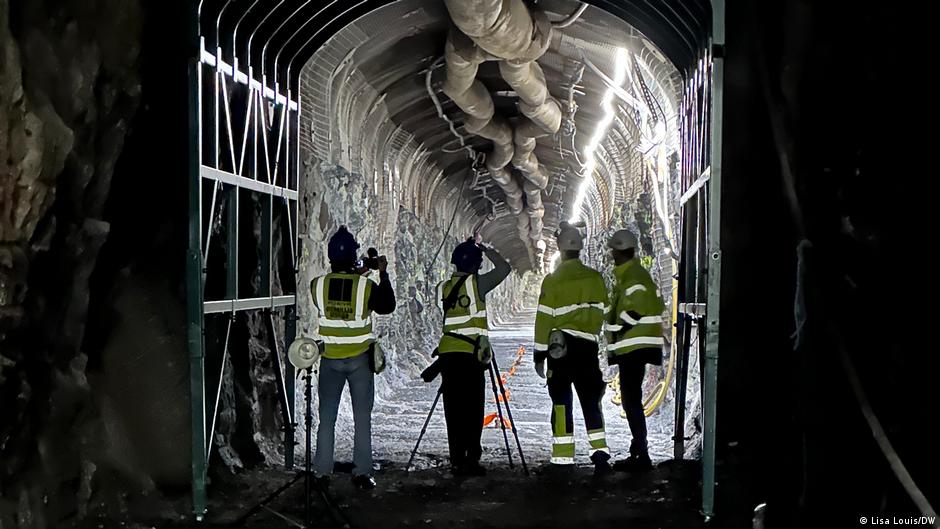
芬兰最近成为世界上第一个批准建设放射性核废料储存库的国家。它位于芬兰西部一个岛屿地下400米处,坐落于该国两座核电站之一的所在地。该项目历时约40年才完工。
Finland recently became the first country in the world to approve a repository for radioactive nuclear waste. Located 400 meters underground on an island in western Finland, it is situated at the site of one of the country's two nuclear power plants. The project took around 40 years to complete.
德国的搜寻工作已进行十年 然而在包括德国在内的其他所有国家,这个问题依然没有得到解决。用一个日常比喻来形容:垃圾已经放在外面等待收集,但垃圾车还没来。根本没有垃圾场可以运去。这并不是一个愉悦的景象,而且几乎没有人愿意住在这样的地方附近。
Germany's search underway for ten years Yet in every other country, including Germany, the problem remains unresolved. To make an everyday analogy: The garbage has already been placed outside for collection, but the garbage truck has not yet arrived. There is simply no landfill to take it to. It is not a pleasant sight, yet hardly anyone wants to live near such a site.
德国取得了一些进展:专门成立的联邦放射性废弃物处置公司(BGE)目前已寻找合适的选址近十年,该选址将像芬兰的储存库一样位于地下深处。
Germany has made some progress: The specially established Federal Company for Radioactive Waste Disposal (BGE) has now been searching for a suitable site for almost ten years, one that, like the Finnish repository, would be located deep underground.
大多数专家长期以来在一个问题上达成了一致:核废料,尤其是核电站中将保持数千年放射性的乏燃料元件,必须储存在地下。
Most experts have long agreed on one point: Nuclear waste, especially the spent fuel elements from nuclear power plants, which will remain radioactive for many thousands of years, must be stored underground.
核电对未来几代人的代价 要观看此视频,且德国只有5%的国土仍在评估范围内 德国希望在2050年之前确定最终处置库的选址。但这还有很长的路要走,这也是为什么中左翼社会民主党(社民党)环境部长卡尔斯滕·施奈德希望研究是否可以加速搜寻进程。
The toll of nuclear power on generations to come To view this video , and Only 5% of Germany's territory remains under consideration Germany hopes to identify a site for a final repository by 2050. But that is still a long way off, which is why Environment Minister Carsten Schneider of the center-left Social Democratic Party (SPD) wants to examine whether the search process can be accelerated.
政府表示,至少目前已经有了路线图。“俄罗斯、美国、英国和日本的程序还没有我们推进得那么远,”该部发言人斯特凡·加布里埃尔·豪费本周在例行政府新闻发布会上表示。“芬兰无疑是全球进展最快的国家。但德国处于领先国家之列。”本周,联邦放射性废物处置公司宣布,德国仅有5%的土地面积、分布在该国16个联邦州中的11个,仍在被考虑作为最终处置库的潜在选址。
And, the government says, at least there is a roadmap in place. "Russia, the United States, the United Kingdom, and Japan have not yet advanced their procedures as far as we have," ministry spokesperson, Stephan Gabriel Haufe, said at a regular government press conference this week. "Finland is certainly the country making the fastest progress worldwide. But Germany is among the leading countries." This week, the BGE announced that only 5% of Germany's land area, spread across 11 of the country's 16 states, remains under consideration as a potential site for a final repository.
该机构正与地质学家、核专家、物理学家以及普通公民和政治家进行磋商。目前已经明确的是,在数十年的核电生产过程中产生的核废料将留在德国。
The agency is consulting geologists, nuclear experts, and physicists, as well as citizens and politicians. What is already clear, is that the nuclear waste generated during decades of nuclear power production will remain in Germany.
德国的核废料目前正储存在核电站附近的临时储存点,例如戈尔勒本的这个储存点 德国已经淘汰了核电 大部分核废料目前储存在其产生地点或附近。其中包括目前正在退役的19座前核电站以及几个研究设施。
Nuclear waste in Germany is currently being stored at interim sites near nuclear power stations, such as this one in Gorleben Germany has phased out nuclear power Most of the waste is currently stored at or near the sites where it was generated. These include the 19 former nuclear power plants currently being decommissioned, as well as several research facilities.
2011年,在日本福岛发生反应堆灾难后,德国决定淘汰核能的商业使用,最后一座核电站于2023年关闭。然而,核废料仍留在临时储存设施中。
In 2011, following the reactor disaster in Fukushima, Japan, Germany decided to phase out the commercial use of nuclear energy, and the last nuclear power plant was shut down in 2023. The waste, however, remains in interim storage.
“必须证明,放射性废物处置库在极长的一段时间内将保持安全,”BGE发言人达格马尔·德默(Dagmar Dehmer)表示。“在芬兰,这意味着10万年;在德国、瑞士和法国,则是100万年。但无论科学家预测到多么遥远的未来,所涉及的工作都是巨大的。它需要对时间推移的发展、地质与技术的相互作用以及放射性核素的衰变进行详细分析,并评估这些因素如何影响安全。”
"It must be shown that a repository will remain safe over a very long period of time," said BGE spokesperson Dagmar Dehmer. "In Finland, that means 100,000 years; in Germany, Switzerland, and France, one million years. But no matter how far into the future scientists project, the effort involved is enormous. It requires a detailed analysis of developments over time, the interactions between geology and technology, and the decay of radionuclides, as well as an assessment of how these factors affect safety." 400 meters underground, protected by a rock barrier The procedure is indeed complex: First, potential sites are evaluated for their geological suitability.
在地下400米深处,受岩石屏障保护这一程序确实很复杂:首先,要评估潜在地点的地质适宜性。岩层在400米深处能否保持稳定?地下水是否会被污染?目标是确定这样一个地点:处置库将被大约100米厚的岩层包围,从而提供一道天然屏障。合适的地质构造包括黏土层、花岗岩和岩盐层。
Will the rock formation remain stable at a depth of 400 meters? Could groundwater become contaminated? The goal is to identify a location where the repository would be surrounded by a rock layer around 100 meters thick, providing a natural barrier. Suitable geological formations include layers of clay, granite, and rock salt.
随着要求越来越严格,纳入考虑的潜在地点也越来越少。其他因素,例如距离大城市的远近,直到流程的后期才会发挥作用。无论是城市地区还是乡村地区,几乎没有哪个社区会欢迎放射性废物处置库。
As the requirements become progressively stricter, fewer and fewer potential sites remain under consideration. Other factors, such as proximity to major cities, come into play only much later in the process. Few communities are likely to welcome a repository for radioactive waste, whether in an urban area or in the countryside.
自20世纪70年代以来,核能一直是德国一个充满争议的问题 德默:“芬兰对政府行动抱有极大信任” 建立和维护信任也是德默工作的一部分。她经常需要解释,为什么处理核时代遗留问题如此重要,无论人们对核能持何种立场。
Nuclear power has been a controversial issue in Germany since the 1970s Dehmer: 'Finland has great trust in government action' Building and maintaining trust is also part of Dehmer's job. She often has to explain why it is important to deal with the legacy of the nuclear age, regardless of where people stand on nuclear energy.
德默认为,芬兰成功做到了这一点。“芬兰对政府行动有着高度的信任,”她表示,“该国的监督和许可机构——STUK(芬兰辐射与核安全局)是最受尊崇的机构之一。德国可以向芬兰学习,保持一致性,避免频繁改变方向,并展现出取得成功所需耐性。”核废料的处置极其昂贵。时至今日,寻找最终处置场以及在原反应堆所在地储存核废料的费用每年仍约为14亿欧元(折合16亿美元)。
Finland has succeeded in doing so, Dehmer believes. "There is a high level of trust in government action in Finland," she said. "The country's supervisory and licensing authority, STUK, is one of its most respected institutions. Germany can learn from Finland by remaining consistent, avoiding frequent changes in direction, and demonstrating the patience needed to achieve a successful outcome." The disposal of nuclear waste is extremely expensive. Even today, the search for a final repository and the storage of nuclear waste at former reactor sites cost around €1.4 billion ($1.6 billion) per year.
专家估计,最终处置场建成后,其本身的成本约为140亿欧元(折合164亿美元)。如果一切按计划进行,最终将有28,000立方米的放射性废料被永久储存在地表深处。
Experts estimate that the final repository itself will cost roughly €14 billion ($16.4 billion) once completed. If all goes according to plan, 28,000 cubic meters of radioactive waste will eventually be stored deep underground on a permanent basis.