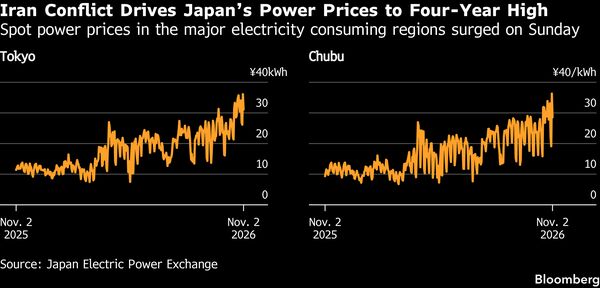
日本现货电力价格周末飙升,高企的燃料成本推动东京和中部等主要用电地区电价触及多年高点。
Japan’s spot power prices surged at the weekend, with elevated fuel costs driving rates in major electricity-consuming regions Tokyo and Chubu to multi-year highs.
日本电力交易所的数据显示,周日东京和中部地区的次日现货电力价格分别较上周上涨1.1%和7.2%,达到每千瓦时36.11日元(0.2美元)和36.29日元,均为自2022年9月以来的最高水平。同日,全国平均电价下跌8.7%,至每千瓦时30.09日元。
The next-day spot power price for the Tokyo and Chubu areas, climbed 1.1% and 7.2% on a weekly basis to ¥36.11 ($0.2)/kWh and ¥36.29/kWh respectively on Sunday, the highest since September 2022, according to data from Japan Electric Power Exchange. Meanwhile, the nationwide average price was down 8.7% to ¥30.09/kWh on the same day.
据交易员称,现货液化天然气价格周五涨幅延续,达到每百万英热单位约34美元,超过战争前水平的三倍多。全球出口关键水道霍尔木兹海峡的液化天然气流量仍低于冲突开始前的三分之一。
Spot liquefied natural gas prices extended gains to about $34 per million British thermal units on Friday, according to traders, more than triple pre-war levels. LNG flows through the Strait of Hormuz — a key waterway for global exports — remain at less than a third of the rate before the conflict began.
受中东冲突引发的燃料成本上升影响,东京地区平均家庭电费预计将在11月达到创纪录的9738日元。东京电力公司执行副社长山口裕之在周五的业绩说明会上表示,如果电力价格当前的涨势持续,电费可能很快超过10000日元。
Average household electricity bills in the Tokyo area are projected to reach a record ¥9,738 in November, driven by rising fuel costs stemming from the conflict in the Middle East. The bill could soon top ¥10,000 if the current surge in power prices continues, said Hiroyuki Yamaguchi, Executive Vice President of Tokyo Electric Power Co. during an earnings briefing on Friday.
日本的燃料成本调整制度根据三个月平均价格,自动将液化天然气、原油和煤炭进口价格的变化反映在电费中。
Japan’s fuel-cost adjustment system automatically reflects changes in LNG, crude oil and coal import prices in electricity rates, based on a three-month average.
自周五一艘巴基斯坦液化天然气运输船在霍尔木兹海峡附近遭到袭击以来,中东紧张局势升级。这可能预示着该水道的实际封锁将进一步延长,可能推高燃料成本,并给日本电力公司带来更大压力。
Tensions in the Middle East have escalated since a Pakistani LNG carrier was attacked near the Strait of Hormuz on Friday. This could signal a further prolonging of the waterway’s effective closure, potentially driving fuel costs even higher and adding to pressure on Japanese utilities.