乌克兰科扎茨克 — 乌克兰人娜塔利娅·佳丘克(Nataliia Diadiuk)大门上的一条白毛巾和手中的一块白布,是她向俄罗斯无人机操作员表明自己是平民的唯一途径。10月27日短暂停火生效时,她迎来了一刻喘息。
HANNA ARHIROVA, VOLODYMYR YURCHUK KOZATSKE, Ukraine — A white towel on her gate and a white rag in her hand were Ukrainian Nataliia Diadiuk’s only ways to tell Russian drone operators she is a civilian. When a brief ceasefire kicked in on Oct. 27, she had a moment of respite.
这位53岁的妇女是留在科扎茨克为数不多的居民之一。这个临河村庄位于乌克兰赫尔松州的“杀戮区”,距离俄控区不足2公里(1.2英里)。
The 53-year-old is one of a handful of residents left in Kozatske, a riverside village located in the kill zone of Ukraine’s Kherson region less than 2 kilometers (1.2 miles) from a Russian-controlled area.
“我真想要安静,”佳丘克站在两旁全是废弃房屋的空荡街道上,强忍泪水说道。“我想见到离开的人,所有离开的人。”人们分别去了双方控制区。
“I really want silence,” Diadiuk said, fighting back tears as she stood on an empty street lined with abandoned houses. “And I want to see the people who left, all of them.”People left for both sides.
佳丘克的生活已缩减为基本生存:喝雨水,在镇上捡柴火取暖,拼命调频收音机听新闻,靠着人道主义援助的残留物资度日——直到这场刚开始几天就于周日晚间结束的短暂停火前,援助已有两年未能送达她手中。外出意味着要躲避各种武器,包括到处散布的地雷。她提到的邻居,死者多于仍住在附近的寥寥生者。
Diadiuk’s life has been reduced to basic survival: rainwater to drink, firewood gathered around town for heat, a radio she tries to tune in to for news, and the remnants of humanitarian aid that had not reached her in two years until the brief ceasefire that ended Sunday night just days after it began. Going out means dodging every kind of weapon, including mines scattered everywhere. The neighbors she mentions are more often the dead than the few still living nearby.
美联社记者团获得难得机会进入所谓的“红区”,实地目睹“杀戮区”内的生活图景,此行之所以得以成行,仅因与俄占城市奥列什基(Oleshky)的人道主义援助任务挂钩的一次短暂、局部停火。
A team from The Associated Press gained rare access to a so-called red zone to see firsthand what life in the kill zone looks like, a visit made possible only because of a brief, localized ceasefire tied to the humanitarian aid mission in the Russian-occupied city of Oleshky.
奥列什基引起了世界关注,但前线双方还有许多更多地方困住了平民。在此次任务中,乌克兰地方官员、警方、乌克兰红十字会及志愿者,在民军合作专家的协助下,利用这难得的时间窗口,抵达河对岸己方控制区的民众身边,其中一些人已被切断联系近两年。
Oleshky has drawn the world’s attention, but civilians are trapped in many more places on both sides of the front line. During the mission, Ukrainian regional officials, police, the Ukrainian Red Cross Society and volunteers, with the facilitation of civil-military cooperation specialists, used the rare window of time to reach people on their side of the river, some of them cut off for nearly two years.
据地区行政部门称,共有180人从河滨社区和赫尔松市撤离,其中包括23名儿童。约14万人仍留在乌克兰控制的赫尔松州部分地区。
In all, 180 people were evacuated from riverside communities and the city of Kherson, including 23 children, the regional administration said. About 140,000 people remain in the Ukrainian-held part of the Kherson region.
战前,整个赫尔松州(目前近70%处于俄罗斯控制之下)约有100万居民。河滨地带被指定为红区,即军事危险最高等级。随着停火结束,居民将再次面临无人机、火炮、滑翔炸弹和空投地雷的威胁。尽管如此,许多人仍拒绝离开。一些人无力重新开始生活,另一些人则不愿抛弃他们成长的地方。
Before the war, the whole region, now nearly 70% under Russian control, had about 1 million residents. The riverside is designated a red zone, the highest level of military danger. With the ceasefire over, residents will again face drones, artillery, glide bombs and airdropped mines. Still, many refuse to leave. Some cannot afford to start over, and others will not abandon the places where they grew up.
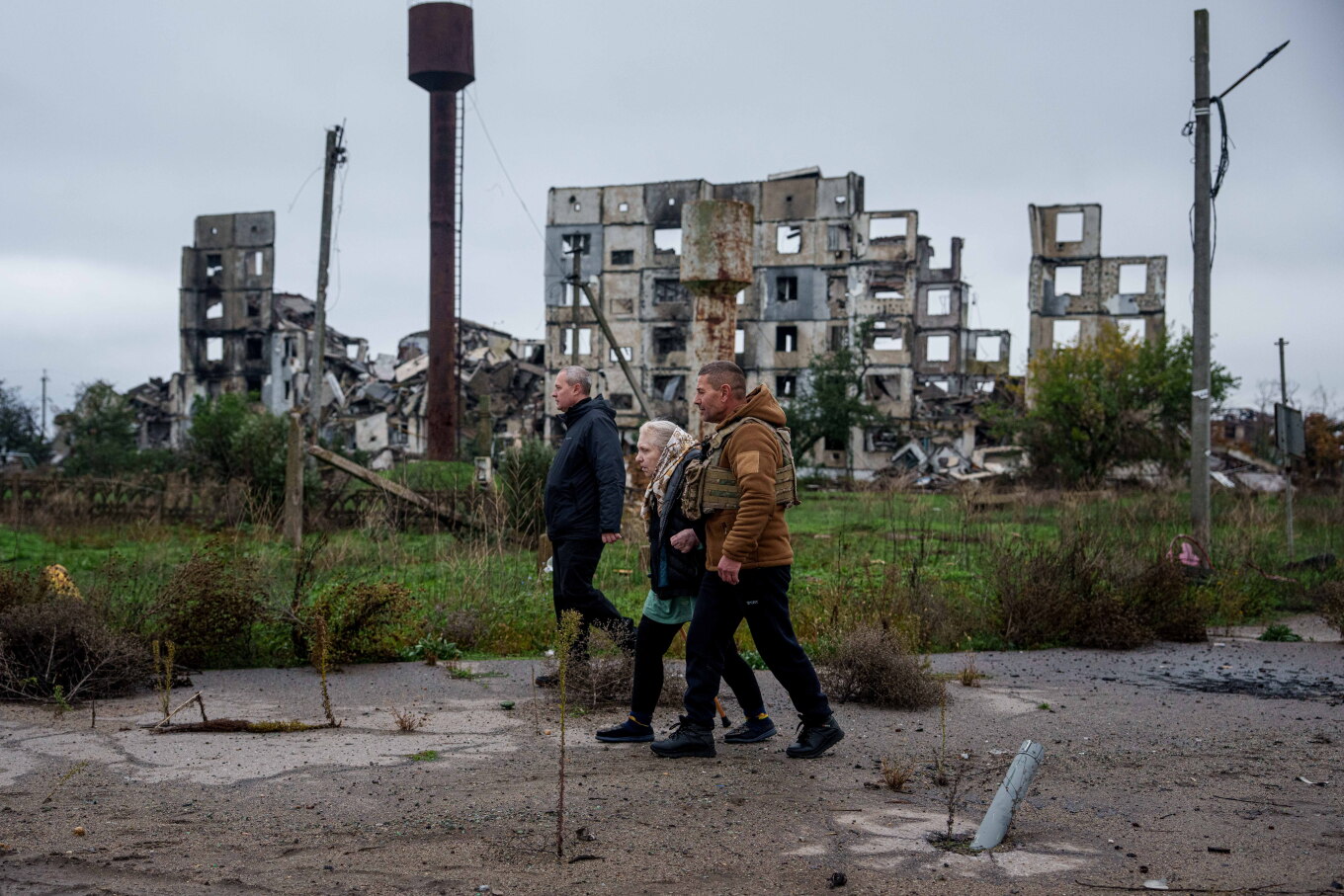
在通往佳久克村庄的路上,被击中的烧毁车辆被遗弃在原地,旁边是乌克兰人试图派往人员无法通行的危险道路上的残毁地面机器人。那条路上仍矗立着一块和平时期的遗物:“感谢您保持路边整洁。”村里许多房屋只剩下烧焦的墙壁。滑翔炸弹留下了弹坑,炮弹尾翼像花一样插在沥青路面上。无人机投放的地雷到处都是,有的呈花瓣状,有的系简易制作、包裹在锡纸或塑料里,所以每一步都必须小心翼翼。茂密的植被吞没了空屋的废墟。
On the road to Diadiuk’s village, burned-out cars sit abandoned where they were hit, alongside wrecked ground robots that Ukrainians try sending down roads too dangerous for people. A relic of peacetime still stands on that road: “Thank you for keeping the roadside clean.”In the village, many houses are reduced to burned walls. Glide bombs have left craters, and the tail fins of shells stick out of the asphalt like flowers. Mines dropped from drones lie everywhere, some petal-shaped, others improvised and wrapped in foil or plastic, so every step must be taken with care. Thick vegetation swallows the ruins of empty houses.
佳久克最难忍受的是留在房子里的狗的嚎叫声,它们和她一样在艰难求生。“就为了这些,我也不能离开它们,”她指着两只从不离她太远的瘦狗说。但她也把仅有的一点食物分给其他狗吃。
What Diadiuk finds hardest to bear is the howling of the dogs left behind in the houses, surviving much as she is. “Even for the sake of these, I can’t leave them,” she says, pointing to two thin dogs that never stray far from her. But she shares what little food she has with other dogs as well.
在与世隔绝、被迫每天为生存而战的日子里,她已失去了时间感。“我打开手机只是为了看看今天是几号,”她说。她用太阳能板给手机充电。
Isolated and forced to fight for survival every day, she has lost track of time. “I turn on my phone only to see what day it is,” she says. She charges it with solar panels.
季亚丘克收集雨水,用纱布过滤,用氯消毒,再烧开。“这里的水多少还凑合,”她说,“房子里躺着很多尸体,所以只能说水勉强算干净。”这个村庄的磨难始于俄罗斯全面入侵的最初几天,当时它被占领。乌克兰军队解放该村后,随着战争日益技术化,科扎茨凯逐渐陷入无人机的围困之中。
Diadiuk collects rainwater, strains it through gauze, treats it with chlorine and boils it. “The water here is more or less all right,” she says. “There are a lot of dead lying in the houses, so it’s good water only in a manner of speaking.”The village’s ordeal began in the first days of Russia’s full-scale invasion, when it was occupied. After Ukrainian forces liberated it, Kozatske gradually came under siege by drones as the war turned increasingly technological.
“以前我就推开门走出去,”住在街道更远处的54岁奥列克西·沙沃金说,“现在我只开一条缝,伸出耳朵听天上的动静。”他说,他的房子在2023年初遭迫击炮袭击烧毁,但他修补好了,继续住在那里。他靠旧的人道主义援助物资和自家母鸡下的蛋生活。“我定量吃粮食,让它撑久一点。我习惯了,”他说,“现在我一天吃一顿,在晚上,那已经足够了。”他从接近100公斤(220磅)的体重减掉了30公斤(66磅)。他认识的许多人死于袭击,其他人离开了。他决定留下。
“Before, I’d just open the door and walk out,” said Oleksii Shavokin, 54, who lives a little farther down the street. “Now I open it a crack, stick my ear out and listen to the sky.”His house burned down in early 2023 after a mortar attack, he said, but he patched it up and stays on there. He lives off old humanitarian aid and eggs from the hens he still keeps. “I ration my food so it lasts. I’m used to it,” he said. “Now I eat once a day, in the evening, and that’s quite enough.”He has lost 30 kilograms (66 pounds) from a weight of close to 100 kilograms (220 pounds). Many of the people he knew were killed by strikes, and others left. He decided to stay.
“我珍惜生命,但哪里保证我在别处不会被车撞到?”沙沃金说,“注定你在哪里丧命,或在哪里继续活下去,你就会在那里丧命,或继续活下去。尽管如此,我还是希望这一切快点结束。”新卡霍夫卡市军事管理局局长奥列赫·塔拉巴卡说,许多留下的居民不知道去哪里,担心一旦离开就会被迫自生自灭。他是试图劝说季亚丘克和沙沃金离开的团队成员之一。
“I value life, but where’s the guarantee a car won’t hit me somewhere else?”Shavokin said. “Wherever it’s written for you, that’s where you’ll lose your life, or go on living. And still, I hope this all ends soon.”Many residents who stay do not know where they would go and fear they would be left to fend for themselves, said Oleh Tarabaka, head of the Nova Kakhovka city military administration. He was part of the team that tried to persuade Diadiuk and Shavokin to leave.
但这很难,他说。许多人在那里生活了一辈子,担心一旦离开,就没有生计。不是每个人都有去处。有些人没有亲戚。
But it is difficult, he said. Many have lived there their whole lives and fear that once they leave, they will have nothing to live on. Not everyone has someone to go to. Some have no relatives.
“假如没有那一段平静期,我们根本无法把人撤出来,”塔拉巴卡说。“我们也没法开车进来。”塔拉巴卡说,居民们经历的已超出生存的范畴,或许还没有词语能形容这种境况。
“If there hadn’t been a period of quiet, we simply wouldn’t have gotten people out,” Tarabaka said. “We wouldn’t have been able to drive in here.”What residents are living through goes beyond survival, Tarabaka said, adding that perhaps no word has yet been invented to describe it.
不过,有些人还是能被说服离开。叶夫亨和他的母亲安东尼娜就是这种情况,两人出于安全原因拒绝透露姓氏。
Some, however, can be persuaded to leave. That was the case for Yevhen and his mother, Antonina, who declined to give their last names for security reasons.
一名军方人员转向叶夫亨。“只要做出正确的决定,做一个男人和儿子该做的决定,”第42旅的一名士兵、也是撤离小组成员之一告诉他。最终,他们同意了。
One of the military officials turned to Yevhen. “Just make the right decision, the decision of a man and a son,” a soldier from the 42nd brigade who was part of the evacuation group told him. Eventually, they agreed.
一路穿过满目疮痍的家乡,安东尼娜嚎啕大哭,不愿离开。她的哭声在空荡荡的街道上回荡。
All the way through her bombed-out town, Antonina wailed and wept, not wanting to leave. Her cries echoed through the empty streets.
这次临时停火让红十字会从赫尔松市撤离的人数远超平常。通常情况下,每条路线、每个环节都必须围绕无人机和其他武器的持续威胁来规划。
The temporary truce allowed the Red Cross to evacuate far more people than usual from Kherson city. Normally, every route and every stage must be planned around the constant threat of drones and other weapons.
“现在,赫尔松的某些街道和地点也是杀戮区。根本无法从那里溜过去。风险非常、非常高,”乌克兰红十字会赫尔松州快速反应小组指挥官米科拉·塔拉年科说。
“Right now, some streets and places in Kherson are a kill zone too. It’s simply impossible to slip through there. The risk is very, very high,” said Mykola Taranenko, commander of the Ukrainian Red Cross Society’s rapid response team in the Kherson region.
他的小组通常每周撤离约10人,但在停火那一周,至少撤离了40人。
His team usually evacuates about 10 people a week, but during the ceasefire week, it took out at least 40.
获撤离者中有弗拉基米尔和叶卡捷琳娜·雅库巴,两人均77岁,20多年前已离婚,但这次一起离开了城市。他们的女儿安排了撤离事宜,两人将去敖德萨和女儿同住。
Among those evacuated were Volodymyr and Kateryna Yakuba, both 77, who divorced more than 20 years ago but left the city together. Their daughter arranged the evacuation, and they are going to stay with her in Odesa.
“我们得在寒冷来临前撤出去,”她说,并谈到停火:“不然我不知道我们怎么能撤出来。”
“We need to get out before the cold sets in,” she said, adding about the ceasefire: “I don’t know how we would have gotten out otherwise.”
“离开家很可怕,”她的声音在颤抖。“你不知道自己能不能回来,也不知道回去后还剩下什么。”
“It’s scary to leave home,” her voice trembled. “You don’t know if you’ll come back, or if there will be anything to come back to.”