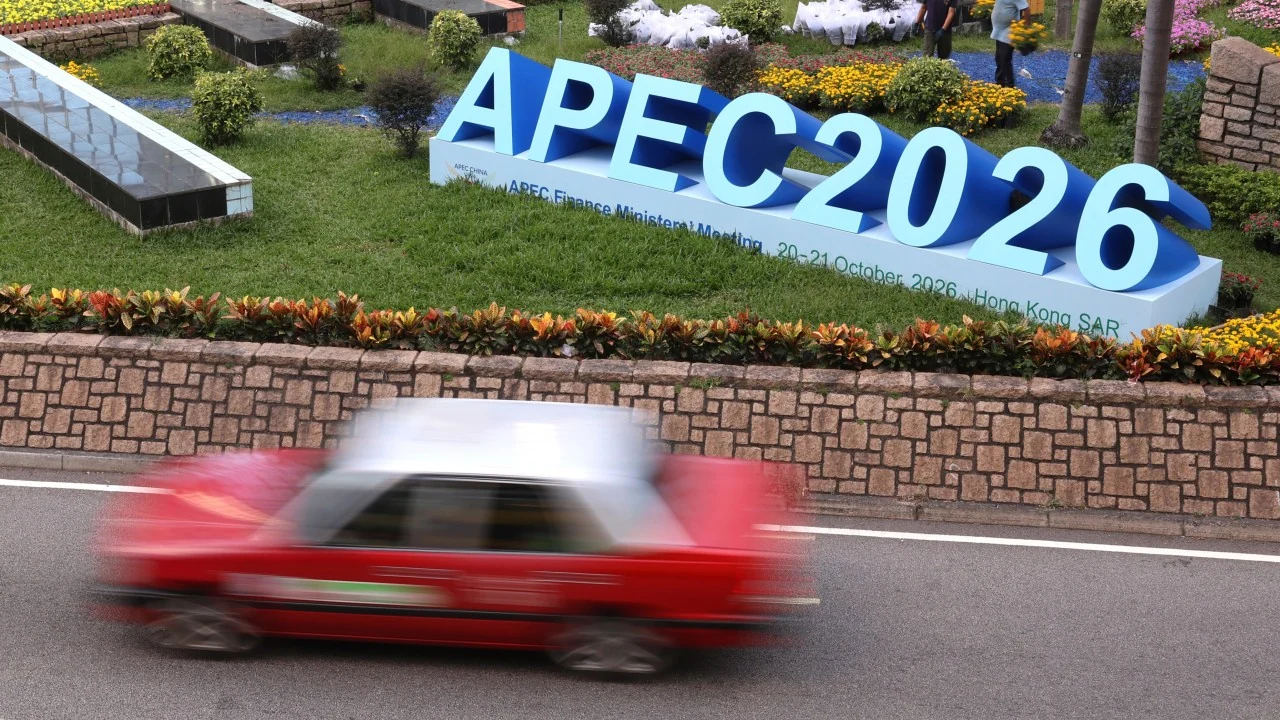
在香港举行的首场亚太经合组织(APEC)财长会议聚焦于开放、合作与韧性。这些主题触及了摆在这座城市面前的一个核心问题:随着全球化变得更加艰难,规范国际市场的规则和安全边界日益复杂,香港还能为跨境商业提供什么?
The first Asia-Pacific Economic Cooperation (Apec) forum finance ministers’ meeting to be held in Hong Kong focused on openness, cooperation and resilience. These themes go to the heart of a question confronting the city: as globalisation becomes more difficult and the rules and security boundaries governing international markets grow more complex, what can Hong Kong still offer cross-border commerce?
全球化并未结束。资本仍在海外寻找机遇,而技术、能源、原材料和供应链也不能简单地退回到国界之内。然而,地缘政治、产业政策、技术管制、数据治理和金融安全正日益塑造投资决策。
Globalisation is not over. Capital still seeks opportunities overseas, while technology, energy, raw materials and supply chains cannot simply retreat behind national borders. Yet geopolitics, industrial policy, technology controls, data governance and financial security increasingly shape investment decisions.
几十年来,全球化在很大程度上关乎降低成本和减少壁垒。其下一个阶段可能会由一个不同的挑战来定义:当边境再次变得重要时,如何维持跨境交易的运转。
For decades, globalisation was largely about lowering costs and reducing barriers. Its next phase could be defined by a different challenge: how to keep cross-border transactions moving when borders matter again.
长期以来,香港一直将自己描述为中国与世界其他地区之间的“超级联系人”。当规则出现分歧时,更艰巨的任务不再是克服距离,而是弥合制度差异。
Hong Kong has long described itself as a “superconnector” between China and the rest of the world. When rules diverge, the harder task is no longer overcoming distance; it is bridging institutional differences.
一家进入东南亚、中东或欧洲的中国内地企业,必须将其信誉、资产、技术和商业模式转化为当地银行、监管机构、投资者和合作伙伴能够理解、接受和定价的形式。进入中国的国际资本也面临着相反的相同挑战。
A mainland Chinese company entering Southeast Asia, the Middle East or Europe must translate its creditworthiness, assets, technology and business model into forms that local banks, regulators, investors and partners can understand, accept and price. International capital entering China faces the same challenge in reverse.
金融、保险、法律、仲裁、清算、结算和会计看似是不同的行业,但它们发挥着共同的功能:将一个制度体系下的经济活动转化为另一个体系能够包容的交易。
Finance, insurance, law, arbitration, clearing, settlement and accounting might appear to be distinct industries, but they perform a common function: translating economic activity under one institutional system into transactions that another system can accommodate.
因此,香港未来的价值可能与其说在于单纯的连通性,不如说在于让不同的制度体系协同运作。其角色不是消除差异,而是将这些差异产生的风险转化为可以识别、定价和管理的风险。
Hong Kong’s future value might therefore lie less in connectivity alone than in making different institutional systems work together. Its role is not to eliminate differences but to turn the risks arising from those differences into ones that can be identified, priced and managed.
这有助于解释为什么开放和韧性在亚太经合组织会议上占据如此突出的地位。它们共同反映了全球化从减少摩擦向管理摩擦的转变。
This helps explain why openness and resilience featured so prominently at the Apec meeting. Together, they reflect a shift in globalisation from reducing friction to managing it.
跨境成本现在已经超出了关税和物流的范畴。它们包括数据能否跨境、技术是否受限、资本能否自由流动、监管标准是否兼容、政策变化是否可预测以及合同能否得到可靠执行。
Cross-border costs now extend beyond tariffs and logistics. They include whether data can cross borders, technology is restricted, capital can move freely, regulatory standards are compatible, policy changes are predictable and contracts can be reliably enforced.
香港的首个五年规划提出,要增强经济和社会韧性、风险预警机制、网络安全和应急管理,同时巩固该城市在离岸人民币业务、国际资产和财富管理以及国际风险管理方面的角色。
Hong Kong’s first five-year plan proposes strengthening economic and social resilience, risk alert mechanisms, cybersecurity and emergency management, while consolidating the city’s role in the offshore renminbi business, international asset and wealth management, and international risk management.
其意义在于开放与韧性之间的关系。开放创造机遇;韧性有助于遏制尾部风险。清晰的规则和可靠的保障可以将安全转化为一种制度资产,而不是又一道贸易壁垒。
The significance lies in the relationship between openness and resilience. Openness creates opportunities; resilience helps contain tail risks. Clear rules and credible safeguards can turn security into an institutional asset rather than another barrier to trade.
在碎片化的世界中,香港还能提供日益宝贵的东西:保持不同路径畅通的选择权。选择香港的公司既可以获得人民币融资,又能保持与全球资本市场的联系;既能进入内地市场,又能维持国际商业网络;既能受益于中国的增长,又能利用香港的普通法框架、仲裁系统和专业服务。
Hong Kong can also offer something increasingly valuable in a fragmented world: the option to keep different paths open. Companies choosing Hong Kong can access renminbi financing while remaining connected to global capital markets, enter the mainland market while maintaining international business networks, and benefit from China’s growth while using Hong Kong’s common-law framework, arbitration system and professional services.
在稳定时期,这种灵活性可能只是一种便利。在不确定环境中,它类似于一项金融期权。没有人能预测贸易、金融和技术系统在下一个十年将如何重组。因此,保持获取不同融资来源、市场和制度安排的渠道本身就具有价值。
In stable times, this flexibility might be a convenience. In an uncertain environment, it resembles a financial option. No one can predict how trade, finance and technology systems will be reorganised during the next decade. Preserving access to different financing sources, markets and institutional arrangements therefore has value in itself.
因此,地缘政治碎片化可能会为香港创造机遇,但由此带来的任何红利都绝非自动产生。香港通过减少制度摩擦所创造的价值,必须超过通过该城市路由交易所产生的额外成本。
Geopolitical fragmentation could thus create opportunities for Hong Kong, but any dividend from this is far from automatic. The value Hong Kong creates by reducing institutional friction must outweigh the additional costs of routing transactions through the city.
这就需要人们坚信合同将得到执行、规则将保持足够的连通性、资本将保持足够的自由流动、专业机构将符合国际标准,并且政策变化能够纳入商业决策之中。如果没有这种信心,夹在两个系统之间可能会成为摩擦的来源,而不是一种优势。
That requires confidence that contracts will be enforced, rules will remain sufficiently consistent, capital will retain adequate freedom of movement, professional institutions will meet international standards and policy changes can be incorporated into commercial decisions. Without that confidence, standing between two systems may become a source of friction rather than an advantage.
香港面临的挑战不是在深化与国家发展的融合和保持其国际特色之间二选一。这两者可以相辅相成。
Hong Kong’s challenge is not to choose between deeper integration with national development and maintaining its international character. The two can reinforce each other.
如果香港失去与内地经济的深厚联系,其对全球尼资本的独特价值就会减弱。世界上已经有了纽约、伦敦、新加坡和迪拜等主要金融中心。香港的定位不同:它提供了一个罕见的接口,既能接触到中国经济,又能以国际投资者熟悉的方式来构建交易。
If Hong Kong loses its deep connections with the mainland economy, its distinctive value to global capital will diminish. The world already has major financial centres in New York, London, Singapore and Dubai. Hong Kong’s proposition is different: it offers a rare interface between access to the Chinese economy and the ability to structure transactions in ways familiar to international investors.
从这个角度来看,该城市的五年规划不仅仅是为了扩大香港的金融板块。其更深远的意义在于,随着内地企业和资本走向全球,为该城市的跨境金融和专业服务创造持续的需求。
Seen in this light, the city’s five-year plan is about more than expanding Hong Kong’s financial sector. Its deeper significance lies in creating sustained demand for the city’s cross-border financial and professional services as mainland companies and capital expand globally.
传统上,金融中心之间的竞争是关于谁能以更快速、更自由、更便宜的方式转移资本。在一个全球化新时代,另一个问题可能同样重要:谁能在一个制度分歧、规则复杂且利益冲突的世界中,帮助保持开放、维持合作并在不确定性中维护受信任的联系?这可能就是香港需要抓住的亚太经合组织机遇。
The competition among financial centres has traditionally been about who can move capital faster, more freely and more cheaply. In a new era of globalisation, another question might matter just as much: who can help a world of divergent institutions, complex rules and competing priorities remain open, sustain cooperation and preserve trusted connections amid uncertainty? That could be the Apec moment Hong Kong needs to seize.