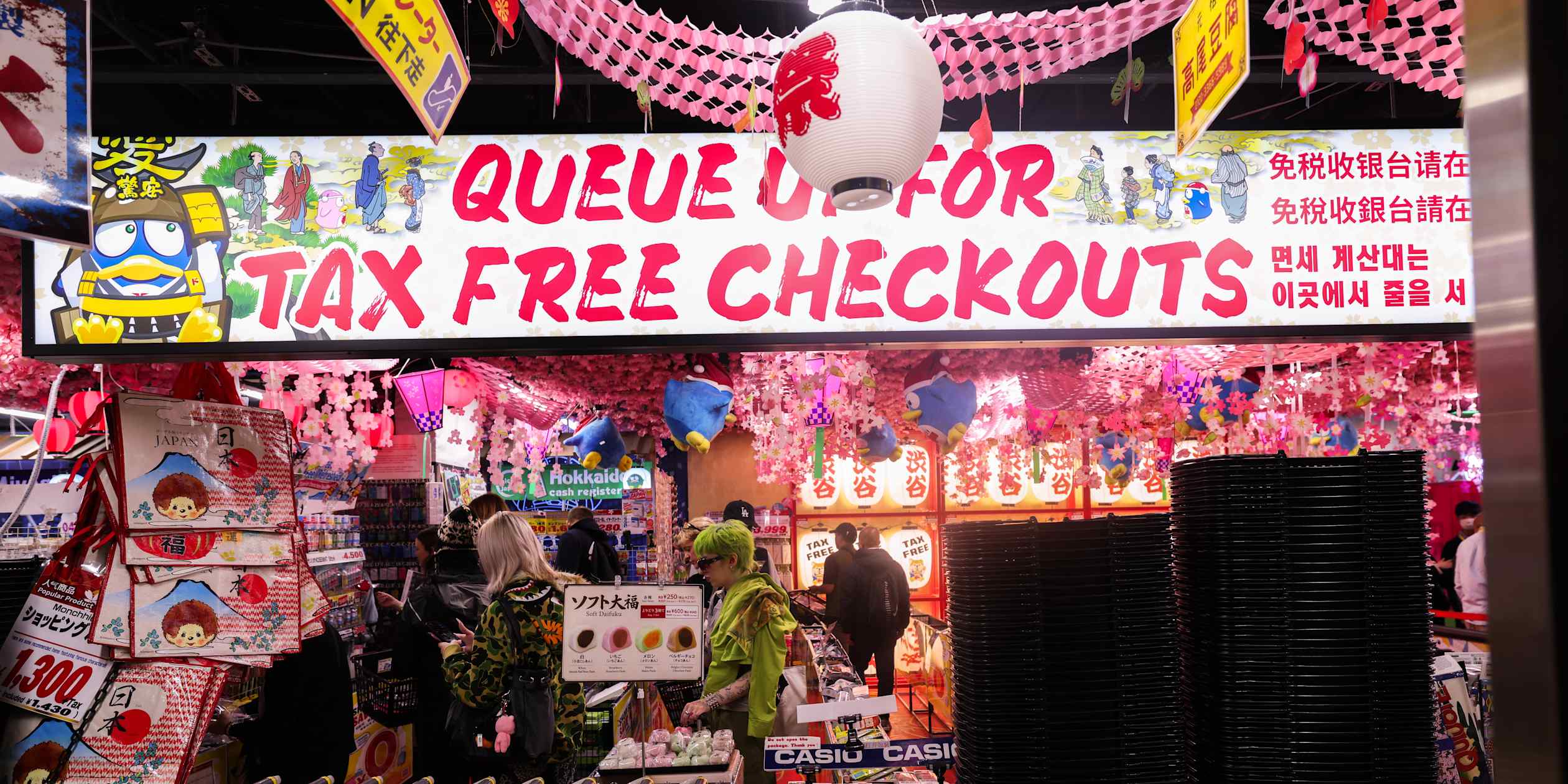
东京——折扣连锁店唐吉诃德表示,随着日本推出针对外国游客的新免税购物规则,该公司希望通过取消手续费来增加免税销售额。
TOKYO -- Discount store chain Don Quijote said it hopes to increase tax-free sales by eliminating handling fees as Japan rolls out new tax-free shopping rules for foreign visitors.
虽然在某些商店按新系统申请退税时,顾客可能会面临手续费,但唐吉诃德将免除此类手续费,不过选择在机场以现金方式领取退税的顾客除外。
While customers may face handling fees when claiming refunds under the new system at some stores, Don Quijote will waive such fees except for customers who choose to receive their refunds in cash at the airport.
日本连锁店运营商泛太平洋国际控股公司入境支援部经理栾越(音)周一在新闻发布会上表示:“我们将免除手续费视为一项投资。通过让这项服务对顾客而言更加便捷和具有吸引力,我们希望推动销售额和利润增长。”此举出台之际,政府正在全面修改其免税购物规则。购物者现在必须在购买时支付包括税款在内的全额价格,而不是像以前那样获得免税。该变化已于周日生效。
"We see waiving the fees as an investment," Yue Luan, manager of the inbound support division at Pan Pacific International Holdings, the operator of the Japanese chain, said at a news briefing on Monday. "By making the service more convenient and attractive to customers, we hope to drive sales and profit growth." The move comes as the government overhauls its tax-free shopping rules Shoppers are now required to pay the full price, including tax, at the time of purchase instead of receiving an exemption as before. The change took effect on Sunday.
离境时,他们必须在港口或机场大厅的终端机上出示护照,系统将据此决定是否需要进行海关检查。只有在确认所有符合条件的物品都被带出境后,消费税才会退还。
Upon departure, they must present a passport at a terminal in the port or airport lobby, which will determine whether a customs inspection is needed. The consumption tax will be refunded only after it has been confirmed that all eligible items are being taken out of the country.
11月2日,一名来自瑞典的游客在东京涩谷区的唐吉诃德总店查看商品。
A tourist from Sweden looks at products at Don Quijote's main store in Tokyo's Shibuya district on Nov. 2.
政府还将取消每家商店每天50万日元(约合3167美元)的消耗品(如食品、药品和化妆品)免税购买额度上限。最低购买金额将保持5000元日元不变。
The government is also scrapping a daily cap of 500,000 yen ($3,167) per store on tax-free purchases of consumable goods such as food, pharmaceuticals and cosmetics. The minimum purchase amount will remain 5,000 yen.
栾越表示:“在新系统下,顾客最初必须支付消费税,这可能会影响他们的购买行为。但取消消耗品与一般商品的区别,以及取消特殊包装要求和购买限制,可能会有助于提振销售。”
"Customers will initially have to pay the consumption tax under the new system, which could affect their purchasing behavior. But the removal of the distinction between consumables and general goods, along with special packaging requirements and purchase limits, could help boost sales," said Luan.
从零售商的角度来看,新规则可能会减轻店员的负担,因为将不再需要特殊包装,也将消除消耗品与其他类型商品的区别。该零售商预计这些变化将缩短结账时间,并计划利用节省下来的时间来提高运营效率,并加强多语言购物协助等服务。但一些唐吉诃德的顾客仍然对新系统的麻烦和复杂性感到担忧。
From the retailer's perspective, the new rule may reduce the burden on clerks, as special packaging will no longer be required and the distinction between consumables and other types of goods will be eliminated. The retailer expects the changes to shorten checkout times and plans to use the time saved to make operations more efficient and strengthen services such as multilingual shopping assistance. But some Don Quijote customers remain concerned about the inconvenience and complexity of the new system.
36岁、第四次访问日本的澳大利亚游客伊万表示:“还得经历一个额外的步骤很麻烦。我宁愿直接支付10%的消费税。”来自英国的29岁游客康纳·索克恩表示:“保留所有的收据很不方便。”
"Having to go through an extra step is a hassle. I would rather just pay the 10% consumption tax," said Ivan, a 36-year-old Australian visiting Japan for the fourth time. "Keeping all of the receipts would be inconvenient," said Connor Sochern, 29, from from the U.K.
根据日本观光厅的数据,日本大约有6万4000家免税店,所有这些店铺都必须遵守规则的变更。日本始于1952年的消费时免税制度,在主要经济体中几乎是独一无二的。
Japan has around 64,000 tax-free shops, according to the Japan Tourism Agency, all of which will have to comply with the rule change. Japan's tax exemption at the point of purchase, which dates back to 1952, was nearly unique among major economies.
这项在2025财年确定的彻底改革,是由外国游客滥用该系统所驱使的,他们经常免税购买商品并在日本境内转售。根据日本海关当局的数据,几乎没有任何购买价值达1亿日元或以上商品的游客能够被证实已将所有物品带出境外。
The overhaul, which was decided in fiscal 2025, was spurred by abuse of the system by foreign travelers who would often purchase items tax-free and resell them within Japan. Almost no visitors who make purchases worth 100 million yen or more can be confirmed to have taken all their items out of the country, according to Japan's customs authorities.