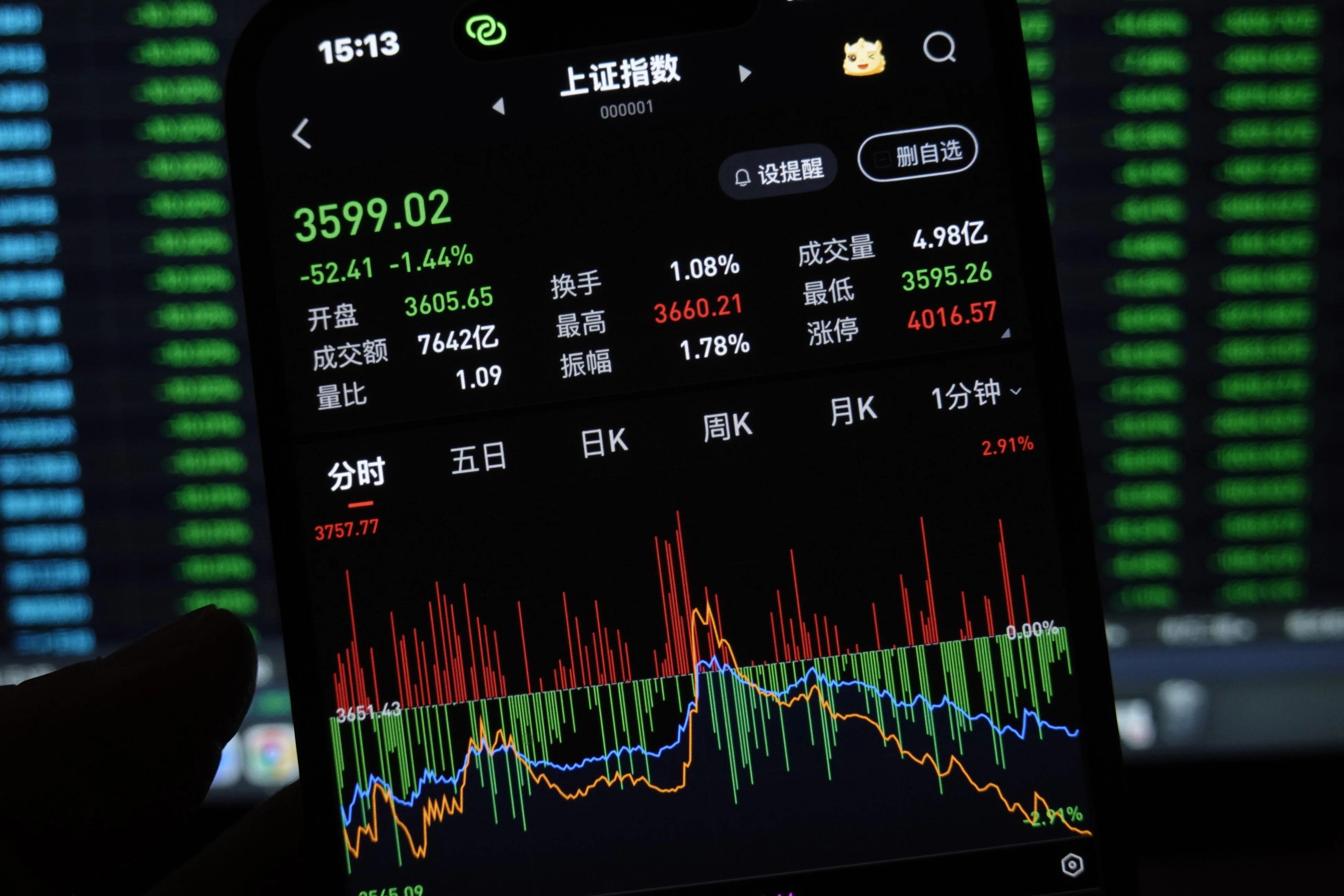
中国央行周一宣布,将启动新一轮互换便利操作,向陷入困境的在岸股市注入约150亿美元资金。此前,中国股市遭遇十年来最严重的月度抛售,重创投资者信心,并可能给中国金融体系带来新的风险。
China’s central bank announced on Monday it would start a fresh round of a swap facility that would channel about US$15 billion into the struggling onshore stock market, after its worst monthly sell-off in a decade dealt a heavy blow to investor confidence and threatened to add new risks to the country’s financial system.
中国人民银行将于周二启动为期一年的互换便利操作。央行在一份网上声明中表示,该工具允许机构投资者将流动性较差的资产换成流动性较好的资产,再从央行换取资金用于购买股票。
The People’s Bank of China will start the one-year swap on Tuesday. The facility allowed institutional investors to exchange illiquid assets for liquid ones with the central bank to buy stocks, according to an online statement from the central bank.
央行表示,包括证券公司和资产管理公司在内的31家机构已申请该计划——总规模为1000亿元人民币(合150.4亿美元)——并补充称,该工具将“支持我国资本市场健康发展”。
The bank said 31 institutions, including securities firms and asset management companies, had applied for the programme – which has a combined size of 100 billion yuan (US$15.04 billion) – adding that the facility would “support the healthy development of our capital markets”.
市场此前已预期此举,因为当地媒体在周末报道称,央行将与其他金融监管机构和机构投资者召开会议,讨论支持股市的选项。
The market had anticipated the move after local media reported on the weekend that the central bank would convene a meeting with other financial regulators and institutional investors to discuss options to support equities.
追踪在上海和深圳两地上市的中国主要公司的沪深300指数周一上涨0.8%,从10月份十年来最差月度表现中反弹;芯片股权重较大的科创50指数上涨逾3%。
The CSI 300 Index, which tracks major Chinese firms listed in both Shanghai and Shenzhen, rose 0.8 per cent on Monday, rebounding from its worst monthly performance in a decade in October, while the chip-heavy Star 50 gauge rallied more than 3 per cent.
SPI Asset Management管理合伙人斯蒂芬·英尼斯表示:“传递的信息相当明确。北京方面似乎越来越不愿意让股市的抛售自行发展势头,尤其是在全球人工智能交易已经承压的情况下。”
Beijing appears increasingly uncomfortable allowing the equity rout to develop its own momentumStephen Innes, SPI Asset Management“The message is fairly straightforward. Beijing appears increasingly uncomfortable allowing the equity rout to develop its own momentum, particularly when the AI trade is already under pressure globally,” said Stephen Innes, a managing partner at SPI Asset Management.
“官方鼓励的又一轮买入能否恢复真正的投资者信心,那是另一回事;但当中国‘国家队’开始在市场周围集结时,做空者明智的做法是一只眼盯着政策消息面,另一只眼盯着出口。”互换便利的重启标志着国家对中国股市干预的升级,中国股市今年在全球主要市场中跌幅居前。高盛估计,投资者所谓的“国家队”——即中国国家队买家——上个月可能至少买入了1700亿元与关键股指挂钩的交易型开放式指数基金(ETF)。
“Whether another round of officially encouraged buying can restore genuine investor confidence is another matter, but when China’s national team starts assembling around the market, the shorts would be wise to keep one eye on the policy headlines and the other on the exit.”The relaunch of the swap facility marked an escalation of the state intervention in Chinese stocks, which are ranked among the worst-performing key markets globally this year. Goldman Sachs estimated that China’s state buyers, dubbed “the national team” by investors, may have bought at least 170 billion yuan of exchange-traded funds tied to key equity gauges last month.
受国内需求在疲弱就业市场和房地产市场困境持续中继续低迷,以及美国科技股轮动换仓也助长了中国市场的暴跌,AI押注在升至历史高位后承受了抛售的重压,沪深300指数10月下跌8.5%,录得自2016年1月以来最大单月跌幅,全年跌幅扩大至13%。
The CSI 300 slumped 8.5 per cent in October, logging its steepest monthly decline since January 2016 and taking its annual loss to 13 per cent, as domestic demand continued to languish amid a poor jobs market and as woes in the property market lingered. A rotation out of tech stocks in the US also fuelled the rout in the Chinese market, with AI bets bearing the brunt of sell-offs after rising to record highs.
互换便利项目是央行2024年推出的一揽子方案的一部分,旨在通过注入新增流动性托举股市,该方案还包括一项3000亿元再贷款计划,为上市公司和大股东回购提供资金。在前两轮互换便利中,央行向股市注入了约1000亿元。
The swap programme is part of a broad package unveiled by the central bank in 2024 to prop up the stock market with fresh liquidity, alongside a 300 billion yuan relending scheme that funds buy-backs by listed companies and key shareholders. In the previous two rounds of the swap facility, the central bank injected about 100 billion yuan into the stock market.
有迹象表明国家队买入可能进一步加速,据本地媒体报道,组成国家队的政府支持投资实体——中国诚通控股集团和中国改革控股集团——可能各自从一家大型国有银行获得高达1000亿元的再贷款额度,用于股权回购。
In signs that state buying may further gather pace, China Reform Holdings and China Chengtong Holdings Group, the government-backed investment entities consisting of the national team, might get as much as 100 billion yuan each in relending for equity repurchases from a big state bank, according to local media reports.
开源证券分析师韦冀星表示:“下行风险可能有限,但这并不意味着市场已经触及绝对底部。短期反弹随时可能发生,但这不能推断出趋势反转。AI交易的重新启动需要叙事强化以及拥挤度进一步回落。”美股的动荡可能使中国稳定自身股市的努力复杂化。纳斯达克100指数周五下跌3.5%,较历史高点下跌10%,在技术面上进入回调区间。
“The downside risk may be contained, but that doesn’t mean the market has already hit the absolute bottom,” said Wei Jixing, an analyst at Kaiyuan Securities. “A short-term rebound may take place any time, but that cannot extrapolate a trend reversal. A restart of the AI trade requires a strengthening of the narrative and a further fallback in crowding.”The tumult in US stocks may complicate China’s efforts to stabilise its own, with the Nasdaq-100 Index tumbling 3.5 per cent on Friday to technically enter a correction after a 10 per cent drop from an all-time high.
投资者对今年7500亿美元AI基础设施建设的回报感到担忧,因为有迹象表明,巨额资本支出正在侵蚀超大规模云服务商现有业务的利润,并且超出了现金流的产生速度。
Investors are fretting over the returns on US$750 billion in spending on AI infrastructure buildouts this year, as signs emerged that the enormous capital expenditures were eating into hyperscalers’ profits from existing businesses and outpacing the generation of cash flows.
美国银行和麦格理表示,中国的国家干预可能只会为股市提供底部支撑,而不会推动大幅上涨,因为股市上涨的可持续性取决于企业盈利的强劲程度和国内需求的复苏。
Bank of America and Macquarie said that China’s state intervention might only put a floor under stocks, rather than drive a substantial rally, as the sustainability of equity gains depended on the strength of corporate earnings and a recovery in domestic demand.