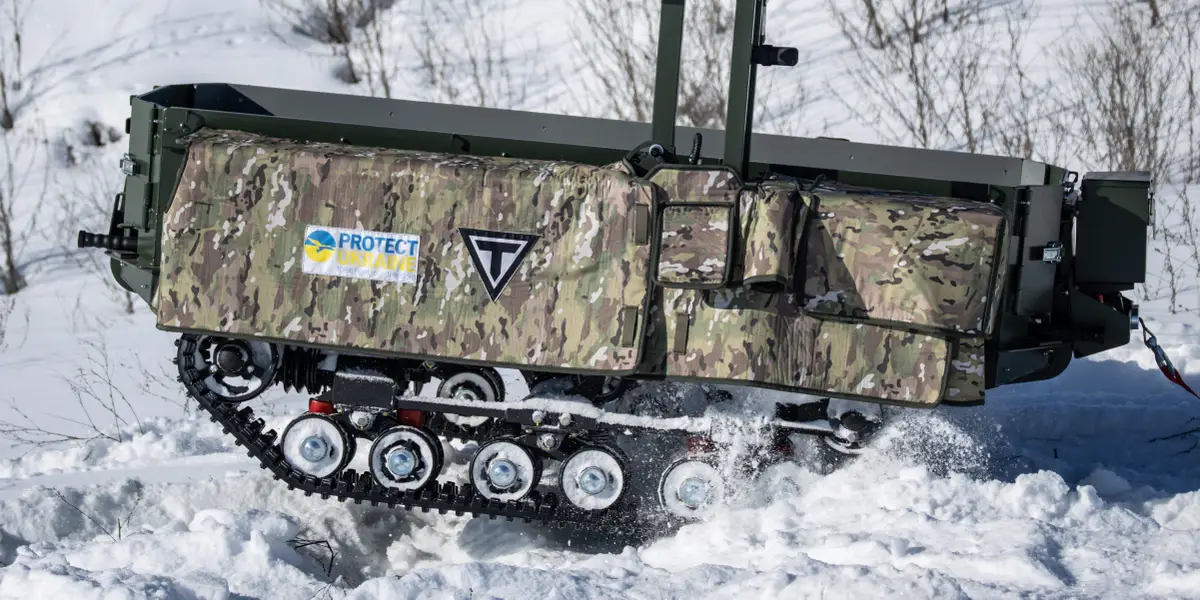
乌克兰的地面机器人舰队规模已大幅扩充,但新的考验即将到来,具体指秋季的厚重泥泞以及冬季的严寒和积雪,这些都会增加战场机动难度,并给某些系统带来压力。过去一年,该国军方和工业界将部署一支机器人大军作为优先事项,用于攻击、收集情报、运送装备和撤离伤员。目的是在战争中最危险的区域尽可能多地以机器人取代人类士兵。自去年冬天以来,舰队规模显著扩大,技术也取得长足进步。如今,它面临着季节性考验。
Ukraine's ground robot fleet has swelled, but new tests lie ahead, specifically the thick autumn mud and the winter cold and snow that can make battlefield movement more difficult and stress certain systems. Over the last year, the country's military and industry have prioritized fielding an army of robots to attack, gather intelligence, carry gear, and evacuate the wounded. The purpose is to replace as many human soldiers as possible in the war's most dangerous sectors. The fleet has expanded significantly and advanced technologically since last winter. Now it faces seasonal tests.
“这些地面机器人系统在不断改进,”乌克兰“达芬奇狼群”营机器人系统负责人奥列克桑德尔·亚布昌卡(Oleksandr Yabchanka)对《商业内幕》(Business Insider)表示。“它们的作战半径和越野机动性都在提升。”
"These ground robotic systems are constantly being improved," Oleksandr Yabchanka, head of robotic systems for Ukraine's Da Vinci Wolves Battalion, told Business Insider. "Their operational range and off-road mobility are increasing."
“现在秋天到了,我们将能够评估它们与去年秋天相比进化了多少,”他说。“毕竟,在干燥地面上的夏季作战是一回事,但在秋季——当地面变成泥泞、机动变得困难得多时——则完全是另一回事。”
"Now that autumn has arrived, we will be able to assess how much they have evolved compared to last autumn," he said. "After all, operating in the summer on dry ground is one thing, but in the autumn — when the ground turns to mud and movement becomes significantly more difficult — it is quite another."
今年3月,乌克兰国防部表示,自今年初以来,已签订合同采购超过2万套地面机器人系统,称这几乎是2025年全年采购量的两倍。该部表示,其使用范围“正在迅速扩大”。
In March, Ukraine's defense ministry said that since the beginning of the year, more than 20,000 ground robotic systems had been contracted, which it said was almost twice as many as in all of 2025. It said their use was "rapidly expanding."
“现在数量更多了,”亚布昌卡同时也是非营利组织“国防机器人乌克兰”(Defence Robotics UA)的联合创始人,他表示。“2026年全年,许多部队都开始使用无人地面载具(UGV)。”
"There are more of them now," Yabchanka, also a cofounder of the nonprofit Defence Robotics UA, said. "Throughout 2026, many units have begun employing UGVs."
“这种使用已经变得普遍,”他说,并透露“地面机器人系统正成为部署在接触线上的大多数单位作战行动中不可或缺的一部分。”
"This usage has already become widespread," he said, sharing that "ground-based robotic systems are becoming an integral part of combat operations for most units deployed along the line of contact."
秋季和冬季长期以来一直是对乌克兰军事装备的严峻考验。首先,地面会变成厚重的泥泞。接着,气温降至冰点以下,积雪覆盖战场的整个区域,树木落叶,剥夺了宝贵的掩护。
Autumn and winter have long been a difficult test for Ukraine's military equipment. First, the ground turns into thick mud. Next, the temperatures drop below freezing, snow covers whole sections of the battlefield, and trees go bare, stripping away valuable cover.
乌克兰无人机操作员描述称,严寒气温会耗尽电池电量,而雾气、结冰和冷凝水会干扰摄像头、旋翼及其他设备。大风和白昼缩短也是挑战。就目前而言,地面机器人是新加入战场的,在很大程度上尚未经受同样的季节性考验。这些系统与空中无人机有一些相同的冬季弱点:寒冷会耗尽电池,降低其续航能力,以及推越复杂地形和搬运重型货物所需的动力。
Ukrainian drone operators have described how freezing temperatures drain batteries, while fog, ice, and condensation can interfere with cameras, rotors, and other equipment. Strong winds and shorter days are also challenges. Ground robots, at least as they are now, are newer to the fight and largely haven't faced the same seasonal tests. These systems have some of the same winter weaknesses as aerial drones: cold can drain batteries, reducing their range and the power they need to push over difficult terrain and carry heavy cargo.
冷凝水、泥浆和积雪也会遮挡其摄像头并妨碍其他设备。然而,无人地面车辆(UGV)面临一个额外问题:它们必须在实地行驶。泥浆会导致车轮和履带陷入或迫使机器人减速行驶,使其更加脆弱。积雪有同样的效果,而结冰会使路面湿滑并降低牵引力。
Condensation, mud, and snow can also obscure their cameras and hinder other equipment. UGVs, however, face an additional problem: They have to drive across the terrain. Mud can cause wheels and tracks to get stuck or force robots to drive more slowly, making them more vulnerable. Snow has the same effect, while ice makes surfaces slippery and reduces traction.
北约教官与乌克兰部队密切合作,对地面机器人在冬季、特别是大雪天气下的有效性提出了质疑。“我们要在积雪两米的挪威北部使用那种东西吗?”负责监督一个训练项目的挪威指挥官、准将阿特勒·莫尔德在夏季一次访问期间对《商业内幕》网站表示。他说这“没那么容易”。在天空布满无人机的战场上,陷入泥浆或积雪可能是灾难性的。即使行动未受阻碍,这些条件也会留下痕迹。树木掩护减少也使机器人更容易被发现,增加了被发现和遭攻击的风险。
NATO trainers working closely with Ukrainian troops have raised questions about the effectiveness of ground robots in winter, particularly heavy snow. "Should we use that in Northern Norway with two meters of snow?" asked Brigadier Atle Molde, a Norwegian commander who oversees a training program, told Business Insider during a visit over the summer. It's "not that easy," he said. Getting stuck in the mud or snow can be disastrous on battlefields where the skies are full of drones. And even if movement isn't impaired, these conditions leave tracks. The reduced tree cover also makes the robots more visible, increasing their risk of being spotted and attacked.
许多此类机器人设计为相对廉价且可消耗。它们旨在执行危险任务以替代人类,损失一台机器远比损失一名士兵要好。但可靠性仍然很重要,特别是当机器人系统运送关键物资或撤离伤员时。
Many of these robots are designed to be relatively inexpensive and expendable. They're intended to replace humans on dangerous missions, where losing a machine is far preferable to losing a soldier. But reliability still matters, especially if a robotic system is carrying critical supplies or evacuating a wounded soldier.
一些制造商报告称,他们的无人地面车辆(UGV)在去年冬天取得了成功,但此后有更多型号投入战斗,尚未经受住考验。然而,乌克兰并非完全在陌生领域摸索。在整个战争期间,它反复调整无人机技术以适应冬季条件。部队和公司给相机加装新密封件以防止冷凝,给裸露部件如电缆增加防护层,给螺旋桨涂抹润滑脂以防冻结,将电池放在保温袋中保暖,开发新相机系统以在黑暗中看得更清楚,制造耐寒电池,并制造设计用于在大风中更好运行的无人机。
Some manufacturers reported success with their UGVs during the last winter, but many more models have since entered the fight and have yet to be tested. Ukraine, however, isn't treading completely unfamiliar ground. Throughout the war, it has repeatedly adapted its drone technology to winter conditions. Units and companies have added new seals to cameras to prevent condensation, added layers to exposed elements like cables, greased propellers to keep them from freezing, kept batteries warm in thermal bags, developed new camera systems to see better in the dark, built cold-resistant batteries, and made drones that are designed to operate better in strong winds.
士兵们也想出了自己的办法,例如用发热鞋垫包裹无人机电池,以在飞行中保持温暖。其不断扩大的地面机器人舰队可能需要类似的改进。机器人在过去一年里已经经历了大量改进。制造商宣布了更长的作业续航、更大的车轮和更强的履带、更耐用的结构、新武器以及更高的自主性。乌克兰制造商告诉《商业内幕》,他们根据前线部队的反馈,对机器人进行频繁的、有时是每周一次的更改,前线部队直接联系他们并与到访工程师合作。
Soldiers are also coming up with their own solutions, such as wrapping drone batteries in heated shoe insoles to keep them warm in flight. Its expanding ground robot fleet may need similar adaptations. Robots have already seen a host of improvements over the last year. Manufacturers have announced longer operating ranges, bigger wheels and stronger tracks, more durable structures, new weapons, and greater autonomy. Ukrainian manufacturers have told Business Insider that they make frequent, sometimes weekly, changes to their robots based on feedback from front-line troops, who contact them directly and work with visiting engineers.
快速开发周期可能有助于他们应对秋冬季节出现的问题。亚布昌卡称这是“一个重要优势”。“改进既通过军方与制造商之间直接的、横向的联系发生,也通过集中渠道发生,”他说。“这是一个非常活跃、动态的过程。”一些部队表示,他们预计机器人在冬季将特别有用,因为恶劣条件使得补给运输和伤员撤离对士兵来说更加危险。
The rapid development cycle could help them respond to problems that emerge in the fall and winter. Yabchanka called that "an important advantage" "Improvements occur both through direct, horizontal links between the military and manufacturers and through centralized channels," he said. "It is a very active, dynamic process." Some units say they expect robots to be particularly useful in winter because the harsh conditions make supply runs and casualty evacuations even more dangerous for soldiers.
机器人可能在泥泞和积雪中举步维艰,但它们执行的任务对本应由其替代的人类来说可能更加危险。
The robots may struggle in the mud and snow, but the missions they perform can be even more dangerous for the humans they're meant to replace.