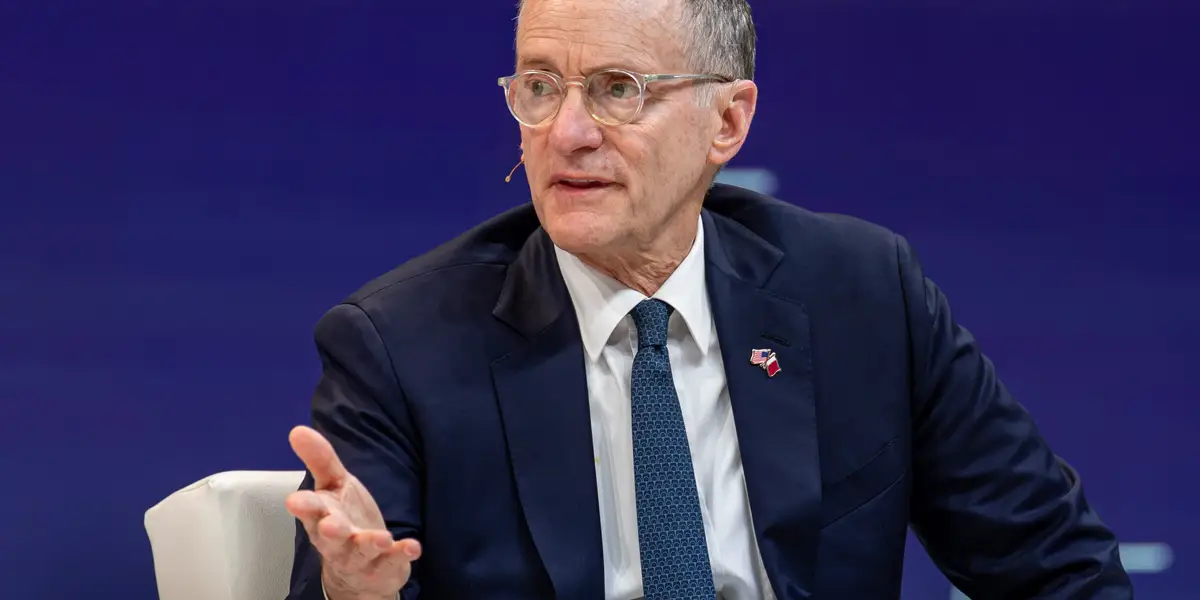
霍华德·马克斯刚刚指出,投资AI公司最难的部分之一。像他这样的价值投资者试图预测一家公司五年后的收益,以判断当前股价是否具有吸引力,他在周一的《彭博:中国节目》中表示。“我认为我们无法对大部分AI做到这一点,”马克斯说。他以Anthropic为例,这是一家开发Claude的AI公司,最近提交了上市申请,可能成为历史上最大规模的IPO之一。
Howard Marks just highlighted one of the hardest parts of investing in AI companies. Value investors like him try to project a company's earnings five years from now to gauge whether a stock is attractively priced today, he said on "Bloomberg: The China Show" on Monday. "I don't think we can do that with much of AI," Marks said. He gave the example of Anthropic, the AI company behind Claude that recently filed to go public in what could rank among the biggest IPOs in history.
“我们真的能骗自己,以为我们知道它五年后会做什么吗?”马克斯问道。“但这并不意味着我们不想参与其中。”Anthropic的联合创始人在其IPO招股说明书中写道,他们“将不断寻求重塑我们的业务,推出旨在超越现有产品经济价值的新产品类别。”他们指出,AI的进步在2022年催生了聊天机器人,去年催生了编码代理,而今年正逐渐使使用代理进行更广泛的知识工作和科学发现成为可行。
"Can we really fool ourselves into thinking we know what it will do five years from now?" Marks asked. "And yet, that doesn't mean we don't want to be in it." Anthropic's cofounders wrote in its IPO prospectus that they "will be constantly seeking to reinvent our business, releasing new classes of products whose aim is to dwarf the economic value of our existing ones." They noted that advances in AI enabled chatbots in 2022 and coding agents last year, and this year have been gradually making it viable to use agents for broader knowledge work and scientific discovery.
马克斯是Oaktree Capital Management的亿万富翁联合创始人兼联席主席,他表示,在六十年的投资生涯中,他从未遇到过像AI这样“在其不可理解性、新颖性、进步速度、自主性和不可预测性方面”的事物。然而,他指出,AI热潮最近的“挫折”——例如上周投资者因担忧AI支出而抛售Alphabet和亚马逊股票——在某种程度上“刺破了无懈可击的泡沫”。
Marks, the billionaire cofounder and co-chairman of Oaktree Capital Management, said that in six decades of investing, he's never dealt with something like AI "in terms of its inscrutability, its novelty, its speed of progress, its autonomy, and its unpredictability." However, he noted the AI boom's recent "stumbles" — such as investors dumping Alphabet and Amazon stock last week on concerns about their AI spending — have "somewhat burst the bubble of infallibility."
纳斯达克100指数在上周四和周五两天内下跌了约1400点,即近5%。但这个以科技股为主的指数今年以来仍上涨了约13%,并且自2022年底以来飙升了约160%,从不到11000点上升至略低于28400点。
The Nasdaq 100 slumped by roughly 1,400 points, or nearly 5%, over the course of Thursday and Friday last week. But the tech-heavy index is still up about 13% this calendar year, and has soared by around 160% since the end of 2022, from under 11,000 points to just below 28,400 points.
马克斯在备忘录中分享智慧和建议已有35年之久,他说,投资者试图控制自己的兴奋情绪,变得更加“审慎”和“怀疑”,这是“非常健康”的。这位困境债务投资者表示,投资者不应担心某只股票在某一天的表现,而应“构建一套长期有效的投资组合,并坚持持有”。“投资行业对过度活跃没有回报,”他说。马克斯的关键影响者之一、沃伦·巴菲特几十年来一直倡导长期投资。
Marks, who's been sharing wisdom and advice in his memos for over 35 years, said it's "very healthy" that investors are trying to control their excitement and be a little more "thoughtful" and "skeptical." The distressed-debt investor said that instead of worrying about how a stock is performing on a single day, investors should "put together a portfolio of things that will work in the long run, and stay with it." "There is no reward in the investment business for hyperactivity," he said. One of Marks' key influences, Warren Buffett, has championed long-term investing for decades.
他打造的联合体伯克希尔·哈撒韦公司在20世纪90年代中期完成了对可口可乐和美国运通的大额持股建仓,此后一直未动过。巴菲特于2025年底卸任伯克希尔首席执行官,并于今年9月卸任董事长,他在7月的一场采访中对人工智能热潮发出了类似的警告。“当所有人都偏好赌博时,很难找到价值,”这位传奇的淘金者说。
The conglomerate he built, Berkshire Hathaway, finished building large stakes in Coca-Cola and American Express in the mid-1990s, and hasn't touched them since. Buffett, who stepped down as Berkshire's CEO at the end of 2025 and as its chairman this September, issued a similar caution about the AI boom in a July interview. "It's tough to find values when everybody is preferring gambling," the legendary bargain hunter said.
他还强调,被称为超大规模云服务商的Meta和微软等公司正在微芯片、数据中心和其他人工智能基础设施上投入数千亿美元,他将其描述为“真金白银”。另一位著名的价值投资者、《大空头》成名的迈克尔·伯里,多次警告称人工智能是注定会破裂的泡沫。他在自己的Substack上论证称,人工智能公司过度投资,并指出其激进的会计处理、隐藏债务和循环交易是危险信号。
He also emphasized that so-called hyperscalers such as Meta and Microsoft are spending hundreds of billions of dollars on microchips, data centers, and other AI infrastructure, describing that as "real money." Another prominent value investor, Michael Burry of "The Big Short" fame, has repeatedly warned that AI is a bubble destined to burst. He's made the case on his Substack that AI companies are overinvesting, and pointed to their aggressive accounting, hidden debts, and circular deals as red flags.