新西兰储备银行因其作为通胀目标制先驱的地位而备受关注,却犯了一个错误。这个失误未必致命,甚至可能给世界上一课。
The Reserve Bank of New Zealand, closely watched because of its status as a pioneer of inflation targeting, has blundered. The mistake needn’t be fatal and might even teach the world a lesson.
上周,官员们放弃了几乎所有人都预期的加息举措,犯下了央行决策中最严重的错误之一。让交易员如此彻底地措手不及是不明智的。政策制定不应仅仅为了迎合市场,但市场剧烈波动很少能增强投资者信心。
By forgoing an interest-rate hike last week that was almost universally expected, officials committed one of central banking’s most grievous errors. Catching traders so thoroughly off guard is unwise. Policies shouldn't be made simply to appease them, but market volatility rarely builds investor confidence.
前美联储主席本·伯南克曾敏锐地指出,成功的政策 98% 靠沟通,2% 靠行动,此言非虚。新西兰储备银行行长安娜·布雷曼及其团队过去对政策意图相对公开,但在本次决策前却过于保守。他们或许应当重新学习“前瞻指引”这门艺术。更奇怪的是,布雷曼在决策后的几天里强调,借贷成本很可能在 12 月的下次会议上上调。
Not for nothing did former Federal Reserve Chair Ben Bernanke observe that successful policy is 98% talk and 2% action. RBNZ Governor Anna Breman and her team, relatively open about their intentions in the past, were far too restrained ahead of the decision. They might consider relearning the art of talking Stanger still, Breman stressed in the days afterward that borrowing costs are likely to rise at the next meeting in December.
到那时,官员们能了解到几天前尚不明显的什么信息?如果他们如此确信仍需进一步努力以遏制通胀,那么周三就应该采取行动。投票决定维持利率不变的委员们担心家庭消费和投资疲软。如果布雷曼能重拾节奏,这件事顶多算个小污点。她甚至可能为全球经济做件好事。市场对这一意外的反应剧烈。一旦现状维持不变的消息明朗,新西兰元兑美元汇率暴跌,跌幅创近 19 个月新高。
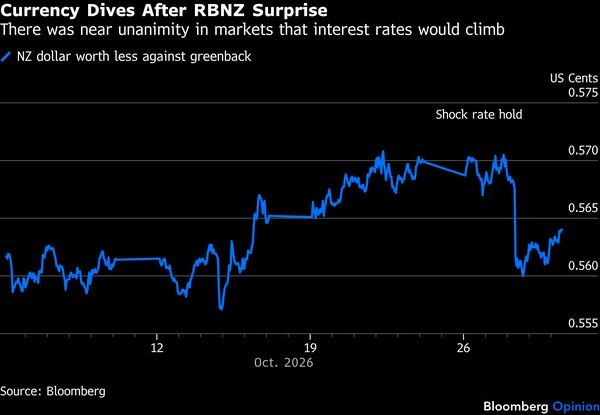
What might officials learn by then that wasn't apparent a few days ago? If they’re so sure that more work is needed to quash inflation, then they should have acted on Wednesday. Those on the panel who voted to hold fretted about subpar household spending and investment. If Breman recovers her footing, the episode need be little more than a blemish. She might even do the global economy a favor. The reaction to the surprise was severe. The New Zealand dollar plunged the most in almost 19 months against the greenback once it was clear the status quo prevailed.
这表明,当投资者得不到指引、或得到错误指引时,会发生什么。如今一些央行家渴望减少信息披露,这一教训显得愈发切题。
That shows what can happen when investors are starved of guidance, or given the wrong kind. The lesson is all the more pertinent now that some central bankers are eager to dial back the flow of information.
“更多并不总是更好”这一学派最有力的倡导者是美联储主席凯文·沃什。该学派认为,自全球金融危机以来,过度的开放性使得这种纠正显得必要。他坚称自己不从事前瞻指引工作,并拒绝为所谓的“点阵图”提交预测,该图表显示联邦公开市场委员会(FOMC)成员对借贷成本走向的看法。上周,他宣布2028年安排的八次FOMC会议中将有一场专门用于战略讨论——且届时不太可能发布声明。次年将有两场此类“沉默会议”。欧洲央行也在减少会议次数。
The most powerful advocate of the more-isn't-always-better school, which sees it as a necessary corrective to too much openness since the Global Financial Crisis, is Fed Chair Kevin Warsh. He insists he's not in the business of forward guidance and refuses to submit a projection for the so-called dot plot, which shows where members of the Federal Open Market Committee see borrowing costs headed. Last week he announced that one of the eight FOMC meetings scheduled for 2027 will be devoted to strategy — and there's unlikely to be a statement to follow. In the following year, there will be two such silent conclaves. The European Central Bank is also scaling back the number of meetings.
沃什表示,在正常时期,美联储大量释放暗示对投资者并无益处。但数十年的透明化做法无法简单逆转。首先,尽管主席保持沉默,许多美联储官员的发言依然像以往一样频繁。在主权债券市场不安之际,允许出现信息真空是否明智?央行变得健谈自有缘由。从全球金融危机开始,由于利害攸关,当局在叙述上变得开放得多。
Warsh says that in normal times, the Fed does investors no good by dropping lots of hints. But decades of transparency can’t simply be unwound. For one thing, plenty of Fed officials are talking as much as ever, despite the chair’s reticence. And at a time of unease in the market for sovereign debt, is it prudent to allow a vacuum to develop? Central bankers became talkative for good reason. Starting with the global financial crisis, authorities grew far more forthcoming with their narratives because the stakes were so high.
他们处于舆论风口浪尖,投资者需要确信有人掌舵。量化宽松模糊了财政与货币政策的界限,也使一定程度的坦诚成为政治必要。艾伦·格林斯潘——鲜少有人视其为清晰表达的典范——意识到多说话可能有利,并非因为他本身偏好公开,而是因为这有助于美联储实现目标。如果市场确信你动真格且信号足够强烈,市场就能替你完成大部分工作。
They were in the firing line, and investors needed reassurance that someone had a hand on the tiller. By blurring the line between fiscal and monetary policy, quantitative easing also made a degree of candor a political necessity. Alan Greenspan, few people’s idea of a paragon of clarity, recognized that saying more could be advantageous — not because he favored openness for its own sake, but because it could help the Fed achieve its aims. If markets were convinced you were serious and your signals were loud enough, they could do much of your work for you.
如果交易员根据你的言论收紧或放松金融条件,你自己的利率决策就不必那么剧烈,引发“发脾气”式抛售的风险也会降低。在格林斯潘(于6月去世)任内,美联储开始发布联邦公开市场委员会(FOMC)声明并公开会议记录——并首次给出了前瞻性指引的雏形。
If traders tightened or loosened financial conditions based on what you said, your own rate decisions need not be so dramatic, and the risk of a tantrum would recede. Under Greenspan, who died in June, the Fed began releasing FOMC statements and publishing transcripts of its meetings — and gave the first inklings of forward guidance.
这位老人依然语焉不详,但他迈出的稳步举措让透明度在一个历史上不透明的领域变得可接受。若预期偏离像新西兰那样严重,他会想办法至少稍微把市场引向另一方向。布雷曼还有工作要做,“少即是多”派不妨研究一下安提波德斯(指新西兰)的失误。
The man still mumbled, but he took steady steps that made transparency acceptable in a historically opaque arena. Had expectations been as badly off as they were in New Zealand, he would have found a way to nudge the market at least a little the other way. Breman has work to do, and the less-is-more school could do worse than study the Antipodean stumble.