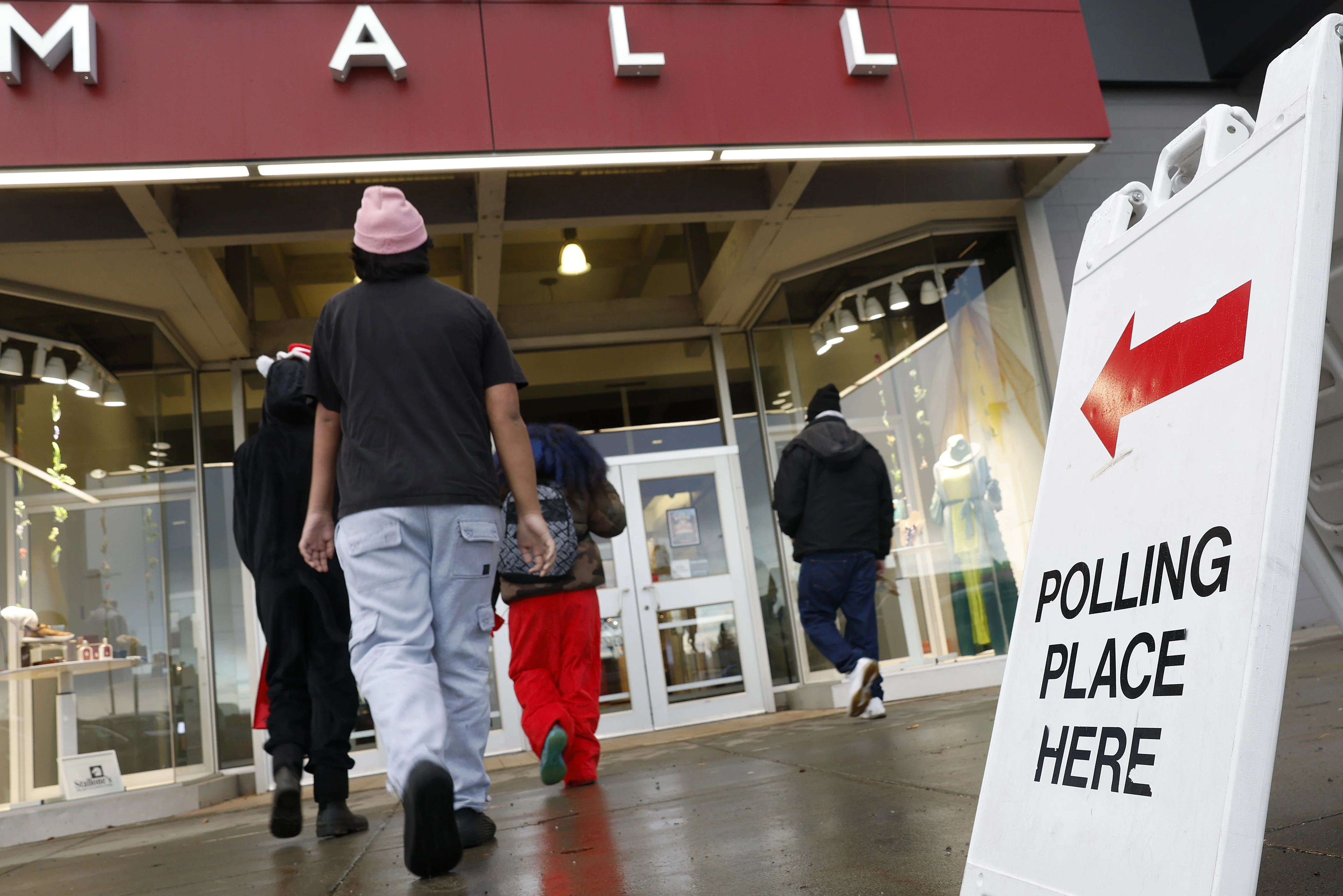
选民于2026年10月31日在阿拉斯加州安克雷奇的Midtown Mall投票站进入投票。
Voters enter a polling station at Midtown Mall on October 31, 2026 in Anchorage, Alaska.
Justin Sullivan/Getty Images North America 选民正在投票,选票正在被统计,435个众议院席位、35个参议院席位和36个州长职位的竞选,以及投票议题和数千个州议会席位的结果开始陆续出炉。但美国国家公共电台(NPR)将如何在选举之夜宣布胜选?在全国众多竞选中确定胜者是一项庞大的工作。这就是为什么NPR与美联社(AP)合作——且已合作多年——以确保竞选结果宣布的准确性。
Justin Sullivan/Getty Images North America Voters are voting, ballots are being counted and results are starting to come in for 435 House races, 35 Senate races and 36 gubernatorial contests as well as ballot measures and thousands of state legislative seats. But how will NPR call races on election night? Determining a winner in any of the many races across the country is a big job. That's why NPR partners with the Associated Press — and has for many years — to ensure that races are called accurately.
美联社自1848年起便开始宣布竞选结果,近180年后的今天,其宣布胜选的流程依然相当简单。以下是美联社对其宣布胜选流程的解释:宣布胜选的人员与专注于全州范围竞选(如联邦参议员和州长竞选)以及联邦众议员选举的分析师协作。美联社决策团队的决策编辑对总统、联邦参议员、州长竞选的每一个胜选宣布,以及联邦众议员竞选中具有重要意义的竞选宣布,进行最终把关。
The Associated Press has been calling races since 1848 and even now, nearly 180 years later, the process for making those calls is pretty simple. Here's how the AP explains its race calling process: Race callers collaborate with analysts who focus on statewide races, such as those for U.S. Senate and governor, and elections for the U.S. House of Representatives. The decision editors on AP's Decision Team sign off on every race call for president, U.S. Senate and governor, as well as races of significance for U.S. House.
他们共同关注的远不止总得票数。他们逐县研究陆续传来的选票数据。在信息可获取的州,他们按选票类型查看投票情况:在投票站现场投票,还是提前通过邮寄或现场投票。他们还与美联社的计票团队保持持续联系,寻找关于目前已统计了多少选票以及可能还有多少选票待统计的最新信息。
Together, they are looking at far more than just the overall vote totals. They study the incoming vote county by county. In states where the information is available, they look at the vote by type of ballot: cast in person at polling places, or in advance by mail or in person. They are also in constant contact with AP's vote count team, in search of the latest information about what's been counted so far and how many ballots may still be left to count.
一旦美联社掌握了尚未统计的选票数量与已统计选票数量的对比情况,其工作人员便可基于多种不同因素,开始核算某位候选人在特定竞选中获胜的可能性:尚未统计的选票来自何处、那些社区的人口构成如何,甚至个别选民是如何选择投票方式的。
Once AP has an idea of how many ballots are outstanding versus how many have been counted, their staff can start to tabulate the likelihood of a certain winner being victorious in a certain contest based on a lot of different factors: where the ballots that are outstanding are coming from, what the makeup of those communities looks like and even, how the individual chose to vote.
就NPR而言,一旦美联社宣布某场竞选的结果,我们将作为特别报道的一部分,在广播和数字端向受众播报,并通过数字报道在网上发布。我们还确保我们的数百家成员电台也能获取该信息。我们将使用美联社的数据来填充我们的选举结果页面,以便观众能够实时追踪。在并非所有选票都已清点完毕时,如何宣布竞选结果?
For NPR's part, once the AP calls a race, we will alert our broadcast and digital audiences on air as part of special coverage and online through digital stories. We also ensure that our hundreds of member stations also have access to that information. We will use AP's data to populate our election results pages so viewers can keep track, in real time. How are races called when not all votes have been counted?
但有时,在并非所有——甚至大部分——选票清点完毕的情况下,也可能会宣布竞选结果。这怎么可能呢?
But sometimes, races might be called without all — or even most — of the vote counted. How is that possible?
美联社在2024年解释称,它利用选票的相同计算方式、外部因素和其他数据来为其决策提供依据。
The Associated Press explained in 2024 that it uses that same calculation of ballots, external factors and other data to inform its decisions.
在几乎所有情况下,在100%的选票清点完毕之前很久,就可以宣布竞选结果。美联社的选举记者和分析师团队只要能够确定明显的获胜者,就会立即宣布竞选结果。这听起来可能显而易见,但它是推动该机构选举结果宣布流程的指导原则。
In almost all cases, races can be called well before 100% of the votes have been counted. The AP's team of election journalists and analysts will call a race as soon as a clear winner can be determined. That may sound obvious, but it is the guiding principle that drives the organization's election race-calling process.
美联社对竞选结果的宣布并非预测,也不是基于猜测。它们是基于对投票结果和其他选举数据的分析而做出的宣告,即某个候选人已经脱颖而出成为胜者,并且一旦所有选票清点完毕,竞选中的其他任何候选人都将无法超越该胜者。
The AP's race calls are not predictions and are not based on speculation. They are declarations based on an analysis of vote results and other election data that one candidate has emerged as the winner and that no other candidate in the race will be able to overtake the winner once all the votes have been counted.
听起来很简单,对吧?美联社在“能够确定明显的获胜者”之前不会宣布竞选结果。但这并不总是需要每个竞选中的每个选区的全部选票。有时这全关乎数学:这位候选人能否凭借在尚未计票地区的剩余选票切实赢得胜利?这就引出了另一个非常重要的问题。美联社——因此也就是NPR——不会对竞选结果进行预测。
It sounds simple, right? The AP won't call races until "a clear winner can be determined." But that doesn't always require all of the votes for every precinct for every race. Sometimes it's all about the math: can this candidate feasibly win with the votes outstanding in the places they are yet to be counted? And that raises another, really important point. The AP – and therefore NPR – will not project races.
美联社的团队会一直等到确信无疑时才宣布竞选结果,这就是为什么包括NPR在内的数百家新闻机构信任其宣布的竞选结果的原因。因为他们会等到有把握时再宣布,哪怕这意味着多等一会儿以确保万无一失。
The team at the AP will wait until it has certainty to call raises and that is why its race calls are trusted by hundreds of news organizations, including NPR. Because they wait until there is surety, even if it means waiting just a bit longer to be sure.
在操守方面,美国全国公共广播公司(NPR)不会仅仅因为候选人宣布获胜就对竞选结果作出判定,也不会根据承认失败的演讲或声明来作出判定。美联社也是如此:美联社不会进行预测,也不会指出表面上或可能的获胜者。如果我们的选举结果判定人员无法确切地说某位候选人已经获胜,我们就不会进行猜测。例如,在2000年乔治·W·布什与阿尔·戈尔之间竞争激烈的选举中,美联社没有作出结果判定——我们坚持我们的评估,即佛罗里达州的票数差距太小,无法确定谁赢得了选举。
On an ethical note, NPR will not make race calls just because a candidate declares victory, nor will NPR use a concession speech or statement to make a race call either. That is true of the Associated Press as well: AP does not make projections or name apparent or likely winners. If our race callers cannot definitively say a candidate has won, we do not engage in speculation. For example, AP did not call the closely contested race in 2000 between George W. Bush and Al Gore – we stood behind our assessment that the margin in Florida made it too close to say who won.
美联社只有在对选举结果完全有信心时才会作出判定——最简单的定义就是落后候选人已经没有获胜途径的那一刻。
AP only calls a race when we are fully confident that race has been won – defined most simply as the moment the trailing candidates no longer have a path to victory.
当美联社作出选举结果判定时,我们会通过对研究和分析进行透明的报道来予以支撑,正是这些研究和分析让我们能够确切地说出谁赢得了选举。这种解释性新闻报道与选举结果判定本身一样,是我们美国选举报道的重要标志。
When AP makes a race call, we back it up with transparent reporting into the research and analysis that led us to say with certainty who has won. This explanatory journalism is as much a hallmark of our coverage of U.S. elections as the race calls themselves.
虽然选举之夜是这些选举结果判定的开始,但这很可能不会是结束。
While election night is the start of these race calls, it likely will not be the end.
统计选票可能需要一段时间。选举结果判定将被汇总,以确定参议院和众议院的力量对比。NPR将报道所有重大的选举结果判定,并在广播和网络上持续报道2026年选举的最终结果。
Counting voters can take a while Race calls will be tabulated to determine the balance of power in the Senate and the House of Representatives. NPR will cover all major race calls and provide ongoing coverage on air and online of just how the 2026 election shakes out.