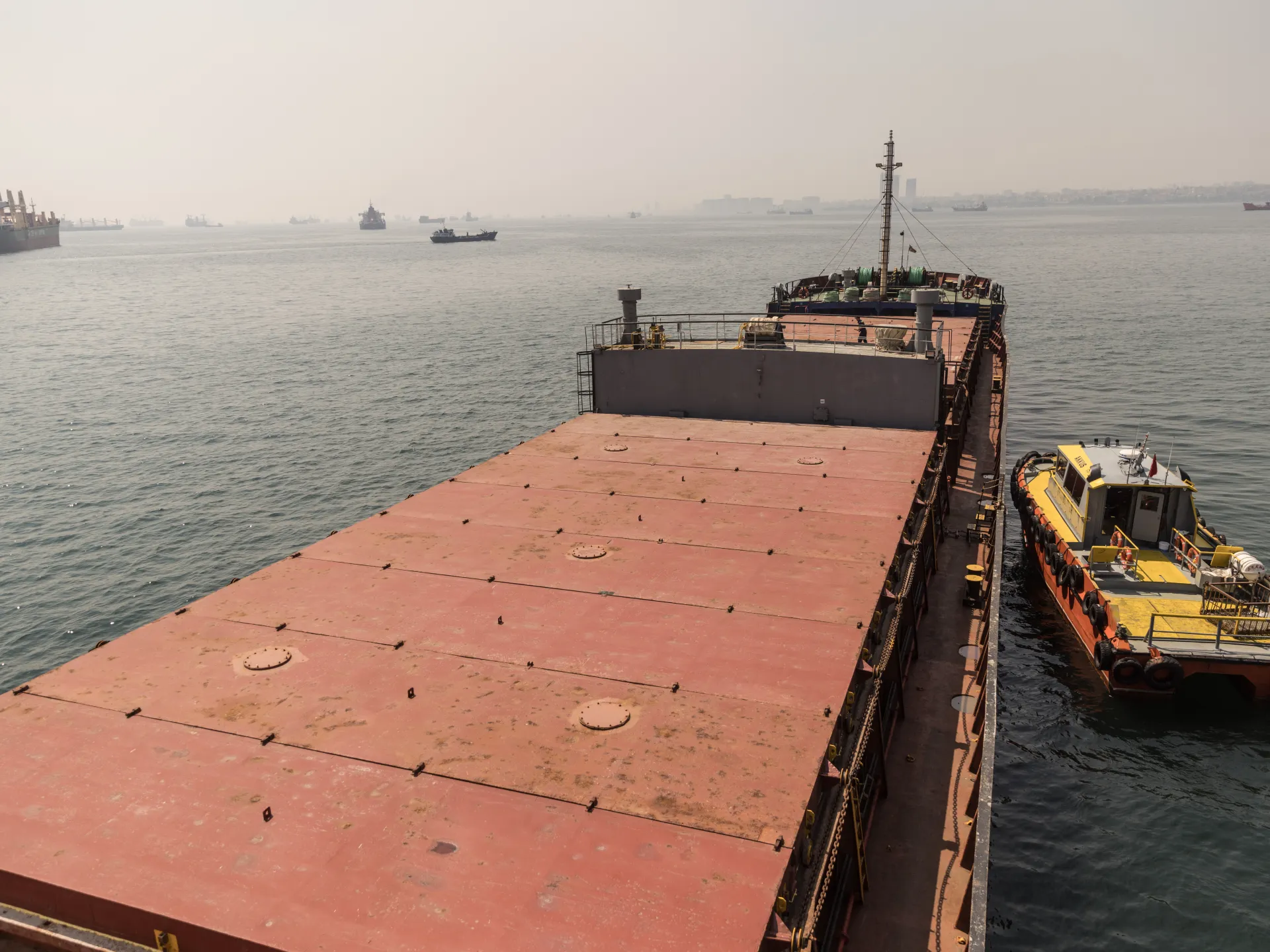
针对商船的袭击似乎已成为正在进行的战争中既定的战术。在海湾地区,这是美国与伊朗持续进行的消耗战的一部分。在黑海,这已成为俄乌冲突中日益突出的特征。遭袭击的船只大多并非军舰,而是装载石油、天然气和石油产品,或小麦、玉米等粮食商品的商船。所有这些物资要么对经济运行至关重要,要么关乎人类生存。
Attacks on commercial vessels appear to have become an established tactic in ongoing wars. In the Gulf region, they are part of the continuing war of attrition between the United States and Iran. In the Black Sea, they have become an increasingly prominent feature of the conflict between Russia and Ukraine. Most of the vessels being targeted are not military ships but commercial ones carrying oil, gas and petroleum products, or food commodities such as wheat and corn. All are essential either to the functioning of the economy or to human survival.
10月,黑海商业航运出现急剧升级,一系列无人机袭击瞄准了罗马尼亚和保加利亚海岸附近的至少九艘船只,这两国均为北约成员。这是一个危险的发展,莫斯科借此测试联盟的凝聚力。多个北约成员国已抱怨俄罗斯侵入其领土,引发关于能否援引《北大西洋公约》第五条(规定集体防御)的疑问。
In October, commercial shipping in the Black Sea witnessed a sharp escalation, with a series of drone attacks targeting at least nine vessels off the coasts of Romania and Bulgaria, both NATO members. This is a dangerous development through which Moscow is testing the alliance’s cohesion. Several NATO members have already complained of Russian incursions into their territory, raising questions about whether Article 5 of the North Atlantic Treaty, which provides for collective defence, could be invoked.
俄罗斯多次轰炸乌克兰黑海港口和多瑙河港口。随着乌克兰大多数港口受阻,基辅转而寻找替代路线,将粮食出口至非洲和中东市场。这些路线主要分为三类:经罗马尼亚的多瑙河走廊:粮食从乌克兰内陆运至多瑙河上的伊兹梅尔和雷尼港口,随后经罗马尼亚的苏利纳运河进入黑海,或运至罗马尼亚的康斯坦察港,在那里换装至更大的船只。
Russia has repeatedly bombarded Ukrainian ports on the Black Sea and the Danube River. With most Ukrainian ports disrupted, Kyiv has turned to alternative routes to export its grain to markets in Africa and the Middle East. These fall into three main categories: The Danube corridor through Romania: Grain is transported from Ukraine’s interior to the ports of Izmail and Reni on the Danube, then through Romania’s Sulina Channel to the Black Sea, or to the Romanian port of Constanta, where it is transferred to larger vessels.
经欧盟的陆路走廊:乌克兰利用火车和卡车经波兰、斯洛伐克、匈牙利和罗马尼亚运输粮食,随后从欧洲波罗的海、亚得里亚海或黑海港口装运出海。沿北约海岸线的乌克兰海上走廊:从敖德萨地区港口出发的船只,穿过西部黑海,靠近罗马尼亚和保加利亚海域,然后驶向土耳其,再通过博斯普鲁斯海峡抵达全球市场。
Overland corridors through the European Union: Ukraine uses trains and trucks to transport grain through Poland, Slovakia, Hungary and Romania, from where it is shipped through European ports on the Baltic, Adriatic or Black Seas. The Ukrainian maritime corridor along NATO coastlines: Departing from ports in the Odesa region, ships travel through the western Black Sea, close to the waters of Romania and Bulgaria, then towards Turkiye, before passing through the Bosphorus Strait to reach global markets.
但这些替代航线未能躲过俄罗斯的攻击。据海事安全公司安布雷(Ambrey)的一份报告,多瑙河走廊相关攻击的月度发生率,在7月至9月季度较2026年上半年上升了3.7倍。与此同时,多瑙河在乌克兰港口货物吞吐量中的份额,从1月至6月的约10%跃升至2026年8月的74%。
But these alternative corridors have not escaped Russian attacks. According to a report by maritime security company Ambrey the monthly rate of attacks associated with the Danube corridor was 3.7 times higher in the July-September quarter than in the first half of 2026. Meanwhile, the Danube’s share of cargo handled at Ukrainian ports jumped from about 10 percent during January-June to 74 percent in August 2026.
从陆地到海洋的粮食战争 为给彼此造成最大损失和损害,俄罗斯和乌克兰均未回避使用一切可用手段来威慑或制服对方。战争起初集中于军事和后勤设施,随后攻击扩大到基础设施和港口,再逐渐波及炼油厂和能源设施。如今,与粮食相关的设施以及运载谷物和其他食品的船只,越来越多地成为攻击目标。
A war on food, from land to sea Seeking to inflict maximum damage and losses on each other, neither Russia nor Ukraine has shied away from using every available means to deter or subdue the other. While the war initially focused on military and logistical facilities, attacks subsequently expanded to infrastructure and ports, then gradually to refineries and energy installations. Today, food-related facilities and ships carrying grain and other food products are increasingly in the line of fire.
战争初期,莫斯科将打击重点放在乌克兰生产谷物和油籽的基础设施上。它封锁了通往乌克兰黑海港口的通道,并反复攻击运载谷物的船只。这迫使乌克兰寻找替代出口路线,包括多瑙河,而多瑙河本身也已成为俄罗斯攻击的目标。
At the beginning of the war, Moscow concentrated its strikes on Ukraine’s infrastructure for producing grain and oilseeds. It obstructed access to Ukrainian ports on the Black Sea and repeatedly targeted vessels carrying grain. This forced Ukraine to secure alternative export routes, including the Danube, which has itself become a target of Russian attacks.
谷物和植物油出口是乌克兰经济的重要组成部分。数据显示,今年上半年,这两项出口约占该国商品出口总额的40%。这有助于解释为何俄罗斯将打击重点集中在运输这些经济关键产品的港口和船只上。
Grain and vegetable oil exports are a vital part of Ukraine’s economy. Data indicate that they accounted for about 40 percent of the country’s total merchandise exports in the first half of this year. This helps explain why Russia has concentrated its strikes on ports and vessels transporting these economically vital products.
乌克兰农业部长估计,如果港口保持关闭,该国在今年6月至2027年6月期间将损失至少80亿美元。这一缺口相当于去年乌克兰出口总收入的20%。俄罗斯对货船和出口基础设施的袭击,已使通过乌克兰黑海港口的海上交通基本陷于停顿。这些港口此前承担了该国约90%的农产品出口。
Ukraine’s agriculture minister estimates that if the ports remain closed, the country will lose at least $8bn between June this year and June 2027. That shortfall would be equivalent to 20 percent of its total export revenues last year. Russian attacks on cargo vessels and export infrastructure have largely brought maritime traffic through Ukraine’s Black Sea ports to a halt. These ports previously handled about 90 percent of the country’s agricultural exports.
另一方面,俄罗斯的粮食生产和出口直到最近仍相对免受袭击影响。但今年夏天,基辅将无人机袭击目标转向俄罗斯的粮食和植物油出口设施,以及商业船只,包括粮船。
On the other side, Russian grain production and exports had, until recently, remained relatively insulated from attacks. But this summer, Kyiv redirected its drones towards Russian grain and vegetable oil export facilities, as well as commercial vessels, including grain carriers.
这标志着经济战的重大转变,因为乌克兰此前的袭击更多集中在俄罗斯能源设施和军事设施上。乌克兰的袭击扰乱了黑海和亚速海的主要俄罗斯粮食出口码头,迫使莫斯科将部分出口转向波罗的海港口。亚速海此前承担了俄罗斯近四分之一的小麦出口。
This marked a significant shift in the economic war, as Ukrainian strikes had previously focused more heavily on Russian energy installations and military facilities. Ukrainian attacks disrupted main Russian grain export terminals on the Black Sea and the Sea of Azov, forcing Moscow to divert some of its exports to Baltic Sea ports. The Sea of Azov had previously handled nearly a quarter of Russia’s wheat exports.
供应短缺与价格飙升 俄罗斯是世界最大小麦出口国,乌克兰排名第五。两国合计占全球小麦出口的近27%。近期袭击推高了芝加哥商品交易所小麦期货价格至2023年以来最高水平,今年前九个月价格上涨约20%。
Supply shortages and soaring prices Russia is the world’s largest wheat exporter, while Ukraine ranks fifth. Together, they account for nearly 27 percent of global wheat exports. Recent attacks have pushed wheat futures on the Chicago Mercantile Exchange to their highest levels since 2023, with prices rising by about 20 percent in the first nine months of this year.
双方袭击升级恰逢两国小麦出口旺季。冬小麦是俄罗斯和乌克兰的主要种植品种,夏季收获,晚夏和初秋出口。
The escalation of attacks by both sides has coincided with the peak wheat export season in each country. Winter wheat, the dominant variety grown in Russia and Ukraine, is harvested in summer and exported in late summer and early autumn.
据报道,乌克兰的袭击——特别是针对亚速海和新罗西斯克俄罗斯港口的袭击——已使俄罗斯约70%的粮食出口能力瘫痪。与此同时,近期俄罗斯的袭击已暂停了敖德萨的发运,导致乌克兰近90%的粮食装运停摆。
Ukrainian attacks, particularly those targeting Russian ports on the Sea of Azov and at Novorossiysk, have reportedly knocked out an estimated 70 percent of Russia’s grain export capacity. Recent Russian attacks, meanwhile, have halted shipments from Odesa, putting nearly 90 percent of Ukrainian grain shipments out of operation.
乌克兰还在7月和8月加大了对离开俄罗斯港口货轮的袭击力度。据乌克兰军方官员称,他们在7月6日至11日期间打击了76艘俄罗斯船只。7月中旬,俄罗斯暂停了通过顿-亚速运河的出口。随后,乌克兰在7月下旬袭击了俄罗斯塔曼港一个主要粮食出口终端,导致俄罗斯经亚速海的小麦出口遭受进一步挫折。
Ukraine also intensified its attacks on cargo ships departing Russian ports in July and August. According to Ukrainian military officials, they struck 76 Russian vessels between July 6 and 11. In mid-July, Russia suspended exports through the Don-Azov Canal. Russian wheat exports via the Sea of Azov suffered a further setback following a Ukrainian attack on a major grain export terminal at the Russian port of Taman in late July.
战争与干旱双重夹击 俗话说,祸不单行。针对涉及全球两大粮食生产国的粮食相关设施和供应线的袭击,恰逢因干旱和气候变化导致全球小麦产量下降。
Caught between war and drought As the saying goes, misfortunes rarely come alone. Attacks on food-related facilities and supply routes involving two of the world’s largest grain producers have coincided with a decline in global wheat production caused by drought and climate change.
据美国农业部估计,全球七大小麦出口国在2026-27年度的总产量可能下降11%。
According to estimates by the US Department of Agriculture, the combined production of the world’s seven largest wheat-exporting countries is likely to fall by 11 percent in the 2026-27 season.
这些事态发展共同对全球粮食安全构成双重威胁。粮食生产能力在下降,而将粮食运往进口市场的能力却因运输成本上升和保障装运费用增加而受到干扰。
Together, these developments pose a dual threat to global food security. The capacity to produce food is declining, while the ability to deliver it to importing markets is being disrupted, amid rising transport costs and the growing expense of securing shipments.
归根结底,黑海上演的战争将转化为更高的食品价格、不断攀升的进口账单和战略储备的消耗,尤其是在那些严重依赖进口粮食的阿拉伯和非洲国家。
Ultimately, the war unfolding in the Black Sea will translate into higher food prices, rising import bills and the depletion of strategic reserves, particularly in Arab and African countries that depend heavily on imported grain.
海湾水域战争导致的能源供应中断已在推高通胀。如今,黑海战争导致的粮食供应下降恐将增加另一个同样危险的通胀源头。本文阿拉伯语版本最初由半岛电视台研究中心在此发布。
The disruption of energy supplies caused by the war in Gulf waters is already fuelling inflation. Now, the decline in food supplies resulting from the war in the Black Sea threatens to add another, equally dangerous source of inflation. A version of this piece in Arabic was originally published by Al Jazeera Centre for Studies here