
布鲁塞尔——乌克兰和中东的战争迫使北约重新思考如何应对俄罗斯的攻击——包括摘下手套,打击俄罗斯境内纵深目标。
BRUSSELS—Wars in Ukraine and the Middle East are forcing NATO to rethink how it would counter a Russian attack—including by taking off the gloves and striking far inside Russian territory.
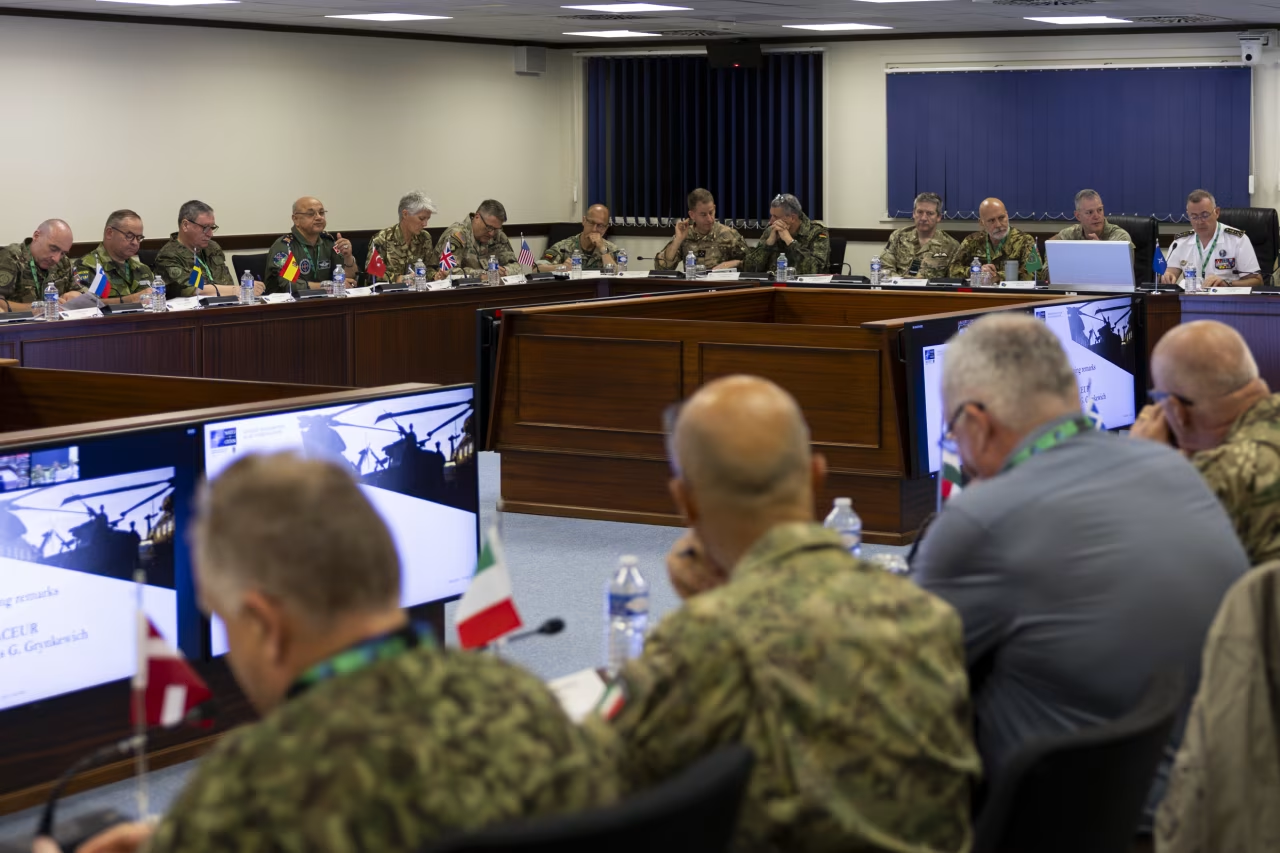
来自北大西洋公约组织各成员国的高级军官和官员于6月齐聚一堂,参加该联盟首届“纵深打击研讨会”。研讨会由北约最高军事指挥官、美国空军将军亚历克斯·格林克维奇主持,与会者进行了讨论和兵棋推演,探讨了一个直到最近鲜少有人公开提及的话题。
Top officers and officials from across the North Atlantic Treaty Organization gathered in June for the alliance’s first-ever Deep Strike Symposium. Hosted by U.S. Air Force Gen. Alexus Grynkewich, NATO’s top military commander, the discussions and wargame tackled a topic few attendees would have openly addressed until recently.
几十年来,保卫北约欧洲领土的核心在于军事层面的设置路障。但经过莫斯科在乌克兰近五年的战争,北约战略家表示,仅靠阻滞推进已无法挫败俄罗斯的入侵。
Protecting NATO’s European territory for decades centered on the military equivalent of putting up roadblocks. But after almost five years of Moscow’s war in Ukraine, NATO strategists say a Russian invasion won’t be thwarted by merely impeding an advance.
遏制克里姆林宫的常规武装力量现在需要更积极的预防,用军事术语说就是“拒止”。这不仅意味着轰炸可能越境涌入的部队,还意味着打击前线后方、俄罗斯本土的军事基地、补给仓库和工业设施。
Deterring the Kremlin’s conventional forces now requires more active prevention or, in military speak, denial. That entails not just blasting troops that might pour across borders, but also hitting military bases, supply depots and industrial facilities behind the front line, on Russia’s home ground.
格林克维奇最近在一次关于其“胜利理论”的演讲中阐述了这一思路,解释称北约防御力量将首先阻挡任何攻击的第一波冲击,随后削弱后续行动。他对华沙的听众表示,如果攻势持续,“我们将击溃针对我们的作战体系”,打击推进部队以及“支撑、维持或控制该部队的任何和所有事物”。升级至核武器不在该战略之内。
Grynkewich recently spelled out the approach in a speech on his “theory of victory,” explaining that NATO’s defensive forces would first block the initial wave of any attack and then blunt follow-on action. If the offensive were to continue, he told a Warsaw audience, “we will break the warfighting system engaged against us” by hitting both advancing forces and “anything and everything that supports, sustains, or controls that force.”Escalating to nuclear weapons isn’t in the strategy.
该计划的核心是高精度纵深打击武器——既包括高端装备,也包括成本较低的装备。美国近期一直在升级并扩充其精确纵深打击导弹阵列,包括“战斧”巡航导弹和“艾塔姆斯”火箭弹,同时研发新系统。此前落后的欧洲盟友正竞相装备新型号,并增加“风暴阴影”、“斯卡尔普”和“金牛”巡航导弹的少量库存。
Central to the plan is highly precise deep-strike weaponry—both high-end and less expensive. The U.S. has recently been upgrading and extending its array of precision deep-strike missiles, including Tomahawk cruise missiles and Atacms rockets, while developing new systems. European allies, who have lagged behind, are racing to field new models and boost their small stocks of Storm Shadow, Scalp and Taurus cruise missiles.
据挪威国防研究所高级研究员、导弹专家法比安·霍夫曼统计,欧洲各地已宣布至少48个新型低成本巡航导弹项目,涉及20家制造商。这些项目何时能交付武器仍是未知数。许多项目不会成行,即便取得进展也需要数年时间。
Across Europe, at least 48 new low-cost cruise-missile projects involving 20 manufacturers have been announced, according to Fabian Hoffmann, a senior researcher at the Norwegian Institute for Defense Studies who specializes in missiles. When any of those will deliver arms is an open question. Many won’t materialize, and even those that progress will need years.
对“纵深”的定义不一,从100英里左右到数百英里不等,但大体指前线远后方的目标。
Definitions of “deep” vary from around 100 miles to hundreds of miles, but broadly refer to targets far behind the front line.
在实战中,远程导弹、火箭弹和无人机将不仅用于打击远距离的传统军事目标——如偏远机场或陆军基地——还将用于打击距离北约边境数千英里的俄罗斯工业设施、关键基础设施和资源基地。
In combat, long-range missiles, rockets and drones would be used to pick off not only traditional military targets at great distances—like remote air fields or army compounds—but also Russia’s industrial facilities, critical infrastructure and resource bases that lie thousands of miles from NATO borders.
这种常被形容为“射人先射马,而非举盾挡箭”的做法,是乌克兰对抗俄罗斯所采取的路径。乌克兰使用日益强大的武器,包括国产“火烈鸟”巡航导弹,打击了俄罗斯遥远的军事和经济资产,如火箭燃料生产商、无人机电池厂、炼油厂和数据中心。美国今年对伊朗的行动也是这种做法。
The approach—often described as hitting an archer, rather than shielding from arrows—is one that Ukraine has taken against Russia. Using increasingly powerful weapons, including the domestically developed Flamingo cruise missiles, Kyiv has struck distant Russian military and economic assets, such as rocket-fuel producers, drone-battery plants, oil refineries and data centers. It is also an approach the U.S. deployed against Iran this year.
与此同时,俄罗斯对乌克兰发动了数量大得多的远程打击,将对战略目标的精确打击与对民用设施的大规模破坏相结合。乌克兰驻北约大使阿廖娜·盖特曼丘克表示,乌克兰西方供应的拦截弹告急,因此越来越多地依赖纵深打击这种“主动防御”来反击俄罗斯。
Russia, meanwhile, has launched a much larger number of long-range strikes on Ukraine, mixing pinpoint attacks on strategic targets with widespread destruction of civilian assets. Ukraine has run short of Western-supplied interceptors to protect itself, so is relying increasingly on deep-strike “proactive defense” to hit Russia, said Ukraine’s ambassador to NATO, Alyona Getmanchuk.
“防空系统就像止痛药——能缓解症状——但你需要瞄准疼痛的源头,”盖特曼丘克在一次乌克兰国防会议上表示。
“Air defense is like a painkiller—it can alleviate the symptoms—but you need to target the source of the pain,” Getmanchuk told a conference on Ukrainian defense.
北约从乌克兰战争中汲取的一个关键教训是,“防御也意味着反击”,而精确深度打击是其中至关重要的一环,波兰陆军少将伊雷内乌什·诺瓦克在接受采访时表示。“在与俄罗斯的冲突中,我们肯定想要打击其国防工业基础,”他说。
A crucial lesson for NATO from Ukraine is that “defense also means striking back,” and precision deep-strike attacks are a crucial part of that, said Polish Maj. Gen. Ireneusz Nowak in an interview. “We definitely would want to strike the defense-industrial base” in a fight with Russia, he said.
诺瓦克说:“我们需要把深度精确打击视为一种威慑。”他指出,如果乌克兰在战争早期具备这种能力,战斗就不会“演变成像一战那样的堑壕战”。虽然北约各国军事领导人现在都接受“拒止”作为作战原则,但许多战略家怀疑,欧洲政客是否敢于对俄罗斯的入侵实施深度打击回应。
“We need to treat deep precision strike as deterrence,” Nowak said, noting that if Ukraine had it early in the war, fighting wouldn’t have “resulted in trench battles like in World War I.” While military leaders across NATO now accept “denial” as doctrine, many strategists wonder if European politicians would stomach a deep-strike response to a Russian incursion.
“合理的对俄防御军事规划——其中肯定包含进攻性要素——与政治决策者之间存在脱节,后者认为防御只是筑起一道墙或部署一道无人机墙,”德国前国防部参谋长尼科·兰格说。
“There is a disconnect between the military planning that is reasonable to defend against Russia—which definitely includes offensive components—and the political decision makers, who believe defense is just putting up a wall or readying a drone wall,” said Nico Lange, a former chief of staff in Germany’s Defense Ministry.
格林克维奇等人的军事计划旨在使深度打击攻击在俄罗斯发动军事攻击后基本实现自动化。它们还旨在阐明为何储备这些武器是必要的。
Military plans like Grynkewich’s aim to make deep-strike attacks essentially automatic following a Russian military attack. They also aim to clarify why stockpiling the weapons is necessary.
乌克兰战争表明,大量精确制导武器至关重要,因为随着冲突拖延,新目标不断涌现。工厂等固定资产相对容易打击,但它们可能被转移到多个隐蔽地点——乌克兰就是这么做的。与此同时,发射装置等机动目标由于体积小且不断变换位置,打击难度可能更大。
Ukraine has shown that large supplies of precision weapons are vital because new targets continually emerge as conflicts wears on. Fixed assets like factories are relatively straightforward to target, but they may be relocated to several, hidden locations—as Ukraine has done. Mobile targets like launchers, meanwhile, can be even harder to strike because they are small and continually reposition.
霍夫曼说:“我们看到的是,你不希望陷入一场高强度冲突,在这种冲突中,你的对手拥有庞大的远程打击武器库,而你自己却没有。”
“What we’ve seen is that you don’t want to be caught in a high-intensity conflict where your adversary has access to deep arsenals of long-range strike capabilities and not have them yourself,” said Hoffmann.
深度打击攻击可追溯至第二次世界大战,当时双方均依赖有人驾驶的轰炸机。美国的一次轰炸任务击中了纳粹控制的、位于罗马尼亚境内深处的油田。德国部署了世界上首批有针对性的远程军用火箭——V1和V2,并将其倾泻在英国以及包括比利时安特卫普港在内的基础设施上,该港口在诺曼底登陆后成为盟军的补给节点。那些方法都不具备可靠的精确性。
Deep-strike attacks date back to World War II, when both sides relied on manned bombers. One U.S. bombing mission hit Nazi-controlled oil fields far inside Romania. Germany deployed the world’s first targeted long-range military rockets, the V1 and V2, which it rained on Britain and infrastructure including the Belgian port of Antwerp, an Allied supply node after D-Day. None of those methods was reliably precise.
冷战期间,弹道导弹变得更加精准,但体积庞大且发射复杂。深度精确打击在1991年第一次海湾战争中惊艳亮相,当时美国发射了数百枚“战斧”巡航导弹。它们水平飞行,使用小型喷气发动机,而非像弹道导弹那样使用火箭发动机。
During the Cold War, ballistic missiles grew more accurate but were big and complex to fire. Deep precision strike made a dramatic debut during the first Gulf War in 1991, when the U.S. fired hundreds of Tomahawks. They flew horizontally, using small jet engines, rather than rockets like ballistic missiles.
此后,美国、其盟友和对手扩充了巡航导弹库存,研发了像“陆军战术导弹系统”(Atacms)这样从美国“海马斯”(Himars)卡车发射的精确制导火箭,并最近模糊了无人机与导弹之间的界限。
Since then, the U.S., its allies and adversaries have expanded cruise-missile arsenals, developed precision rockets like Atacms fired from U.S. Himars trucks, and recently blurred the lines between drones and missiles.
北约指挥官表示,为了备战——并希望借此实现威慑——他们必须迅速建设深度打击武库。
NATO commanders say that to prepare for conflict—and hopefully deter it—they must quickly build out their deep-strike arsenals.
“传递的信息必须是:别干蠢事,因为我们能惩罚你,”波兰的诺瓦克说。“但要让这具有可信度,我们需要拥有那些能力。”
“The message needs to be: Don’t do anything stupid, because we can punish you,” said Poland’s Nowak. “But to be credible, we need to have those capabilities.”