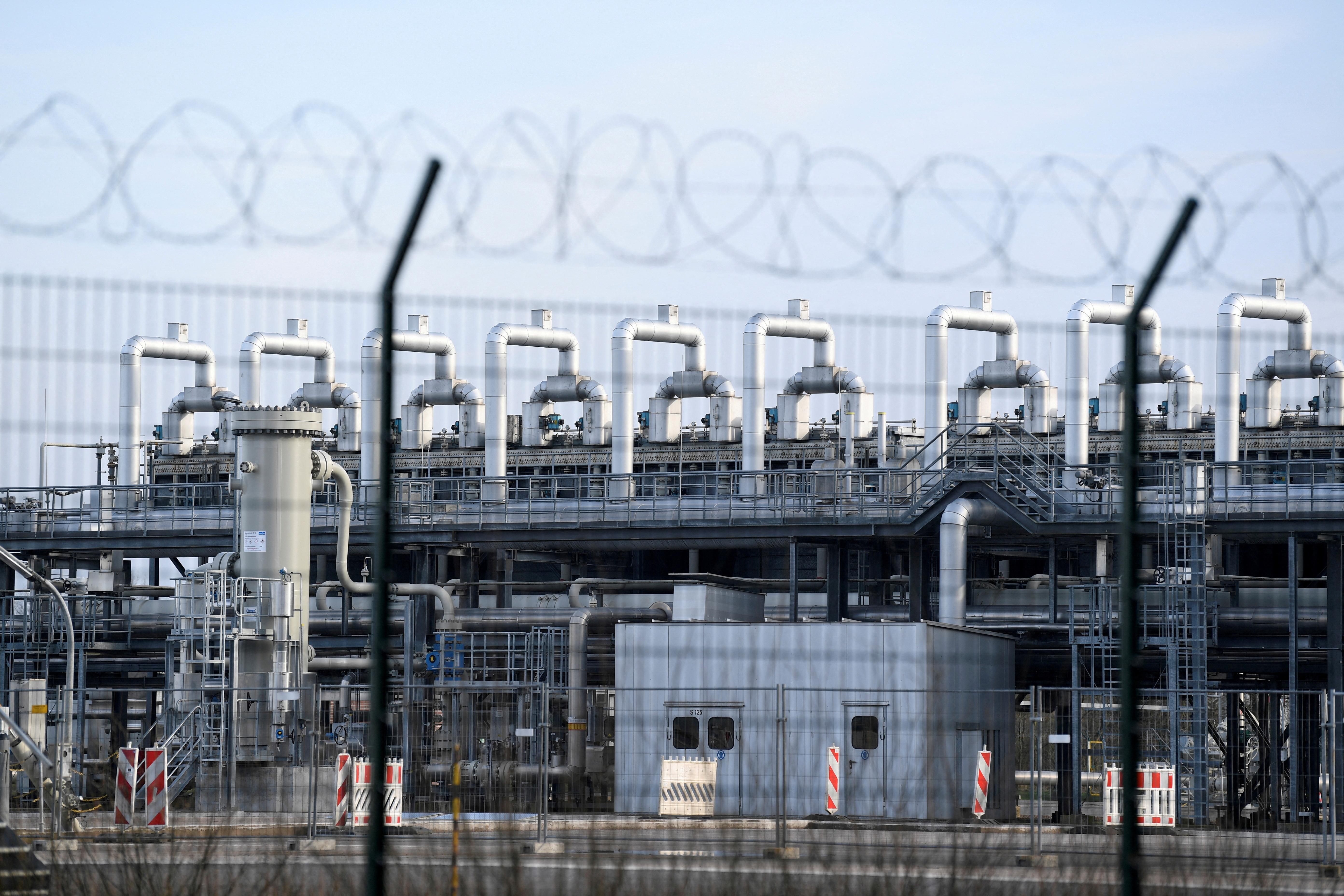
德国拥有欧盟五分之一以上的天然气储存容量,却以有记录以来最低的天然气库存迎来冬季,远低于欧盟平均水平,原因是伊朗冲突推高价格,且贸易商认为囤积天然气利润微薄。
Germany, which holds more than a fifth of the European Union's gas storage capacity, has entered winter with its lowest gas stocks on record, far below the EU average, as the Iran conflict inflates prices and traders see little profit in stockpiling.
库存偏低和天然气价格升至四年高位,引发了欧洲最大经济体乃至更广泛地区的供应担忧,2022年能源危机的记忆犹新,当时莫斯科切断了与欧洲长达十年的供气关系。
Low stocks and a four-year high in gas prices have stoked supply fears in Europe's biggest economy and beyond, with the memory of the 2022 energy crisis, when Moscow stopped a decade-long supply relationship with the continent, still fresh.
当时,柏林不得不花费数百亿欧元从其他来源购买天然气,并挽救其最大的天然气进口商,这是一项代价高昂的举措,旨在防止居民住宅受冻和企业被迫停产。
At the time, Berlin had to spend tens of billions of euros to buy gas from other sources and save its biggest gas importers, in a costly move to protect flats from turning cold and companies from switching off production lines.
根据欧洲天然气基础设施组织的数据,截至11月2日,德国天然气储存水平仅为61.05%,远低于74.56%的欧盟平均水平,也低于德国为月初设定的70%左右的目标。
As of November 2, Germany's gas storage levels stood at just 61.05%, according to Gas Infrastructure Europe, a far cry from the 74.56% EU average and also below a target of around 70% Germany set for the start of the month.
过去四年平均来看,德国天然气储存水平在4月1日比11月1日低48个百分点,显示出余地有多么有限。
Over the past four years German gas storage levels, on average, came out 48 percentage points lower on April 1 compared with November 1, indicating how thin the margin is.
莱法伊森银行分析师阿龙·阿尔伯对路透社表示:“也许我们将以20%至25%左右的库存水平结束冬季,而不是30%至40%。”
"Maybe we will exit the winter season with levels around 20 to 25%, not 30 to 40%," Raiffeisen analyst Aaron Alber told Reuters.
伊朗战争和液化天然气供应减少在夏季推高了天然气价格,而夏季通常是商家储存天然气比出售更有利可图的时候。
The Iran war and lower supplies of liquefied natural gas have pushed gas prices higher over the summer, when merchants usually find it more lucrative to store volumes than sell them.
德国经济部目前也由基民盟的卡特琳娜·赖歇领导,该党传统上不太倾向于干预市场。
Germany's economy ministry is currently also led by Katherina Reiche of the conservative CDU party, which has traditionally been less inclined to intervene in the market.
9月,经济部在一份提交给议会委员会会议的文件中表示,在一个游说团体警告如果即将到来的冬季极其寒冷将出现短缺后,无需政府干预来提高德国天然气储存水平。
In September, the ministry said in a document for a parliament committee meeting that no government intervention was needed to raise German gas storage levels after a lobby group warned of shortages if the coming winter is extremely cold.
拥有大量长期液化天然气(LNG)合同、工业需求较低、储气设施规模较小或政府干预力度较强的欧洲国家,在天然气储备注入方面表现较好。
European countries which have large LNG contracts, lower industrial demand, smaller storage sites or stronger government intervention have managed better on storage refilling.
例如波兰的储气设施接近满负荷,得益于基础设施建设和充足的长期液化天然气合同,尽管其储气容量占消费量的比例远低于邻国。
Poland for example has near-full storage levels, helped by infrastructure build-up and ample LNG contracting, though its storage capacity as a proportion of consumption is much lower than in neighbouring countries.
波兰储气设施填充率达到容量的99%,储存量为33亿立方米,仅足以覆盖约60天的平均需求,远低于斯洛伐克、捷克和匈牙利的水平。
Polish storage facilities filled at 99% of capacity hold 3.3 billion cubic meters of the fuel, enough to cover only some 60 days of average demand, far below levels in Slovakia, the Czech Republic and Hungary.
在汲取了数十年依赖俄罗斯以及2022年供气中断的教训、且发电需求不断增长的背景下,华沙将于本月启用一座新设施,将储气容量提升25%,并计划进一步扩建。
Having learned the lessons from decades of dependence on Russia and the delivery cut-off in 2022, and with growing demand from power generation, Warsaw will this month open a new facility, boosting storage capacity by 25%, and plans further expansion.
德国周五驳回了意大利的指责,后者指控德国为了降低天然气进口公司的成本、为其私有化做准备,未能在冬季来临前填满天然气储备。
Germany on Friday rejected accusations from Italy that it had failed to fill its gas stores ahead of winter in order to reduce costs for its gas import companies to prepare them for privatisation.