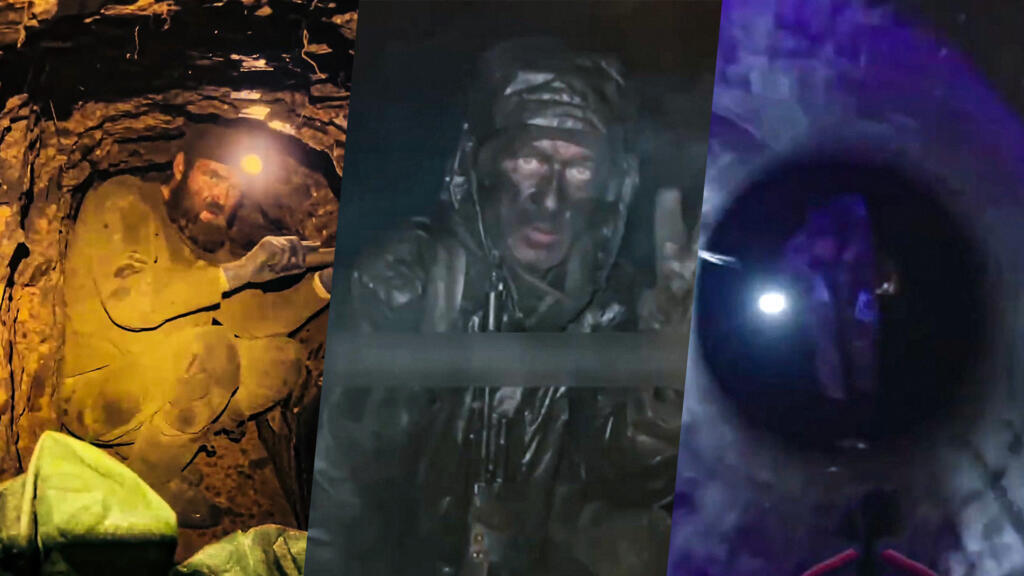
乌克兰总统弗拉基米尔·泽连斯基上周宣称“维莱斯行动”取得成功,期间基辅派兵深入库皮扬斯克地区一条废弃天然气管道与俄军交战。俄军已使用这种地下战术两年多以绕过乌克兰防线,如今这为基辅在战场上提供了一种新战略。
Ukrainian President Volodymyr Zelensky last week heralded the success of Operation Veles, during which Kyiv sent troops deep into a disused gas pipeline in the Kupiansk region to confront Russian troops. These underground tactics, which Russian forces have been using for more than two years to slip past Ukrainian lines, are giving Kyiv a new strategy on the battlefield.
经过多年在乌克兰田野、森林及上空的战斗,这场战争开辟出了一个新战线:地下。《纽约时报》10月底报道,乌克兰军队现已将战斗带入乌克兰东部库皮扬斯克镇周边废弃地下天然气管道和隧道网络,与俄军交锋。
After years of fighting raged across the fields and forests of Ukraine and up into the skies above them, a new front has opened up in the war: beneath the earth. The Ukrainian army has now taken the fight to the Russians in the network of disused underground gas pipelines and tunnels around the town of Kupiansk in Ukraine’s east, the New York Times reported at the end of October.
近两周来,乌克兰军队一直在向西方媒体展示其夺取一条穿过奥斯基尔河、延伸至这座俄军苦苦争夺的前线城市的天然气管道控制权的惨烈实况。
For almost two weeks, the Ukrainian army has been showing Western media outlets the grim reality of its efforts to seize control of a gas pipeline that passes beneath the Oskil River and into this frontline city that the Russians have been fighting to capture.
基辅于10月发起“维莱斯行动”,泽连斯基上周将其称为“巨大成功”。整个战役中,经过特殊训练和装备的乌克兰士兵沿直径仅1.2米的天然气管道推进15公里,确保了隧道入口的控制权。
Kyiv in October launched Operation Veles, which Ukrainian President Volodymyr Zelensky last week described as a “great success”. Throughout the campaign, specially trained and equipped Ukrainian soldiers advanced 15 kilometres along a gas pipeline with a diameter of just 1.2 meters to secure the tunnel’s entry.
总统表示,部队还在激烈的地下战斗中“消灭”了约一百名俄军士兵,并俘虏了30多名俄军。
The president said that troops had also managed to “eliminate” around a hundred Russian soldiers and take more than 30 more prisoners during the fierce fighting that raged unseen in this underground battlefield.
格拉斯哥大学乌克兰战争专家侯赛因·阿利耶夫表示,此次行动标志着乌克兰采纳了莫斯科长期实行的战术。
Huseyn Aliyev, a specialist on the war in Ukraine at the University of Glasgow, said that the operation marked Ukraine’s adoption of tactics long practiced by Moscow.
“这种战术正变得非常普遍,但这并非新事物——是俄罗斯人率先开始使用的,”他说。“据我所知,这是乌克兰人首次开始使用相同的方法。”
“It is becoming very widespread, but it's not a new thing – Russians were the ones who started using it,” he said. “This is the first time I know when Ukrainians have started using the same methods.”
制胜战术 尽管乌克兰并非率先将战斗引入纵横交错于该国大部分地区的工业管道的一方,但泽连斯基表示,基辅如今已将其发扬光大。
A winning tactic While Ukraine was not the first side to take the fight into the industrial pipelines criss-crossing much of the country, Zelensky said that Kyiv had now made it their own.
“乌克兰战士成功地改造了这一战术,使其现代化,并让其变得更加复杂和技术先进,”他说。
“Ukrainian warriors have successfully transformed this tactic, modernised it, and made it much more sophisticated and technologically advanced," he said.
国际安全研究团队(ITSS)维罗纳分部的俄罗斯与乌克兰战争专家威尔·金斯顿-考克斯表示,莫斯科此前曾利用这些隧道绕过乌克兰的防线。
Will Kingston-Cox, a specialist in Russia and the Ukraine war at the International Team for the Study of Security (ITSS) Verona, said that Moscow had previously used these tunnels to slip past Ukraine’s defences.
“一个早期的例子是2024年1月的阿夫杰耶夫卡,我们看到俄军部队通过一条排水管道到达了乌克兰设防阵地的后方,”他说。
“One early example that I was thinking about was Avdiivka in January of 2024, where we saw Russian troops reaching the rear of the Ukrainian fortified position through what appears to have been a drainage conduit,” he said.
随后,俄军利用这一新战术从乌克兰手中夺回了库尔斯克,接着又在库皮扬斯克地区使用,乌克兰士兵在那里为争夺穿过地下的每一英尺管道而战。
The Russian army has subsequently used this new tactic to retake Kursk from Ukrainian control, then in the Kupiansk region, where Ukrainians soldiers fought them for each foot of the pipeline tunneling through the earth.
芬兰国际事务研究所高级研究员雷霍尔·尼日尼考表示,这些战术之所以成为可能,是因为苏联时期的天然气管道网络和其他隧道曾将俄罗斯天然气经乌克兰输送至欧洲。
Ryhor Nizhnikau, a senior research fellow at the Finnish Institute of International Affairs, said that these tactics were only made possible by the network of Soviet-era gas pipelines and other tunnels that once brought Russian natural gas across Ukraine into Europe.
“这是一个新的战场,但规模小得多,”他说。“你只能在现有的管道网络中行动。但事实是,我们确实看到过去一年里,这个网络的使用强度大大增加。”
“This is a new battlefield, but it’s much smaller in scale,” he said. “You can only operate in the network of pipelines that exists. But the fact is that we do see this network being used much more intensively over the past year.”
地图与疆域 尼日尼考表示,这些地下网络在哈尔科夫、卢甘斯克和顿涅茨克地区,以及扎波罗热部分地区也有分布。
The map and the territory Nizhnikau said that these underground networks were also found in the Kharkiv, Luhansk and Donetsk regions, as well as in parts of Zaporizhzhia.
奥地利国防学院军事分析师古斯塔夫·格雷塞尔表示,污水和排水管道在乌克兰城市中也能起到同样的作用。他说:“在城市聚集区,废水系统成了另一片战场。”
Gustav Gressel, a military analyst at Austria’s National Defence Academy, said that sewage and drainage pipes could also serve the same purpose in Ukraine’s cities. “In urban conglomerations, the wastewater system becomes another battlefield,” he said.
这些管道网络主要建于苏联时期,当时乌克兰东部是苏联的工业心脏地带之一,对基辅和莫斯科的军事规划者来说并非秘密。
Largely built when eastern Ukraine was one of the industrial heartlands of the Soviet Union, these networks of pipelines are no secret to military planners in Kyiv and Moscow.
尼日尼考说:“大家都知道这些管道在苏联时期是怎么建的。所以你们有图,俄罗斯人也有图。”阿利耶夫表示,乌克兰部队最初试图等待俄罗斯士兵从隧道中冒出来,玩一场残酷的“打地鼠”游戏,而不是把战斗带到地下。
“Everyone knows how these pipelines were built in Soviet times,” Nizhnikau said. “So you have the map, and the Russians have the map.”Aliyev said that Ukrainian forces had initially tried to wait for Russian soldiers to surface from the tunnels in a grim game of whack-a-mole rather than take the fight underground.
他说:“很长一段时间里,他们其实在嘲笑俄罗斯人利用管道,说这太危险、太无效,根本行不通。”
“For a very long time they were actually making fun of Russians using pipelines, saying that it is so dangerous, so ineffective, and it never works,” he said.
但俄罗斯在阿夫杰耶夫卡和库尔斯克的胜利迫使基辅重新考量。2025年9月,俄罗斯独立调查媒体iStories进一步凸显了这一点,披露莫斯科如何储备弹药和物资,以利用库皮扬斯克地区的天然气管道发动更大规模的攻势。
But the Russian victories in Avdiivka and Kursk forced Kyiv to reconsider. In September 2025, Russian independent investigative media outlet iStories hammered the point home further, revealing how Moscow was stockpiling ammunition and supplies to use the gas pipeline in the Kupiansk region for a larger-scale offensive.
金斯顿-考克斯说,新的地下战线让双方都有了发动攻击和反攻的途径,这正值无人机大规模扩散使地面突击变得充满风险之际。
Out of sight Kingston-Cox said that the new underground front gave both sides ways to launch attacks and counter-attacks at a time where the mass proliferation of drones made above-ground assaults fraught.
他说:“在开阔地上,一支队伍显然会在到达目标前很早就被发现。我们已经看过无数这样的案例,……既有侦察无人机,也有攻击无人机。”尼日尼考说,前线两侧数十公里范围内持续存在的无人机威胁,让即使狭窄、可能充满燃气的隧道也成为更具吸引力的选择。
“On open ground, a group can obviously be spotted well before it reaches its objective,” he said. “And we've seen countless cases where this has been the case with ... reconnaissance drones and also attack drones." Nizhnikau said that the constant threat of drones for tens of kilometres on either side of the front made even the narrow, potentially gas-choked tunnels a more compelling prospect.
“对人们来说,这更具可预测性。我明白这真的很可怕,但总比被无人机炸死强,”他说。“至少步兵知道敌人就在隧道前方——当你意想不到的时候,天上不会有东西掉下来。”格雷塞尔强调,尽管潜在危险重重,但隧道为士兵提供了难得的保护,使他们免受无人机袭击;在持续四年的战争中,无人机已造成绝大多数人员伤亡。
“It's more predictable for people. I understand it's really horrible, but then, it’s better than being killed by a drone,” he said. “At least a foot soldier knows that his enemy is just ahead of him in the tunnel – and there is nothing coming from the skies when you don’t expect it.”While potentially perilous, Gressel stressed that the tunnels afforded soldiers rare protection from the drones that had become responsible for the bulk of the human casualties of the four-year war.
“遥控无人机在入口处会失去信号,而光纤无人机的电缆常会在拐角处勾住,”他说。“可以在入口处张设网、细金属丝或鱼线,让无人机过早引爆。”但尼日尼考夫强调,尽管侦察和攻击无人机的饱和部署迫使双方在纵横交错的乌克兰隧道争夺战中投入更多资源,这些战术应被理解为更广泛战斗的“辅助措施”。阿利耶兹同意,这种隧道战无法在整条前线复制。
“Radio-controlled drones lose their signal at the entrance, and for fiber-optic drones the cable often snags in corners,” he said. “Nets, small wire or fishing lines can be spun around the entrance to prematurely detonate a drone.”But while the saturation of reconnaissance and attack drones was driving both sides to invest more into the fight for the tunnels criss-crossing Ukraine, Nizhnikau stressed that these tactics should be understood as “a support measure” to the broader fight. Aliyez agreed that this kind of tunnel warfare could not be replicated across the whole front.
“在前线的许多地方,根本不存在可利用的此类基础设施,”他说。
“In a lot of places along the front line, there's just no such infrastructure to use in the first place,” he said.
这些管道狭窄幽闭的特性,也使其几乎不可能用于发起大规模攻势。
The claustrophobic nature of these pipelines also makes it near impossible to use them to launch larger-scale offensives.
“例如,狭窄的管道可以将步兵输送过障碍物——但随后也将极难为处于压力下的大部队提供支援,”金斯顿-考克斯说。“如果守军盯着出口,人员只能几个几个地出来,这可能会变得极其脆弱。”尽管如此,他表示,这些高风险战术可用于帮助“打破局部僵局”。
“A narrow pipe, for example, can deliver infantry past an obstacle – but then it would also have very limited capacity to support a larger force under pressure,” Kingston-Cox said. “If the defender is watching the opening and people are coming out a few at a time, this could become extremely vulnerable." Despite its limitations, he said, these high-risk tactics could be used to help “break local deadlocks”.
直到现在,这些废弃管道主要被俄军用来深入乌克兰境内。通过“韦莱斯”等行动,乌克兰方面表明,他们已准备好在任何战场将战斗带到莫斯科门前。本文改编自法语原版。
And until now, these disused pipelines have largely been used by Russian forces to push deeper into Ukraine. Through operations such as Veles, the Ukrainians are showing that they’re ready to take the fight to Moscow on any battlefield. This article has been adapted from the original in French.