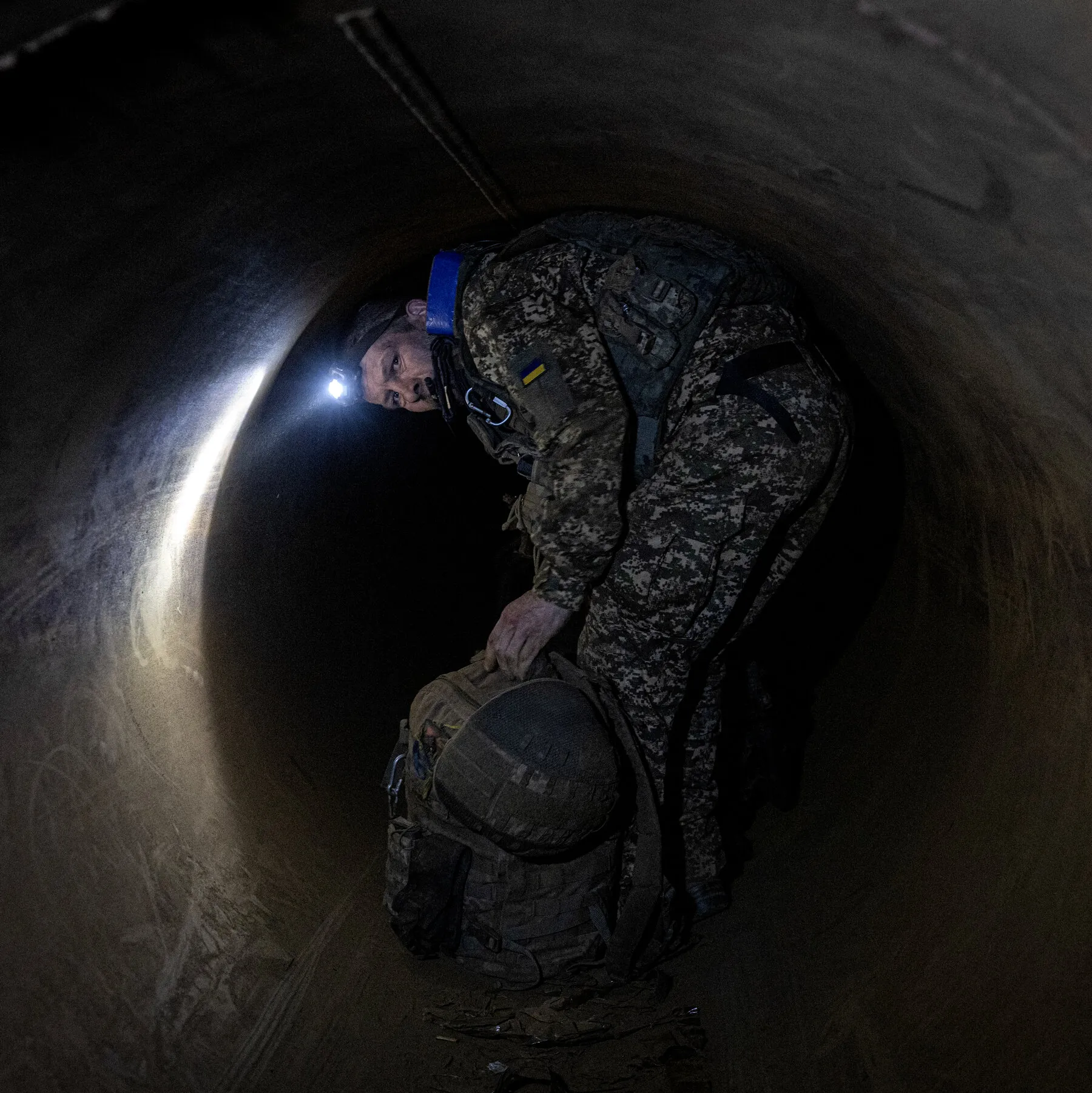
乌克兰人在地下天然气管道中与俄罗斯人作战。我走进了其中一条。
Ukrainians Are Fighting Russians Inside Underground Gas Pipes. I Went in One.
在无人机主宰天空之际,我体验了战争的地下未来。我并不喜欢这种感觉。
I experienced war’s subterranean future as drones dominate the skies. I didn’t like it.
本月,乌克兰士兵乘坐越野车穿行在乌克兰库皮扬斯克附近的地下天然气管道中。 里,唯一安全的地方在地下。
Ukrainian soldiers traveling on a buggy through underground gas pipelines near Kupiansk, Ukraine, this month. Credit... Supported by Deep inside a forest in drone-infested eastern Ukraine, I stepped onto a small metal platform and descended into a postapocalyptic world of modern warfare, where the only safe place is underground.
电梯停下时,一个巨大的地下空间映入眼帘——这是一个后勤枢纽,长数百码,至少三码高。与之相连的是一张埋在地下的管道网络,那些管道曾经在乌克兰与俄罗斯之间输送天然气。
When the elevator stopped, a vast subterranean space came into view — a logistics hub, hundreds of yards long and at least three yards high.
这些管道直径不足四英尺,乌克兰士兵无法在管道中站直。然而,他们一次要在里面待上数周,用枪支和手榴弹与俄罗斯人作战,把在前线受伤或阵亡的战友运出,再送进关键物资。乌克兰战略人士表示,随着无人机在上方战场上巡猎,这就是战争的未来。
Connected to it was a buried web of pipes that once carried natural gas between Ukraine and Russia. Ukrainian troops cannot stand up in the pipes, which are less than four feet in diameter. Yet they spend weeks at a time inside them, fighting Russians with guns and grenades, ferrying out fellow soldiers injured or killed at the front, and carrying in critical supplies. With drones stalking the battlefield above, this is the future of war, Ukrainian strategists say.
我走近其中一条管道时,残留天然气的味道让我头晕目眩。浑身裹满棕色尘土的士兵乘坐锈迹斑斑的电动越野车在地下网络中行驶,不停从隧道中钻出,又消失在隧道中。
As I approached one of the pipes, the smell of residual gas made my head spin. Soldiers caked in brown dust constantly popped out from or disappeared into the tunnel on the rusty electric buggies that roll through the underground network.
我戴上护目镜和防毒面具,坐在奉命前往阵地的士兵身后。他们说,管道里面的气味会更浓。随后我们出发了。在管道中穿行在这个十月的日子里,没过多久我就明白了乌克兰军方为什么希望将更多与俄罗斯的战斗转入地下。
I put on protective goggles and a gas mask and sat behind troops who had been ordered to their positions. Inside the pipe, the smell would be even stronger, they said. Then we set off. Riding In It hadn’t taken long on this October day to see why the Ukrainian military wants to take more of the battle against Russia below ground.
为了到达通往管道的洞口,我们的摄影师芬巴尔·奥赖利和我必须先乘坐一辆皮卡,与包括三名士兵在内的一组人一起穿过开阔的田野。我们处于无人机的打击范围内,它们会攻击任何移动的目标。
To get to the hole in the earth that led to the pipe, our photographer, Finbarr O’Reilly, and I first had to cross open fields in a pickup truck with a group that included three soldiers. We were within range of drones that target anything that moves.
士兵们沉默不语,气氛紧张。其中一人一手拿着无人机探测仪,一手拿着手机,向监视这段道路的侦察飞行员询问“天上的点”的情况。探测仪不停地发出哔哔声。突然,那名士兵大喊让大家快跑。
The soldiers were quiet, the mood tense. One of them held a drone detector in one hand and a phone in the other, asking reconnaissance pilots monitoring the stretch of road about “dots in the sky.”The detector kept beeping. Suddenly, the soldier shouted for everyone to run for it.
司机停下车,我们全都跳了出来,以最快的速度从皮卡车旁跑开——皮卡车是无人机偏爱的目标。我们彼此拉开距离,以减少在无人机袭击时受伤甚至更糟情况的可能。
The driver stopped and we all jumped out, sprinting as fast as we could away from the pickup, a preferred target for drones. We put distance between ourselves to reduce the potential for injuries, or worse, if the drone attacked.
头顶上无人机的嗡嗡声先变小,然后又变大。透过我唯一能找到的掩体——一些灌木丛,我看到一名士兵举枪瞄准天空,准备射击。无人机飞走了。
The drone’s buzz overhead grew fainter, then louder again. Through some bushes, the only cover I could find, I saw a soldier aiming his gun at the sky, ready to shoot. The drone flew away.
又开了半小时穿过田野,并在无人机威胁下再次匆忙弃车后,我们加速驶入森林。
After another half-hour of driving through the fields and one more hurried exit from the pickup under drone threat, we sped into the forest.
卡车上的士兵之一奥列克桑德尔已经在管道里定期轮换驻守了三个月。即使休息了10天,他的嘴唇仍然干裂。灰尘似乎改变了他皮肤的颜色。
One of the soldiers in the truck, Oleksandr, had been doing regular rotations in the pipes for three months. Even after a 10-day break, his lips were dry and cracked. The dust seemed to have altered the color of his skin.
他接下来几周的任务将是后送伤员。奥列克桑德尔说,长时间没有新鲜空气或开阔天空是很难熬的。和我交谈过的其他人一样,他出于安全原因要求不公开姓氏。用塑料袋和瓶子当厕所也同样难熬。他说,比起时刻暴露在无人机威胁下的持续紧张,他更喜欢管道。
His task for the next few weeks would be to evacuate wounded soldiers. Going long periods without fresh air or an open sky is difficult, said Oleksandr, who like others I spoke with asked that his last name be withheld for security reasons. So is using plastic bags and bottles as a toilet. He prefers the pipes, he said, to the constant tension of being exposed to drones.
交火 俄军是这场战争中最早使用废弃工业管道的军队,重拾了一种让人想起第一次世界大战的战术——当时英德军队在敌方战线下方挖掘隧道。
Trading Fire Russian forces were the first to use abandoned industrial pipes in this war, reviving a tactic reminiscent of World War I, when English and German troops dug tunnels under enemy lines.
在我们走访的乌克兰东北部库皮扬斯克附近地区,有大约80英里长、长期闲置的天然气管道。
In the area we visited, near Kupiansk in northeastern Ukraine, there are about 80 miles of long-disused gas pipes.
俄罗斯军队去年底利用这些管道渗透进入库皮扬斯克。随后,乌克兰军方策划了自己的地下行动。乌克兰哈尔季亚军团寻找管道图纸,并找到了建设该网络的退休燃气专家。该军团随后安装了通风系统,这是最困难的任务。
Russian troops used the pipes late last year to infiltrate Kupiansk. The Ukrainian military then planned its own underground operation. Ukraine’s Khartia Corps sought maps of the pipes and tracked down retired gas specialists who had built the network. The corps then installed ventilation, the most difficult task.
哈尔季亚军团副指挥官沃洛季米尔·利休克上校表示,在乌克兰首次此类行动中,其士兵在管道内遭遇了俄罗斯军人。他们展开了一场激烈的枪战,但未能将俄罗斯军人击退。
During Ukraine’s first such operation, its soldiers ran into Russians inside a pipe, said Col. Volodymyr Lysiuk, deputy commander of the Khartia Corps. They engaged in a fierce firefight but could not push the Russians back.
因此,乌克兰部队在管道上开凿了一个出口,挖掘隧道通向一条平行管道,随后从俄罗斯阵地后方重新闯入第一条管道,将敌军包围,他说。利休克上校表示,乌克兰部队击毙数十名俄罗斯军人并俘虏数人。
So the Ukrainian troops cut an exit from the pipe, dug a tunnel toward a parallel one and then broke back into the first pipe behind Russian positions, trapping the enemy, he said. Ukrainian forces killed dozens of Russians and took several prisoner, Colonel Lysiuk said.
总统弗拉基米尔·泽连斯基和独立军事分析人士称,该行动帮助乌克兰守住了库皮扬斯克镇,尽管战斗仍在继续。一支由维也纳军事分析师弗朗茨-斯特凡·加迪领导的团队,基于在乌克兰的实地调查,将该地下行动描述为“战术成功”,称其减缓而非完全阻止了俄罗斯的推进。
President Volodymyr Zelensky and independent military analysts say the operation helped Ukraine defend the town of Kupiansk, though the battle continues. Based on field research in Ukraine, a team led by a Vienna-based military analyst, Franz-Stefan Gady, described the underground operation as a “tactical success,” saying it slowed rather than fully halting the Russian advance.
这一成功促使乌克兰探索其他将战争转入地下的方式。乌克兰已将部分国防生产和后勤转入地下。据两名知情的乌克兰军方官员透露,武装部队正在核算建设隧道网络的成本,以更好地将观察哨与后方战场的补给及其他支援连接起来。
The success has prompted Ukraine to look at other ways to move the war underground. It has already gone subterranean with some defense production and logistics. The armed forces are calculating the costs of building a network of tunnels to better connect observation posts with supplies and other support in the rear of the battlefield, according to two Ukrainian military officials with knowledge of the matter.
虽然地下化提供了躲避无人机的掩护,但也带来了其他恐惧。士兵们告诉我,有一位朋友因俄罗斯炸弹击中管道入口,吸入烟雾而死亡。一名46岁的士兵罗斯季斯拉夫表示,在轮换任务接近尾声时,他开始感到精力耗尽,迫切需要离开。
While offering protection from drones, the shift below ground has brought other terrors. Soldiers told me about a friend who died from smoke inhalation after a Russian bomb struck the entrance to a pipe. One soldier, Rostyslav, 46, said that toward the end of his rotations, he began to feel that he had no strength left and desperately needed to get out.
在休息期间,他需要时间重新适应。“待在管道里之后,有时你在家里醒来,起床前,你会先试着量一下天花板的高度,”他说。“然后你才意识到自己在公寓里。”
During his breaks, it takes time to readjust. “After being in the pipe, sometimes you wake up at home and, before getting up, you first try to measure the height of the ceiling,” he said. “Then you realize you’re in your apartment.”
但他补充道,总体而言,“结果证明你可以住在管道里。” 我们在隧道中缓慢前行,尘土扑面而来。
But overall, he added, “it turns out you can live in the pipe.”Riding Out Dust stung our faces as we crept through the tunnel.
在上坡路段,沙滩车减速爬行;在下坡路段,它加速行驶,时速达到约10英里(约16公里)。我们用了约40分钟,穿过这条狭窄的管道行驶了6英里(约9.7公里)。
On uphill stretches, the buggy slowed to a crawl, and on the descents, it picked up speed, reaching about 10 miles an hour. It took us about 40 minutes to travel six miles through the narrow pipe.
我们抵达了另一个后勤枢纽。尽管它位于地下深处,但距离所谓的“零线”很近,那是前线上仍有乌克兰阵地的最后一点。几枚俄罗斯制导航空炸弹在我们头顶上方附近爆炸,地下空间传来一阵轻微震动。
We arrived at another logistics hub. This one, albeit deep underground, is close to what is known as the zero line, the last point on the front with a Ukrainian position. Several Russian guided aerial bombs struck nearby above us, sending a slight tremor through the underground space.
“俄罗斯人刚吃完午饭,”指挥该阵地的高级军士长弗拉季斯拉夫(Vladyslav),32岁,开玩笑说,这种轰炸通常发生在下午早些时候。
“The Russians just finished their lunch,” said Vladyslav, 32, a senior sergeant who commands the position, jokingly explaining that such bombing usually comes in the early afternoon.
枢纽内一片忙碌。为了给沙滩车让路,我翻过从隧道挖出的土袋。士兵们随后把麻袋继续往地下空间深处推。
The hub was a beehive of activity. To get out of the buggies’ way, I climbed over bags of soil dug out from the tunnels. Soldiers then pushed the sacks farther along inside the underground space.
管道被中间切开,形成了朝向相反的两个入口。白天,沙滩车主要运送弹药和食物包裹;夜晚,反方向则主要运送泥土。
The pipe had been cut through the middle to create two entrances facing in opposite directions. During the day, the buggies mostly carried parcels of ammunition and food. At night, in the opposite direction, they mostly carried soil.
当弗拉季斯拉夫大喊有俄罗斯四轴无人机正接近一个隧道入口时,士兵们翻过土袋和食物袋,冲向深处。他说,俄罗斯无人机定期试图找到进入其阵地的方法,有时会使用热成像探测体温。
When Vladyslav shouted that a Russian quadcopter drone was approaching a tunnel entrance, soldiers scrambled over the bags of soil and food, rushing deeper inside. Russian drones, he said, regularly try to find ways into his position, sometimes with thermal imaging to detect body heat.
轮换离开的士兵一个个聚集在枢纽,等待搭车。一名沙滩车司机坐在管道里,听着一首流行的乌克兰歌曲,歌里唱着一个男人请求一个拥抱。
One by one, soldiers scheduled to rotate out gathered in the hub, waiting for a ride. A buggy driver sat inside the pipe, listening to a popular Ukrainian song about a man asking for a hug.
在返回途中,我们看到管道侧面有一个开口,被黄色的光芒照亮。我们在附近停下,接上更多士兵,他们正从一条侧向隧道爬出来。随着越来越接近出口,越野车已无法容纳所有人,我们不得不弯腰走完最后 50 码(约 46 米)。
On the way back, we saw an opening in the side of the pipe lit by a yellow glow. We stopped near it to pick up more soldiers as they climbed out of a side tunnel. Closer to the exit, the buggy could no longer carry everyone, and we had to walk the last 50 yards, crouching.
回到地面上,我们上了一辆汽车,它将带我们穿过旷野返回。“哦,上帝,保佑我们吧,”开车的司机在发动引擎时说道,他的呼号是拉迪克。
Above ground, we got into a car that would take us back through the open fields. “Oh, God, help us here,” the driver, who went by the call sign Radik, said as he started the engine.
他以极快的速度驾驶,冲上山丘又猛冲下去。我们从未来那场令人不快的战争,进入了今日这场令人恐惧的战争。
He drove at breakneck speed, racing up hills and plunging back down. We had moved from the unpleasant war of the future to the terrifying war of today.
当我们到达一条覆盖着网的道路上时,这些网用于保护车辆免受无人机袭击,标志着旅程中最危险路段的结束,司机给妻子打了电话。
When we reached a road covered with nets to shield vehicles from drones, marking the exit from the most dangerous part of the journey, the driver called his wife.
“亲爱的,我回来了,”他说,“一切顺利。亲亲。”玛丽亚·瓦雷尼科娃报道乌克兰及其与俄罗斯的战争。
“Honey, I’m back,” he said. “All good. Kisses.”Maria Varenikova covers Ukraine and its war with Russia.