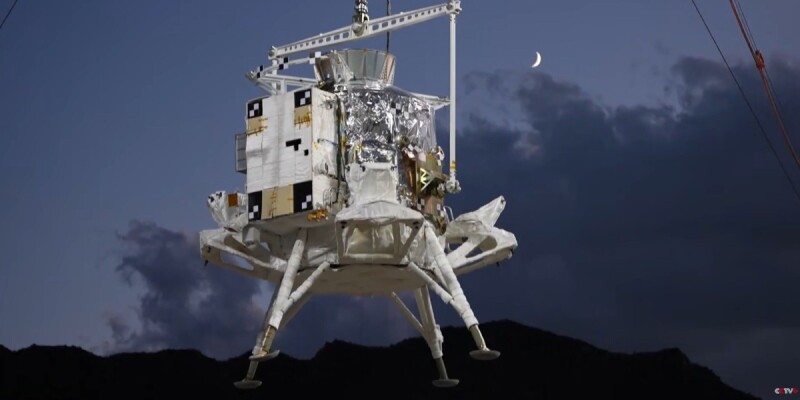
中国载人航天工程概述了其希望在2030年前实现的登月计划。
China’s crewed space program has outlined plans for a moon landing it hopes to achieve by the year 2030.
副总设计师王翔上周末在名为“第七届载人航天学术大会”的活动上解释了这些计划。
Deputy chief designer Wang Xiang explained the plans last weekend at an event called the Seventh Manned Space Symposium.
中国官方媒体发布了王翔讨论登月计划的视频,该计划将通过发射两枚长征十号火箭来实现。
Chinese state media has posted video of Wang discussing plans to reach Luna by launching two Long March 10 rockets.
其中一枚将搭载名为“揽月”的着陆器,另一枚将搭载名为“梦舟”的载人飞船。
One will carry a lander named “Lanyue” and the other will hoist a crew capsule called “Mengzhou.”
两个航天器将在环月轨道上交会对接,梦舟上的三名航天员中的两名将转移至揽月,随后降落踏上月壤。
The two craft will meet in orbit around the Moon, where two of the three Taikonauts aboard Mengzhou will transfer to Lanyue and descend to set boot on regolith.
王翔在视频中表示,中国计划在未来几年对这两个航天器进行近地轨道测试任务,随后进行一次无人探月。
In the video, Wang said China plans near-Earth orbit test missions for both vehicles in coming years, followed by an uncrewed visit to the Moon.
如果一切顺利,中国希望在2030年前尝试载人登陆。
If all goes well, China hopes to attempt a crewed landing by 2030.
第七届载人航天学术大会恰逢中国航天事业创建70周年,同时也被定位为在“十五五”规划(北京对2026年至2030年的蓝图)下阐述国家太空雄心的时刻。
The Seventh Manned Space Symposium marked the 70th anniversary of the founding of China's space program and was also pitched as a moment for articulation of the nation’s ambitions in space under its 15th five-year-plan, Beijing’s blueprint for the years 2026 to 2030.
中国在8月取消了上一次探月任务,当局在计划发射前一天决定“嫦娥七号”机器人寻冰任务“未能满足发射条件”。
China called off its last moonshot in August, when authorities decided the Chang’e 7 robotic ice hunting mission “failed to meet launch criteria” just one day before its planned launch.
该任务抵达月球南极所需的轨道并非总是易于进入,因此中国计划明年再次尝试。
The orbit required to reach the South Lunar Pole for that mission isn’t always easily accessible, so China plans to try again next year.
当中国尝试让嫦娥七号、揽月和梦舟飞起来时,至少有一些新标准可应用于它们的运行——中国载人航天工程办公室上周发布了十七项此类标准。
When China tries to get Chang’e 7, Lanyue, and Mengzhou flying, it will at least have some new standards to apply to their operations after the China Manned Space Engineering Office last week published seventeen of them.
其中一项标准定义了中国空间站和其他轨道飞行器上以太网和Wi-Fi网络的架构。
One of the standards defines the architecture for Ethernet and Wi-Fi networks on China’s space station and other orbiters.
另一项规范了轨道上使用的标识,希望统一标准能避免航天员犯错。
Another governs signage used in orbit, in the hope that a standard means Taikonauts won’t make mistakes.
还有几项概述了舱外活动的程序,以及使用机械臂在此类任务中协助航天员的操作规程。
A couple outline procedures for extravehicular activities, and use of a robotic arm to assist Taikonauts on such missions.
另有一些展项则介绍设计人员在建造航天器时可以选用的材料。
®
Others explain the materials designers can choose from when building spacecraft. ®