苏联统治结束数十年后,匈牙利正在公开其所有秘密情报档案。此举引发了关于线人、罪责与责任的全新辩论。
Decades after the end of Soviet rule, Hungary is releasing all its secret service files. The disclosure is sparking fresh debate about informants, guilt and responsibility.
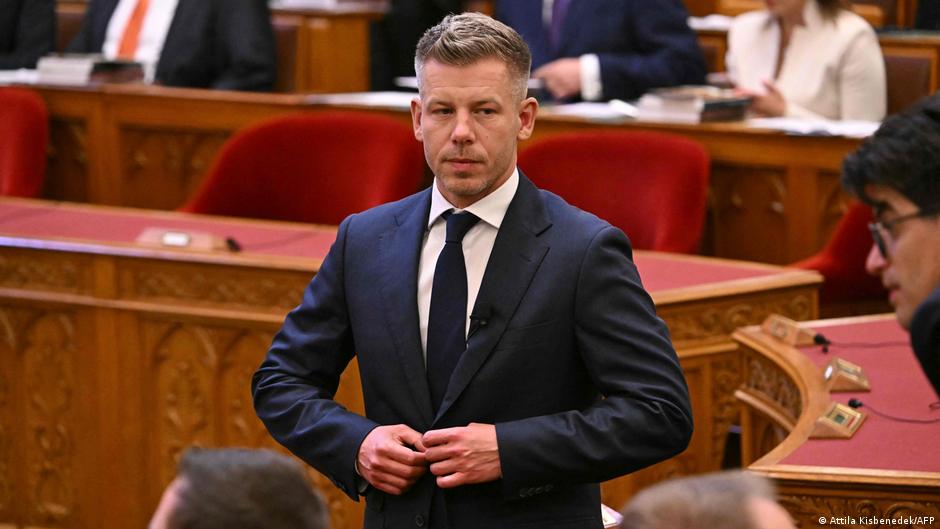
匈牙利总理彼得·马扎尔将公开文件作为竞选承诺。1956年11月4日,数万名苏联士兵和坦克开进匈牙利,残酷镇压了该国的反共起义。随后数十年的独裁统治依靠匈牙利残暴的秘密警察维持体制运转。
Prefer DW on Google Hungary's Prime Minister Peter Magyar made releasing the documents a campaign pledge On November 4, 1956, tens of thousands of Soviet soldiers and tanks swept into Hungary brutally suppressing the country's anti-Communist uprising. Decades of dictatorship followed, relying on Hungary's brutal secret police to keep the system in place.
今年11月4日的事件代表了对匈牙利历史上这一黑暗篇章的某种清算。
Events on Nov. 4 this year represent something of a reckoning with this dark chapter of Hungarian history.
总理彼得·马扎尔领导的政府下令全面公开该国秘密警察的“特工档案”,其中包含匈牙利国家安全线人的名单,其中一些人是自愿合作,而另一些人则是在不知情的情况下提供了情报。
Prime Minister Peter Magyar's government is ordering the full release of the country's secret police "agent files," which contain the names of Hungarian state security informants, some of whom cooperated out of their own volition even as others passed on information unwittingly.
1956年,匈牙利人试图用路障石阻挡苏联坦克。马扎尔及其蒂萨党此前曾承诺,如果当选将公开“特工档案”。此次公开是一件历史性事件,因为它发生在围绕如何处理此类敏感档案进行了三十多年的激烈辩论之后。公开档案的决定也必将引发关于共产主义时代罪责与责任的进一步辩论。
In 1956, Hungarians tried to stop Soviet tanks with cobble stone barricades Magyar and his Tisza party had previously promised to make the "agent files" public if elected. Their release is an historic event, as it comes after over three decades of heated debate over how to handle such sensitive files. The decision to publish is also sure to spark further debate on Communist-era guilt and responsibility.
多年来遭反对。匈牙利人多年来一直呼吁公开档案。1989年柏林墙倒塌和苏联统治结束后,公民权利活动人士和匈牙利较小的政党表示应当公开档案。随后几十年里,公开档案的诉求多次被提出。
Release opposed for years Hungarians have been calling for the release of the files for years. After the fall of the Berlin Wall in 1989 and the end of Soviet rule, civil rights activists and smaller Hungarian political parties said the files should be released. Demands for their publication were expressed repeatedly over following decades.
然而,匈牙利首位后共产主义时代总理、保守派约泽夫·安塔尔拒绝了这一想法,维克托·欧尔班长期执政的青民盟也予以拒绝。据匈牙利新闻平台Telex报道,自2010年以来,青民盟已30多次投票反对开放档案的计划。
Yet Hungary's first post-Communist prime minister Jozsef Antall, a conservative, rejected the idea as did Viktor Orban 's long-ruling Fidesz party. The latter blocked efforts to open the files, voting more than 30 times against such plans since 2010, according to Hungarian news platform Telex.
20世纪90年代确实发生过一次国家安全档案的部分公开,当时匈牙利议会于1994年通过了所谓的“特工法”。该法要求政府成员、议员和某些公务员接受背景审查,以确定他们是否曾为前国家安全机构工作过。
A partial release of state security files did occur in the 1990s, when the Hungarian parliament passed the so-called "agents law" in 1994. This required members of the government, members of parliament and certain public servants to undergo background checks to determine whether they had ever worked for the former state security services.
从1997年起,匈牙利公民可以查阅自己的档案,2003年查阅权限得到扩大。但他们从未能查到线人的姓名。
From 1997, Hungarian citizens have been able to view their own files and in 2003, permissions were expanded. But they have never been able to find out the names of informants.
档案相关法律包含可作宽泛解释的条款,这使得内政部等政府机构能够以可能危害国家安全为由,阻止秘密警察档案移交给匈牙利国家安全历史档案馆(ABTL)。
The law relevant to the files contained provisions that were open to broad interpretation, which allowed government agencies such as the Ministry of Interior to prevent the transfer of files from the secret police to the Historical Archives of the Hungarian State Security, or ABTL, if they believed it would compromise national security.
这种选择性公开档案不仅阻碍了匈牙利社会了解国家安全机构的真相,还使得档案可能被用于政治权力斗争,例如通过向公众泄露政客的把柄材料。
Such a selective release of files not only prevented Hungarian society from learning the truth about its state security service, it also made it possible for files to be exploited in political power struggles, for example, by leaking compromising information about politicians to the public.
维克托·奥尔班的青民盟从未支持公开“特工档案”。一例是前匈牙利总理梅杰希·彼得,2002年被青民盟系的《民族报》揭露曾在共产主义时代担任秘密特工。
Viktor Orban's Fidesz party never supported making the 'agent files' public One such case involved former Hungarian Prime Minister Peter Medgyessy, who was exposed by the Fidesz-affiliated daily Magyar Nemzet in 2002 for having worked as a Communist-era secret agent.
预计将引发政治震荡 马扎尔政府正在终结这种状况。从11月4日起,包含所有线人姓名和关键信息的数据库将在线公开。
Political fallout expected Magyar's government is putting an end to this. From Nov. 4, databases containing all the names of, and key information about, informants will be made available online.
其他数据库也将公开。其中包括一份关于为匈牙利国家安全机构工作的被招募人员最详尽的数据库之一。旧“特工法”规定的保密条款也已缩减,意味着未来将有更多档案可供查阅。
Additional databases will be released as well. They include one of the most extensive databases on individuals recruited to work for the Hungarian state security agency. Confidentiality provisions set out in the old "agent law" have also been scaled back, meaning significantly more files will likely be accessible in the future.
即将发布的多达 6 万名秘密警察线人档案(据估计总数约 15 万名)可能产生重大政治后果。即便如此,ABTL(历史政治审查委员会)主任本德古兹·格尔戈·切赫最近警告说:“你不能全信国家安全机关及其档案的说法。”他说,许多文件不完整、不可全信,且许多档案已被销毁。
The upcoming release of data on up to 60,000 out of an estimated 150,000 secret police informants could have major political consequences. Even so, ABTL director Bendeguz Gergo Cseh recently cautioned that, "you can't believe everything the state security agencies and their files claim." Many documents were incomplete and not fully reliable and many files had been destroyed, he said.
其他人对公开档案也持怀疑态度。专门研究匈牙利独裁历史的历史学家亚诺什·M·赖纳对 Telex 表示,在政权倒台后立即公开档案本是合理的。他在多年后发布档案更多是一种象征性姿态。
Others are also skeptical about the release. Historian Janos M. Rainer, an expert on Hungary's dictatorship, told Telex that the publication would have made sense right after the fall of the regime. Releasing the files after all these years is more of a symbolic gesture, he argued.
与此同时,深入研究过国家安全档案的历史学家克里斯特安·翁格瓦里欢迎即将到来的公开。他对德国之声表示,这将使历史学家能够开展新研究,也让社会能进行新的辩论。他认为匈牙利将从这种反思中受益,因为“社会谎言必然导致与政治的紧张关系,我们为此付出的代价是 16 年的青民盟统治。”
Meanwhile historian Krisztian Ungvary, who has researched the state security files extensively, welcomes the upcoming publication. It will allow historians to pursue new research and society to engage in fresh debates, Ungvary told DW. He believes Hungary will benefit from such reflection, as "societal lies inevitably lead to a strained relationship with politics and the price we paid for that was 16 years of Fidesz rule."
1957 年 3 月 9 日,在布达佩斯举行的 1956 年匈牙利起义后首场公审中,被告接受法官讯问 政治清算对马扎尔而言,公开这些信息意义重大。清算过去,尤其是欧尔班执政时期,是他最热衷的议题之一。
Defendants are questioned by a judge in Budapest on March 9, 1957, during the first show trial held after the 1956 Hungarian uprising Political reckoning For Magyar, making this information public carries great significance. The idea of coming to terms with the past, especially the years of the Orban regime, is one of his favorite topics.
匈牙利议会于 9 月中旬修改档案法时,马扎尔在 Facebook 上写道:“拖延 36 年后,匈牙利议会今日在提萨党倡议下决定公开‘特工档案’。青民盟未支持该动议。不知为何?”这暗指青民盟许多要员及欧尔班核心圈子成员曾是匈牙利共产党党员或秘密警察成员。
When the Hungarian parliament amended the law about the files in mid-September, Magyar wrote on Facebook that, "after a 36-year delay, the Hungarian parliament today decided, at the initiative of Tisza, to make the 'agent files' public. Fidesz did not support the motion. I wonder why?" It was an allusion to the fact that many prominent figures in Fidesz' ranks and in Orban's inner circle were members of the Hungarian Communist party or secret police.
后者中最知名的可能是约热夫·霍尔瓦特,他曾是匈牙利国家安全部门的全职雇员,该部门负责镇压国内反对派。
The most well-known of the latter is likely Jozsef Horvath, a former full-time employee of the department of Hungarian state security that was responsible for suppressing the domestic opposition.
在欧尔班治下,霍尔瓦特曾担任情报官员和安全顾问,并于2024年成为欧尔班主权保护办公室的研究主任。该机构旨在揭露所谓的欧尔班政权敌人,并给他们贴上“外国代理人”的标签。
Under Orban, Horvath worked as an intelligence officer and security advisor, and in 2024, he became the research director of Orban's Sovereignty Protection Office. This was an agency that exposed supposed enemies of the Orban regime, branding them " foreign agents ."