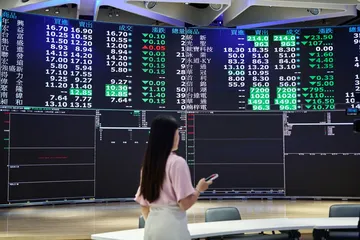
亚洲的对冲基金经理和经纪人周五醒来时面对的是惊慌失措的客户,此前美国股市隔夜急跌,重燃了市场担忧:人工智能(AI)押注的平仓尚未结束。
Hedge fund managers and brokers in Asia awoke to panicked clients on Friday after a sharp overnight selloff in US equities reignited concerns that the unwinding of AI bets still has further to run.
经纪人和基金经理忙着接听客户电话,亏损蔓延至市场上一些最拥挤的交易。知情人士透露,从台湾到香港的富裕客户因杠杆押注面临追加保证金通知。他们表示,在香港,一些客户因被迫以亏损价格接收股票,正为结构性票据的巨额亏损做准备。
Brokers and fund managers were fielding calls from clients as losses rippled through some of the market’s most crowded trades. Wealthy clients from Taiwan to Hong Kong faced margin calls on leveraged bets, according to people familiar with the matter. In Hong Kong, some clients braced for steep losses from structured notes as they were forced to take delivery of shares at a loss, they said.
“这是自互联网泡沫以来我所见过的最极端的行情之一,”Chris McGuire 说。他于 1991 年开始在芝加哥期货交易所(CBOT)交易期权,现任 Eagle’s View Capital Management 日本可转债套利基金经理。“持股者集中持有相同股票或板块并集中平仓,造成了我们很长时间以来未见的单边动能。”剧烈波动已给对冲基金行业带来广泛亏损,巨头 ExodusPoint Capital Management 和 Millennium Management 亦在其中,尽管也有基金从波动中获益。McGuire 称,其基金本月预估获利 2.5% 或更多。
“This is as extreme as almost any I have seen since the dot-com bubble,” said Chris McGuire, who began trading options at the CBOT in 1991. He now manages a Japanese convertible-bond arbitrage fund at Eagle’s View Capital Management. “The unwind by equity holders who all appear concentrated in the same stocks or sectors has created more one-way momentum than we have seen for a long time.”The wild swings have already inflicted widespread losses in the hedge fund industry, including for giant firms such as ExodusPoint Capital Management and Millennium Management, though some benefited from the volatility. McGuire said his fund gained an estimated 2.5% or more this month.
然而,亚洲整体图景依然低迷。知情人士透露,总部位于香港的对冲基金 Aspex 在上个月科技股暴跌中亏损 16%。Valliance Asset Management 在投资者通报中称,其 Long-Short Master Fund 十月下跌 6.7%。据招商期货报告,中国的纯多头量化策略十月亏损逾 10%,抹平了全年收益。
The larger picture across Asia, however, was downbeat. Hong-Kong based hedge fund Aspex suffered a 16% loss in last month’s technology shares rout, according to people familiar with the matter. Valliance Asset Management said in an investor update that its Long-Short Master Fund fell 6.7% in October. In China, long-only quantitative strategies lost more than 10% in October, wiping out their gains for the year, according to a report from China Merchants Futures.
高盛集团旗下主经纪商估算,亚洲选股型基金上月亏损 9.4%,今年收益缩水至 14%。专注中国市场的基金十月暴跌 11%,今年回报降至 16%。
Goldman Sachs Group Inc. prime brokers estimated Asia stock pickers lost 9.4% last month, eroding this year’s gain to 14%. Those focused on China tumbled 11% in October, reducing this year’s return to 16%.
科技股抛售潮源于市场预期:在民主党掌控国会两院后,将推动对人工智能实施更严格监管,并放缓数据中心的建设步伐。在美国,Rob Pohly 旗下的 Samlyn Capital 在将除全球金融板块外几乎所有板块的敞口均大幅削减后,正解聘高级分析师;专注于 AI 领域的对冲基金 Value Aligned Research Advisors 上月暴跌 33%。
The technology selloff is being driven by expectations that Democrats, who have gained power in both houses of Congress, will push for stronger regulation of AI and slow the build out of data centers. In the US, Rob Pohly’s Samlyn Capital is dismissing senior analysts after cutting exposure to nearly every sector except global financials and Value Aligned Research Advisors, an AI-focused hedge fund, plunged 33% last month.
MSCI 亚太指数周五盘中最大跌幅达 5.3%,此前周四纳斯达克 100 指数遭遇暴跌,市值蒸发创纪录的 2.3 万亿美元。韩国综合股价指数盘中最大跌幅达 8.8%,触发熔断机制。
The MSCI Asia Pacific Index tumbled as much as 5.3% on Friday, following a rout in the Nasdaq 100 on Thursday that wiped out a record $2.3 trillion in market value. South Korea’s Kospi Index plunged as much as 8.8%, triggering a circuit breaker.
在香港,一位券商人士表示,散户投资者夜间涌入大量咨询,迫使员工加班安抚情绪并讨论风险管理策略。他称,给客户的唯一建议是“尽快离场”,融资交易者则应专注于降低杠杆头寸。
In Hong Kong, one broker said retail investors began flooding the firm with inquiries overnight, forcing staff to work overtime to calm nerves and discuss risk management strategies. He said the only advice for clients was to “run for the exit” as quickly as they can, and for margin traders to focus on lowering their leveraged bets.
尽管如此,该券商人士表示,大规模强制平仓的风险在一定程度上已降低,因为其公司几周前已开始敦促客户增加科技股杠杆头寸的抵押品。
Even so, the broker said the risk of widespread forced liquidations was somewhat reduced because his firm had begun urging clients weeks earlier to increase collateral on leveraged technology positions.
“我们到处都在接到关于 AI 抛售的咨询,”住友三井信托资产管理公司东京首席策略师上野博之表示,“卖方客户难以向其客户解释正在发生的事情。”上野博之称,短线投资者反应迅速,但大型机构基金面临更艰难的抉择。
“We’re fielding queries about the AI selloff left and right,” said Hiroyuki Ueno, chief strategist at Sumitomo Mitsui Trust Asset Management in Tokyo. “Sell-side clients are struggling to explain what’s going on to their customers.”While short-term investors can react quickly, larger institutional funds face more difficult choices, Ueno said.
对亚洲许多投资者而言,关键问题不再是 AI 估值是否需要重置,而是抛售还将延续多远。信心消退的速度快于流动性枯竭,交易者在寻找支撑位,却鲜有人敢宣称已见底。
For many investors across Asia, the key question is no longer whether AI valuations needed a reset, but how much further the selloff will go. Confidence has evaporated faster than liquidity, leaving traders searching for a floor in a market where few are willing to call a bottom.
“从我们团队早会的印象来看,市场表现得不理性,”T&D Asset Management Co.首席策略师兼基金经理波冈宏(Hiroshi Namioka,音译)说。“我不至于说这是彻头彻尾的恐慌,但投资者很难看到上行空间。”市场参与者还指出,随着关键技术位失守,期权相关资金流放大了波动。
“The impression I got from our team’s morning meeting is that the market is behaving irrationally,” said Hiroshi Namioka, chief strategist and fund manager at T&D Asset Management Co. “I wouldn’t go so far as to say it’s outright panic, but investors are finding it difficult to see upside.”Market participants also pointed to options-related flows amplifying volatility as key technical levels gave way.
“这看起来更像是仓位爆仓,而非对未来的根本性重新思考,”驻香港的独立分析师、为对冲基金提供咨询的Travis Lundy(音译)说。“对一些人来说,糟糕的十月似乎触发了十一月初的平仓,并引发了连锁反应。”
“It looks more like a position blowout than a fundamental rethinking of the future,” said Travis Lundy, a Hong Kong-based independent analyst who consults for hedge funds. “A bad October for some appears to have triggered early November unwinds which have cascaded.”