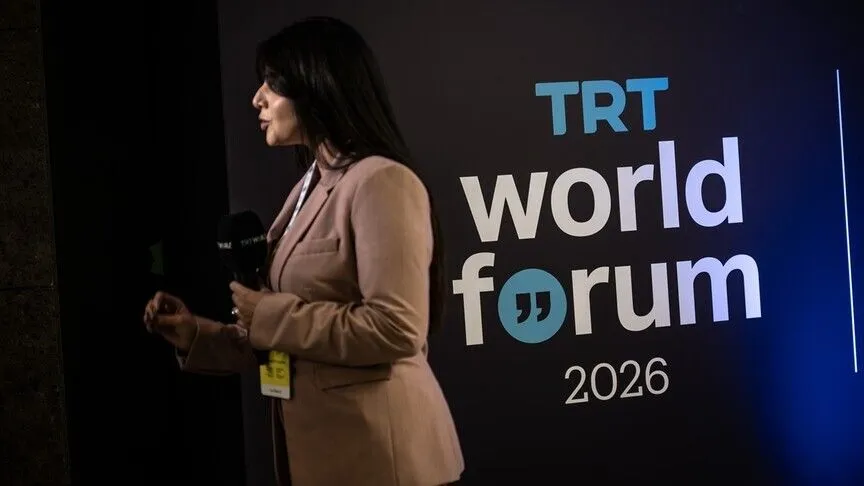
TRT世界论坛第十届会议周五在伊斯坦布尔开幕,主题为“一个没有中心的世界:当规则失效时谁来领导?”。自2017年起,土耳其公共广播机构TRT每年举办一次这一高层聚会,地点设在伊斯坦布尔会议中心,汇聚政界人士、学者、记者、运动员、艺术家和民间社会代表,共同应对紧迫的全球挑战。
The 10th edition of the TRT World Forum kicked off on Friday in Istanbul under the theme "A World Without a Center: Who Leads When the Rules Run Out?" Organized annually by Turkish public broadcaster TRT since 2017, the high-level gathering at the Istanbul Congress Center brings together politicians, academics, journalists, athletes, artists, and civil society representatives to address pressing global challenges.
土耳其总统雷杰普·塔伊普·埃尔多安在论坛首日致开幕辞,总统府传播局局长布尔哈内丁·杜兰和TRT总干事梅赫梅德·扎希德·索巴吉陪同出席。
Turkish President Recep Tayyip Erdogan delivered opening remarks on the first day of the forum, alongside Presidential Communications Director Burhanettin Duran and TRT Director General Mehmed Zahid Sobaci.
副总统杰夫德特·耶尔马兹在题为“土耳其:从地区大国到多区域行动者”的公开会议上发言,国家情报组织(MIT)负责人易卜拉欣·卡林在题为“加沙:国际法与人道主义崩溃的交汇点”的小组讨论中发言。过去十年间,论坛共邀请801位演讲者,举办86场公开会议和76场闭门会议,成为国际对话和全球权力格局演变的重要平台。
Vice President Cevdet Yilmaz addressed an open session titled "Türkiye: From Regional Power to Multi-Regional Actor," while National Intelligence Organization (MIT) head Ibrahim Kalin spoke at a panel titled "Gaza at the Intersection of International Law and Humanitarian Collapse." Over the past decade, the forum has hosted 801 speakers across 86 open and 76 closed sessions, serving as a platform for international dialogue and shifting global power dynamics.
今年议程聚焦人工智能、能源危机、国际法和全球经济,设九场公开会议和若干专家圆桌会议。
This year's agenda highlights artificial intelligence, energy crises, international law, and global economics through nine open sessions and several expert roundtables.
重点小组讨论包括多极秩序中的中等强国、国际体系中的美国悖论、战后中东经济、海上走廊地缘政治以及人工智能治理。
Key panels include discussions on middle powers in a multipolar order, the American paradox in the international system, post-war Mideast economies, the geopolitics of maritime corridors, and AI governance.
圆桌会议还将探讨亚太地区安全动态、欧亚一体化、俄乌战争,以及非洲大陆的外交与地缘经济学。
Roundtable discussions will also examine security dynamics in the Asia-Pacific region, Eurasian integration, the Russia-Ukraine war, and diplomacy and geoeconomics across Africa.