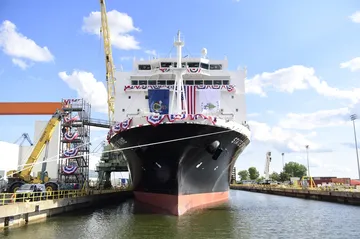
一年前,首尔承诺投入1500亿美元振兴美国海事产业,以换取与唐纳德·特朗普总统达成贸易协定。但随着韩国韩华集团与美国海军签署的首份造船合同金额仅为该承诺的一小部分,轮到华盛顿牵头,确保这一承诺兑现。
Seoul pledged a year ago to spend $150 billion on revitalizing America’s maritime industry in exchange for a trade pact with President Donald Trump. But with the first shipbuilding contract between South Korea’s Hanwha Group and the US Navy worth a fraction of that sum, it’s Washington’s turn to take the lead to ensure that promise is fulfilled.
对于面临中国竞争对手日益激烈竞争的韩国造船企业——包括HD现代重工株式会社和三星重工株式会社——而言,向美军供应舰船(且拥有大量积压订单待填补)是一个极具吸引力的提议。不过,兑现这一承诺需要的不仅仅是少数几份订单,必须有足够订单量来证明为扩大美国造船产能所需的巨额投资是合理的。华盛顿确实需要帮助——其海军扩建项目长期以来屡屡延期、超支,导致舰队规模远远落后于中国。
For Korean shipbuilders including HD Hyundai Heavy Industries Co. and Samsung Heavy Industries Co. that face rising competition from Chinese rivals, the prospect of supplying the US military — with a sizeable backlog of orders to fill — is an attractive proposition. Still, delivering on that commitment will require filling more than a handful of orders to justify the enormous investment needed to expand US shipbuilding capacity. Washington could do with the help — its naval expansion programs have a long history of running behind schedule and over budget, leaving it far behind China in fleet size.
自去年11月“让美国造船业再次伟大”倡议启动以来,达成的协议数量仍然有限。上周,韩华集团旗下韩华航空航天株式会社的美国子公司韩华防务美国公司宣布,获得一份价值2.69亿美元的订单,为海军建造一艘中型登陆舰,并包含再建造三艘的选择权。这类运送士兵和装备的舰艇,在美国军方遏制中国的太平洋战略中变得愈发重要。7月,该公司还单独中标一份价值20亿美元的合同,为五角大楼建造两艘用于追踪弹道导弹试验的舰艇。
So far, the number of agreements since theg of the “Make American Shipbuilding Great Again” initiative last November remains modest. Last week, Hanwha Defense USA, the Korean conglomerate’s US unit that is part of Hanwha Aerospace Co., announced a $269 million order to build a medium landing ship for the Navy, with options for three more. These vessels, which transport soldiers and equipment, are becoming more important to the US military's strategy to counter China in the Pacific. In July, the company was separately selected to build two vessels used to track ballistic missile tests for the Pentagon in a contract worth $2 billion.
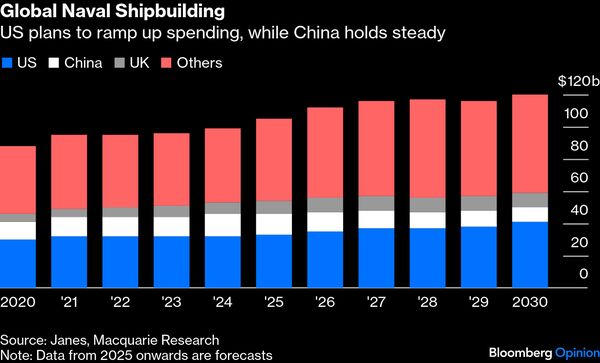
然而,与授予老牌承包商的合同相比,这些交易规模微不足道。今夏,美国仅有的两家潜艇制造商——通用动力公司旗下的电船公司和亨廷顿·英格尔斯工业公司旗下的纽波特纽斯造船厂——获得了一揽子770亿美元大单,建造十余艘舰艇。
These deals, however, are tiny compared to the ones given to established contractors. Over the summer, America’s only two manufacturers of submarines, General Dynamics Corp.’s Electric Boat and Huntington Ingalls Industries Inc.’s Newport News Shipbuilding, were awarded a $77 billion package to build more than a dozen vessels.
新进入者很难指望在高度专业化的核潜艇业务中挑战双寡头垄断。但此等规模的合同说明了他们最终将需要争取的业务量级。这一点很重要,因为首尔提出的1500亿美元是一个融资框架,包含私人投资、担保及其他资金。韩国企业和金融机构仍须在资金投入前确定商业上可行的项目。
Newcomers can hardly expect to challenge a duopoly in the highly specialized nuclear submarine business. But contracts of this magnitude illustrate the scale of business they will eventually need to secure. This is important because the $150 billion proposed by Seoul is a financing framework including private investments, guarantees and other funding. Korean companies and financial institutions must still identify commercially viable projects before the money can be deployed.
而且,与前总统乔·拜登的《芯片与科学法案》不同,后者提供联邦激励措施鼓励台积电等半导体制造商赴美设厂,造船计划缺乏来自华盛顿同等程度的财政支持。这意味着能否预判到稳定的业务管线显得更为关键。
And unlike former President Joe Biden’s CHIPS and Science Act, which offers federal incentives to encourage semiconductor makers like Taiwan Semiconductor Manufacturing Co. to set up in the US, the shipbuilding initiative lacks a comparable level of financial support from Washington. That means it's even more important to be able to anticipate a steady pipeline of business.
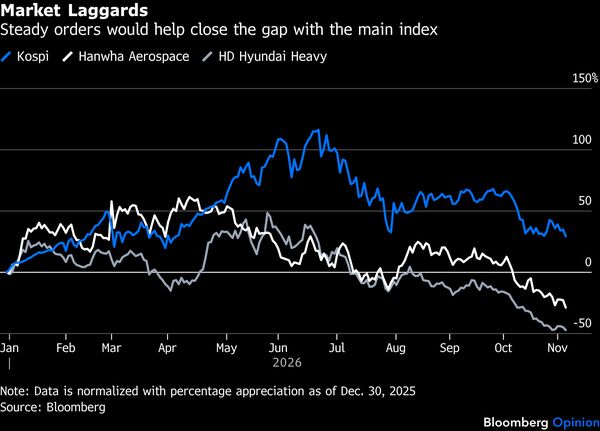
经济账算得很清楚。两年前以1亿美元被韩华收购的历史悠久的费城造船厂,即便在其所有者制定了雄心勃勃的扩产计划后,依然深陷亏损。将年产量从不足两艘提升至最多20艘,将需要超过50亿美元的新增设备和设施投入。这家韩企还必须应对供应链破碎、熟练工人短缺,以及比国内高得多的劳动力成本。
The economics make that clear. The historic Philly Shipyard, purchased two years ago by Hanwha for $100 million, has struggled with losses even as its owner laid out an ambitious plans to expand capacity. Increasing annual output from less than two vessels to as many as 20 will require more than $5 billion in new equipment and facilities. The Korean firm must also contend with a fragmented supply chain, shortage of skilled workers, and labor costs that are considerably higher than at home.
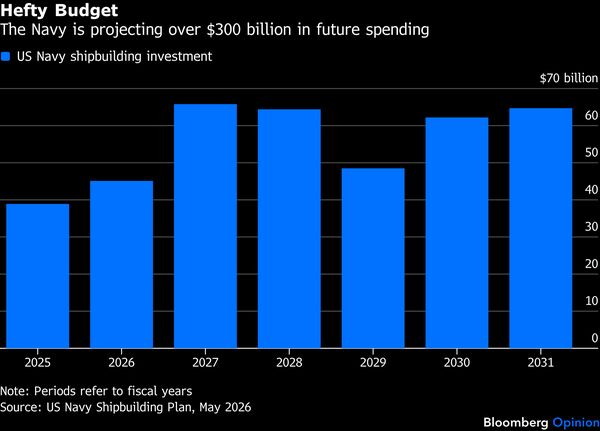
只要军方订单流可预期,这些障碍就是可以克服的。商业造船无法指望填补缺口。《美国造船法案》旨在振兴对美国建造商船的需求,目前已陷入停滞,仅有部分条款随国防立法推进。但尽管美国海军的需求不乏其数,这并不自动转化为可获得的合同。
The obstacles are surmountable as long as there is a predictable flow of military orders. Commercial shipbuilding can’t be counted on to fill the gap. The SHIPS for America Act, which sought to revive demand for US-built merchant vessels, has stalled, with only some provisions advancing through defense legislation. But while there’s no shortage of demand from the US Navy, that doesn’t automatically translate into accessible contracts.
华盛顿需要为韩国造船企业提供一条更清晰的路径,以便其进入该领域业务。其他国家也在竞争之中,但只有韩国将振兴美国造船业作为其与华盛顿双边经济关系的核心支柱。其他国家也未投入同等规模的资金。亨利·L·史汀生中心韩国项目主任金智元(J. James Kim,音译)告诉我,海军和海岸警卫队的长期采购路线图,加上对同类舰艇的重复订单,将使企业更有信心进行投资。
Washington needs to give Korean shipbuilders a clearer path to that business. Other countries are in the mix, but only the Koreans have made revitalizing the US industry a centerpiece of their bilateral economic relationship with Washington. And others haven’t committed the same amount of money. A long-term procurement roadmap for the Navy and Coast Guard, coupled with repeat orders for the same classes of vessels, would give companies greater confidence to invest, J. James Kim, director of the Korea program at the Washington-based Henry L. Stimson Center, told me.
美国政府似乎已意识到这些挑战。特朗普于8月签署了一份备忘录,允许最多两艘军舰在外国船厂建造,前提是承包商在美国投入巨额资金并培训当地工人。鉴于韩国的建造成本比美国低25%至50%,这是一个可靠的解决方案,尽管只是暂时的。这无法取代对可靠、持续的合同流的需求,而这才是造船企业实现规模经济所必需的。
The US government seems to be aware of the challenges. Trump signed a memorandum in August allowing up to two military vessels to be built in foreign shipyards, as long as the contractors are investing substantial amounts in America and training local workers. With construction costs between 25% and 50% lower in South Korea than in the US, this is a solid solution, though a temporary one. It doesn’t replace the need for a reliable, consistent stream of contracts that would allow shipbuilders to achieve economies of scale.
还有一些纯粹的实际问题。首尔正寻求为造船工人争取专门的美国签证,以避免重演去年现代汽车公司和LG新能源在佐治亚州合资电池工厂发生的移民突击检查事件,当时数百名韩国工人被扣留。
There are also purely practical matters. Seoul is trying to secure dedicated US visas for shipbuilding workers to avoid a repeat of the immigration raid at a Hyundai Motor Co. and LG Energy Solution Ltd.-owned battery plant in Georgia last year, when hundreds of South Korean workers were detained.
这位亚洲盟友希望协助复兴美国造船业。但仅凭投资承诺无法让更多舰船下水。华盛顿现在必须证明,它能够提供订单和监管确定性,使这些雄心在商业上具有可行性。
The Asian ally wants to help revive America's shipbuilding industry. But investment pledges alone won't put more ships in the water. Washington must now demonstrate that it can provide the orders and regulatory certainty needed to make those ambitions commercially viable.