二十年前,中国依赖外资现代化产业、向高端转型,并学习按照国际标准制造汽车。如今,正是欧洲需要直接的中国投资来生产电池和电动汽车。这种显著的转变不仅限于汽车行业:中国首条高速铁路于2008年开通,但到2025年底,高速铁路网已达5万公里——是欧洲的四倍。
wenty years ago, China relied on foreign investment to modernize its industry, move upmarket, and learn to manufacture cars to international standards. Today, it is Europe that needs direct Chinese investment to produce batteries and electric vehicles. This striking reversal is not limited to the automotive sector: China's first high-speed rail line opened in 2008, but by the end of 2025, the high-speed network had reached 50,000 kilometers – four times Europe's.
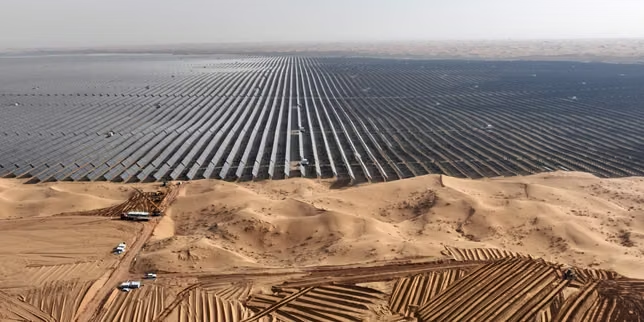
欧洲补贴了最初的光伏面板,但其生产商已消失,而中国如今占据全球已安装光伏装机容量的一半。根据2025年数据,中国也负责全球新增风电装机容量的近三分之二。中国在药品和太空技术方面也在加速发展,并持续创新,特别是在先进半导体、人工智能(AI)、量子计算和生物技术等关键技术领域。
Europe subsidized the first photovoltaic panels, but its producers have vanished, while China now accounts for half the installed solar capacity worldwide. Based on 2025 figures, it is also responsible for nearly three-quarters of new global wind power capacity. China is also accelerating in pharmaceuticals and space technologies and continuing to innovate, particularly in critical technologies such as advanced semiconductors, artificial intelligence (AI), quantum computing and biotechnology.
加拿大研究者Dan Wang在《Breakneck: China's Quest to Engineer the Future China》中指出,中国是一个工程国家,而美国则由律师掌控。中国占全球制造业产出的三分之一,远超美国和欧洲。虽然美国在人工智能和太空领域目前仍领先,但北京正在追近。事实显示:没有哪个国家像中国一样擅长结合规划与竞争。
As Canadian researcher Dan Wang notes in Breakneck: China's Quest to Engineer the Future China is an engineering state, whereas the United States is run by lawyers. China represents one-third of global manufacturing output, far ahead of the US and Europe. While American tech still leads for now in AI and space, Beijing is closing in. The facts are clear: Better than any other country, China knows how to combine planning and competition.
然而,中国缺乏一项能够纠正其持续性失衡的宏观经济策略。中国的工业占国内生产总值(GDP)的四分之一——而法国仅为10%——规模过大,而服务业相应地发展不足。增长长期由基础设施和房地产投资驱动,如今几乎全部由出口和家庭消费推动,但后者仅占GDP的40%(法国为54%,美国为68%)。
What China lacks, however, is a macroeconomic strategy capable of correcting its persistent imbalances. The country's industry, which accounts for one-quarter of gross domestic product (GDP) – compared to 10% in France – is oversized, while services are correspondingly underdeveloped. Growth, which was long driven by investment in infrastructure and real estate, is now almost exclusively fueled by exports and household consumption, though the latter represents only 40% of GDP (compared to 54% in France and 68% in the US).
自2021年房地产泡沫破裂以来,中国经济一直在与通缩作斗争,但调整过程远未结束。国际货币基金组织(IMF)称,人民币相对于美元的汇率被低估了15%至20%。与此同时,公共部门债务持续上升,预计到2026年底将占GDP的135%,高于法国水平,若计入地方政府通过金融工具借入的债务。
Since the property bubble burst in 2021, China's economy has struggled with deflation, but the adjustment process is far from over. According to the International Monetary Fund (IMF), its exchange rate is undervalued by 15% to 20% relative to the dollar. Meanwhile, public sector debt, which continues to rise, is set to reach 135% of GDP by the end of 2026 – higher than France's level – if one includes the financial vehicles through which local governments incur debt.