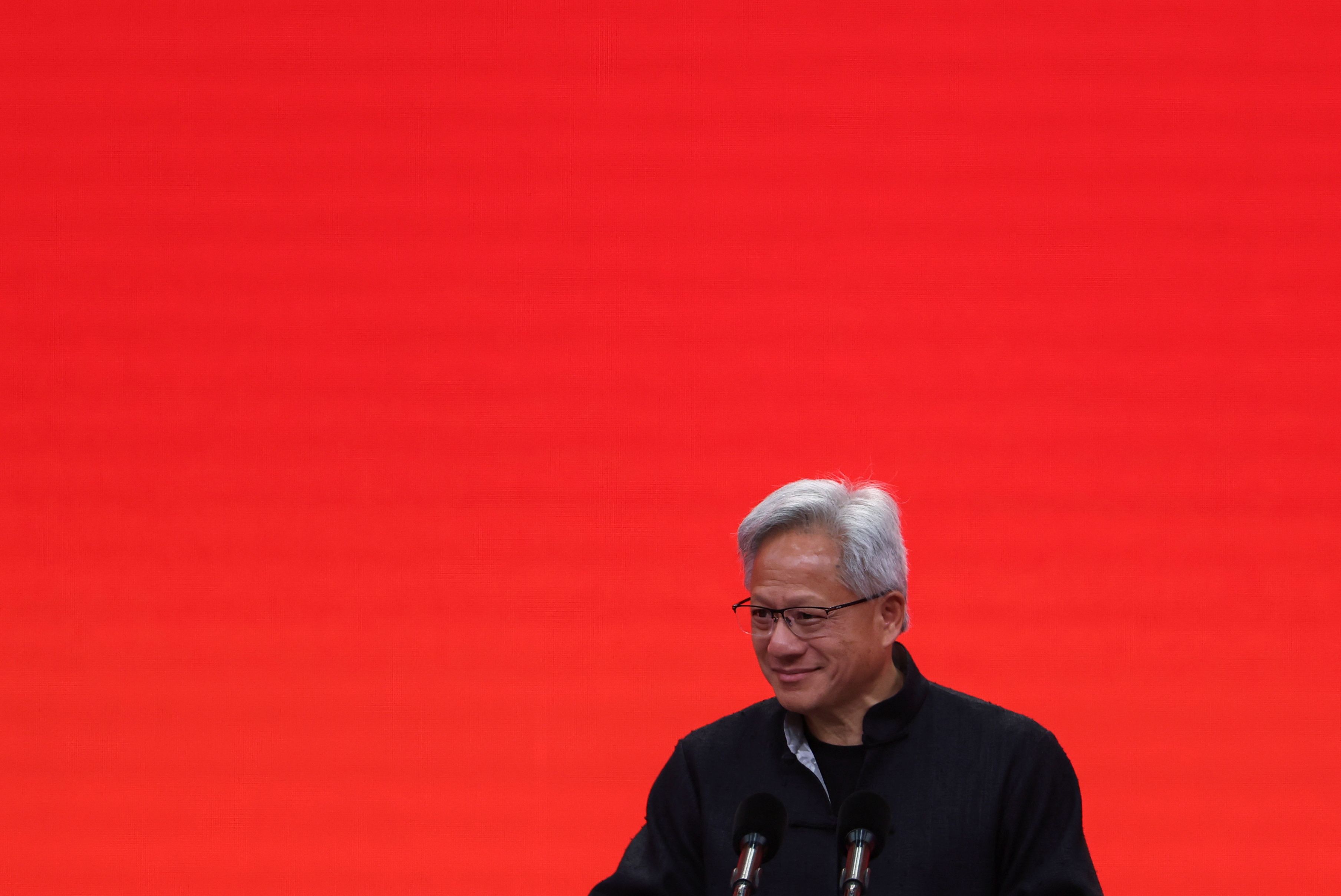
2025年秋天,英伟达首席执行官黄仁勋正乘着AI热潮意气风发。他也身处一场围绕芯片出口的意识形态战争的中心,这家市值4万亿美元的公司及其盟友现在认为,这场战争在他后来的失势中起了关键作用。
In the fall of 2025, Nvidia CEO Jensen Huang was riding high on the wave of the AI boom. He also landed at the center of an ideological war over chip exports that the $4 trillion company and its allies now think played a pivotal role in his undoing.
一边是特朗普政府内部的对华鹰派——以及外围的圈内人士——他们担心黄仁勋的芯片正在助推中国的AI雄心。另一边是黄仁勋、大卫·萨克斯和其他科技界人士,他们主张把美国技术传播到全球各地,以确保美国支持的AI成为世界标准,而他们的主张往往出于自身利益。
e side were the China hawks inside the Trump administration — and circling outsiders — who worried Huang’s chips were helping fuel China’s AI ambitions. On the other side were Huang, David Sacks, and other technologists that argued, often in their own self-interest, for spreading US tech around the globe to ensure American-backed AI became the world standard.
黄仁勋长期持有的支持贸易的观点,早已不受许多智库人士、学者、国家安全工作人员和美国政府官员的欢迎,这些人构成了一个松散的反华意识形态群体。但在接受有影响力的风险投资人比尔·格利和布拉德·格斯特纳的播客采访时,黄仁勋更进一步,称“对华鹰派”这个词是“耻辱”的标签,贴这个标签的人并不“爱国”。这一冒犯并未被忽视,招致了极右翼播客主持人史蒂夫·班农等反科技声音以及其他批评者的愤怒,他们此前曾猛烈抨击黄仁勋游说反对严格的对华出口管制。
Huang’s long-held, pro-trade views were already unpopular with many of the think tankers, academics, national security staffers, and US government officials that make up a loosely held group of anti-China ideologues. But in a podcast interview with influential venture capitalists Bill Gurley and Brad Gerstner, Huang took things further, arguing the term “China hawk” is a badge of “shame” and that those who wear it are not “patriotic.”The slight did not go unnoticed, drawing the ire of anti-technology voices like far-right podcast host Steve Bannon and other critics who had railed against Huang’s lobbying against strict China export controls.
“这么说吧——对华鹰派有耐心,而且记性很好,”埃里克·塞耶斯写道。他曾是国会国防工作人员,现任游说公司Beacon Global Strategies的董事总经理。据知情人士称,该公司曾从事中国政策相关工作。
“Let’s just say this — China hawks are patient and have long memories,” wrote Eric Sayers, a former Congressional defense staffer and current managing director of lobbyist Beacon Global Strategies, a firm that has done work on China policy, according to people familiar with the matter.
11月2日,塞耶斯再次转发了他一年前发布的X帖子。几天后,黄仁勋承认与一名被指为中国间谍的女子有婚外情。此前数周,媒体一直在深挖Megaspeed,这是一家总部位于新加坡的AI数据中心公司,美国政府官员指控其可能将英伟达芯片走私到中国。其暗示很清楚:黄仁勋的命运并非仅仅是这位英伟达CEO个人过失或判断失误的结果。据一位知情人士透露,他还在政府最高层树了强敌,英伟达现在认为,这几乎已使该公司失去了游说向中国出口芯片的能力。
Sayers re-upped his year-old X post again on Nov. 2, days before Huang admitted to having an affair with an alleged Chinese spy, on the back of weeks of media coverage digging into Megaspeed, an AI data center company based in Singapore that US government officials allege might be smuggling Nvidia chips into China. The implication was clear: Huang’s fate was not simply a result of the Nvidia CEO’s own personal failings or bad judgment. He had also made powerful enemies at the highest echelons of government that Nvidia now believes has all but stopped the company’s ability to lobby for the export of chips to China, according to a person briefed on the matter.
尽管没有证据表明他们与任何泄密有关,但最知名的对华鹰派人士包括塞耶斯的前同事伊万·卡纳帕西,他现任国家安全委员会亚洲事务高级主任;塔伦·查布拉,曾任总统副助理兼国家安全委员会技术与国家安全协调员;以及兰登·海德,一名国安会工作人员,曾差点成为商务部工业与安全局负责出口管理的助理部长。
Although there’s no evidence to suggest they are connected to any leaks, among the most prominent of the China hawks are Sayers’ former colleague, Ivan Kanapathy, who serves as senior director for Asia at the National Security Council, and Tarun Chhabra, who served as deputy assistant to the president and coordinator for technology and national security on the National Security Council, and Landon Heid, an NSC staffer who nearly became assistant secretary of commerce for export administration at the Bureau of Industry and Security.
查布拉现在为Anthropic工作,该公司是出口管制的另一个直言不讳的批评者,其CEO达里奥·阿莫代伊将向中国出售芯片比作向朝鲜出售核武器。Anthropic还指责中国AI公司窃取其知识产权,以训练开放权重AI模型。
Chhabra now works for Anthropic, another vocal critic of export controls, with CEO Dario Amodei comparing chip sales to China to selling nuclear weapons to North Korea. Anthropic has also accused Chinese AI companies of stealing its intellectual property in order to train open weight AI models.
英伟达、白宫、商务部、国务院、国安会、马可·鲁比奥和Beacon Global的发言人均未立即回应置评请求。
Spokespeople for Nvidia, the White House, Commerce Department, State Department, NSC, Marco Rubio, and Beacon Global didn’t immediately respond to requests for comment.
目前尚不清楚是谁泄露了被用来抹黑黄仁勋的国家安全文件。英伟达首席执行官是否是间谍阴谋的目标,或者他本人或英伟达是否存在任何不当行为,将由调查人员在未来几个月内确定。但损害已经使这家市值4.2万亿美元的公司市值缩水约2800亿美元。黄仁勋现在面临董事会调查、股东诉讼、国会质询,以及细节几乎肯定会一点一点泄露出去的前景。
It’s unclear who was responsible for leaking national security documents that were used to discredit Huang. And whether the Nvidia CEO was the target of an espionage plot, or if there was any wrongdoing on his or Nvidia’s part, will be determined by investigators in the months ahead. But the damage has already shaved about $280 billion off the market value of the $4.2 trillion company. Huang’s now facing a board probe, shareholder lawsuits, Congressional questioning, and the near-certain prospect of details leaking out in drips and drabs.
几位了解其对华政策议程的人士表示,鹰派群体在华盛顿拥有相当大的权力和影响力,而黄仁勋从辩论另一方的出局,将使即将围绕将出口管制加入《国防授权法案》的斗争变得容易得多。
Several people familiar with their China policy agenda say the group of hawks wield considerable power and influence in DC, and the elimination of Huang from the other side of the debate will make the upcoming fight over export controls being added to the National Defense Authorization Act significantly easier.
黄仁勋显然陷入了一场丑闻,但美国政府有责任澄清它是否在调查这个国家最成功公司的创始人,这样做可能损害一家具有巨大战略价值的公司,并使一只存在于大多数人投资账户中的股票蒸发数十亿美元。
Huang obviously walked into a scandal, but the US government bears some responsibility for clearing up whether or not it’s investigating the founder of the country’s most successful company, potentially harming a company with massive strategic value and shaving off billions of dollars of a stock that’s in most people’s investment accounts.
英伟达的成败对美国几乎所有人以及世界各地的许多人都产生直接和间接的影响。我们应该全面评估政府法外对待一名美国公民所带来的影响,此事具有巨大的经济意义,无论正面还是负面。要么某事是机密,要么不是。既然它已经被泄露,其余信息就应该公之于众。
Nvidia’s success and failure has direct and indirect impacts on almost everybody in the US, and many around the world. We should get a full accounting of the impacts of an extrajudicial action against a US citizen by the government with enormous economic implications, positive and negative. Either something is classified or it’s not. Now that it’s been leaked, the rest of the information should be made public.
消费者选择中心新兴技术政策负责人詹姆斯·切尔尼亚夫斯基表示:“政府不应能够将监控档案武器化,用来对付美国人和他们的企业。每当情报被选择性地披露并加以利用以推进某些政策时,无论是收紧芯片出口管制,还是为重新授权一项存在严重缺陷的监控项目争取支持,这都应当引起每个美国人的关切。当政府掌握这种权力时,它不仅仅是在扰乱个人的生活;它还可能让一家美国公司成为目标,并在市场上制造经济不确定性。这种权力需要真正的限制和问责。保护我们的国家安全很重要,但给予政府全权使用其监控能力,是通往灾难的配方,最终会让所有人的处境都变得更糟。”
From James Czerniawski, head of emerging technology policy at the Consumer Choice Center. “The government shouldn’t be able to weaponize a surveillance file against an American and their business. It should concern every American whenever intelligence is selectively surfaced and leveraged to advance certain policies, whether that means tighter chip export controls or building support for reauthorizing a deeply flawed surveillance program. When the government wields this kind of power, it isn’t just disrupting an individual’s life; it can put a target on an American company and create economic uncertainty in the marketplace. That kind of power demands real limitations and accountability. Protecting our national security is important, but giving the government carte blanche to use its surveillance capabilities is a recipe for disaster that will ultimately leave everyone worse off.”