日本汽车制造商股价自美国中期选举以来大幅上涨,但投资者认为,中东局势缓和和油价下跌的前景将对该行业产生长期影响,这意味着反弹可能才刚刚开始。
Japanese automaker shares have surged since the US midterm elections, but their rebound may just be getting started, as the prospects of easing Middle East tensions and lower oil prices will likely have long-term implications for the industry, according to investors.
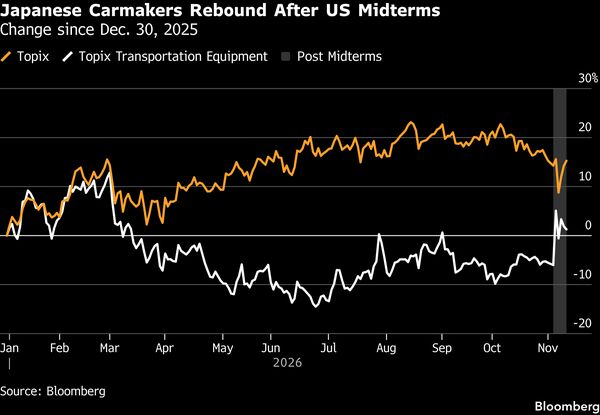
民主党控制国会令市场预期特朗普政府可能面临压力,被迫缩减对伊朗的进一步军事行动,因为这场不得人心的战争在选举中重创了共和党。随后油价下跌将投资者重新吸引回汽车板块,自选举日以来,东证股价指数运输设备板块上涨约 7%,成为该基准指数同期表现第三好的行业。
The Democratic takeover of Congress has raised expectations that the Trump administration may face pressure to scale back further military action against Iran after the unpopular war pounded Republicans at the polls. Subsequent drops in oil prices pulled investors back into the auto sector, lifting the Topix transportation equipment index about 7% since election day, making it the benchmark’s third-best-performing industry over the period.
较低的燃油成本能够支撑车辆需求并降低车企生产成本,而霍尔木兹海峡供应链中断的缓解有助于提升产量。据彭博情报,丰田汽车公司估计本财年因中东冲突将产生 5050 亿日元(约 32 亿美元)影响,本田技研工业预计成本增加 4360 亿日元,主要与该冲突有关。
Lower fuel costs can support vehicle demand and reduce automakers’ production costs, while easing supply-chain disruptions in the Strait of Hormuz could help lift output. Toyota Motor Corp. has estimated a ¥505 billion ($3.2 billion) impact from the Middle East conflict this fiscal year, while Honda Motor Co. expects cost increases of ¥436 billion, mainly tied to the conflict, according to Bloomberg Intelligence.
“在市场波动加剧的情况下,汽车制造商凭借稳健的资产负债表和强劲的现金创造能力,显得相对更具吸引力,”爱泽证券基金经理满井郁夫表示。他近期将部分资金从银行股转向丰田,押注中东局势缓和和油价更加稳定将提供支撑。
“With market volatility elevated, automakers look relatively attractive given their strong balance sheets and robust cash generation,” said Ikuo Mitsui, a fund manager at Aizawa Securities. Mitsui has recently shifted some capital from banks into Toyota, betting that easing Mideast tensions and more stable oil prices will lend support.
尽管本周部分 AI 股因抄底买入而反弹,但民主党将如何监管 AI 仍存不确定性,令部分投资者观望。分析师称,在风险偏好依然强劲的情况下,资金很可能流向汽车等其他板块。
While some AI stocks have rebounded this week on dip buying, uncertainty over how the Democratic Party will regulate AI is keeping some investors at bay. With risk sentiment still strong, funds will likely flow toward other sectors, such as automakers, according to analysts.
大和资产管理首席策略师建部和礼表示,目前日本汽车制造商的持仓相对较轻,这使得从已饱和的AI交易中轮动出来成为更容易的选择。“随着基本面改善、持仓不再拥挤,该板块可能处于相对有利的位置,有望吸引部分从AI相关股票中轮动出来的资金。”尽管中东局势前景有所改善,但该地区地缘政治风险依然很高,伊朗军队仍有能力扰乱航运交通并攻击其邻国。日本汽车制造商还面临来自中国电动汽车制造商的竞争,以及其他结构性挑战。
Positions in Japanese automakers are relatively light at the moment, making rotation out of the saturated AI trade an easier choice, according to Kazunori Tatebe, chief strategist at Daiwa Asset Management. “With fundamentals improving and positioning less crowded, the sector may be relatively well placed to attract some of the money rotating out of AI-related stocks.”Despite a rosier Mideast picture, geopolitical risks in the region are high as the Iranian military is still capable of disrupting shipping traffic and attacking its neighbors. Japanese carmakers also face competition from Chinese electric vehicle makers, among other structural challenges.
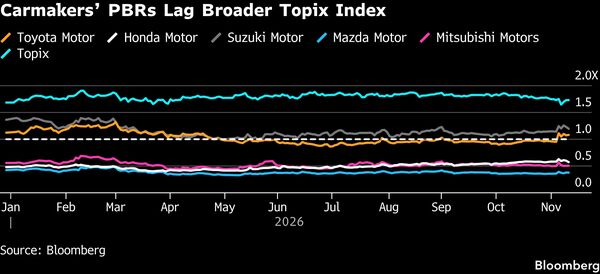
即便如此,该板块估值相对便宜,且股东回报预期较高,这可能对投资者具有吸引力。除丰田和铃木汽车外,其他主要日本汽车制造商的股价均低于账面价值,而东证指数的市净率为1.7倍。
Even so, the sector has relatively cheap valuations and high expectations for shareholder returns, which may appeal to investors. With the exception of Toyota and Suzuki Motor Corp., other major Japanese vehicle manufacturers trade below book value, compared to the Topix’s 1.7 times.
景顺资产管理全球市场策略师木下智夫表示:“汽车板块的反弹尚未完成,明年之前市场环境可能仍对该板块股票构成支撑。”他指出,该板块股价仍低于伊朗战争前的水平。“随着油价现在走低,市场对汽车需求可能复苏的预期正在增强,这已开始改变市场的看法。”
“The auto sector’s rebound is not complete yet and market conditions are likely to remain supportive for the shares into next year,” said Tomo Kinoshita, global market strategist at Invesco Asset Management, noting that the sector is still trading below the pre-Iran war level. “With oil prices now lower, expectations are growing that car demand could recover, and that is starting to change the market’s view.”