
随着政治动荡削弱了政府遏制其迅速增长的6000亿美元债务负担的能力,债券持有人越来越对波兰长期以来作为新兴市场宠儿的地位产生怀疑。
Bondholders are increasingly questioning Poland’s long-held status as an emerging-market favorite as political turmoil undermines the government’s ability to rein in its fast-growing $600 billion debt load.
该国10年期国债收益率已跳升至6.1%以上,今年以来上涨了约100个基点,比过去十年的平均水平高出2个百分点。尽管由于对能源引发的通胀的担忧,全球收益率都在飙升,但波兰的行情尤为引人注目,因为这是在多年债务和发行量激增的基础上出现的。
The country’s 10-year bond yields have jumped above 6.1%, up about 100 basis points this year and 2 percentage points above the average for the last decade. While yields have soared across the globe on concern about energy-driven inflation, the move in Poland is particularly notable because it comes on top of a multi-year surge in debt and issuance.
政治动荡正在蔓延至街头抗议,总理唐纳德·图斯克与亲反对派的总统以及中央银行陷入争议。这使得内阁在缩小欧盟最高赤字之一的空间上所剩无几。
Political turbulence has been spilling over into street protests as Prime Minister Donald Tusk is locked in disputes with the opposition-aligned president and the central bank. That leaves the cabinet with narrow room for maneuver to reduce one of the highest deficits in the European Union.
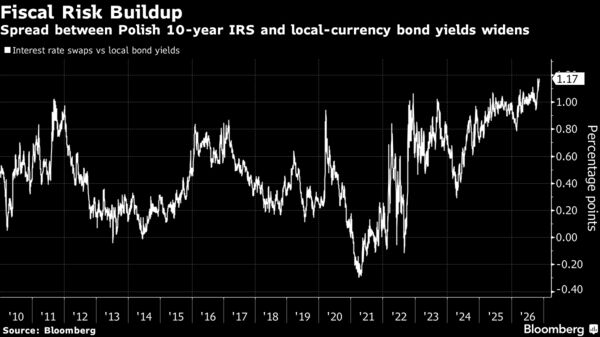
投资者正在密切关注的一个指标是波兰债券与利率互换之间的利差,该利差已触及至少16年来的最大值。利差表明,在预算担忧引发更多市场焦虑之后,投资者在考虑到利率风险后,正要求获得更高的补偿来持有政府债券。
One metric that investors are watching is the gap between Polish bonds and interest-rate swaps, which has hit the widest in at least 16 years. The spread shows investors are demanding far more compensation to hold the government notes after accounting for interest-rate risk as budget concerns stir up more market anxiety.
因此,波兰失去了在本世纪大部分时间里享有的债券市场吸引力。由于布达佩斯新政府的加入欧元雄心,新兴市场投资者一直在撤出波兰并转向匈牙利。一年前,波兰10年期国债收益率比匈牙利低近2个百分点,而现在华沙政府必须支付溢价。
As a result, Poland has lost the bond-market allure it enjoyed for most of this century. Emerging-market investors have been shifting out of Poland and into Hungary thanks to the euro-entry ambitions of the new government in Budapest. A year ago, Polish 10-year yields traded almost 2 percentage points below Hungary’s, now the government in Warsaw must pay a premium.
PGIM有限公司新兴市场宏观研究主管玛格达莱娜·波兰表示,波兰的投资格局正在经历“政权更迭”。她说,从一个债务负担适中的国家,正在过渡到一个以不断上升的债务服务成本为特征的国家。波兰表示:“这有必要对财政风险进行重新评估。”
Poland’s investment profile is undergoing a “regime shift,” said Magdalena Polan, head of EM macro research at PGIM Ltd. From a country with a moderate debt burden, it’s transitioning to one marked by rising debt-servicing costs, she said. “This warrants a reassessment of fiscal risk,” Polan said.
总统卡罗尔·纳夫罗茨基周三在一次演讲中表示,政府允许公共财政侵蚀到“灾难性的状况”。图斯克的内阁则指出,纳夫罗茨基的屡次否决是经济政策的关键障碍。
President Karol Nawrocki said in a speech Wednesday that the government allowed public finances to erode to a “disastrous condition.”Tusk’s cabinet in turn points to Nawrocki’s recurring vetoes as the key impediment for economic policy.
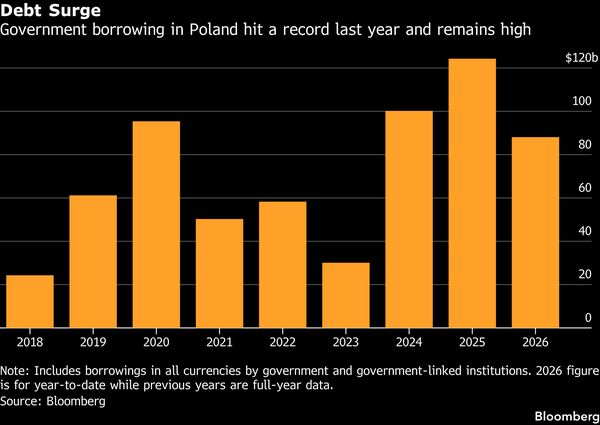
PGIM的波兰指出:“日益将波兰与其地区同行和评级相似的主权国家区分开来的是政治两极分化。在这种环境下,很难指望进行有意义的财政整合。”由于邻国乌克兰的战争推高了国防开支,波兰的债务销售自2023年以来几乎翻了一番,达到每月高达100亿美元,以为运行在经济产出7%的预算赤字提供资金。这与高额社会福利支出相结合,随着该国迎来明年秋季紧张的议会选举,这些支出不太可能迅速下降。
“What is increasingly differentiating Poland from regional peers and similarly rated sovereigns is political polarization,” PGIM’s Polan said. “In this environment, it is difficult to expect meaningful fiscal consolidation.”With defense outlays boosted by the war in neighboring Ukraine, Poland’s debt sales have nearly doubled since 2023 to as much as $10 billion a month to fund a budget deficit running at 7% of economic output. That’s combined with high social spending, which is unlikely to come down quickly as the country heads into tight parliamentary elections next fall.
可以肯定的是,在评级机构最近采取一些负面举措之后,该主权国家仍稳固处于投资级区间。蓬勃发展的国内经济仍然吸引着买家。然而,过去几周的一系列负面头条新闻让一些投资者心生退意。
To be sure, the sovereign is still firmly in investment-grade territory even after some recent negative steps by rating firms. The buoyant domestic economy still attracts buyers too. Yet a spate of negative headlines from past weeks is giving some investors cold feet.
管理着180亿欧元(200亿美元)资产的阿克蒂亚资产管理公司已经减少了波兰的风险敞口,转而支持匈牙利和罗马尼亚。景顺资产管理有限公司投资经理詹姆斯·诺沃特尼今年也削减了波兰的债务持仓,并购买了更多匈牙利债券。
Aktia Asset Management, which manages €18 billion ($20 billion), has reduced its Polish exposure in favor of Hungary and Romania. James Novotny, an investment manager at Jupiter Asset Management Ltd., also cut Polish debt holdings this year and bought more Hungarian bonds.
景顺的诺沃特尼表示:“是的,波兰债券很便宜,但它们可能会变得更便宜。很难寻找那种能够为该主权国家配置更多资金的催化剂。”穆迪评级给予了波兰十年来的首次下调评级,而标普全球评级则下调了该国债务的前景展望。
“Yes, Polish bonds are cheap but they could get cheaper,” Jupiter’s Novotny said. “It’s hard to look for that catalyst to allocate more to the sovereign.”Moody’s Ratings handed Poland its first downgrade in a decade, while S&P Global Ratings lowered its outlook on the country’s debt.
Ninety One英国有限公司主权分析师奥雷莉·马丁表示:“波兰现在确实是一个单一议题的故事。与其邻国和其他新兴市场的最大区别在于财政故事。”英杰华投资公司高级投资组合经理库尔特·诺尔森表示,虽然市场正在要求波兰支付更高的财政风险溢价,但该国可以依靠其强大的机构和具有韧性的经济。欧盟资金依然是一个“重要的锚”,他说。
“Poland is really a one-issue story right now,” said Aurelie Martin, a sovereign analyst at Ninety One UK Ltd. “The big differentiator from its neighbors and other emerging markets is the fiscal story.”Kurt Knowlson, a senior portfolio manager at Aviva Investors, said that while the market is demanding a higher fiscal-risk premium from Poland, the country can count on its strong institutions and a resilient economy. EU funding also remains a “significant anchor,” he said.
诺尔森表示:“我们将谨慎对待将政治不确定性直接转化为宏观经济不稳定这一做法。对于市场而言,重要的信号将是选举后财政轨迹的更大清晰度。”
“We would be careful about translating political uncertainty directly into macroeconomic instability,” Knowlson said. “For markets, the important signal will be greater clarity on the post-election fiscal trajectory.”
威廉布莱尔投资组合经理丹尼尔·德伍德表示,鉴于政府与欧盟的紧密联系以及与西欧国家相比仍然相对较低的债务水平,本地债券可能高估了政治风险。他补充说,兹罗提很便宜且仓位不足。
Local bonds may be overpricing political risk, said Daniel Wood, a portfolio manager at William Blair, given the government’s strong ties with the EU and still relatively low debt levels, compared with western European nations. The zloty is cheap and under-positioned, he added.
与此同时,波兰——这个欧盟财政赤字最高国家之一——也是非欧元东欧国家中利率最低的国家。富达国际固定收益投资组合经理菲利普·菲尔丁指出,这意味着1年期国债4%的收益率接近3.5%的通胀率。
At the same time, Poland — a country with one of the EU’s widest fiscal deficits — also has the lowest interest rates among the non-euro Eastern European nations. Philip Fielding, fixed income portfolio manager at Fidelity International, pointed out that this means that 4% yields on 1-year bonds are near inflation, which is running at 3.5%.
菲尔丁说,在如此低的实际利率下,“你可以看出为什么波兰不再是每个人的宠儿了。我们的立场很谨慎。”
At such low real rates, “you can see why Poland isn’t everyone’s darling anymore,” Fielding said. “We are cautiously positioned.”