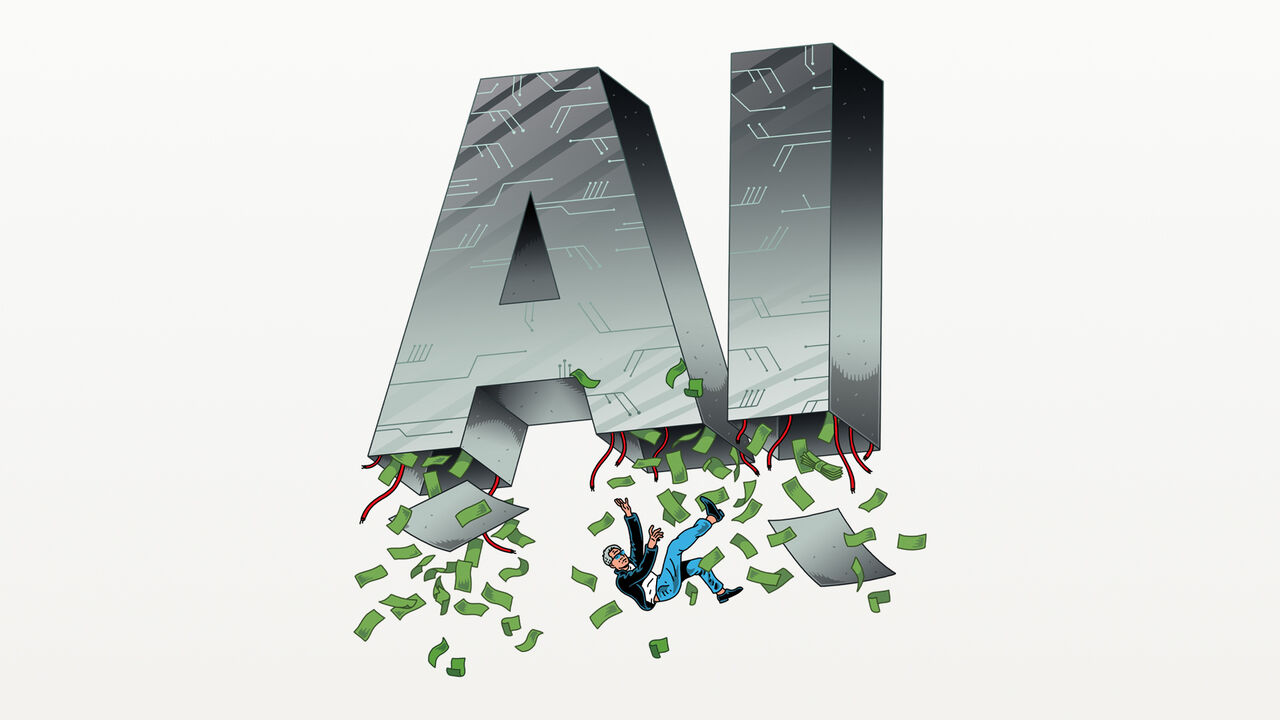
新闻还能更戏剧化吗?人工智能模型持续变得更强大,速度比几乎所有人预测的都要快。下周,前沿模型制造商Anthropic(安谋科技)预计将上市,这可能成为有史以来规模最大的人工智能公司首次公开募股(IPO)。然而,在某些方面,人工智能繁荣看起来正在动摇。一桩性与间谍丑闻正在震动英伟达,这家顶级芯片制造商。
Could the news be much more dramatic? Artificial-intelligence models keep growing more powerful, faster than almost anyone predicted. Next week Anthropic, a frontier model-maker, is expected to list its shares in what could be the biggest-ever IPO of an AI firm. Yet in some ways the AI boom is looking wobbly. A sex-and-spying scandal is rocking Nvidia, the top chipmaker.
美国民主党在赢得中期选举后,正摩拳擦掌准备追究数据中心和与特朗普关系密切的科技巨头的责任。一些人担心一场巨大的科技崩盘即将来临。世界应该担心到什么程度?
America’s Democratic Party, having won the midterms, is raring to go after data centres and Trump-adjacent tech titans. Some fear an almighty tech bust is coming. How worried should the world be?
历史提供了线索。许多过去的技术,从运河和铁路到互联网,都曾带来市场狂欢,随后陷入绝望。即使底层技术被证明具有革命性,对它们的押注也曾出错。
History offers clues. Plenty of past technologies, from canals and railways to the internet, have brought market euphoria and then despair. Bets on them went wrong even though the underlying technologies proved revolutionary.
阅读我们 专题的其余部分 即使像《经济学人》这样的技术乐观主义者,今天也应该担心一场危机。据一项预测,预期在人工智能领域的投资规模巨大,2025年至2032年间,年均将达到美国国内生产总值(GDP)的3.6%。人工智能相关股票经历了一轮令人眩晕的上涨:目前,敞口高度集中于人工智能的前十只股票占美国标普500指数的近40%。
Read the rest of our cover package Even techno-optimists like The Economist should worry about a crunch today. The scale of expected investment in AI is vast, an annual average of 3.6% of America’s GDP between 2025 and 2032, by one forecast. AI-related shares have had a dizzying run: the top ten heavily AI-exposed stocks are now nearly 40% of America’s S&P 500 index.
企业股权已达到美国家庭净资产的38%——比互联网泡沫顶峰时期高出近四分之一。而在截至8月的12个月里,流入美国股票的净外资首次突破1万亿美元,是整个2010年代流入量的数倍。
Corporate equities have reached 38% of American household net worth—nearly a quarter higher than at the peak of the dotcom boom. And over the 12 months to August net foreign inflows into American equities crossed $1trn for the first time, many times greater than for the entire 2010s.
对这一切是否可持续的担忧,使得股市在六个月里大体持平。中期选举后,以科技股为主的纳斯达克指数单日下跌5.5%,投资者担心民主党会阻挠数据中心建设。作为AI行业资产负债表支柱的英伟达,股价已较峰值下跌近30%。看空者认为,当Anthropic上市时,其前景将在股价中完全显现,股价下跌可能引发全市场溃败。
Jitters over whether all this is sustainable have left stocks roughly flat over six months. After the midterms the NASDAQ index of tech firms fell by 5.5% in a day, as investors fretted that Democrats would block data centres. The share price of Nvidia, whose balance-sheet underpins much of the AI industry, is down by nearly 30% from its peak. When Anthropic floats, bears argue, its prospects will be visible to all in its stock price, a fall in which could trigger a market-wide rout.
Anthropic及其主要竞争对手OpenAI是面向客户的公司,为包括数据中心、芯片设计商和芯片制造商在内的整个AI供应链提供动力。如果它们销售太少或无法收取足够高的价格,灾难将迫在眉睫。
Anthropic and its main rival, OpenAI, are the customer-facing companies feeding the entire AI supply chain, including data centres, chip designers and chipmakers. If they have too few sales or cannot charge high enough prices, disaster looms.
投资者高估AI收入,将是一个符合金融史规律的错误。好消息是,这一次的后果很可能是可控的。互联网泡沫式的股市崩盘可能发生;但深度金融危机的可能性要小得多。
For investors to have overestimated revenues from AI would be a mistake consistent with financial history. The good news is that the consequences this time would probably be manageable. A dotcom-style equity-market crash could happen; a deep financial crisis is much less likely.
过去,发现热门新技术的投资者往往不善于预测谁将从中获利。“如果一个有远见的资本家在基蒂霍克现场,他为后继者做的一件大好事就是把奥维尔击落,”沃伦·巴菲特2008年写道,并指出航空业的低盈利性。许多在1990年代为光纤电缆铺设提供资金的人赔了个精光;真正赚得盆满钵满的是那些在这一基础设施上建立业务的科技公司。
In the past, investors who spotted hot new technologies have often been poor forecasters of who will profit from them. “If a farsighted capitalist had been present at Kitty Hawk, he would have done his successors a huge favour by shooting Orville down,” wrote Warren Buffett in 2008, noting the low profitability of airlines. Many who financed the buildout of fibre-optic cable in the 1990s lost their shirts; it was the tech firms that built businesses on that infrastructure that printed money.
现在很容易看出泡沫破裂可能如何发生。Anthropic的大部分收入来自风投支持的AI初创公司,在危机时刻可能枯竭。美国的模型制造商仅领先中国竞争对手约六个月,后者实际上免费提供模型。正如我们报道的那样,Anthropic和OpenAI的高估值假设它们将进一步拉大领先优势,或开发出能更好利用其微弱领先地位的新商业模式。
It is easy to see how a bust could happen now. Much of Anthropic’s revenue comes from venture-capital-backed AI startups and could dry up in a crunch. America’s model-makers are only about six months ahead of Chinese rivals who, in effect, give away models for nothing. As we report high valuations for Anthropic and OpenAI assume they will draw further ahead of the competition, or develop new business models which exploit their small lead better.
最悲观的预言家们受一本知名书籍启发,声称他们的失败将引发一场类似1873年铁路泡沫破裂的崩盘——那是相对于GDP而言,最后一次出现如此巨大的投资狂潮。当时,令人失望的回报引发了一场金融灾难,导致通货紧缩和有记录以来美国最长的一次衰退。
The gloomiest prognosticators, inspired by a prominent book, say that their failure would lead to a crash like the railway bust of 1873—the last time such a huge investment binge, relative to GDP, took place. Then, disappointing returns caused a financial calamity that brought about deflation and the longest American recession on record.
幸运的是,这种比较是不恰当的。美国在AI上的大部分资本支出用于进口设备,如芯片。因此,其经济直接面临的繁荣风险要低得多——可能仅占GDP的0.3%。AI泡沫破裂对台湾经济(年增长率:14%)的冲击将远大于对美国经济的冲击。金融条件现在也截然不同。19世纪70年代没有中央银行,崩盘遭遇的是紧缩性货币政策,而不是如今会触发的降息。
Fortunately the comparison is ill-judged. Most of America’s capital expenditure on AI goes on imported equipment such as chips. The direct exposure of its economy to the boom is therefore much lower—perhaps 0.3% of GDP. An AI crunch would be far worse for Taiwan’s economy (annual growth rate: 14%) than for America’s. Financial conditions are also utterly different now. In the 1870s there was no central bank and the crash was met with contractionary monetary policy rather than the interest-rate cuts that it would trigger today.
AI繁荣的融资方式也令人宽慰。最严重的崩盘——包括1873年的——都发生在主要由债务融资的繁荣之后(而过度的家庭信贷,而非企业借贷,才是最危险的信号)。确实,AI行业为投资而借款的规模远超两三年前,当时投资主要由科技巨头的巨额现金流提供资金。然而,累积的AI资本存量仍主要由权益融资。五家“超大规模企业”(AI数据中心的大户)的债务和租赁承诺约占其账面价值的30%,或仅占其市值的6%;其传统业务仍极其盈利。
The way the AI boom has been financed is also reassuring. The worst crashes—including 1873’s—follow booms that are mostly funded by debt (and it is excessive household credit, not corporate borrowing, that is the reddest flag). True, the AI industry is borrowing to invest far more than it was two or three years ago, when investments were financed overwhelmingly by the vast cashflows of tech behemoths. Yet the accumulated ai capital stock is still mostly equity-financed. The five “hyperscalers” (big owners of AI data centres) have debts and lease commitments worth around 30% of their book value or just 6% of their market value; their legacy businesses are still hugely profitable.
英伟达的杠杆率可忽略不计。AI债务并未推动美国非金融部门的贷款相对于GDP超过其长期趋势。
Nvidia’s leverage is negligible. AI debt has not pushed lending to America’s nonfinancial sector above its long-run trend, relative to GDP.
那么,由AI引发的崩盘可能会发生什么?家庭因股市亏损而减少开支。高杠杆的公司,包括许多“新云”数据中心初创企业,可能会倒闭。可能会出现一场浅度的美国经济衰退,类似于2001年的情况。要让情况恶化得多,AI崩盘必须与另一场灾难同时发生,例如债券市场恐慌或战争。这是可能的:几个富裕国家的债务处于危险的高位,一些全球领导人表现出难以预测的好战姿态。但就目前而言,这并非最可能的结果。
What, then, might happen in an AI-caused crash? Households, nursing losses from the stock market, would spend less. Companies that are highly leveraged, including many “neocloud” data-centre startups, could blow up. There might be a shallow American recession, comparable to that of 2001. For things to get much worse, an AI crash would have to coincide with another calamity, such as a bond-market panic or a war. That is possible: several rich countries’ debts are dangerously high and some global leaders are unpredictably belligerent. But for now, it is not the most likely outcome.
更关键的是技术本身会发生什么。硅谷巨头认为,他们已经拥有构建超级智能所需的基础设施。一些人预测,递归自我改进——即AI在无人类输入的情况下构建更强大的AI——最早可能明年就出现。激烈的政治反弹仍可能打断AI的飞速发展。金融崩盘大概率不会。
What matters more is what happens to the technology itself. Silicon Valley’s titans think they already have the infrastructure they need to build a superintelligence. Some predict that recursive self-improvement—AIs building more powerful AIs without human input—could occur as soon as next year. A furious political backlash could still interrupt the breakneck advance of AI. A financial crash probably won’t.