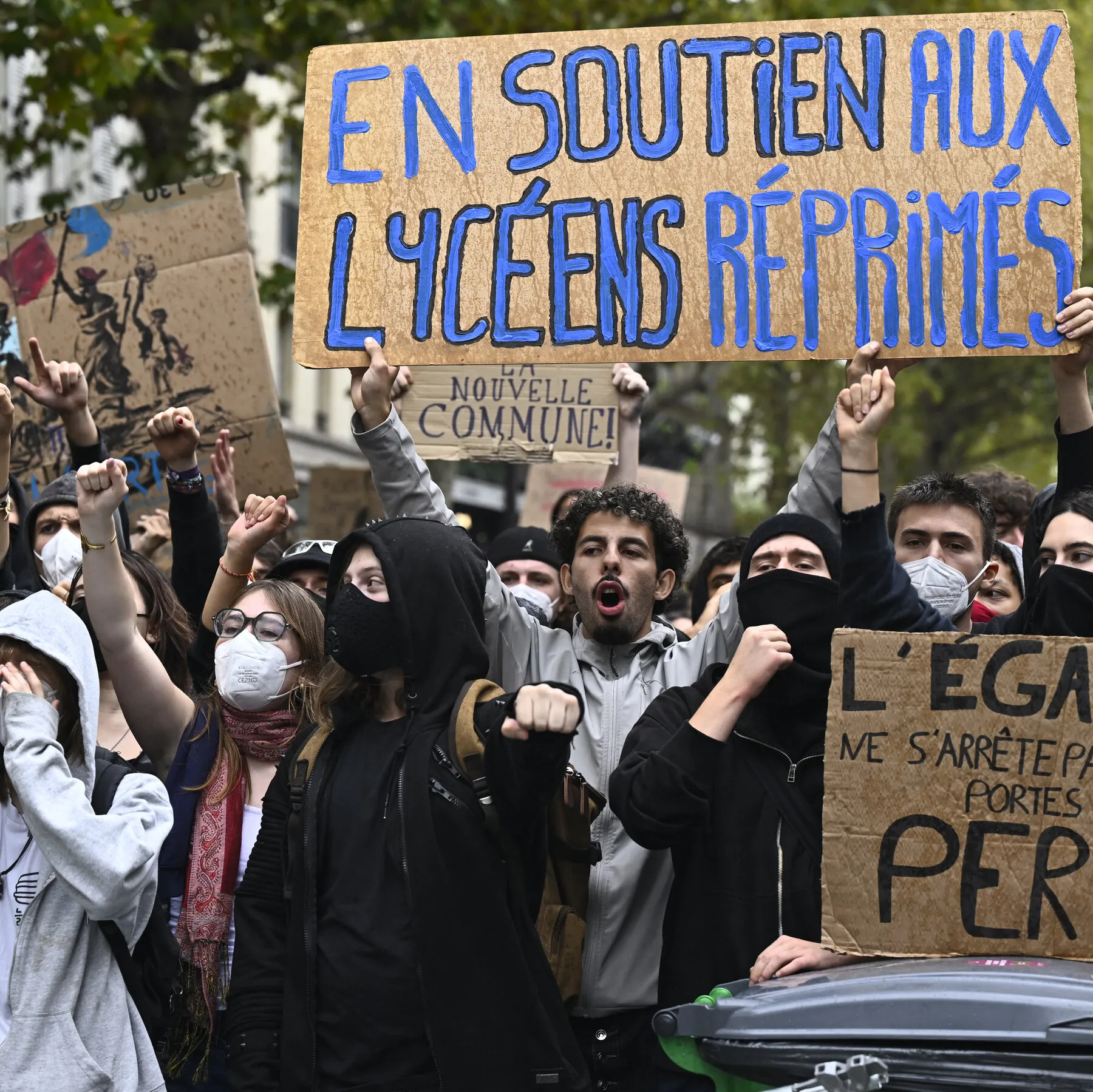
随着退休人员寿命延长,政府需要在养老金上投入更多资金。这使得为其他公共服务提供资金变得更加困难,引发了抗议活动,例如本周末在法国计划举行的抗议。
As retirees live longer, governments need to spend more on pensions. That makes it harder to fund other services, spurring protests like those planned this weekend in France.
法国数据分析师塞巴斯蒂安·迪克罗支持本国大规模的学生抗议活动,他指出了导致政府资金短缺、致使学校破败不堪的一个显而易见的罪魁祸首。
Sébastien Ducros, a French data analyst who supports the widespread student protests in his country, has identified an obvious culprit for the lack of government funds for dilapidated schools.
“巨额资金流向了退休人员,而许多其他事项却被忽视了,”36岁的迪克罗先生说。“我诚实地认为——尽管这么说感觉很奇怪——像我父母这样的人正处于一个应该并且能够放弃部分养老金的位置,”他补充道,并表示父母即将退休。
“A huge portion of the money is going toward retirees, while many other things are being neglected,” said Mr. Ducros, 36. “I honestly think — even if it feels strange to say — that people like my parents are in a position where they should and could” surrender some of their pension payments, he added, saying that they were about to retire.
但72岁的洛朗·格林瓦尔德最近刚在邮政部门工作数十年后退休,他不希望自己的养老金被削减,特别是用来支付其他国家资助的服务。他说,尤其是在房租和生活成本飙升的情况下。
But Laurent Grinwald, 72, who retired recently after decades as a postal worker, isn’t eager for his pension to be reduced, particularly to pay for other state-funded services. Especially, he said, as rents and the cost of living have shot up.
“我们工作了这么久,”格林瓦尔德先生说,“现在突然之间,立场变成了‘好吧,不,我们要开始多拿一点?’” 这种分歧体现了欧洲面临的一个更广泛的问题,这也是本周六在法国计划举行的大规模反政府示威,以及比利时、德国、希腊、意大利和葡萄牙等国沮丧的年轻人近期发起抗议活动的核心所在。随着欧洲人寿命延长,年轻人的需求是否应该被父母和祖父母的养老金所掩盖?养老金通常是欧洲各国国家预算中最大的开支项目。
“We’ve been working all this time,” Mr. Grinwald said, “and now, suddenly, the stance is, ‘Well, no, we’re going to start taking a bit more?’”This disagreement embodies a broader question for Europe, one that is at the heart of mass antigovernment demonstrations planned for Saturday in France, as well as recent protests driven by frustrated young people in countries including Belgium, Germany, Greece, Italy and Portugal. As Europeans live longer, should the needs of the young be eclipsed by their parents’ and grandparents’ pensions, routinely the largest items in Europe’s national budgets?
“这是一场代际冲突,”西班牙独立智库EsadeEcPol主任豪尔赫·加林多说,西班牙拥有欧洲最慷慨的养老金制度之一。
“It’s a generational clash,” said Jorge Galindo, the director of EsadeEcPol, an independent think tank in Spain, which has some of the most generous pensions in Europe.
在欧洲大部分地区,不断增长的老年人口开支是以牺牲年轻工人的服务和补贴为代价的,而这些年轻工人的税收贡献有助于为养老金提供资金。
In much of Europe, spending on a growing population of older people has come at the expense of services and subsidies for young workers whose tax contributions help to fund pensions.
美国施压和俄罗斯侵略导致国防开支螺旋式上升,也让各国政府更难平衡财政收支。而高利率推高了偿还国家债务的成本。
Spiraling defense costs, prompted by American pressure and Russian aggression, have also made it harder for governments to balance their books. And high interest rates have driven up the costs of servicing state debt.
所有这些因素,加上不断上涨的房租和房价,加剧了年轻人对代际不公的感受。根据欧盟最近的一项调查,只有38%的15至30岁受访者认为决策者会考虑其决定的长远后果。调查还发现,只有三分之一的人认为,现在的年轻人拥有与30年前的年轻人同等的成功机会。
All of that, coupled with rising rents and house prices, has compounded a sense of generational injustice among young people. Only 38 percent of people aged 15 to 30 think that policymakers consider the long-term consequences of their decisions, according to a recent European Union survey. Only a third believe that today’s young people have the same shot at success as young people 30 years ago did, the survey also found.
养老金巨大的财政负担——在欧盟社会保障支出中占比约40%——欧洲各国政府并未忽视。
The enormous financial burden of pensions — they gobble up around 40 percent of the spending on social protections in the European Union — has not been lost on European governments.
过去十年里,许多国家试图调整养老金计算公式,力求在削减成本的同时推迟重大的政治反弹。对许多欧洲老年人而言,养老金被视为欧洲福利体系神圣不可侵犯的基石。
Over the past decade, many countries have tried to tinker with pension formulas, trying to cut costs while postponing major political blowback. To many older Europeans, pensions are considered the sacrosanct base of the European welfare system.
通常,它们避免削减每位退休人员的领取金额,而是逐步提高领取养老金的资格年龄——例如从65岁提高到67岁,甚至更高。丹麦计划到2040年将这一年龄提高到70岁。
Often, they have avoided cutting what each retiree is paid while gradually raising the age at which citizens qualify for those payments — to 67 from 65, for example, or older. Denmark plans to raise it to 70 by 2040.
即便这种做法也付出了政治代价。2023年,法国总统埃马纽埃尔·马克龙试图将法国的退休年龄从62岁提高到64岁,引发了愤怒抗议,政府最终被迫冻结该措施。但这给法国带来了另一个问题。
Even that approach has had a political cost. When President Emmanuel Macron of France tried in 2023 to raise France’s retirement age to 64 from 62, it prompted such furious protests that the government eventually froze the measure. But that gave the country a different problem.
法国称,由于拥有欧洲最高债务水平之一,无法承担更多教育支出——这引发了青年愤怒,推动了这波动荡浪潮。
With one of the highest debt levels in Europe, France says it cannot afford to spend more on education — which has prompted the youth anger spurring the wave of unrest.
其他国家尝试了其他缓解代际竞争的方式。英国计划通过放缓养老金随时间增长的速度来节省数十亿英镑,而西班牙则扩大了纳税劳动力池。
Other countries have tried other ways of softening the generational competition. Britain plans to save billions by slowing the speed at which its pension payments increase over time, while Spain has enlarged its pool of taxpaying workers.
西班牙在2011年决定在大多数情况下将退休年龄提高至67岁。随后,现任左翼政府通过确保养老金支付随通胀增长而扩大了养老金开支,保护了领取者免受物价上涨的影响,但给预算带来了巨大压力。
Spain chose in 2011 to raise its pension age to 67 in most cases. Then the current left-wing government enlarged the pension bill by ensuring that pension payments would grow in line with inflation, protecting recipients from rising prices but putting an enormous strain on the budget.
为抵消这些成本,西班牙背离了欧洲趋势,向移民劳动力敞开大门——自2018年以来,已有超过170万外国人进入西班牙劳动力市场。
To offset those costs, it has bucked the European trend and opened its doors to immigrant labor — more than 1.7 million foreigners have entered the Spanish work force since 2018.
这些工人增加了税收收入,进而有助于为养老金缴费提供资金,但专家指出,他们最终也会变老。
Those workers have increased tax revenue, which in turn helps to fund pension contributions, but eventually, experts note, they will age, too.
根据经济合作与发展组织的数据,到2050年,西班牙将把国内生产总值的17.3%用于养老金——比现在高出约四个百分点。这意味着,按今天的价值计算,政府届时每年将在养老金上额外支出相当于670亿美元。目前,西班牙在教育上的支出约为790亿美元。尽管存在资源竞争,但整个欧洲抗议的许多年轻人不愿指责长辈。
Spain will spend 17.3 percent of its gross domestic product in 2050 on pensions, according to the Organization for Economic Cooperation and Development — roughly four percentage points higher than now. That means the government would then be spending the equivalent in today’s terms of an additional $67 billion every year on pensions. It currently spends roughly $79 billion on education. Despite the competition for resources, many of the young people protesting throughout Europe are loath to blame their elders.
“说实话,”22岁的意大利学生Alice Cossa说,她最近在威尼斯参加了抗议,“我们从未谈论过这个问题。”左翼示威者常说,养老金和其他福利可以通过向富人和企业征税来筹资。他们的右翼对应者则建议削减移民,指责移民挤占福利待遇。
“Honestly,” said Alice Cossa, 22, an Italian student who protested recently in Venice, “we’ve never talked about it.”Left-wing demonstrators often say that pensions and other benefits can be funded by taxing the rich and corporations. Their right-wing counterparts suggest cutting immigration, blaming immigrants for soaking up welfare benefits.
不过,一些人认为,至少应重新评估部分养老金,即富裕老年人领取的养老金。
Some feel, though, that at least some pensions, namely those received by wealthy older people, should be reassessed.
“我们年轻人拥有的东西越来越少,越来越少,越来越少,”28岁的银行职员亚历杭德罗·罗哈诺(Alejandro Rojano)说。他与一名室友合住在马德里的一间地下室公寓里。他说,即便是他那年过九旬的祖父母,领到的钱也“远多于”他的月薪,而他的月薪不足2000欧元,即不足2200美元。他感叹道,没有哪个政党敢削减退休人员——这样一个可靠且强大的投票群体——的福利,并补充说:“这讲不通,你知道吗?”
“We young people have less and less and less,” said Alejandro Rojano, 28, a bank employee who lives in a basement apartment in Madrid with a roommate. He said even his own nonagenarian grandparents received “way” more than his monthly salary, which was less than 2,000 euros, or less than $2,200. No political party would dare cut the benefits of such a dependable and powerful voting bloc as retirees, he lamented, adding of the pension payouts, “It makes no sense, you know?”
智库总监加林多先生表示,考虑到保护退休人员利益的根深蒂固的政治利益,年轻人可能需要组建一个本质上单一议题的投票集团。由于欧洲政府通常由小党派组成联合执政,这样的政党即便只有寥寥几个席位,也可能成为关键力量,使其关切得到重视。
Mr. Galindo, the think tank director, said that given the entrenched political interests in protecting retirees, young people might need to form an essentially single-issue voting bloc. Because European governments are typically formed from coalitions of smaller parties, such a party could become pivotal and have its concerns taken seriously with only a handful of seats.
但年轻人在欧洲是一个不断萎缩的人口群体,而更有可能通过工会和党籍行使政治权力的老年人数量却在激增。
But young people are a shrinking demographic in Europe, and the number of older people, who are more likely to exercise political power through union and party memberships, is booming.
而且,年轻和中年欧洲人不愿削减一项他们指望未来能享受的福利。
And young and middle-aged Europeans are reluctant to cut a benefit that they hope to enjoy in the future.
46岁的丹尼尔·拉莫(Daniel Ramo)刚参加完马德里最近的一场教师罢工,抗议薪资低微和教室拥挤。他说,自己税后月入2100欧元,个人很期待将来能领到丰厚的西班牙养老金。与此同时,父母的养老金福利会“惠及”他,帮他度过难关。
As Daniel Ramo, 46, left a recent teachers’ strike in Madrid protesting dismal salaries and packed classrooms, he said that he personally looked forward to receiving his generous Spanish pension after making €2,100 a month after taxes. In the meantime, the benefits of his parents’ pensions would trickle down to help him through tough times.
“我参加罢工,明知还得跟我父亲借钱,”拉莫先生说,他父亲的养老金使他成为家里收入最高的人。
“I’m on strike knowing I’ll have to borrow money from my father,” said Mr. Ramo, who said his father’s pension made him the top earner in the family.
从退休人员的角度来看,这来之不易的福利有助于维系家庭,维系欧洲社会的运转。
From the perspective of retirees, the hard-earned benefit helps keep families, and European society, going.
“我们个人赚的钱比我们的孩子多,”72岁的恩卡纳·马蒂利亚在马德里阳光明媚的雷蒂罗公园散步时说。她说,她88岁的丈夫从14岁工作到70岁,领取的养老金为2700欧元,比西班牙的中位数工资高出60%,并帮忙供养曾孙辈。“我们是安全网,”她说。
“We personally make more than our children do,” said Encarna Matilla, 72, as she took a walk in sunny Retiro Park in Madrid. She said her 88-year-old husband, who worked from 14 to 70, received a pension payment of €2,700, 60 percent higher than Spain’s median salary, and helped support her great-grandchildren. “We are the safety net,” she said.
塞戈莱娜·勒斯特拉迪克在巴黎、约瑟芬·德拉布吕耶尔在罗马、卡洛斯·巴拉甘在马德里参与了采访报道。
Ségolène Le Stradic contributed reporting from Paris, Josephine de La Bruyère from Rome and Carlos Barragán from Madrid.
杰森·霍洛维茨是《纽约时报》马德里分社社长,负责报道西班牙、葡萄牙以及欧洲各地的民生情况。
Jason Horowitz is the Madrid bureau chief for The Times, covering Spain, Portugal and the way people live throughout Europe.