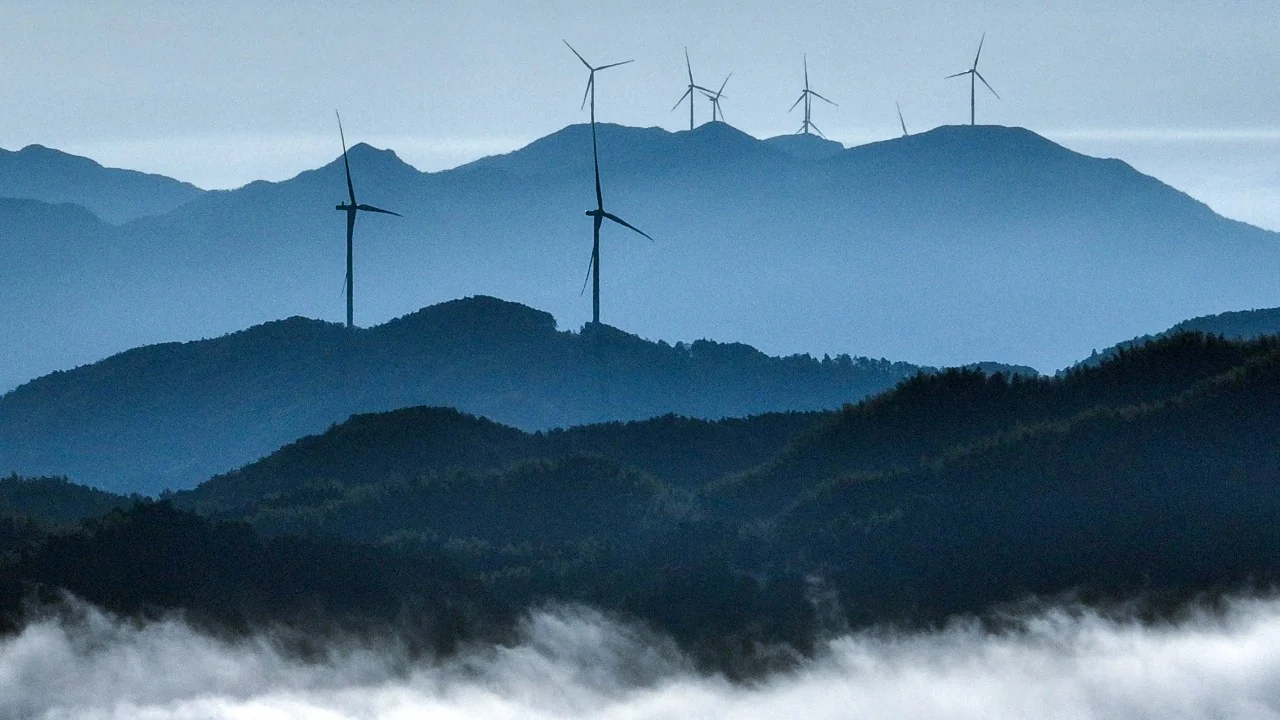
中国正在修改一项法律,该法律支撑了我们时代最显著的工业转型之一。在经历了二十年的可再生能源快速发展之后,中国正准备重写指导、支持和守护其能源革命的规则。
China is updating a law that has underpinned one of the most remarkable industrial transformations of our time. After two decades of rapid renewable-energy development, China is preparing to rewrite the rules that have guided, supported and guarded its energy revolution.
中国《可再生能源法》修订草案于11月6日发布,向公众征求意见,截止日期为12月5日。
The draft revision to China’s Renewable Energy Law was released on November 6 for public comment until December 5.
二十年前,中国刚加入世界贸易组织,随着工厂加大廉价牛仔裤、家具、电视机等产品的生产以满足全球需求,能源消耗激增。当时仍有超过百分之七十五的电力由廉价的本土煤炭发电产生。
Twenty years ago, China, having just joined the World Trade Organization, saw energy consumption surge as factories ramped up production of inexpensive jeans, furniture, television sets and more to meet global demand. Over 75 per cent of electricity was still being generated from cheap, local coal.
随着贸易扩大,公众对空气污染、有毒水质和土壤退化的抱怨也随之增加。中国开始考虑风能和太阳能等能源。当时,水力发电几乎占中国可再生能源发电能力的全部。
As trade expanded, so did public complaints about dirty air, toxic water and soil degradation. China started to consider energy sources such as wind and solar. Back then, hydropower accounted for almost all of China’s renewable energy capacity.
《可再生能源法》于2005年通过,通过国家规划、可再生能源目标、并网和收购义务、上网电价以及财政激励措施,为长期发展奠定了基础。
Adopted in 2005, the Renewable Energy Law established a foundation for long-term development through national planning, renewable energy targets, grid connection and purchase obligations, feed-in tariffs and financial incentives.
它帮助创造了吸引投资、刺激技术创新、建设制造能力以及发展空前规模的国内市场所需的政策确定性。
It helped create the policy certainty needed to attract investment, stimulate technological innovation, build manufacturing capacity and develop a domestic market on an unprecedented scale.
成果是惊人的。去年可再生能源发电装机容量超过23.37亿千瓦,预计今年还将新增3万千瓦的风电和太阳能发电装机容量。太阳能发电已超过煤炭,成为中国最大的发电装机容量来源。中国包括电池、风能和太阳能组件以及电动汽车在内的清洁技术出口,去年创下了约2220亿美元的纪录。
The results have been extraordinary. Installed renewable energy capacity surpassed 2,337 gigawatts last year with a further 300GW of wind and solar power capacity expected this year. Solar power has overtaken coal as China’s largest source of installed power generation capacity. China’s clean technology exports, including batteries, wind and solar components, as well as electric vehicles, reached a record value of around US$222 billion last year.
中国如今已成为光伏、风电、电池和电动汽车全球供应链的核心。其可再生能源制造能力帮助降低了成本,使得此前难以获取可再生能源的国家也能越来越负担得起。
China is now central to global supply chains for photovoltaics, wind power, batteries and electric vehicles. Its renewable energy manufacturing capacity has helped drive down costs, making renewable energy increasingly affordable for countries that previously struggled to access it.
这种产业实力赋予了中国一个非凡的机会,通过更深层次的国际合作,为全球能源转型做出贡献。塑造2005年法律的环境已发生根本性变化。
This industrial strength gives China an extraordinary opportunity to contribute to the global energy transition through deeper international collaboration. The circumstances that shaped the 2005 law have fundamentally changed.
中国提出的修法草案增加了应对发电与电网协调等挑战、以及绿氢和设备回收等新兴机遇的内容。
China’s proposed law revision includes additions that address challenges such as power generation and grid coordination, and emerging opportunities such as green hydrogen and equipment recycling.
可以理解的是,几乎所有新增内容都与国内能源发展相关。然而,修订草案第六条规定,中国“坚持平等互利、合作共赢原则,积极推动可再生能源国际合作”。虽仅一行文字,却意义重大。
Understandably, almost all the additions are related to domestic energy development. However, Article 6 of the draft revision states that China “adheres to the principles of equality, mutual benefit and win-win cooperation, and actively promotes international cooperation in renewable energy”. One short line but it carries considerable significance.
国际伙伴关系应超越买卖关系,支持技术转移、本地制造、技能培养和长期制度能力建设。中国的贡献必须超越在菲律宾建设一个风电场,或向巴基斯坦农民出售太阳能电池板。
International partnerships should go beyond a buyer-and-seller relationship to support technology transfers, local manufacturing, skills development and long-term institutional capacity. China’s contribution must extend beyond building a wind farm in the Philippines or selling solar panels to Pakistani farmers.
对许多发展中国家而言,挑战不仅在于获得价格实惠的太阳能设备、风力涡轮机或电池。更在于建立发展、运营和长期维护可再生能源系统所需的制度、技术和人力能力。
For many developing countries, the challenge is not only to obtain affordable solar panels, wind turbines or batteries. It is to build the institutional, technical and human capacity to develop, operate and maintain renewable energy systems over the long term.
一个国家可能进口太阳能设备,但如果缺乏受过培训的工程师、有能力的本地企业、支持性法规、融资渠道和可靠电网,可能难以将这些进口转化为持久的发展红利。
A country may import solar equipment, but without trained engineers, capable local enterprises, supportive regulations, access to finance and a reliable grid, it may struggle to turn those imports into lasting developmental benefits.
中国的大学、技术机构、公司和研究组织在可再生能源开发方面积累了宝贵的经验。分享这些知识、支持技能发展并帮助合作伙伴国家建设能力,应当成为国际可再生能源合作的核心部分,而这一合作应得到《可再生能源法》修订的支持。
China’s universities, technical institutions, companies and research organisations have accumulated valuable experience in renewable energy development. Sharing this knowledge, supporting skills development and helping to build capabilities in partner countries should become a central part of international cooperation in renewable energy that is supported by the Renewable Energy Law revision.
此外还有关键矿产的问题。太阳能电池板、风力涡轮机、电池和电动汽车都依赖于矿物和材料,而这些矿物和材料的开采与加工可能会产生重大的环境和社会后果。
There is also the question of critical minerals. Solar panels, wind turbines, batteries and electric vehicles depend on minerals and materials whose extraction and processing can have significant environmental and social consequences.
水资源枯竭、生物多样性丧失、污染、不安全的工作条件以及对当地社区的其他影响,不能被视作与己无关的问题。一个真正可持续的可再生能源产业绝不能重复化石燃料经济所带来的环境破坏和和社会不平等。
Water depletion, biodiversity loss, pollution, unsafe working conditions and other effects on local communities cannot be treated as someone else’s problem. A genuinely sustainable renewable energy industry must not reproduce the environmental damage and social inequalities associated with the fossil fuel economy.
气候危机正在加速,世界比以往任何时候都更急需清洁的无碳能源。作为全球最大的可再生能源开发商、生产商和投资商,中国需要在其修订的《可再生能源法》中认识到,可再生能源的可持续性必须贯穿整个生命周期进行评估,从矿产开采和制造到项目开发、运营以及最终的回收利用。
The climate crisis is accelerating, and the world needs clean carbon-free energy sources more urgently than ever. As the world’s largest renewable-energy developer, producer and investor, China needs to recognise in its revised Renewable Energy Law that the sustainability of renewable energy must be evaluated across the entire life cycle, from mineral extraction and manufacturing to project development, operation and eventual recycling.
该草案对国际合作的提及是一个值得欢迎的起点。它需要得到更具体的政策、激励措施和问责机制的支持,以鼓励负责任的海外投资和有意义的能力共享。
The draft’s reference to international cooperation is a welcome starting point. It needs to be backed by more concrete policies, incentives and accountability mechanisms to encourage responsible overseas investment and meaningful capacity-sharing.
中国最初的《可再生能源法》制定时,首要任务是将可再生能源确立为一个可行且具有竞争力的产业。它取得了超乎想象的成功。世界现在需要一种不同类型的领导力。
China’s original Renewable Energy Law was written when the priority was to establish renewable energy as a viable and competitive industry. It has succeeded beyond imagination. The world now needs a different kind of leadership.
下一场可再生能源革命必须超越产能扩张。它还必须建设具有韧性和灵活性的能源体系,确保矿产供应链负责任,创造真正的绿色产业,扩大能源获取,并让技术进步的红利惠及中国以外的人群。
The next renewable energy revolution must be about more than capacity expansion. It must also build resilient and flexible energy systems, ensure responsible mineral supply chains, create genuinely green industries, expand energy access and make the benefits of technological progress available to people beyond China.
中国帮助让可再生能源为世界所负担得起。其下一项贡献应当是帮助让全球可再生能源转型变得负责任、包容和可持续。这应当是修订后的法律所要体现的雄心。
China helped make renewable energy affordable for the world. Its next contribution should be to help make the global renewable energy transition responsible, inclusive and sustainable. That is the ambition the revised law should embrace.