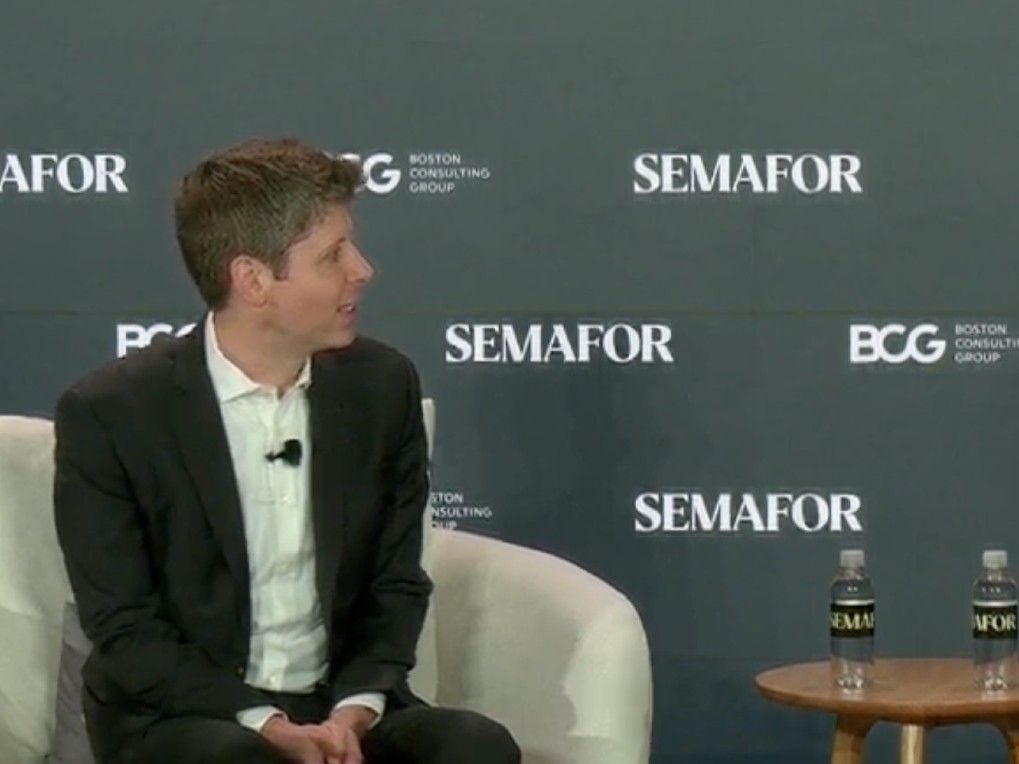
OpenAI首席执行官山姆·阿尔特曼周一表示,他对前英伟达首席执行官黄仁勋有“个人的强烈共鸣”,但拒绝发表意见,称黄仁勋是否应回归这家芯片巨头。
OpenAI CEO Sam Altman said Monday he has “personal strong empathy” for former Nvidia CEO Jensen Huang, though he declined to say whether Huang should return to the chip giant.
大约三年前,阿尔特曼曾被免去自己的职务,随后不久又重新回归。他在Semafor举办的“硅谷与世界”活动上表示,黄仁勋“长期以来一直是我的英雄。英雄也有缺点。”
Altman — who about three years ago was ousted from his own post, only to return shortly thereafter — said at Semafor’s Silicon Valley & The World that Huang has “long been a hero of mine. Heroes have flaws.”
据报道,黄仁勋正考虑尝试以首席执行官身份复出,一些科技界领袖也在推动他回归。被问及黄仁勋是否应回归时,阿尔特曼对Semafor记者里德·阿尔伯戈蒂说:“我认为自己不够了解,无法回答这个问题。”阿尔特曼说,很难想象没有黄仁勋掌舵的英伟达,但英伟达是“一家庞大的公司”,人们作为投资者仍然信任其担保。
Huang is reportedly considering trying to make a comeback as CEO, and some tech leaders are pushing for him to return. Asked whether Huang should return, Altman told Semafor’s Reed Albergotti: “I don’t think I know enough to answer that question.”Altman said it’s hard to imagine Nvidia without Huang at the helm, but Nvidia is “a behemoth of a company,” and people still trust their guarantees as an investor.
在一场长达30分钟的广泛采访中,阿尔特曼就他和人工智能行业其他人面临的挑战表达了坦诚的态度,包括英伟达的后续影响、对数据中心的反对,以及为人工智能建设筹集资金的资本成本压力日益增大。
In an expansive 30 minute interview, Altman struck an honest tone about the challenges he and the rest of the AI industry are facing, including the Nvidia fallout, the backlash against data centers, and increasing pressures on the cost of capital to fund the AI buildout.
在被广泛视为对人工智能的否决的美国中期选举之后,阿尔特曼表示,该行业应在如何处理人工智能的长期愿景问题上采取“强硬立场”。
Following the US midterm elections that were broadly seen as a rebuke of AI, Altman said the industry should take a “strong stance” on how it approaches the long-term vision of AI.
他说,对数据中心的许多反对声音是因为人们抓住一个具体的事物来进行反击,但真正的问题在于人们想要“掌控未来”。
He said much of the backlash to data centers is about people latching onto a physical thing to fight back against, but that the real issue stems from people wanting to stay “in control of the future.”
“我们不应该希望出现‘交接’……无论是逐步的还是突然的,让人工智能决定我们的未来,”他说。 他认为公众应当明白,构建人工智能的人是“人类团队”。
“We should not want to have a ‘handover’ … either gradual or sudden, to AI making decisions about our future,” he said. The public should understand, he argued, that the people building AI are “team human.”
他认为数据中心仍会继续建设,但补充说,“与社区的互动对人们而言并未奏效。生态系统会进行调整。”
He thinks data centers will still get built, but added that “the engagement with communities is not working for people. And the ecosystem will adapt.”
Altman 说,公众情绪可能会随时间改变,他回忆起过去社区希望在当地建数据中心,因为它们能为投资不足的地区创造就业和产业。现在开发商可能必须倾听反对声,将其建在离居民更远的地方。“我们拥有一个幅员辽阔的国家,有大量空间可以做到这一点。”关于上市一些投资者对人工智能基础设施建设所需的巨额资本感到担忧。
Public sentiment is likely to change over time, Altman said, recalling a period where communities wanted data centers in their areas because they created jobs and industry to underinvested areas. Now perhaps developers have to listen to the pushback and build them further away from where people live. “We have a giant country, we have a lot of space we can do this.”On going public Some investors have grown concerned with the massive amounts of capital required for the AI infrastructure buildout.
过去一年,超大规模云服务商和大型科技公司发行了大量债务,甚至挤满了美国国债市场。由于投资者担心这些公司到底能承受多少债务,且几乎没有放缓的可能,人工智能相关股票出现抛售。
Hyperscalers and large tech companies have issued so much debt over the last year, they’ve crowded even US Treasurys. There’s been a selloff in AI as investors fret over how much debt these companies can really handle, with little chance of a slowdown.
Altman 表示,即使 Anthropic 本周稍后成为首批上市公司,他也不担心资金不足。“这不是问题,”他说。“投资者需求远远超过供应。” 他称 OpenAI “将在某个时点上市”,但补充说,上市也有“真实的弊端”,包括剧烈波动。
Altman said he isn’t concerned with there being enough dollars to go around, even if Anthropic is the first to the IPO party later this week. “That is not a worry,” he said. “There’s been way too much investor demand and not enough supply.”He said OpenAI “will go public at some point,” but added there are “real downsides to being public,” including intense volatility.
关于间谍活动 OpenAI 最近也遭遇了自己的间谍风波,一名员工在公司会议室内放置了录音设备。Altman 表示,很明显,“人们正在以各种方式寻求优势”,他补充说,公司的运营安全并不完美,但他们有时间加以解决。“我们一直生活在一种现实之中,而其他人现在才非常公开且突然地开始面对这一现实。”
On espionage OpenAI recently faced its own spy drama when an employee put a recording device in a company conference room. It’s clear that “people are looking for an edge in all sorts of ways,” Altman said, adding that the company’s operational security has not been perfect, but they have had time to address it. “We have been living in a reality that everybody else is now very publicly and suddenly coming to grips with.”
关于内存和 RAM Altman 澄清了他最近的言论,那些言论暗示,在全球内存供应短缺的背景下,人们在家里放置 RAM 内存单元是一件坏事。
On memory and RAM Altman clarified his recent comments suggesting that it’s a bad thing for people to have RAM memory units sitting on their personal devices at home, amid a global memory supply shortage.
他说,他的评论被“误解”了,他希望人们在家里拥有 RAM:“我认为家庭 DIY 很棒。”他说,只有在理想的世界里,个人 DIY 爱好者才能将“这些内存”与需要的人“共享”。
His comment, he said, got “misinterpreted,” and that he wants people to have RAM at home: “I think the home tinkering is great.”Only in an optimal world, he said, would personal tinkerers be able to “share this memory” with people who need it.
关于下一代技术 Altman 表示,世界正在“低估或轻视下一代产品可能带来的影响。”
On the next generation of tech Altman said the world is “underpricing or underweighting what can happen with the next generation of products.”
“我们有了聊天机器人,然后有了编码代理。我认为在过去几个月里,我们开始看到 AI 科学的开端,”他说。“我认为我们将看到大量算力能对组织内大量机械性工作产生什么影响。”OpenAI 周一宣布了一项新计划,旨在提升科学家对前沿 AI 的访问权限。“世界可以变得好得多,”Altman 说。
“We had the chatbots, then we had the coding agents. I think in the last few months we started to see the beginning of AI for science,” he said. “I think we’re going to see what a lot of compute can do to a lot of the kind of rote work inside of an organization.”OpenAI on Monday announced a new program to boost scientists’ access to frontier AI. “The world can get so much better,” Altman said.
关于 AI 安全 Altman 表示,OpenAI 可以更有力地推动递归自我改进——即 AI 模型可以训练自己的继任者以实现改进的想法——但他补充说,“我认为我们目前无法安全地做到这一点。”不过,他说,该公司能够比没有 AI 时更快地开发新模型。
On AI safety Altman said OpenAI could push more forcefully toward recursive self-improvement — the idea that an AI model can train its own successor to improve — but added, “I don’t think we could safely do that right now.”Still, he said, the company is able to develop new models faster than it would without AI.
OpenAI 目前正与 AI 安全监督机构 METR 的嵌入式评估人员合作:他表示,让外部专家评估 AI 实验室的安全工作这一原则,“将变得越来越重要和有价值。”—— J.D. Capelouto
OpenAI is now working with embedded evaluators from AI safety watchdog METR: The principle of getting outside experts to evaluate AI labs’ safety work “is going to be increasingly important and valuable,” he said. — J.D. Capelouto