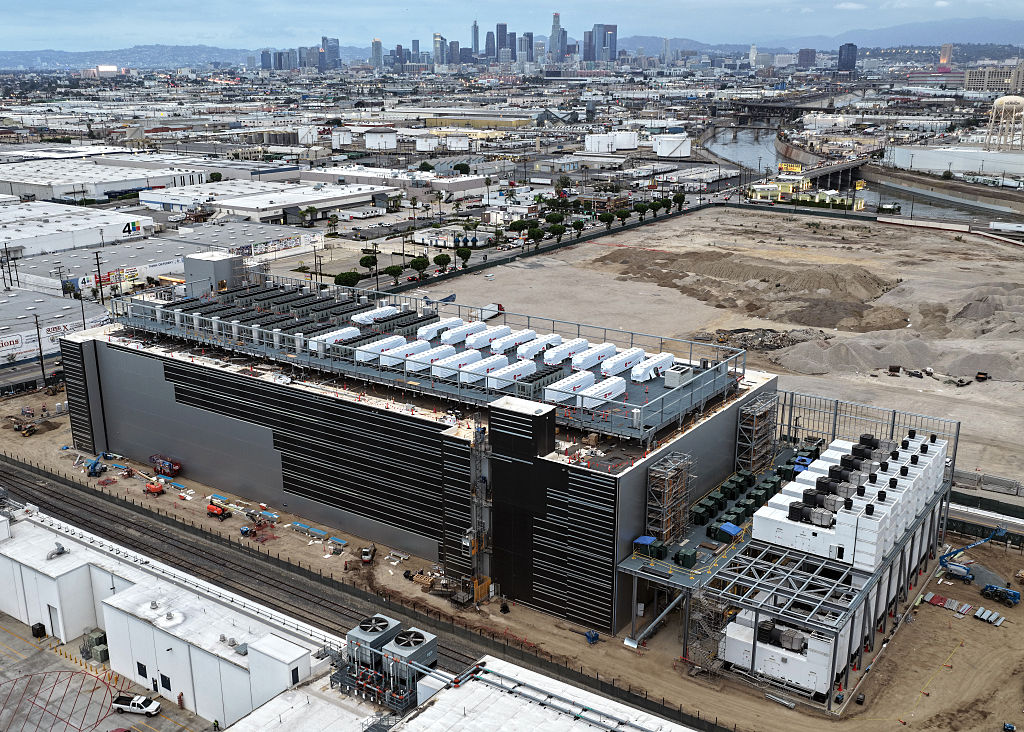
根据周一发表在《自然·可持续性》上的一项新研究,美国的超大规模数据中心合计耗电量相当于一些美国整个州的用电量,一年内排放数百万吨二氧化碳。
America’s hyperscale data centers together use as much electricity as some entire U.S. states and produce millions of metric tons of carbon dioxide over the course of a year, according to a new study published Monday in Nature Sustainability.
超大规模数据中心比传统数据中心更大、更强大,常用于训练和运行大规模人工智能模型,近年来数量激增。2019年至2024年间,全球数据中心数量从500多个翻倍至1100多个,其中一半以上位于美国。这一数字预计还会增长:研究公司Synergy估计,未来三年美国数据中心的总容量将翻倍,主要由超大规模数据中心的增长推动。
The number of hyperscale data centers, which are larger and more powerful than traditional data centers, and are often used to train and run large-scale AI models, has exploded in recent years. Between 2019 and 2024, the number of data centers around the world doubled from a little over 500 to over 1,100, with more than half located in the United States. That number is only expected to grow: the research firm Synergy estimates that the total capacity of U.S. data centers will double in the next three years, largely driven by the growth of hyperscale data centers.
今年11月的中期选举中,美国选民反对数据中心建设,许多人指出经济和环境方面的担忧。在全国41项地方投票倡议中,有40项公民投票限制或阻止数据中心建设。然而,研究人员表示,很少有研究量化每个超大规模数据中心到底使用多少电力,以及是什么燃料产生这些电力。
American voters rallied against data center development in the midterm elections this November, with many citing economic and environmental concerns. In 40 out of 41 local ballot initiatives across the country, citizens voted to limit or prevent data center development. Yet few studies have quantified just how much electricity each hyperscale data center uses, and what fuels generate the electricity, the researchers say.
哈佛大学数据科学倡议主任、该论文的高级作者弗朗西斯卡·多米尼奇说:“尽管关于数据中心环境影响的公众和科学声明很多,但当我们开始这项研究时,我们意识到基本上几乎没有,甚至没有经过同行评审的数据。”
“Even though there were a lot of [public and scientific] statements about the environmental impact of data centers, when we started this research, we realized that there was basically very little, if none, peer-reviewed data,” says Francesca Dominici, director of the Harvard Data Science Initiative and senior author of the paper.
该研究提供了人工智能兴起以来,首批对超大规模数据中心用电量和二氧化碳排放量进行设施层面估算的研究之一。研究人员利用卫星图像,列出了美国境内403个超大规模数据中心,并估算了每个设施在2024年5月至2025年4月期间,在不同运行情景下的年用电量。随后,他们使用美国环境保护署的数据计算了这些设施的排放量。
The study provides one of the first facility-level estimates of the electricity use and carbon dioxide emissions of hyperscale data centers since the rise of AI. The researchers used satellite imagery to build a list of 403 hyperscale data centers across the U.S., and then estimated the annual electricity consumption for each facility between May 2024 and April 2025 under a range of operating scenarios. They then used data from the U.S. Environmental Protection Agency to calculate their emissions.
研究发现,这些数据中心合计用电量在68至99太瓦时之间,高估值相当于印第安纳州、密歇根州和田纳西州等一些州一年的用电量。在低情景下,这些设施的用电量仍相当于威斯康星州向客户售出的年用电量,约70太瓦时,或明尼苏达州的约65太瓦时。
They found that, together, the data centers used between 68 and 99 terawatt-hours (TWh) of electricity—with the upper estimate equivalent to what some states, like Indiana, Michigan, and Tennessee, use in a year. In the lower scenario, the facilities still consumed approximately the annual electricity sold to customers in Wisconsin, roughly 70 TWh, or Minnesota, around 65 TWh.
为数据中心供电的电力中,超过一半来自化石燃料,主要是天然气和煤炭。所研究的设施合计排放约2570万吨二氧化碳,大约相当于丹麦一年的排放量。
More than half of the electricity powering the data centers comes from fossil fuels, primarily natural gas and coal. The facilities studied produced a combined estimated 25.7 million metric tons of carbon dioxide—roughly the annual emissions of Denmark.
报告发现,所研究的所有数据中心中,一半的用电量集中在四个州:弗吉尼亚州、俄勒冈州、俄亥俄州和爱荷华州。弗吉尼亚州因数据中心数量众多,长期被称为“数据中心巷”,但规模和电力容量也会影响用电量。研究人员在爱荷华州识别出26个超大规模设施,其合计用电量约为7.2太瓦时,平均每个设施的预计用电需求显著高于弗吉尼亚州的平均设施。弗吉尼亚州有142个超大规模设施,年用电量约为21.4太瓦时。
Half of the electricity use of all the data centers studied was concentrated in just four states: Virginia, Oregon, Ohio, and Iowa, the report found. Virginia has long been known as “data center alley” due to its high number of data centers, but size and power capacity can also impact electricity consumption. The researchers identified 26 hyperscale facilities in Iowa, combined electricity consumption for which was approximately 7.2 TWh, with the average facility having substantially higher estimated electricity demand than the average facility in Virginia, where 142 hyperscale facilities account for approximately 21.4 TWh of annual electricity consumption.
然而,排放影响并不总是相同。弗吉尼亚州、爱荷华州和俄亥俄州的超大规模数据中心排放量最高,而俄勒冈州的超大规模数据中心数量比爱荷华州和俄亥俄州都多,但由于电网更清洁,其排放量显著更少。
However, the emissions impacts were not always the same. Virginia, Iowa, and Ohio have the most emissions attributable to hyperscale data centers, while Oregon, which is home to more hyperscale data centers than Iowa and Ohio, has significantly fewer emissions due to a cleaner energy grid.
“消耗相同电量的情况下,怀俄明州数据中心相关的区域电力结构产生的二氧化碳大约是俄勒冈州的七倍,”哈佛大学数据科学家、该研究的首席作者 Gianluca Guidi 表示。“所以这些环境影响并非不可避免。地理位置很重要。”据 BloombergNEF 的一份报告称,如果没有清洁能源替代方案,到 2035 年,美国数据中心的天然气消耗量将超过大多数国家。
“For the same amount of electricity consumed, the regional electricity mix associated with data centers in Wyoming produces approximately seven times more carbon dioxide than in Oregon,” says Gianluca Guidi, Harvard data scientist and the study’s lead author. “So these environmental impacts are not necessarily inevitable. Geography matters.”Without clean energy alternatives, U.S. data centers are projected to consume more natural gas than most countries by 2035, according to a report from BloombergNEF.
电力需求和碳排放量可能比研究显示的更高。研究团队当时没有足够的数据来评估美国每一个超大规模数据中心,而且自他们的研究于 2025 年 4 月结束以来,又出现了更多数据中心。
The electricity demand and carbon emissions are likely even higher than the research shows. The team did not have enough data to assess every single hyperscale data center in the U.S. at the time, and more data centers have emerged since their study concluded in April 2025.
研究人员希望继续量化超大规模数据中心的环境影响,以更好地了解其对空气污染、水资源和健康的影响,并补充说,随着 AI 的不断扩张,其基础设施的增长必须以可持续的方式进行。
The researchers hope to continue to quantify the environmental impacts of hyperscale data centers to better understand their impact on air pollution, water, and health, adding that, as AI continues to scale, its infrastructure growth must be done sustainably.
“我们往往将 AI 想象成几乎是非物质的东西,但归根结底,支撑 AI 的电力是非常具体的物理实体,”Guidi 表示。“每个算法背后,都有巨大的建筑、发电厂、水资源,以及最终也包括承受后果的社区。”
“We tend to imagine AI as something that is almost immaterial, but in the end, the infrastructure power is profoundly physical,” says Guidi. “Behind every algorithm, there are enormous buildings, power plants, water resources, and ultimately also communities that live with the consequences.”